
Unlocking Efficiency in Indonesia’s Logistics Sector: Why Fleet Management Systems Are Key
Discover how Geotab's fleet management system overcomes fragmentation, reduces fuel waste, and maximises uptime with predictive fleet maintenance in Indonesia.

By Geotab Team
Dec 10, 2025
Key Insights
- High Logistics Costs: Indonesia's high logistics costs are worsened by traffic congestion and an ageing truck fleet, leading to mechanical issues.
- Fuel Savings: Geotab reduces fuel waste—the largest operational expense—with accurate fuel data and real-time driver coaching, leading to documented fuel reductions.
- Maximum Uptime: Predictive fleet maintenance, enabled by remote diagnostics and centralised work order management, helps eliminate unscheduled breakdowns for better asset utilisation.
- Improved Reliability and Safety: The system enhances delivery reliability via route optimisation and improves road safety by using Driver Safety Scorecards for proactive coaching.
The logistics industry in Indonesia is full of immense potential, yet it remains one of the most operationally challenging markets globally. An archipelago nation made up of thousands of islands, Indonesia presents complex distribution hurdles that directly translate into steep costs. For fleet and operations managers who measure success in margins and delivery times, efficiency and control are essential
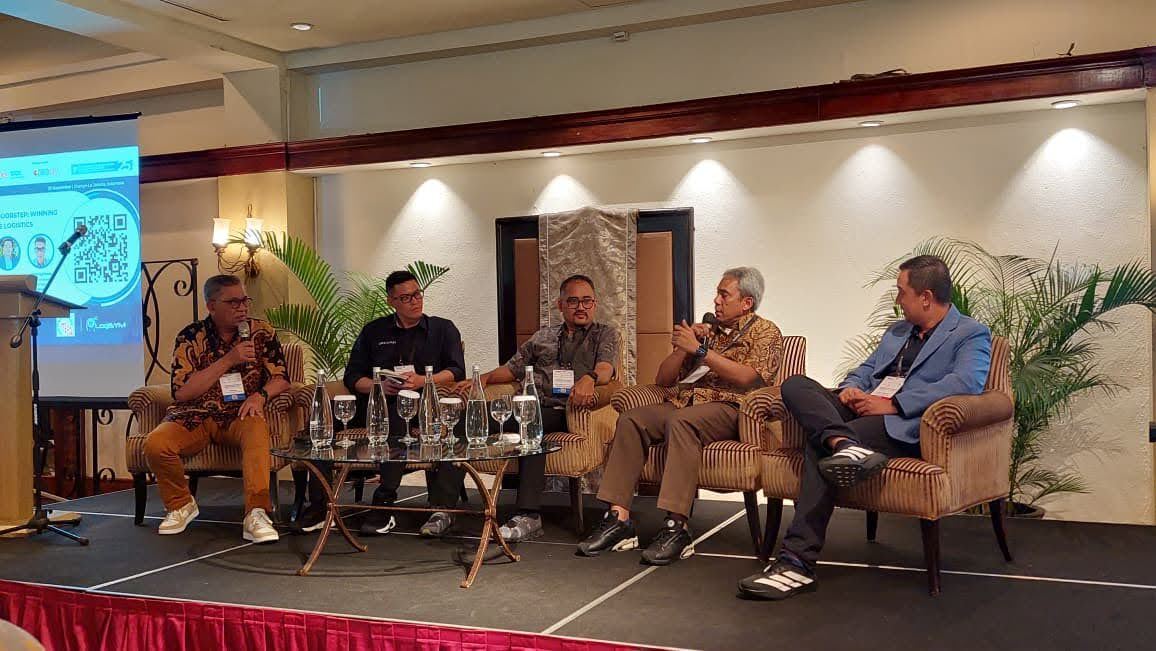
(Alvin Santoso, Geotab Business Development Manager discussing with fellow panelists at LogiSYM indonesia)
Following key industry discussions at LogiSYM Indonesia, it’s clear that overcoming fragmentation and high operational costs requires a strategic shift. Adopting a comprehensive fleet management system is essential to improve in fleet performance and support national economic targets.
The Operational Reality: Why Costs Remain High
Indonesia's logistics costs remain consistently high. While the government has made significant efforts, when combined with export logistics, still reaches around 23.08% of GDP. This figure is far above regional peers like Malaysia at 13% and Singapore at 8%.
The biggest cost pressure stems from land transportation, which accounts for approximately 50% of overall domestic logistics costs.
The Geopolitical and Infrastructure Burden
- The Archipelago Effect and Congestion: Moving goods across thousands of islands means coordinating a mix of different transport methods. This complexity, combined with Indonesia’s extreme traffic congestion (ranked 7th worst in the world), directly inflates fuel consumption and driver hours.
- Ageing Assets and Maintenance Risk: A significant portion of Indonesia’s truck fleet is ageing, with reports indicating 63% are over 10 years old. These older assets are prone to mechanical issues, including brake failures, which the National Transportation Safety Committee (KNKT) attributes to 80% of road safety incidents involving public transport and freight vehicles.
Geotab: Data for Cost and Efficiency
Geotab’s platform moves beyond basic GPS, transforming raw vehicle data into useful insights . This focus on data integrity and comprehensive management is what makes it a robust fleet management system solution for the Indonesian environment.
1. Driving Down Fuel Costs with Data-Driven Coaching
Fuel is the biggest operational expense. Reducing waste is the fastest path to profitability.
- Vehicle Tracking System (VTS) for Accuracy: Geotab's vehicle tracking system connects directly to the vehicle’s engine. Crucially for the SEA region, Geotab offers a Fuel Gauge Tap-In Harness designed to retrieve accurate fuel-level data even from commercial vehicles where this information is traditionally inaccessible via the diagnostic port. This precise data measures fuel consumption, calculates true idling time, and flags fuel-wasting behaviors.
- In-Vehicle Coaching: The Geotab GO device provides instant, real-time feedback to the driver via buzzer or verbal alert if excessive speeding or harsh acceleration is detected. This immediate correction capability is highly effective at modifying behaviour, leading to verifiable cost savings. For instance, regional fleets utilising this system have successfully reduced fuel consumption by up to 9% on Shaziman Transport.
2. Maximising Uptime Through Predictive Maintenance
Unscheduled breakdowns cause major delays and lost revenue , particularly with older assets or when a vehicle is stranded. Fleet maintenance is critical for maximising uptime.
- Proactive Engine Health Monitoring: Geotab acts as a remote diagnostics tool, translating complex engine fault codes into actionable alerts. This helps managers instantly distinguish minor issues from high-impact faults that require immediate action, reducing unnecessary workshop visits.
- Centralised Maintenance Planning: This intelligence enables managers to shift from reactive repairs to predictive scheduling. The platform includes work order management to consolidate maintenance tasks into a centralised digital system, moving away from manual record-keeping and enabling fleets to reduce unscheduled breakdowns.
3. Enhancing Reliability and Visibility
Logistics performance hinges on reliability. Indonesia’s global ranking on the Logistics Performance Index (LPI) declined from 46th in 2018 to 61st in 2023, with Tracking & Tracing being a specific component that saw a decline.
- Real-Time Vehicle Tracking: The vehicle tracking system provides fleet managers with the exact location of every asset and a complete trip history. This visibility is vital for verifying delivery and addressing delays.
- Route Optimisation: Geotab's route planning tool allows companies like Aerotrans to achieve remarkable results, such as a 99.5% On-Time Performance. By analysing vehicle stops, the tool determines the most efficient route for multiple stops, leading to significant savings in fuel consumption and travel time.
4. Safety and Sustainability: Risk Mitigation for the Future
Reducing human error and supporting national environmental goals are key strategic priorities.
- Driver Safety Scorecards: Geotab's safety center provides Driver Safety Scorecards by monitoring critical metrics like harsh braking and excessive acceleration. These tools provide real-time insights, help managers coach drivers and reduce collisions—a critical need given the high rate of human-error-related road safety incidents.
- Supporting Decarbonisation: Indonesia aims to reduce carbon emissions by 32% by 2030. The Geotab Sustainability Center, a data platform in MyGeotab, helps fleet operators meet sustainability goals by monitoring emissions, tracking fuel economy, and finding cost-reduction opportunities. This allows fleets to lower CO2 emissions and maintain compliance by optimising fuel efficiency and reducing idling.
The Path to Operational Excellence
The competitive environment in Indonesia demands a disciplined, data-first approach to operations. The complexities of the archipelago, high operational costs, and the pressure for reliable service all underscore a single conclusion: Intelligent fleet management is the new competitive advantage.
By deploying Geotab's fleet management system, Indonesian fleet and operations managers are not just tracking vehicles; they are transforming their entire business—achieving cost reduction, ensuring safety, and delivering the service required to succeed in one of the world's most dynamic and challenging logistics markets.
Ready to gain this competitive advantage? Request a demo here.
The Geotab Team write about company news.
Related posts
.jpg)
The Safety Crisis: Navigating the Complexity of Philippine Roads
April 8, 2026
5 minute read
.png)
Why Thailand’s Fleet Safety Needs All-in-One Video Telematics Now
March 31, 2026
3 minute read
All-in-One Video Telematics: The New Standard for Fleet Safety in Singapore
March 30, 2026
3 minute read
.png)
Fleet Management in Papua New Guinea: How Telematics Solves the Biggest Challenges
March 25, 2026
3 minute read
.jpg)