How to Choose the Best Dashcam in the Philippines for Fleet Insurance Protection
The best dashcam in the Philippines is no longer just a recording device — for commercial fleet operators, it has become the primary tool for managing insurance costs. Each unresolved disputed claim can trigger a premium increase at renewal.

By Geotab Team
Oct 6, 2026

Key Insights
- Dash cam adoption among Philippine commercial fleets is rising — the primary driver is insurance protection, not compliance
- The GO Focus Plus is the best dash cam in the Philippines for fleet use: dual-facing, event-triggered, and fully integrated with MyGeotab
- Video footage disputes false or inflated third-party claims before they reach settlement — protecting your premium at renewal
- Philippine non-life insurers are increasingly factoring dash cam adoption into commercial vehicle risk assessments at renewal
The best dashcam in the Philippines is no longer just a recording device — for commercial fleet operators, it has become the primary tool for managing insurance costs. For fleets operating in high-density corridors like EDSA, C5, and the North Luzon Expressway, each unresolved disputed claim can trigger a premium increase at renewal. Choosing the right dashcam for your fleet changes that equation entirely.
Why Are Philippine Fleet Operators Buying Dash cams for Insurance Protection?
Commercial fleet insurance premiums in the Philippines are primarily set by claims history and frequency. Every at-fault or disputed settlement raises your risk profile — and your next renewal rate.
The core problem is that liability is routinely contested without video evidence. When two vehicles collide and neither has footage, insurers typically apply shared-fault settlements. Your fleet pays a portion of the claim even when your driver was not responsible.
Fraudulent staging and exaggerated injury claims remain an established problem on Philippine roads — particularly around high-volume interchanges and expressway on-ramps. Without a dash cam, there is no objective counter to an inflated account filed days after the incident.
The result is a compounding cycle: each uncontested settlement raises your claims ratio, which raises your premium.
How Does Dash cam Video Proof Change the Insurance Outcome?
Video footage from an always-on dash cam shifts the burden of proof decisively in your favour.
When a third-party claim is filed, clear footage showing lane position, speed, following distance, and driver attentiveness in the seconds before impact can exonerate your vehicle within days — not months. Insurers no longer need to rely on conflicting statements, and the shared-fault default no longer applies.
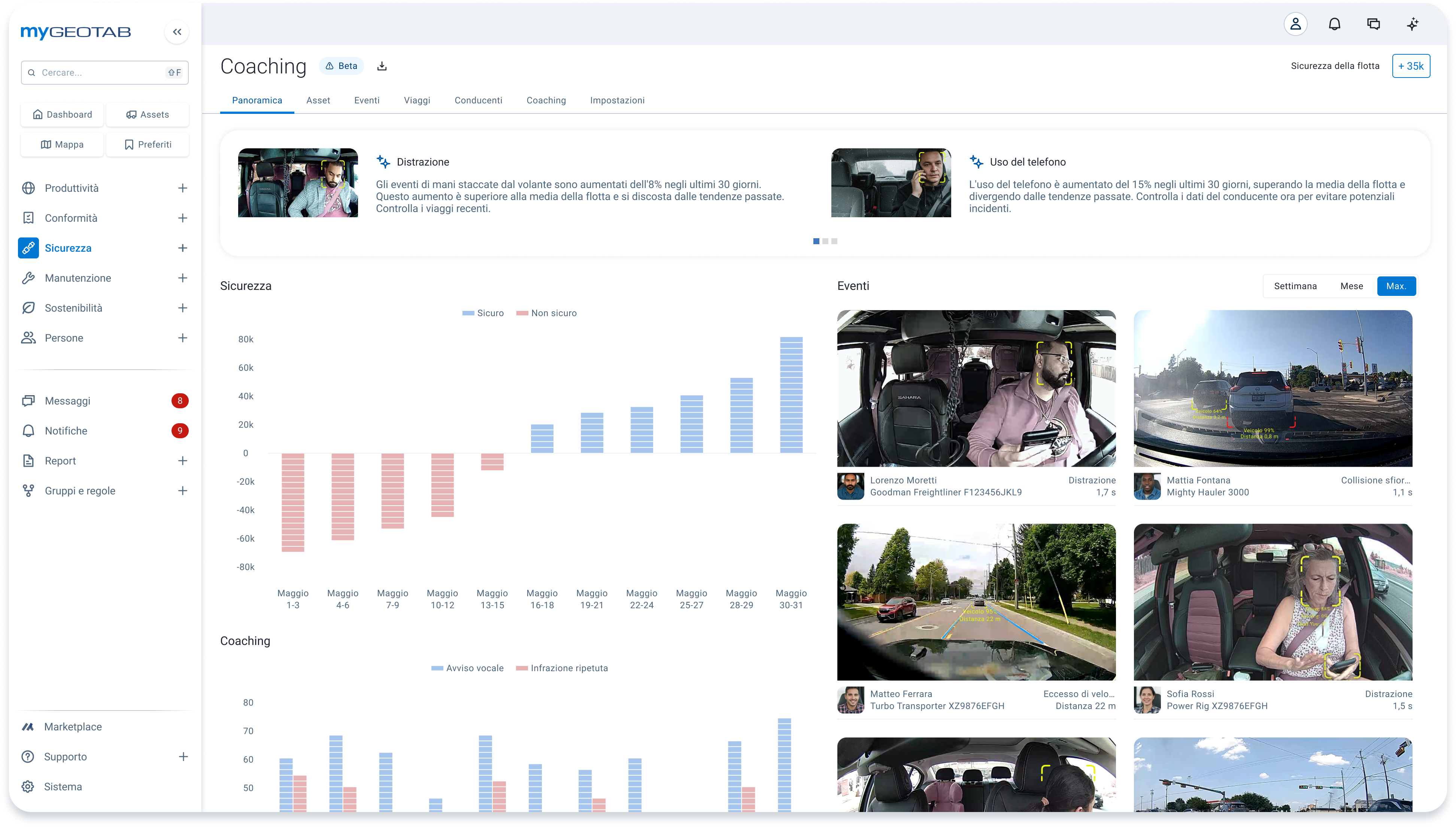
Beyond individual claim outcomes, the most significant long-term value is renewal leverage. A fleet that can demonstrate low claims frequency, dash cam-backed incident investigation, and active driver coaching presents as a categorically lower-risk client — and should be positioned as such at every renewal conversation with its broker.
| Claim Scenario | Without a Dash Cam | With GO Focus Plus |
|---|---|---|
| Third party alleges your driver ran a red light | Shared-fault settlement likely | Footage proves signal state at the moment of impact |
| Pedestrian claims injury in an area your vehicle passed | Driver's account disputed | GPS-tagged clip shows exact vehicle path and behaviour |
| Rear-end collision with disputed following distance | Speed data alone may be questioned | Footage and telematics combine to establish full context |
| Staged "accident" by a third party | Your driver's word against theirs | Footage can identify pre-meditated staging patterns |
What Does the GO Focus Plus Capture on Philippine Roads?
Unlike a standard car dashcam that records passively, the GO Focus Plusis Geotab's native AI dash cam — built for commercial fleet deployment, with active AI detection and full integration with the MyGeotab platform.
As the best dash cam in the Philippines for fleet-scale insurance protection, it captures:
- Road-facing camera — wide-angle continuous recording of the road ahead; establishes the objective scene, including traffic position, signal state, and pedestrian presence
- Driver-facing camera — cabin view that monitors driver alertness and behaviour; directly addresses distraction or fatigue claims
- Event-triggered clips — automatically saved when the Geotab GO device detects harsh braking, sharp cornering, rapid acceleration, or a collision-level event
- Video on Demand — fleet managers can request a live or historical clip remotely through MyGeotab,, without waiting for the vehicle to return to base
All footage is time-stamped, GPS-tagged, and stored securely. When an incident occurs, the relevant clip is already captured and retrievable — no manual action required by the driver.
This is a critical operational advantage. Drivers involved in incidents are often stressed or reluctant to report an event. An automatic capture system removes human discretion from the evidence chain entirely, ensuring the 30-second window before and after every safety event is always preserved.
How to Use Dash cam Footage at Every Stage of an Insurance Dispute
A dash cam in the Philippines is only as valuable as the process behind it. The GO Focus Plus evidence chain covers three distinct stages:
Stage 1 — At the scene
The driver reports that dash cam footage of the incident exists. This alone discourages fraudulent account-building by the opposing party. An LTO accident report filed with a note of existing footage changes the dynamics of a dispute immediately.
Stage 2 — During insurer assessment
Footage is submitted alongside the formal claim notification — not as an afterthought, but as the primary evidence package. Combined with the MyGeotab trip history, speed profile, and event log, it creates a complete incident record that is far harder to dispute than written statements alone.
Stage 3 — In legal or regulatory proceedings
Dash cam video footage may be admissible as evidence in Philippine legal proceedings, subject to proper authentication and the applicable rules of evidence. GPS metadata and timestamps embedded in MyGeotab clips can support authentication by helping establish the time and context of a recording.
As a best practice, fleet managers should establish a formal incident response protocol: the moment a driver reports a collision or safety event, the relevant MyGeotab clip is flagged, preserved, and forwarded to the fleet manager and insurer promptly — ideally within 24 hours.
What Measurable Impact Does Video Telematics Have on Claims Frequency?
The best dash cam in the Philippines does more than protect against individual claims — it drives down the frequency of incidents that generate claims in the first place.
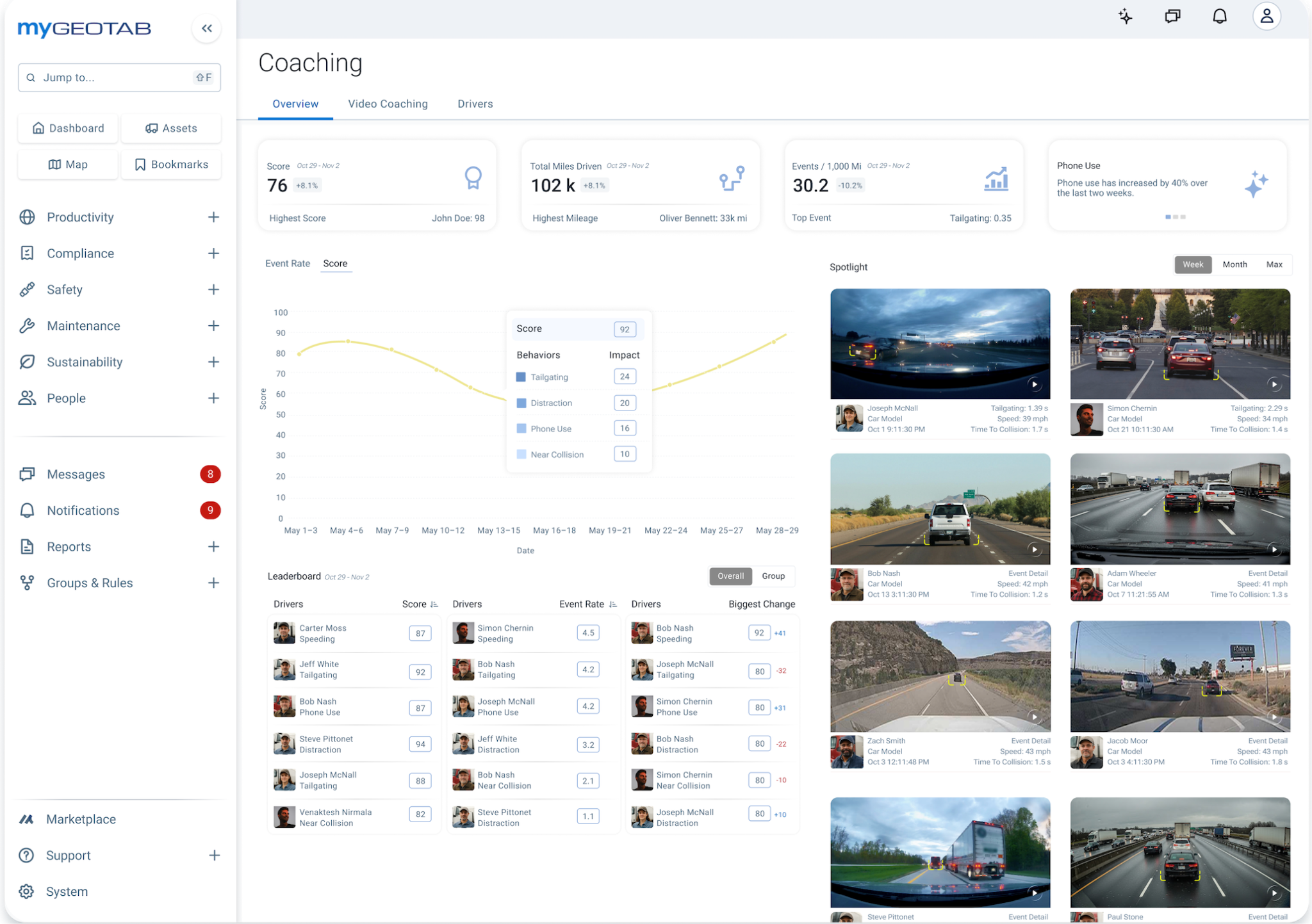
When drivers know their behaviour is monitored and recorded, driving standards improve measurably. The GO Focus Plus is integrated with MyGeotab's driver safety reporting, enabling safety managers to identify risky patterns — late braking, tailgating, phone use — and deliver targeted driver coaching before an incident occurs.
Reduced incident frequency means fewer claims. Fewer claims means a lower claims ratio at renewal. For large commercial fleets in the Philippines — where a single at-fault bodily injury claim can reach millions of pesos — the return on investment from a properly deployed dash cam is realised at every renewal cycle.
How to Submit Dash cam Evidence to Philippine Insurers and Authorities
Having dash cam footage is only valuable if it is retrievable, correctly formatted, and submitted through the right channel at the right time.
MyGeotab allows fleet managers to:
- Pull specific event clips by date, time, vehicle, and event type
- Download footage directly to their computer for submission to insurers or authorities
- Access the full incident picture in one platform — GPS trip history, speed profile, and the corresponding dashcam clip — for review and evidence preparation
For police blotter submissions and insurer notifications, this combined report is significantly more compelling than a written statement. It establishes timeline, location, speed, and driver behaviour objectively — and it is far harder to contest.
For a full picture of how Philippine fleet operators are managing road safety through video telematics,, the GO Focus Plus combined with MyGeotab reporting creates a system where every incident is documented, retrievable, and defensible — from the first driver notification to the final insurer settlement.
Ready to protect your fleet from the next premium hike? Request a demo and we will walk through the best dashcam configuration for your Philippine fleet.
Frequently Asked Questions
Yes. Philippine non-life insurers increasingly factor dash cam adoption into commercial vehicle risk assessments at renewal — fleets with documented video evidence capability and lower claims frequency typically achieve more favourable terms. Present your telematics and driver safety data to your broker before renewal, not during it.
Without video evidence, liability is determined by physical evidence, witness accounts, and the police blotter — all of which are open to interpretation. In contested cases with no footage, insurers routinely apply shared-fault settlements, meaning your fleet bears a cost even when your driver was not responsible. A dash cam eliminates this default.
The GO Focus Plus is a Geotab-native dash cam designed to work with the GO devices across a range of commercial vehicle types. Its key differentiator is deep integration with the MyGeotab fleet management platform, combining video capture with data-driven driver coaching in a single system — rather than requiring a separate dash cam solution alongside your telematics. For fleets already using Geotab, this integration makes it a practical and cohesive option. Whether it is the right dash cam for a specific operation in the Philippines depends on fleet size, vehicle type, connectivity, and budget.
Event-triggered clips are stored on the device's SD card and mirrored to MyGeotab for remote access. Retention duration depends on card capacity and the frequency of triggered events. Your Geotab partner will advise on the correct storage configuration for your fleet's incident volume and operational profile.
Yes. Video footage recorded by a dash cam is admissible in Philippine civil and criminal proceedings as an electronic document under the Rules on Electronic Evidence (A.M. No. 01-7-01-SC), provided it is properly authenticated — meaning the footage is shown to be genuine and unaltered. GPS-tagged, time-stamped recordings support the authentication process. Consult qualified Philippine legal counsel for requirements specific to your case.
The Geotab Team write about company news.
Table of Contents
- Why Are Philippine Fleet Operators Buying Dash cams for Insurance Protection?
- How Does Dash cam Video Proof Change the Insurance Outcome?
- What Does the GO Focus Plus Capture on Philippine Roads?
- How to Use Dash cam Footage at Every Stage of an Insurance Dispute
- What Measurable Impact Does Video Telematics Have on Claims Frequency?
- How to Submit Dash cam Evidence to Philippine Insurers and Authorities
Related posts
What Is ADAS? A Guide to Driver Assistance Systems for Philippine Fleets
October 21, 2026
5 minute read
What Is a GPS Jammer? Detection and Protection in the Philippines
October 20, 2026
5 minute read


What the Geotab and TAPA Webinar Reveals About Fleet Safety Management
October 2, 2026
2 minute read

How to maximise vehicle utilisation with a fleet management system in Southeast Asia
October 1, 2026
3 minute read
How Driver Safety Scorecards and AI Video Telematics Are Improving Fleet Safety in Southeast Asia
September 28, 2026
5 minute read