The True Cost of a Fleet Accident in Thailand: Legal, Repairs & Premium Impact
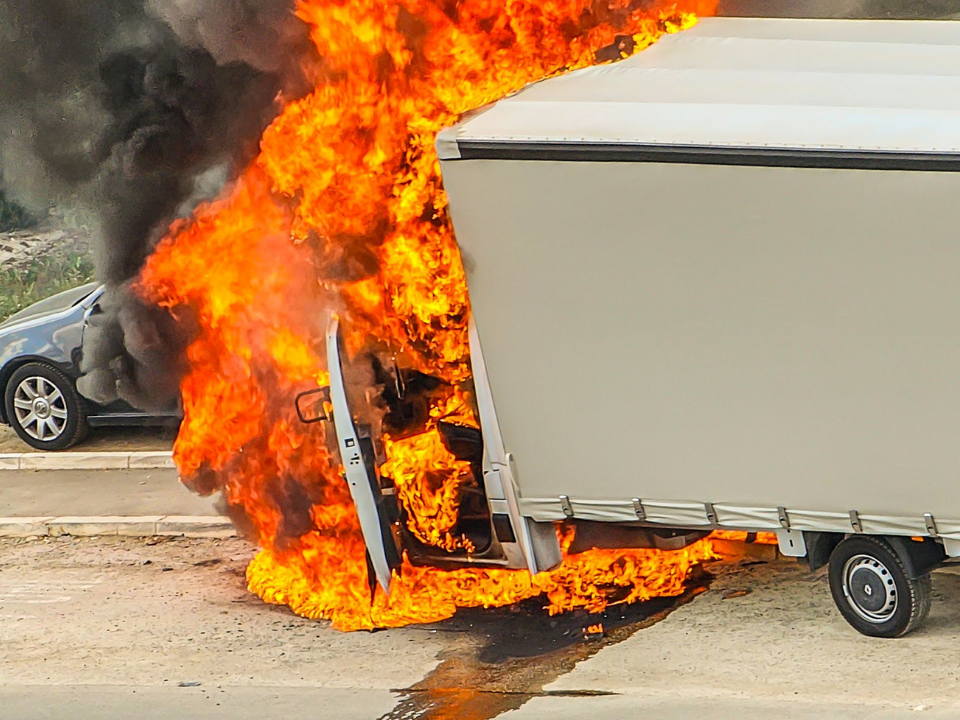
A single fleet accident in Thailand triggers high costs in repairs, legal liability, and insurance premiums. Implementing a fleet management system with ADAS technology mitigates these risks by reducing accidents and providing vital data for insurance claims.

Senior Business Development Manager
Aug 5, 2026
Key Insights
- Thailand ranks among the world's deadliest road environments — road crashes cost nations approximately 3% of GDP, according to the WHO (2026)
- Car insurance in Thailand separates compulsory cover (พ.ร.บ.) from voluntary Class 1 policies — both are triggered in a commercial fleet accident, and both affect your total cost exposure
- Legal liability extends to the fleet operator, not just the driver, under Thai civil law
- One at-fault accident can raise your Class 1 premium by 20–40% at next renewal
- ADAS systems and video telematics provide documented evidence that protects your legal position and limits claim exposure
Most fleet managers calculate accident cost as: repair bill + excess payment. The real number is three to five times higher.
Thailand's roads carry one of the highest accident burdens in Asia. According to the WHO Global Status Report on Road Safety 2023, road traffic deaths globally stand at 1.19 million per year — with 92% occurring in low- and middle-income countries. Thailand sits in the highest-risk tier, with a fatality rate that consistently places it among the worst performers in Southeast Asia.
For a commercial fleet operator, every accident generates costs across four categories — and most operators only account for one.
| Cost Category | What It Includes | Typical Range (THB) |
| Vehicle repair | Bodywork, mechanical, third-party vehicle | ฿50,000 – ฿500,000+ |
| Medical & compensation | Injured parties, hospital, rehabilitation | ฿80,000 – ฿3,000,000+ |
| Legal & administrative | Lawyer fees, court time, settlement | ฿30,000 – ฿500,000+ |
| Premium increase | Annual uplift at renewal (Class 1) | ฿15,000 – ฿80,000/year |
| Indirect costs | Driver downtime, vehicle off-road, lost contracts | Variable — often exceeds direct costs |
Indicative market estimates are based on commercial vehicle benchmarks across Bangkok and provincial routes. Actual costs will vary depending on vehicle class, incident severity, insurance policy terms, and location. These figures serve as an illustrative model for corporate risk-assessment purposes.
How Car Insurance in Thailand Works for Commercial Fleet Operators
Car insurance in Thailand operates on a two-tier system that every commercial fleet operator must understand before an accident, not after.
Tier 1: Compulsory Insurance (พ.ร.บ. — Motor Vehicle Act)
Every registered vehicle in Thailand must carry พ.ร.บ. (Compulsory Motor Insurance). It covers:
- Death or total disability: up to ฿300,000 per person
- Disability (partial): up to ฿300,000 per person
- Medical expenses: up to ฿80,000 per person
Critical limitation: พ.ร.บ. does not cover property damage. It does not cover your own vehicle. It does not cover damage to third-party vehicles. It pays out regardless of fault — meaning even a vehicle that caused the accident receives basic coverage under this scheme.
Tier 2: Voluntary Insurance (Classes 1–5)
Commercial fleets typically carry Class 1 (comprehensive) or Class 2+ cover. Class 1 includes:
- Own vehicle damage (regardless of fault)
- Third-party bodily injury beyond พ.ร.บ. limits
- Third-party property damage
- Personal accident for driver and passengers
- Theft and fire
The gap that creates legal exposure: When an accident involves serious injury or death and third-party claims exceed Class 1 policy limits, the fleet company faces direct civil liability. Under Thailand's Civil and Commercial Code (Sections 420–437), the employer is jointly liable for negligent acts committed by employees in the course of their duties.
This means the company — not just the driver — can be sued.
What Happens to Your Premium After a Fleet Accident
Car insurance in Thailand uses a no-claims discount (NCD) system for commercial fleets — but the premium impact of a single at-fault claim is steeper than most operators expect, and compounds significantly across a multi-vehicle fleet.
A single at-fault claim under a Class 1 policy results in:
- Loss of no-claims bonus — typically 20–40% of the NCD accumulated over 1–3 years
- Risk uplift — insurers may apply a loading of 10–25% to reflect the vehicle's claims history
- Fleet-wide review — for fleets of 10+ vehicles, a single serious incident can trigger a full portfolio review at renewal, affecting premiums across the entire fleet
Multiple claims accelerate this dramatically. Insurers in Thailand use cross-insurer claims databases to assess commercial risk. A driver with two at-fault incidents in 36 months may be uninsurable at standard rates.
The compounding effect: A single serious accident involving a commercial truck or van can generate ฿1–3 million in total claims exposure. The resulting premium increase across a fleet of 20 vehicles, sustained over three years, adds ฿900,000–฿2,400,000 in additional insurance cost — on top of the original claim settlement.
The Legal Exposure That Fleet Managers Underestimate
Beyond insurance, commercial fleet operators face three legal exposure channels after a serious accident in Thailand.
1. Civil Liability Under the Civil and Commercial Code
As noted above, Section 420 of Thailand's Civil and Commercial Code establishes that any person who wilfully or negligently injures another is liable. Section 425 extends this to employers for acts committed by employees performing their duties.
In practice, claimants in Thailand will typically sue both the driver and the company. Settlement pressure is significant, and court proceedings can run 2–4 years.
2. Criminal Liability for Negligent Management
If an accident results in death and prosecutors can demonstrate that the company failed to maintain the vehicle, failed to enforce hours-of-rest policies, or knowingly deployed an unfit driver, senior management may face criminal negligence charges under the Penal Code. This risk is low but non-zero — and it is rising as Thai courts increasingly scrutinise fleet operator conduct.
3. Regulatory Action by the Department of Land Transport (DLT)
Commercial vehicle operators registered with the DLT are subject to regulatory oversight. A serious accident can trigger a DLT audit of the fleet's maintenance records, driver certification, and compliance with working-hours regulations. Non-compliance findings result in licence suspension or revocation.
The duty-of-care gap: Most Thai fleet operators rely on paper-based driver logs and manual vehicle checks. Without a fleet management system generating timestamped digital records, operators have no documentary defence if regulatory or legal proceedings examine their duty-of-care practices. Thai fleet operators who pair a fleet management system with an AI dashcam — such as the Geotab GO Focus Plus — extend this documentary record to include GPS-tagged video footage for every trip: the strongest available evidence layer under DLT scrutiny or civil proceedings.
How ADAS and Fleet Management Systems Reduce Your Total Accident Cost
For fleet management in Thailand, ADAS (Advanced Driver Assistance Systems) is the single most cost-effective risk mitigation available to commercial fleet operators today — and the most direct route to reducing both accident frequency and the total cost of any claim that follows.
What ADAS Does in a Fleet Context
| ADAS Feature | How It Reduces Accident Cost |
| Forward Collision Warning (FCW) | Alerts driver before impact — reduces rear-end collisions, the most common commercial vehicle claim type |
| Lane Departure Warning (LDW) | Reduces side-swipe and road-departure incidents on Thai highways |
| Driver Fatigue Detection | Flags drowsiness before micro-sleep incidents — critical on long-haul routes |
| Automatic Emergency Braking (AEB) | Reduces impact speed in unavoidable collisions — directly reduces injury severity and claim size |
| Speed Alert | Enforces speed compliance — the single biggest driver of fatal crash risk (WHO: every 1% increase in mean speed produces a 4% increase in fatal crash risk) |
A fleet management system integrates ADAS alerts with GPS tracking, driver scoring, and trip history. This creates a timestamped, auditable record of driver behaviour before, during, and after every incident.
Why this matters legally: If a third party claims your driver was speeding or ran a red light, your fleet management system's data provides an independent, court-admissible record. Without this data, your insurer and your legal team are defending a claim blind.
Geotab connects a vast number of vehicles globally across a large customer base, processing an immense volume of data points every day. In Thailand, fleets using Geotab's GO9 device with driver behaviour scoring have access to real-time exception alerts, collision detection via the device accelerometer, and full trip playback — the exact data set needed to dispute inflated or fraudulent claims.
For fleets that require video-level evidence, the Geotab GO Focus Plus adds an AI dashcam layer to this record. Its dual-lens setup captures the road ahead and the driver simultaneously — footage that is automatically triggered on every exception event, GPS-tagged, and surfaced directly in MyGeotab for manager review.
In Thailand, where out-of-court settlements often move quickly under third-party pressure, having timestamped dashcam footage alongside your trip data means your insurer and legal team assess liability from the same evidence as the claimant — before an inflated figure becomes a negotiating baseline.
What a Fleet Accident Actually Costs: A Worked Example
Scenario: A 5-tonne delivery truck rear-ends a passenger car on Sukhumvit Road, Bangkok. The car occupant sustains a fracture. The truck sustains front-end damage.
| Cost Item | Typical range (Baht) |
| Truck repair | ฿80,000 - ฿300,000 |
| Third-party vehicle repair | ฿50,000 - ฿250,000 |
| Third-party medical (beyond พ.ร.บ.) | ฿150,000 - ฿1,000,000+ |
| Legal costs (out-of-court settlement) | ฿50,000 - ฿300,000+ |
| Driver downtime (2 weeks) | ฿14,000 - ฿25,000 |
| Truck off-road rental (2 weeks) | ฿35,000 - ฿70,000 |
| Premium increase Year 1 (fleet of 10, 40% NCB loss) | ฿240,000 - ฿480,000 |
| Total Year-1 Cost | ฿619,000 - ฿2,425,000+ |
| Premium increase Years 2–3 (partial NCB recovery) | ฿120,000 - ฿240,000 |
| 3-Year Total Cost | ฿739,000 - ฿2,665,000+ |
Estimates based on a mid-severity rear-end collision scenario in Bangkok. Premium increase calculated using publicly available Thai Class 1 commercial vehicle insurance data (฿60,000–฿120,000/year per vehicle) and a 40% NCB loss on a fleet of 10 vehicles. Actual costs will vary depending on vehicle class, incident severity, insurance policy terms, and location. These figures serve as an illustrative model for corporate risk-assessment purposes.
A fleet accident in Thailand is never just a repair bill. It is a legal event, an insurance event, and a regulatory event — all simultaneously. The operators who manage this risk most effectively are those who have invested in three things: comprehensive voluntary insurance, a fleet management system with full trip and driver records, and ADAS technology that reduces both accident frequency and severity.
The cost of a fleet management system across a 10-vehicle fleet is a fraction of the cost of a single serious accident. The data it generates is not just operational intelligence — it is your legal defence. The GO Focus Plus takes this further — adding real-time AI driver monitoring and GPS-tagged dual-lens video that is automatically triggered and captured on every detected risk event, so Thai fleet operators have the complete picture of each incident: what the road showed, and what the driver was doing.
Use Geotab's Fleet ROI Calculator to model the financial impact of reduced accidents on your fleet's insurance and total operating cost. Or contact the Geotab team to discuss a fleet safety assessment for your Thailand operations.
Frequently Asked Questions
Every vehicle must carry พ.ร.บ. (Compulsory Motor Insurance). Commercial fleet operators should also carry voluntary Class 1 or Class 2+ cover, as พ.ร.บ. does not cover property damage or third-party vehicle damage.
Yes. Under Thailand's Civil and Commercial Code (Section 425), employers are jointly liable for negligent acts committed by employees in the course of their duties. This means the company — not just the driver — can be named as a defendant in civil proceedings.
A single at-fault claim typically results in loss of no-claims bonus (worth 20–40% of the prior year's premium) plus a risk loading of 10–25%. For fleets of 10+ vehicles, a serious incident can trigger a full portfolio review affecting premiums across the entire fleet.
An ADAS system (Advanced Driver Assistance System) is a set of in-vehicle technologies — including forward collision warning, lane departure alerts, driver fatigue detection, and automatic emergency braking — that reduce the likelihood and severity of accidents. Fleets equipped with ADAS have documented evidence of driver behaviour that supports insurance claims and legal defence, in addition to preventing incidents before they occur. The Geotab GO Focus Plus is an AI-powered fleet dashcam that delivers these capabilities — detecting driver fatigue, distraction, and phone use in real time, with automatic event footage captured and surfaced to managers for review and legal use.
GPS trip data, driver behaviour logs, and collision detection records generated by a certified fleet management system are generally admissible as evidence in Thai civil proceedings. The data must be timestamped, unedited, and traceable to a specific device and vehicle. Geotab's platform generates this audit trail automatically for every trip.
Senior Business Development Manager
JoAnn is a Senior Business Development Manager, Southeast Asia at Geotab
Table of Contents
Related posts
What Is ADAS? A Guide to Driver Assistance Systems for Philippine Fleets
October 21, 2026
5 minute read
What Is a GPS Jammer? Detection and Protection in the Philippines
October 20, 2026
5 minute read

What the Geotab and TAPA Webinar Reveals About Fleet Safety Management
October 2, 2026
2 minute read

How to maximise vehicle utilisation with a fleet management system in Southeast Asia
October 1, 2026
3 minute read

How Driver Safety Scorecards and AI Video Telematics Are Improving Fleet Safety in Southeast Asia
September 28, 2026
5 minute read