From punishment to performance: How Southeast Asia’s fleet operators are rethinking driver coaching
Fleet safety in Southeast Asia depends on more than recording risky events. Fleet operators need tools that identify risk as it happens, provide timely feedback and help managers coach drivers constructively.

Senior Business Development Manager
Sep 16, 2026
Key Insights
- Retrospective, punishment-first monitoring can make driver coaching feel confrontational and reactive.
- Real-time telematics gives drivers feedback closer to the point of risk.
- Aerotrans achieved a 61% improvement in predicted collision rate after deploying Geotab telematics.
- Video and driver behaviour data help managers focus on higher-severity events.
- A driver coaching programme for fleet operators should include a behavioural baseline, timely feedback and recognition for improvement.
Why fleet safety in Southeast Asia requires a more responsive approach
Fleet operators across Singapore, Indonesia, Malaysia, Thailand and the Philippines work in varied and demanding road environments. Dense urban traffic, busy logistics corridors and growing last-mile delivery networks can create multiple sources of risk during a single shift.
The World Health Organization reports that approximately 1.16 million people die in road traffic crashes each year. It also identifies speeding and distracted driving as significant contributors to crash risk. Drivers using mobile phones are approximately four times more likely to be involved in a crash, while every 1% increase in mean speed produces a 4% increase in fatal crash risk.
For commercial fleets, these risks can affect more than individual drivers. They can also lead to vehicle downtime, insurance costs, missed deliveries, reputational damage and pressure on fleet managers.
This makes the central question clear: how can operators improve driver safety in fleet management without creating a culture based only on surveillance and punishment?
Why retrospective driver safety management falls short
A traditional approach to driver safety management often follows the same pattern:
- A camera or telematics device records an event.
- A manager reviews the footage later.
- The driver is asked to explain what happened.
- The organisation issues a warning or takes corrective action.
This process can be useful for investigating serious events. However, it does not give drivers feedback when they can still change their behaviour.
It can also make coaching feel like an exercise in fault-finding. Drivers may feel that monitoring is being used against them rather than as a tool to support safer driving.
Managers face a different challenge. When every speeding event, harsh brake or near miss generates a manual review, high volumes of alerts can make it difficult to identify the events that require immediate attention.
A more effective fleet safety strategy separates real-time intervention from manager-led coaching. Drivers receive timely feedback for lower-severity events, while managers focus their attention on patterns and incidents that need further discussion.
How to improve driver safety in fleet management with real-time feedback
The most effective time to address risky behaviour is often as it occurs, rather than days later in a review meeting.
Edge AI technology in devices such as the Geotab GO Focus Plus processes video directly on the device. When the system detects events such as tailgating, lane departure, distracted driving or harsh braking, it can deliver an immediate verbal alert in the cab.
This gives the driver an opportunity to respond in the moment. The intervention is brief, specific and connected to the behaviour itself.
For higher-severity events that require manager attention, automated workflows can route the relevant video clip directly to the driver for self-review before a coaching conversation takes place. This provides context for the discussion and gives drivers an opportunity to reflect on the event beforehand.
The result is a clearer feedback loop:
- Detect the behaviour.
- Alert the driver where appropriate.
- Escalate higher-severity events.
- Review the relevant evidence.
- Coach against a shared understanding of what happened.
How fleet telematics supports driver behaviour monitoring in Southeast Asia
Fleet telematics provides the data infrastructure for a more consistent safety programme. It can bring together information such as:
- Vehicle location and trip history
- Harsh braking and acceleration
- Speeding events
- Collision-related data
- Idling duration
- Video evidence
- Driver safety scores
Individually, these data points show what happened. When analysed over time, they can help reveal where and when risk is more likely to occur.
For example, a fleet manager might identify repeated harsh braking on a particular route, speeding events during the final hour of a shift or different risk patterns between vehicle types. These insights can help managers address the conditions surrounding risky behaviour rather than treating every event as an isolated incident.
This is the practical value of reducing fleet risk with telematics. The goal is not to create another dashboard of alerts. It is to help managers prioritise risk, identify patterns and choose the right coaching response.
Aerotrans demonstrates the value of fleet safety coaching
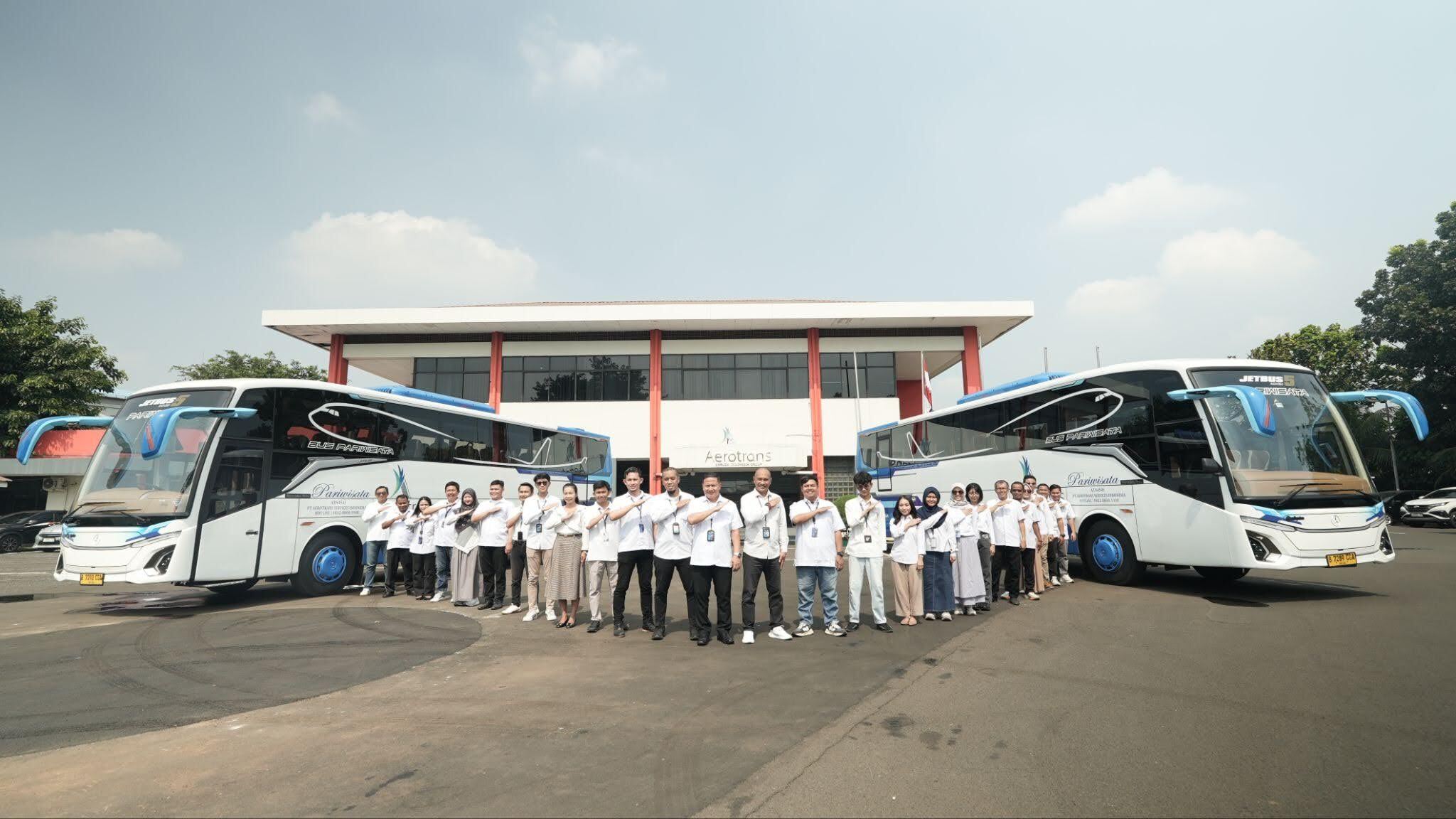
Aerotrans, the ground transport provider for the Garuda Indonesia Group, operates more than 700 vehicles across Indonesia. The organisation adopted Geotab in September 2024 to gain greater visibility across its operations.
Before using Geotab, Aerotrans had limited insight into driver behaviour and found it difficult to identify where risk was accumulating. The company now uses telematics data to monitor vehicle activity, driver behaviour, maintenance and fuel usage.
Since adopting Geotab, Aerotrans has reported the following improvements:
- An 89% safety ranking
- A 61% improvement in predicted collision rate per kilometre
- A 57% reduction in harsh braking events
- 66% fewer acceleration spikes
- A 22% reduction in idling duration
“Before Geotab, our visibility of the fleet was very limited. Now, we can monitor our vehicles in real time. Since adopting the system, we have also seen a significant improvement in safety performance.”
— Hermawan, Chief of Transport Operation Control Centre, Aerotrans
These results illustrate how a fleet safety telematics solution can help connect visibility, driver feedback and safety management. They should be understood as Aerotrans’s reported results, rather than a guaranteed outcome for every fleet.
What to look for in fleet management software
Fleet management software should help operators move from isolated event reviews to a repeatable safety process.
When comparing platforms, fleet operators should consider whether the software provides:
| Capability | Why it matters |
|---|---|
| Real-time driver data | Helps teams identify risk closer to the time it occurs |
| Driver safety scoring | Supports consistent benchmarking across drivers and vehicles |
| Automated workflows | Routes alerts, video and follow-up actions to the right person |
| Configurable thresholds | Allows teams to set rules that reflect their vehicles and routes |
| Video integration | Adds context to selected driving events |
| Regional reporting | Helps teams compare performance across locations and operating conditions |
Geotab fleet management software combines vehicle data, driver behaviour information, reporting and coaching workflows in one platform. GO Focus Plus can add video-based safety capabilities for fleets that need visual context around selected events.
Operators assessing the business case can also use the Fleet ROI Calculator to explore potential opportunities across safety, fuel and maintenance.
How to build a driver coaching programme for fleet operators
A driver coaching programme does not need to begin with a complete policy overhaul. It can start with a clear process and measurable baseline.
1.Establish a behavioural baseline
Use fleet telematics to measure current patterns, such as:
- Harsh braking
- Speeding
- Acceleration
- Idling
- Distracted driving
- Collision-related events
The baseline gives managers a reference point for identifying priorities and tracking change over time.
2. Give feedback at the point of risk
Use real-time in-cab alerts where they are appropriate for the event and operating context. Reserve manager-led reviews for higher-severity incidents, repeated patterns or events that require additional investigation.
Where suitable, route video to drivers for self-review before a formal coaching conversation. This can help ensure that the discussion begins with shared evidence.
3. Link performance to recognition
A safety programme should not focus only on poor scores or flagged events. Recognition can also acknowledge improvement, consistent safe behaviour and constructive participation in coaching.
The exact framework will vary by organisation. The important principle is to make safety performance visible and give drivers a clear understanding of how improvement is recognised.
For more detail on measuring driver performance, see Geotab’s Driver Safety Scorecards white paper
Conclusion
Improving fleet safety in Southeast Asia requires more than collecting footage after an incident. Operators need a process that helps identify risky behaviour, provide timely feedback and focus manager attention where it can have the greatest value.
Fleet telematics supplies the data. Fleet management software turns that data into scores, alerts and workflows. A structured driver coaching programme then helps teams use those insights consistently.
Aerotrans’s reported results show how this approach can support measurable safety improvements in an Indonesian fleet. For other operators, the starting point is a clear baseline, a practical coaching process and a system that supports drivers before risk becomes an incident.
Next step: Build a more proactive safety programme
Read the guide, Stop watching footage, start driving results, to learn how fleet operators can move from reactive video review to more proactive driver safety coaching.
Frequently Asked Questions
Fleet operators can improve driver safety by combining real-time telematics, driver behaviour monitoring and structured coaching. This approach helps identify risk earlier and gives drivers timely, constructive feedback.
Driver behaviour monitoring uses telematics data to identify patterns such as speeding, harsh braking, rapid acceleration, distracted driving and idling. Fleet managers can use these insights to prioritise coaching and track improvement.
Fleet telematics connects vehicle data, driver safety scores, video evidence and coaching workflows. This helps managers move from retrospective incident reviews to more proactive driver safety management.
A driver coaching programme should include a behavioural baseline, real-time feedback, targeted manager reviews and recognition for improvement. Together, these elements create a consistent process for addressing risk.
A fleet safety telematics solution helps fleets reduce risk by identifying recurring behaviour patterns, alerting drivers closer to the point of risk and directing higher-severity events to managers for follow-up.
Senior Business Development Manager
JoAnn is a Senior Business Development Manager, Southeast Asia at Geotab
Table of Contents
- Why fleet safety in Southeast Asia requires a more responsive approach
- Why retrospective driver safety management falls short
- How to improve driver safety in fleet management with real-time feedback
- How fleet telematics supports driver behaviour monitoring in Southeast Asia
- Aerotrans demonstrates the value of fleet safety coaching
- What to look for in fleet management software
- How to build a driver coaching programme for fleet operators
- Conclusion
- Next step: Build a more proactive safety programme
Related posts

What the Geotab and TAPA Webinar Reveals About Fleet Safety Management
October 2, 2026
2 minute read
How Driver Safety Scorecards and AI Video Telematics Are Improving Fleet Safety in Southeast Asia
September 28, 2026
5 minute read

How to Choose the Best Dashcam in the Philippines for Fleet Insurance Protection
August 20, 2026
4 minute read

How Commercial Fleets in Thailand Use Dashcam Video Telematics to Dispute False Claims
August 19, 2026
5 minute read
The True Cost of a Fleet Accident in Thailand: Legal, Repairs & Premium Impact
August 5, 2026
6 minute read

How to turn hidden fleet cost leaks into visible ROI in Southeast Asia
June 18, 2026
5 minute read