Cold chain logistics guide for fleet managers
Cold chain transportation helps maintain product integrity for perishable or temperature-sensitive items, such as fresh food, beverage and chemicals — and helps you meet strict regulatory standards.

By Geotab Team
Dec 14, 2025
Key Insights
- Cold chain logistics relies on temperature-controlled storage, specialised packaging, refrigerated transportation and real-time monitoring.
- Maintaining consistent temperatures, helping the customer to meet their regulatory compliance and managing equipment reliability are significant challenges in cold chain logistics.
- Implementing fleet management software enhances cold chain operations by providing near real-time monitoring, optimising routes, ensuring regulatory compliance and improving overall efficiency.
A reliable cold chain ensures perishable products such as food and beverage remain safe and effective throughout the journey. This is where cold chain logistics comes into the picture. It involves transporting and storing temperature‐sensitive goods, preserving product integrity from origin to destination.
In this article, we explore cold chain transport, the components involved in the process, common challenges and the benefits of using fleet management software. We also discuss ways to improve your cold chain logistics and tips for optimising it.
What is cold chain logistics?
Cold chain logistics is a specialised, temperature-sensitive logistics process that ensures products stay within a specific temperature range during delivery. Its main components are refrigerated storage, transport and packaging.
Cold chain transportation helps maintain product quality for perishable or temperature-sensitive items such as fresh food, beverage and chemicals. It also helps meet strict regulatory standards.
Cold chain logistics components
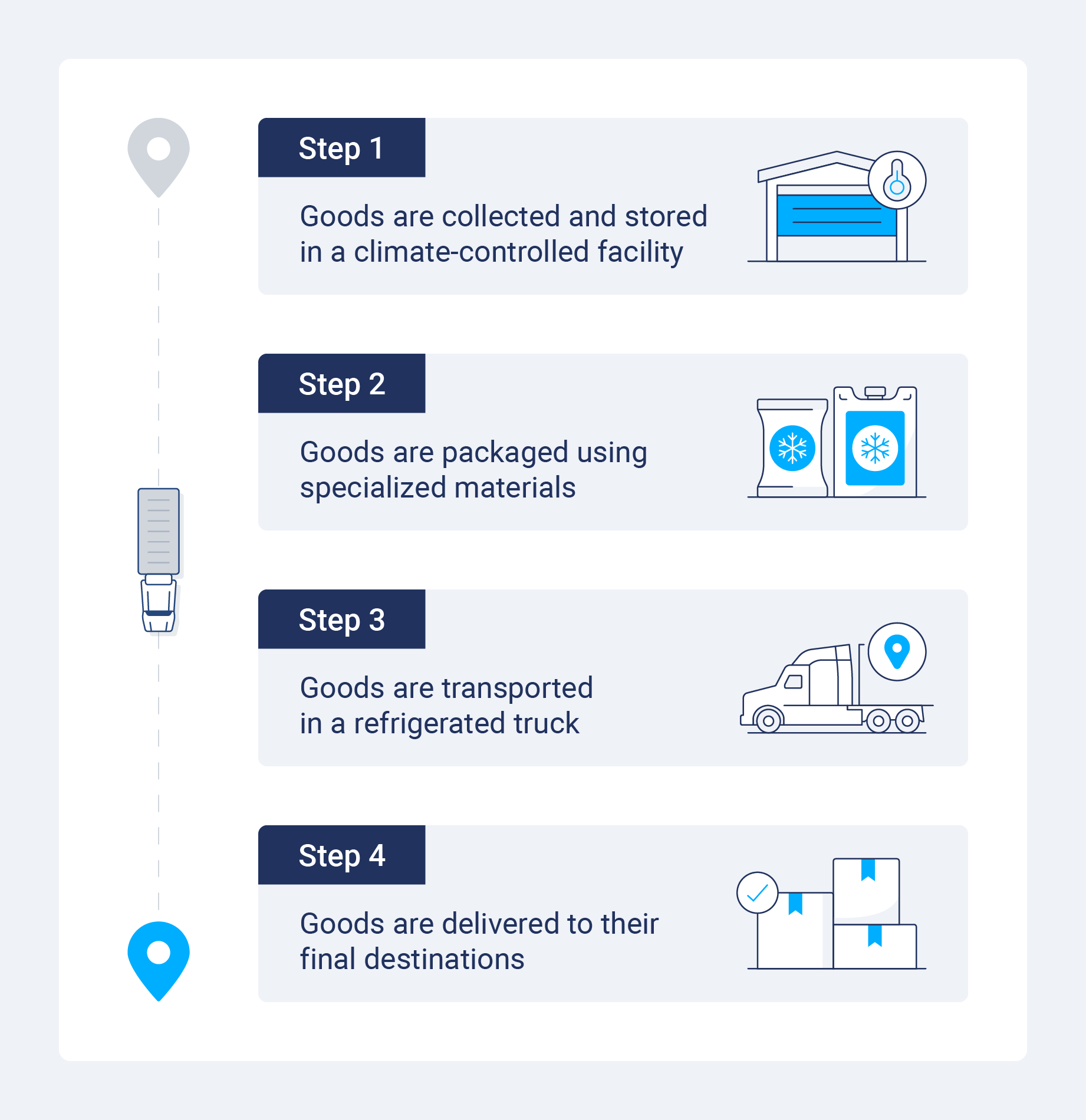
Cold chain logistics comprises several critical components that work seamlessly to preserve temperature-sensitive products throughout the entire supply chain. Each component — from specialised storage facilities to advanced monitoring systems — helps maintain the integrity, safety and compliance of perishable goods.
Storage
Storage is the first step in the cold chain, where products undergo conditioning in temperature-controlled environments. Dedicated refrigerated warehouses and cold rooms keep products at specified temperatures to maintain freshness and prevent spoilage immediately after production.
This foundational step ensures that all items retain quality before you further process or ship them.
Packaging
Cold chain packaging uses specialised materials and solutions to maintain consistent temperatures during transportation.
Insulated boxes, gel packs, dry ice and phase change materials are examples of materials that create protective barriers against heat and cold fluctuations. These solutions stabilise the product’s temperature and safeguard against physical damage.
Temperature-controlled transportation
Cold chain transportation, or cold chain shipping, relies on vehicles and containers engineered to maintain precise temperature conditions.
You can use refrigerated trucks, railcars and specialised shipping containers (reefers) for transportation. These vehicles have integrated refrigeration systems that actively control the internal environment. Our guide to food transportation consistently highlights the importance of reliable refrigeration during transit. Even small temperature changes can lead to spoilage or contamination, especially in perishable foods. Specialised shipping ensures the products remain safe and effective from origin to destination.
Monitoring and analytics
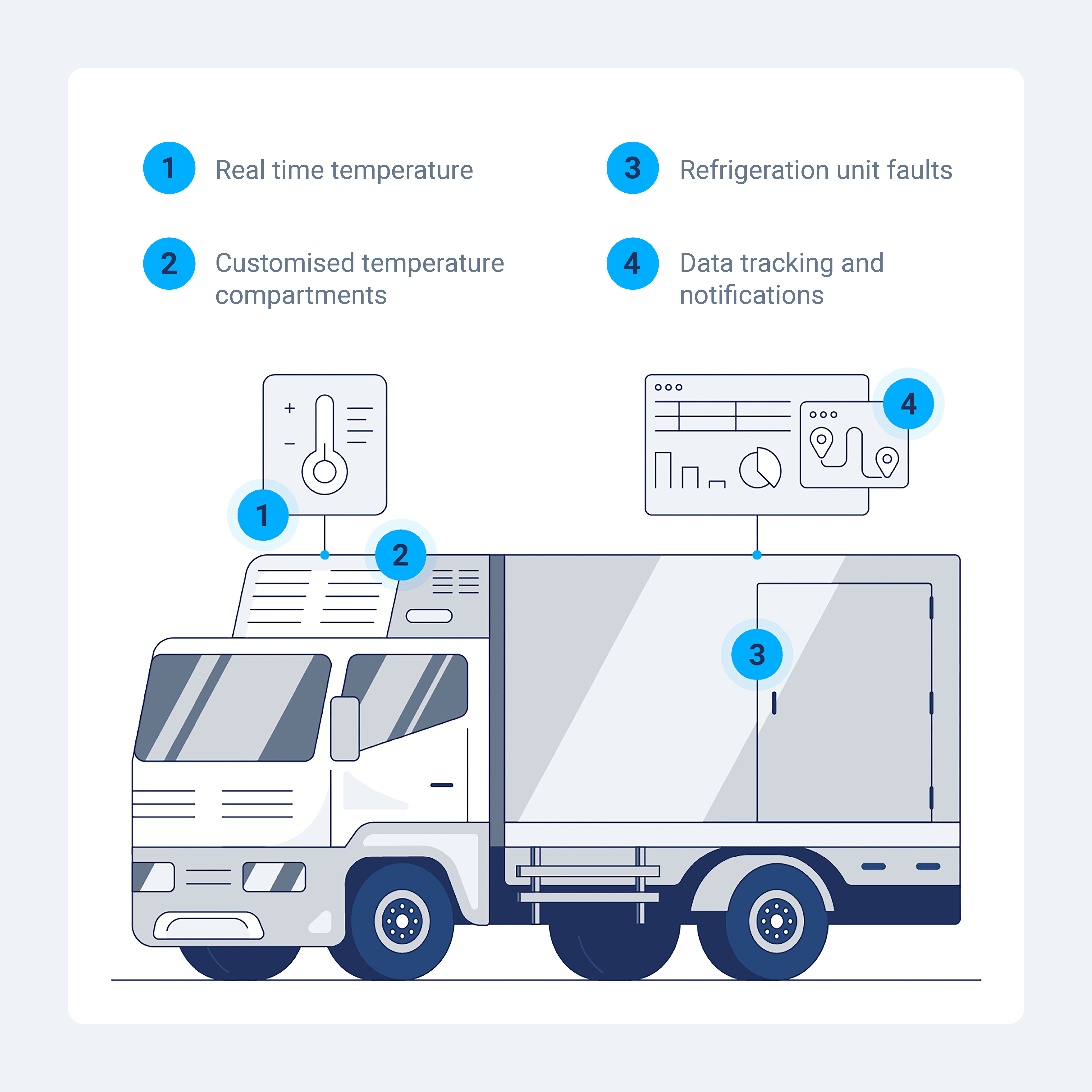
Effective cold chain trucking continuously monitors temperature levels leveraging the temperature sensors of the refrigeration units, the setpoint of each zone and any hardware faults of the units. These real-time monitoring systems provide actionable insights and alerts, enabling quick interventions when deviations occur.
Comprehensive analytics also help maintain product integrity and support data-driven decisions to optimise storage and transportation conditions throughout the cold supply chain.
Compliance and regulations
You must follow robust documentation and quality control measures to protect product efficacy and consumer safety. Adherence to strict industry regulations and guidelines ensures that every aspect of the process complies with health and safety standards. Our solution will help the customer to fulfil their compliance regulations by providing all the necessary data to fulfil these requirements.
Some common nationwide guidelines include:
- Storing, handling and administering vaccines
- TGA and FSANZ requirements
- Hazard Analysis and Critical Control Points (HACCP) for food safety
4 key challenges in cold chain logistics
Maintaining an end-to-end cold chain for temperature-sensitive goods presents several challenges that can disrupt the overall cold chain distribution process.
Choosing a solution specific to your needs can solve most problems. For instance, if you transport only food items, a food and beverage fleet management solution can be highly beneficial.
That said, you must address four major challenges to preserve product quality and ensure consumer safety.
1. Regulatory compliance
Accurate documentation and thorough reporting are essential in cold chain logistics management. Strict regulatory guidelines require detailed records at every stage to prove that products have consistently been maintained within the specified temperature ranges.
Inaccurate records might result in compliance issues, leading to recalls or penalties. Meticulous documentation also helps verify that products, especially perishable foods and pharmaceuticals, meet both domestic and international standards.
2. Weather conditions
Extreme weather conditions are a major challenge in end-to-end cold chain management. Sudden temperature fluctuations caused by heat waves, cold snaps or other climatic events can disrupt the delicate balance required for maintaining safe product temperatures.
These weather-induced variations can lead to temperature excursions, compromising product safety and quality. Your cold chain logistics management systems must be robust enough to counteract external conditions through enhanced insulation and reliable refrigeration technology.
3. Lack of visibility
You need real-time visibility in cold chain distribution to promptly detect and address temperature deviations. Even minor temperature anomalies can go unnoticed without immediate alerts and notifications, increasing the risk of product spoilage.
Deploying technologies that offer continuous tracking and instant communication for effective cold chain logistics management can ensure swift corrective actions to maintain product quality.
4. Equipment failure
Equipment failure poses significant risks in cold chain logistics. Even brief disruptions can lead to temperature loss and product compromise. For instance, the failure of refrigeration units in trucks, railcars or storage facilities can delay deliveries and lead to a breakdown in the end-to-end cold chain.
Such unexpected events endanger product safety and can result in substantial financial losses due to waste, increased maintenance costs and potential claims from customers.
Cold chain logistics tips and best practices
Here are some tips to mitigate cold chain trucking risks, optimise operations and ensure end-to-end product safety throughout the cold chain distribution process:
- Invest in temperature monitoring: Deploy a remote monitoring system to continuously track temperature and humidity.
- Optimise transportation routes: Analyse route options using advanced analytics and mapping tools to select paths that minimise exposure to adverse weather conditions and reduce transit times.
- Maintain temperature-controlled vehicles: Regularly inspect, maintain and upgrade refrigerated trucks, railcars and shipping containers to meet performance standards.
- Implement packaging solutions: To further protect goods during transit, utilise specialised cold chain packaging materials, such as insulated boxes, gel packs, dry ice and phase change materials.
- Establish clear documentation: Maintain comprehensive records, including temperature logs, maintenance reports and compliance documentation, at every stage of the supply chain.
- Combine real time solutions with predictive maintenance: Flag refrigeration unit faults in real time, while using vehicle historical data and predictive analytics to anticipate vehicle failures before they occur.
- Enhance staff training and communication: The Australian government has invested $45 million into the Heavy Vehicle Safety Initiative since 2016, with an additional $4.2 million from industry — and for good reason. Regular training sessions can reduce human error and boost employee safety.
The benefits of using fleet management software
Fleet management software tailored for cold chain freight offers a powerful way to optimise operations, reduce fleet management costs and ensure product integrity throughout the entire distribution process.
These systems integrate real-time monitoring, intelligent route planning and automated tools to help you deliver products safely while boosting overall efficiency and customer satisfaction.
Here are some key benefits of using a fleet management solution:
- Reduced product spoilage: Advanced systems continuously monitor temperature and other critical factors, enabling immediate corrective action when issues arise.
- Increased efficiency: Automated route optimisation and real-time vehicle tracking help reduce transit times and fuel consumption, leading to lower operational expenses.
- Compliance support: Geotab's solutions automatically logs temperature data, maintenance records and other key metrics to support stringent regulatory reporting.
- Improved customer experience: Fleet management software significantly enhances customer satisfaction by reducing delays, minimising product spoilage and ensuring the consistent delivery of high-quality goods.
When choosing a fleet management solution, always prioritise the one that caters to your industry and needs. For instance, if your business mostly transports food and beverage, choose the appropriate industry solution..
Improve cold chain logistics with Geotab
Effective cold chain logistics is a task, but a heavy transport and logistics fleet management solution can simplify the process.
Geotab offers a comprehensive solution for real-time temperature monitoring, ensuring temperature-sensitive goods stay within specified ranges throughout transportation.
You’ll have access to live data on cargo temperatures, refrigeration unit status and refrigeration unit faults, enabling you to take immediate corrective actions if deviations occur.
The Geotab Team write about company news.
Related posts

Heavy Vehicle Fuel Consumption in Australia: 2026 Fleet Efficiency Guide
March 27, 2026
2 minute read

.jpg)

AI dash cams vs. traditional: Which delivers better fleet safety?
March 5, 2026
5 minute read
.jpg)
Complete Guide: How to reduce your fleet operational costs
March 5, 2026
4 minute read