How does fleet management software help reduce costs and improve compliance in Australia?
Australian fleet managers are under pressure to improve safety, control costs, meet customer expectations and maintain compliance. No single system can do all of that alone, but connected together, GPS tracking, video telematics and asset data can.

By Geotab Team
Oct 13, 2026
Key Insights
- 72% of Australian fleets now use GPS tracking, but the fleets seeing the strongest results are the ones connecting it with other data sources.
- Fleets using a modern fleet management platform report 57% improved productivity and 54% improved compliance.
- Video telematics is reducing false insurance claims by 61%, one of the clearest signs that connected data pays off.
Connected fleet technologies are helping organisations stay safe, control costs and meet compliance demands. However, as adoption becomes more widespread, the competitive advantage is no longer collecting vehicle data, it's turning that data into better operational decisions.
The organisations seeing the strongest results aren't collecting more data than everyone else, they're connecting it through a modern platform, which enables them to catch problems earlier and act on them faster.
What connected fleet technologies are Australian fleets using in 2026?
Connected fleet technologies are now a standard part of fleet operations across Australia. According to the Geotab Connected Fleets in Australia Report 2026, 72% of Australian fleets use GPS tracking, while adoption of fleet management platforms sits at 64% for small fleets and 74% for both mid-sized and enterprise organisations.
Beyond GPS, many organisations are expanding their connected technology ecosystem. More than half now use asset or trailer tracking (54%) and video telematics (53%), while 44% have adopted field service management solutions to support scheduling and dispatch.
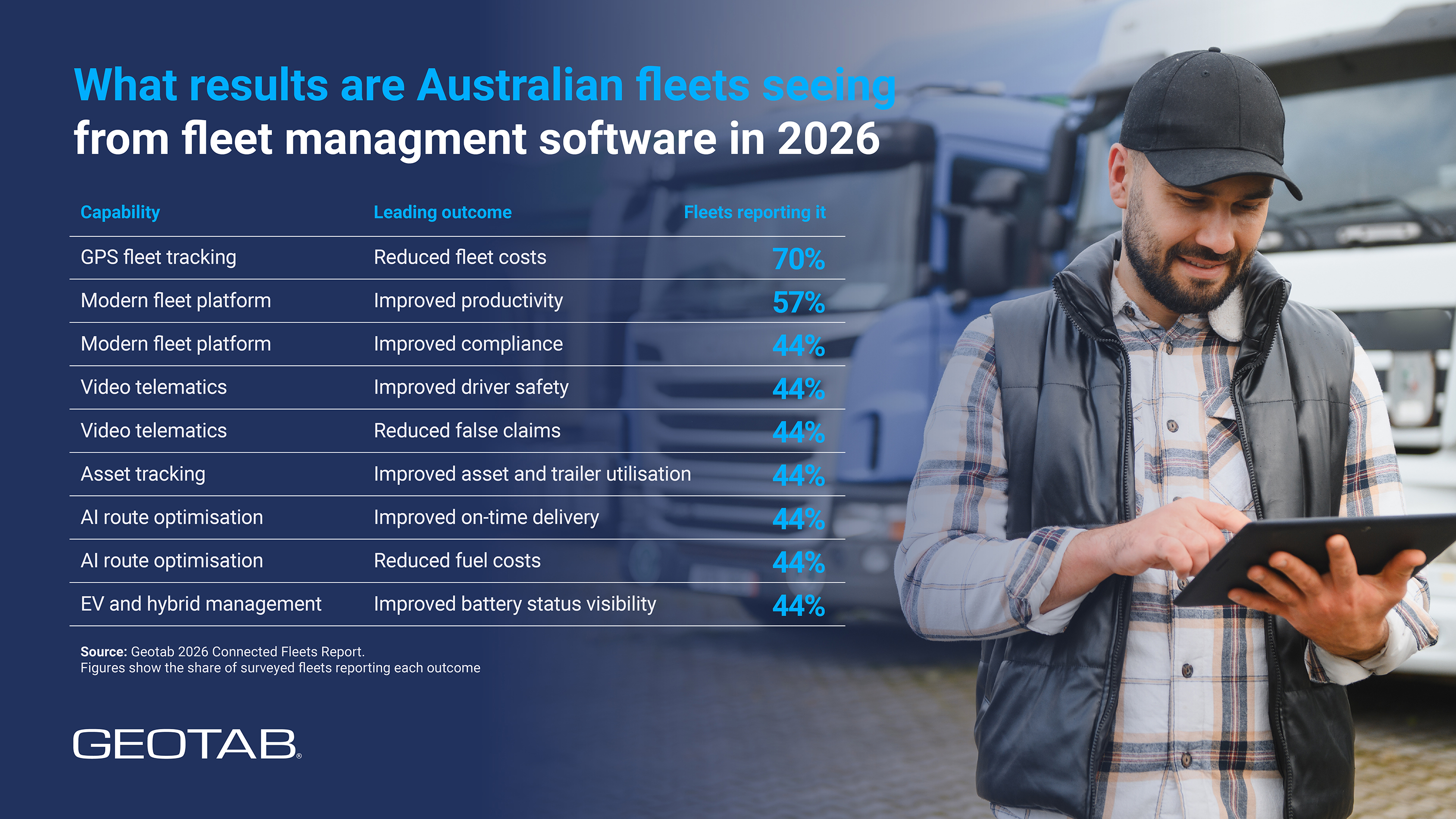
Each of these technologies delivers benefits. Fleets using AI-powered route optimisation report a 69% improvement in on-time delivery. Video telematics delivers an even sharper result, with 61% of fleets reporting a reduction in false insurance claims, a stat that speaks directly to the cost and liability exposure every fleet manager is trying to manage down.
Brought together, these technologies are even more powerful. They give organisations visibility across vehicles, drivers and assets that no single system provides on its own.
How does fleet management software turn vehicle data into better decisions?
Consider a vehicle that arrives late to a customer site. GPS confirms the delay but not the cause. But route information, driver activity and video telematics can show whether the hold-up was traffic, a delay at the customer site or something else. Armed with this information, a fleet manager can find solutions.
This ability to connect data is helping organisations improve performance across multiple areas of their business. Among fleets using a modern fleet management platform, 57% reported improved productivity, 54% improved compliance, 47% improved customer service and 44% reduced fuel consumption.
How can fleet management software address complex problems?
Australian fleet managers continue to face a range of operational pressures. Driver fatigue and safety (67%), customer expectations (64%), fuel costs (60%), scheduling inefficiencies (59%) and labour costs (59%) remain among the most significant challenges identified in the research.
These challenges rarely have a single cause.
Improving safety may require combining driver behaviour data with video telematics and vehicle information. Managing fuel costs depends on understanding route efficiency, idling and driving behaviour. Delivering accurate ETAs relies on real-time vehicle location, scheduling information and operational visibility.
When these data sources work together, fleet managers are better equipped to identify trends, respond to issues earlier and make more informed operational decisions.
What do high-performing Australian fleets do differently?
The research suggests that organisations achieving the strongest operational outcomes have moved beyond using connected technologies in isolation. Instead, they're using operational data to support decisions across productivity, compliance, safety and asset management.
Rather than relying on separate systems for different parts of the business, these organisations are connecting information from vehicles, drivers and assets to build a more complete view of fleet performance. This helps them respond more quickly to operational issues, improve efficiency and identify opportunities for continuous improvement.
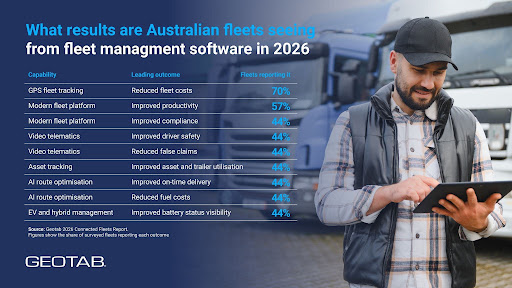
What results are Australian fleets seeing from fleet management software in 2026?
Why does Geotab's fleet management platform work better than single-purpose tools?
Connected technologies have become a standard part of fleet management for many Australian organisations. The next step is making better use of the data they already collect.
Rather than viewing GPS tracking, video telematics and asset management as separate systems, leading fleets are bringing these insights together to improve decision-making across their operations. The result is greater visibility, stronger operational performance and a more proactive approach to managing safety, compliance and efficiency.
Download the Geotab Report 2026: Connected Fleets in Australia to see where your fleet stands [Download the full report]
The Geotab Team write about company news.
Related posts

.jpg)
How Small Businesses Use Telematics to Optimise Operational Expenditures
October 13, 2026
2 minute read
How video telematics is improving safety and reducing risk for Australian fleets
October 8, 2026
2 minute read
.jpeg)
Beyond Van Tracking: Turning Fleet Data into Bottom-Line Growth
October 6, 2026
3 minute read
HVNL compliance checklist: 4 areas fleet operators should review in 2026
September 10, 2026
4 minute read