Building a safety culture for fleet success
Building a strong safety culture protects drivers and reduces operational costs by combining real-time coaching with proactive vehicle maintenance.

By Geotab Team
Mar 5, 2026
Key Insights
Key insights
Drivers are safer on the road: thanks to coaching, monitoring, and real-time alerts.
Vehicles stay roadworthy: with regular maintenance reminders and digital inspections.
Businesses reduce risk and costs: through fewer accidents, better compliance, and improved efficiency.
Building a strong safety culture is essential for businesses that operate vehicles. It protects drivers, reduces accidents, lowers costs, and ensures your fleet runs efficiently. Using a modern fleet management solution makes creating a safer workplace and safer vehicles simple and effective.
For businesses that rely on vehicles, a strong safety culture isn’t just “nice to have” it’s a measurable business advantage. A safety-first mindset protects your people, decreases operational risk, reduces costs, and increases customer trust. But for smaller teams juggling limited time and resources, building that culture can feel overwhelming.
A modern fleet management solution makes the process achievable, consistent, and far more effective.
Why does a culture of safety matter to fleets
Creating a safe workplace is paramount and mandatory for any business. Safe drivers means protecting what matters most in your business: your team.
In this sense, research shows that “promoting safety culture is a benefit, a strategic investment, not an additional cost, and concludes that safety not only protects a company’s assets but also improves its overall performance”(1).
Additionally, it also confirms “that safety culture improves safety performance since it significantly reduces the number of accidents at work,” (2) because prevention is one of the best ways to mitigate the risks of accidents.
A meaningful safety culture delivers real and measurable benefits:
- Fewer accidents and injuries: This reduces staff downtime, protects drivers’ wellbeing, and ensures your business can continue operating without costly disruptions.
- Lower insurance costs and reduced liability: When insurers see a safer driving record, they often reward businesses with better premiums, reducing long-term operational expenses.
- Longer vehicle lifespan and fewer breakdowns: Safe driving behaviours and proper maintenance extend the life of your vehicles, helping you avoid expensive, unplanned repairs.
- Improved driver morale and retention: When drivers feel safe, supported, and valued, they are more motivated to stay with the company long-term, lowering recruitment costs.
- Better customer confidence and brand reputation: A visibly safe fleet reassures clients that your business is reliable, professional, and committed to high service standards.
How fleet management solutions support a safety-first culture
1. Prevent incidents before they happen
Fleet management systems track real-time behaviours such as speeding, harsh braking, harsh acceleration, and sharp cornering which is really helpful to take action on these aggressive drive behaviour.
As an example, “speed is a factor in about 30% of fatal crashes nationwide. Even minor speeding, just 5 km/h over the limit, doubles the risk of an accident” (3). In this sense, “speeding is never safe. Speed increases the risk of having a crash, as well as the severity of the crash” (4).
So, it is the responsibility of the employer to tackle this driver behaviour and promote a culture of safety across the team to promote a safe drivers workplace. These are some ways that can help improve driver safety:
- Proactive driver behaviour insights highlight risks early: This allows managers to intervene before unsafe habits lead to accidents, keeping drivers protected and vehicles on the road.
- Real-time alerts help drivers correct issues instantly: On-the-spot feedback prevents minor mistakes from turning into serious incidents, reducing stress and building safer habits.
- Visibility into risky hotspots and routes strengthens planning: Understanding where incidents occur supports better route decisions, lowering exposure to hazards.
2. Keep vehicles roadworthy and compliant
One of the core pillars of a safety culture for fleet-reliant businesses is to develop a robust vehicle maintenance program that combines preventive and predictive maintenance.
In fact, predictive maintenance uses real-time data to predict when a vehicle needs to be repaired. Yet, people often misunderstand the process. Predictive maintenance is so much more than using past work order history to make assumptions about the future. It’s a complementary approach to preventive maintenance that helps fleets avoid costs between cycles.
According to research, “leveraging this data for predictive maintenance can significantly reduce unplanned failures, enhance safety, and extend vehicle lifespan” (5). Optimal vehicle condition is crucial for ensuring driver safety.
Fleet management solutions automate key safety processes like maintenance reminders and digital inspections:
- Scheduled maintenance reminders prevent avoidable breakdowns:This keeps vehicles reliable, reduces repair costs, and ensures drivers never get stranded on the roadside.
- Digital vehicle checks create consistent daily safety routines: Drivers can quickly report defects from their phone, ensuring issues are caught early before they pose danger.
- Automated defect reporting keeps everyone informed: The workshop, managers, and drivers all see the same information, accelerating repairs and preventing safety gaps.
- Real-time mechanical alerts protect drivers from hidden risks: Early warnings about engine faults, tyre pressure, or critical failures help avoid dangerous breakdowns or costly damage.
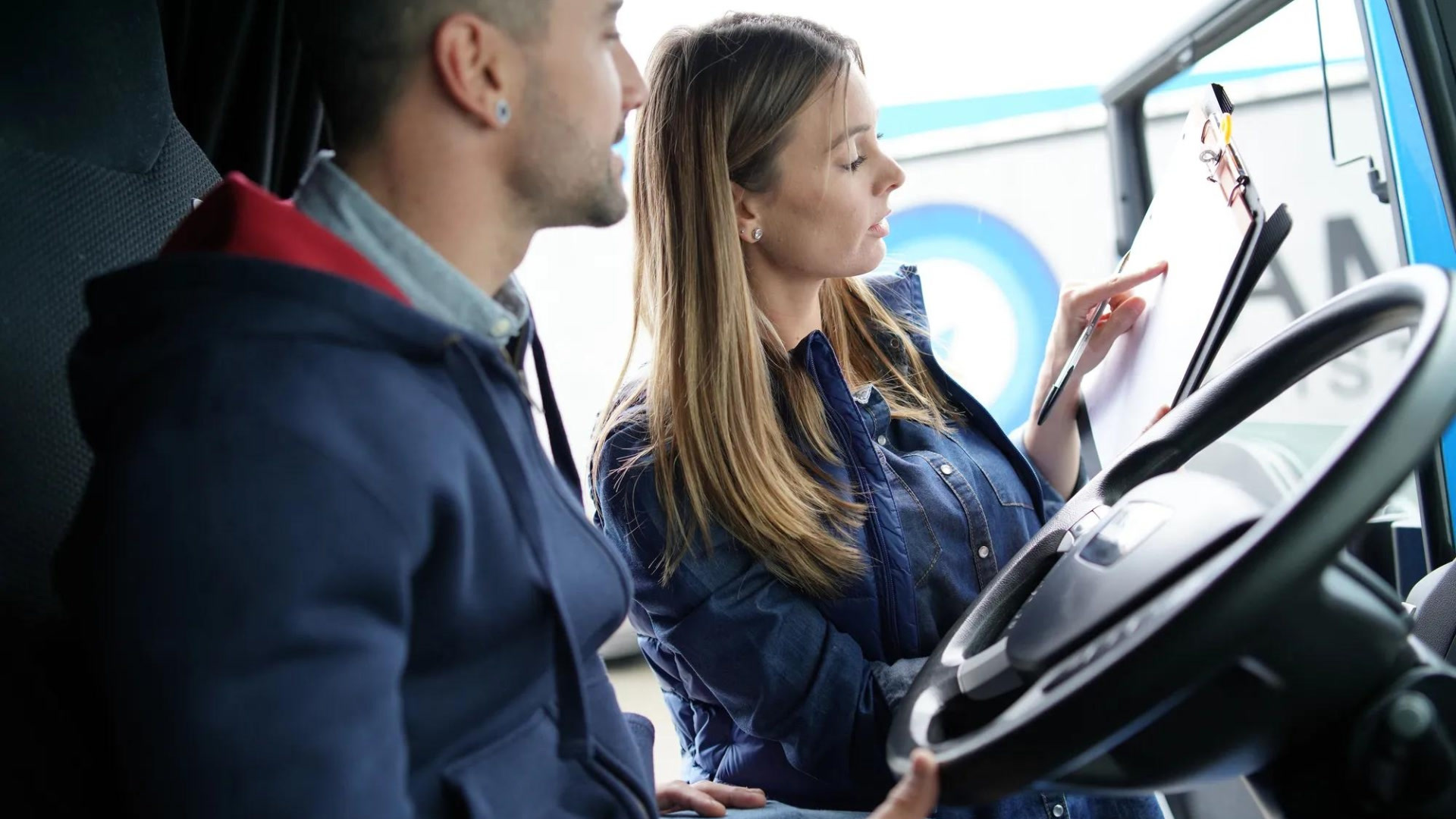
3. Empower drivers through coaching and support
Coaching is a long-term commitment to build a successful safety culture. Driver coaching “positively influences driving style and drivers’ broader attitudes toward driving safety and organisational culture”(6).
In this sense, effective coaching is essential “for driver education not only because it accelerates immediate skill acquisition but, more importantly, because it cultivates long-term behavioral change, deeper personal accountability, and sustained positive attitudes toward driving safety” (7).
A supportive culture builds trust and encourages long-term safety habits:
- Objective feedback helps drivers understand where to improve: This removes guesswork and creates a fair, transparent coaching environment grounded in data rather than opinions.
- Driver safety scorecard reward safe behaviour: Recognising positive performance boosts motivation and makes safety feel like a shared achievement.
- Trip footage and telematics insights support personalised coaching:
Real examples help drivers learn faster, apply better techniques, and grow their confidence on the road. - Supportive coaching strengthens driver-manager relationships: Drivers feel valued rather than monitored, which increases engagement and reduces turnover.
4. Reduce risk and strengthen insurance position
Companies that proactively address fleet risks clearly demonstrate to insurers their dedication to safety and claims reduction. This proven commitment serves as a key factor in negotiating lower insurance premiums.
Safety-focused fleets can drastically lower financial risk:
- Lower collision frequency helps reduce insurance premiums: Safer fleets cost insurers less, allowing businesses to negotiate improved pricing and avoid large annual increases.
- Accurate incident data speeds up claims resolution: Clear trip data and timestamps reduce disputes, ensuring drivers are protected and claims are settled faster.
- Safety records help demonstrate compliance: Insurers and regulators view data-backed safety programs more favourably, making audits smoother and less stressful.
- Reduced business risk supports long-term financial stability: Fewer accidents mean fewer disruptions, protecting revenue and improving overall business resilience.
5. Build trust and accountability across your team
To create a culture of safety accountability, companies must engage drivers as active participants rather than just rule-followers. This is achieved through clear and consistent communication of safety expectations, coupled with a commitment to providing regular, high-quality training and the necessary tools.
A fleet management solution creates transparency across your organisation and can help build trust and accountability:
- Shared data makes safety everyone’s responsibility: When all stakeholders see the same insights, safety becomes a collaborative effort rather than a top-down demand.
- Consistent reporting builds a culture of honesty and improvement: Drivers feel comfortable reporting issues because they know the system is fair and fact-based.
- Clear communication reduces misunderstandings: Fleet data removes ambiguity, helping managers give precise guidance and drivers feel supported.
- Accountability boosts professionalism across the fleet: When everyone understands the standards, their performance improves and the business delivers safer service.
6. Strengthen safety culture with AI dash cams and video telematics
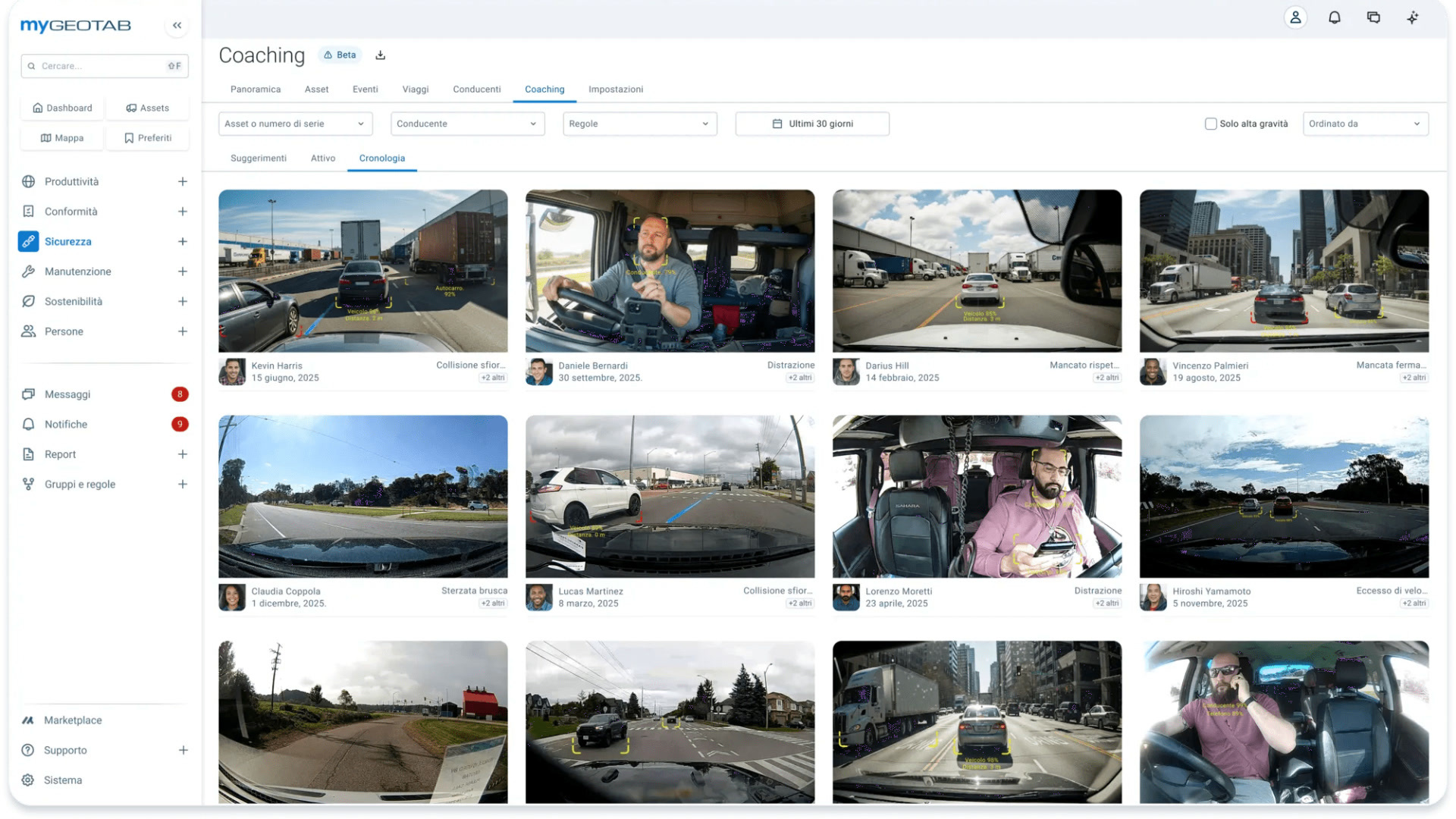
AI dash cams and video telematics have become one of the most powerful tools for elevating safety culture in modern fleets. Instead of reacting to incidents after they happen, organisations can proactively identify risk, coach drivers in real time, and build a stronger sense of shared responsibility.
Integrating AI video telematics into your fleet management strategy reinforces a culture where transparency, fairness, and continuous improvement are encouraged not feared.
An AI-powered dash cam solution enhances trust, collaboration, and accountability across your fleet:
- Real-time video insights create immediate awareness: AI dash cams detect risky behaviours like distracted driving, tailgating, or mobile phone use, in real time, and alert drivers instantly. This promotes self-correction, empowering them to take responsibility before a risky action escalates into an incident.
- Video evidence ensures fairness and protects drivers: Video telematics provides objective, context-rich data. This builds trust by eliminating ambiguity during incident investigations and shielding responsible drivers from false claims. A culture of fairness encourages drivers to fully support dash cam programs.
- Continuous coaching improves long-term performance: AI dash cam analytics highlight behavioural patterns, enabling personalised and consistent coaching. When drivers see coaching as supportive rather than punitive, they engage more openly and aim for continuous improvement.
- Positive reinforcement boosts morale and professional pride: With accurate driver scoring and clear benchmarks, managers can celebrate safe performance. Recognition programs—powered by video telematics insights—motivate drivers to maintain high safety standards.
- Enhanced visibility strengthens safety leadership: Fleet managers gain a clear understanding of behaviours, trends, and emerging risks. This visibility helps them lead with confidence and make data-driven decisions that continuously improve the organisation’s safety culture.
Practical Steps to Build a Safety Culture in Your Fleet
- Start with clear, simple safety policies
Clear policies provide predictable expectations, helping drivers stay confident and reducing the chance of misunderstandings that lead to unsafe choices. - Use data to drive real improvements
Data shows exactly where risks exist, allowing managers to focus on the most impactful improvements instead of guessing. - Train and coach regularly
Regular training reinforces safe habits, increases driver awareness, and helps new team members quickly adopt best practices. - Involve drivers in the process
When drivers contribute to safety goals, they feel ownership and are more likely to follow the procedures they helped shape. - Choose AI-powered dash cams and advanced video telematics
Investing in AI dash cams provides real-time insights into driver behavior, risky events, and near-misses. Video telematics not only captures incidents but also analyzes patterns to prevent future accidents. This technology helps enforce safety policies, supports driver coaching, and strengthens overall fleet accountability. - Keep vehicles in top condition
A well-maintained vehicle is safer, more reliable, and less expensive to operate, ensuring minimal disruption to your business. - Review and celebrate successes
Recognising improvements keeps the momentum going and helps build pride in maintaining a safe, professional fleet.
The real benefit: safety culture drives business success
A strong safety culture protects people, reduces costs, enhances efficiency and builds a resilient fleet. By combining clear leadership, engaged drivers, and a smart fleet management solution, businesses create safer vehicles, safer journeys, and safer workplaces all of which lead to long-term success.
Sources Australia:
(1-2)https://www.sciencedirect.com/science/article/pii/S092575352300351X
(4)https://www.transport.nsw.gov.au/roadsafety/topics-tips/speeding#_Speeding_
(5)https://www.sciencedirect.com/science/article/pii/S2772662225000530
(6-7)https://escholarship.org/content/qt1z82z8pg/qt1z82z8pg.pdf
The Geotab Team write about company news.
Related posts
.jpg)
AI dash cams vs. traditional: Which delivers better fleet safety?
March 5, 2026
5 minute read
.jpg)
Complete Guide: How to reduce your fleet operational costs
March 5, 2026
4 minute read
%20(2).jpg)
How dash cams protect your drivers and your business: a practical guide
March 5, 2026
5 minute read

How route optimisation helps cut costs, boost efficiency and deliver better
March 5, 2026
3 minute read