Why Device-Agnostic Driver Apps Are the Next Step for Australian Heavy Transport
Australian fleet operators can reduce in-cab tablet costs by $400–$800 per unit by switching to device-agnostic driver apps. These platforms run telematics software on any approved Android device, eliminate vendor lock-in, and support EWD compliance requirements.

By Geotab Team
May 18, 2026
Key Insights
Key Insights
- Proprietary in-cab tablets can cost $800–$2,000 per unit, compared to $300–$600 for equivalent commercial-grade Android devices
- Australia's road transport sector faces a shortage of more than 26,000 qualified drivers, making retention and onboarding speed a critical operational priority
- Fleets using familiar, intuitive in-cab interfaces report up to 30% reduction in training time for new drivers
- Electronic Work Diary (EWD) adoption across Australian heavy transport is accelerating — device-agnostic platforms support the leading EWD providers without hardware changes
- Operators switching to device-agnostic platforms typically see a return on technology investment within 6–12 months through reduced hardware costs and improved driver productivity
The in-cab tablet has long been a fixture of heavy transport operations in Australia. But as hardware costs rise, driver expectations shift, and telematics software evolves faster than ever, fleet operators are asking a question that would have seemed radical five years ago: why does the device have to be locked into a single telematics ecosystem at all?
Device-agnostic driver applications — software that runs on any approved device rather than a locked proprietary tablet — are changing the economics of fleet technology. For Australian operators already managing thin margins, driver shortages, and tightening compliance obligations, the shift offers a practical path to better outcomes without starting from scratch.
The Real Cost of Locked-In Hardware
For most of the past decade, the telematics industry operated on a simple model: the software came with the device. Want the platform? Buy our tablet. Want to upgrade? Buy our new tablet. Switch providers? Start again.
For a fleet of 50 vehicles, replacing proprietary telematics tablets at $1,200 per unit represents a $60,000 hardware outlay — before installation costs, contracts, or the lost productivity during changeover. For a 150-vehicle operation, that figure approaches $180,000.
Beyond the upfront cost, proprietary hardware creates a cycle of dependency. Tablets reach end-of-life on the provider's schedule, not yours. Software updates are gated by hardware compatibility. And when a device fails in the field, replacement logistics can take drivers off-road for days.
The alternative — running the same telematics software on commercially available, approved devices — breaks this cycle entirely.
What Device-Agnostic Actually Means in Practice
Device-agnostic driver applications decouple the software from the hardware. The telematics platform — including dispatch, navigation, safety alerts, compliance tools, and driver messaging — runs on any compatible Android device approved by the fleet operator.
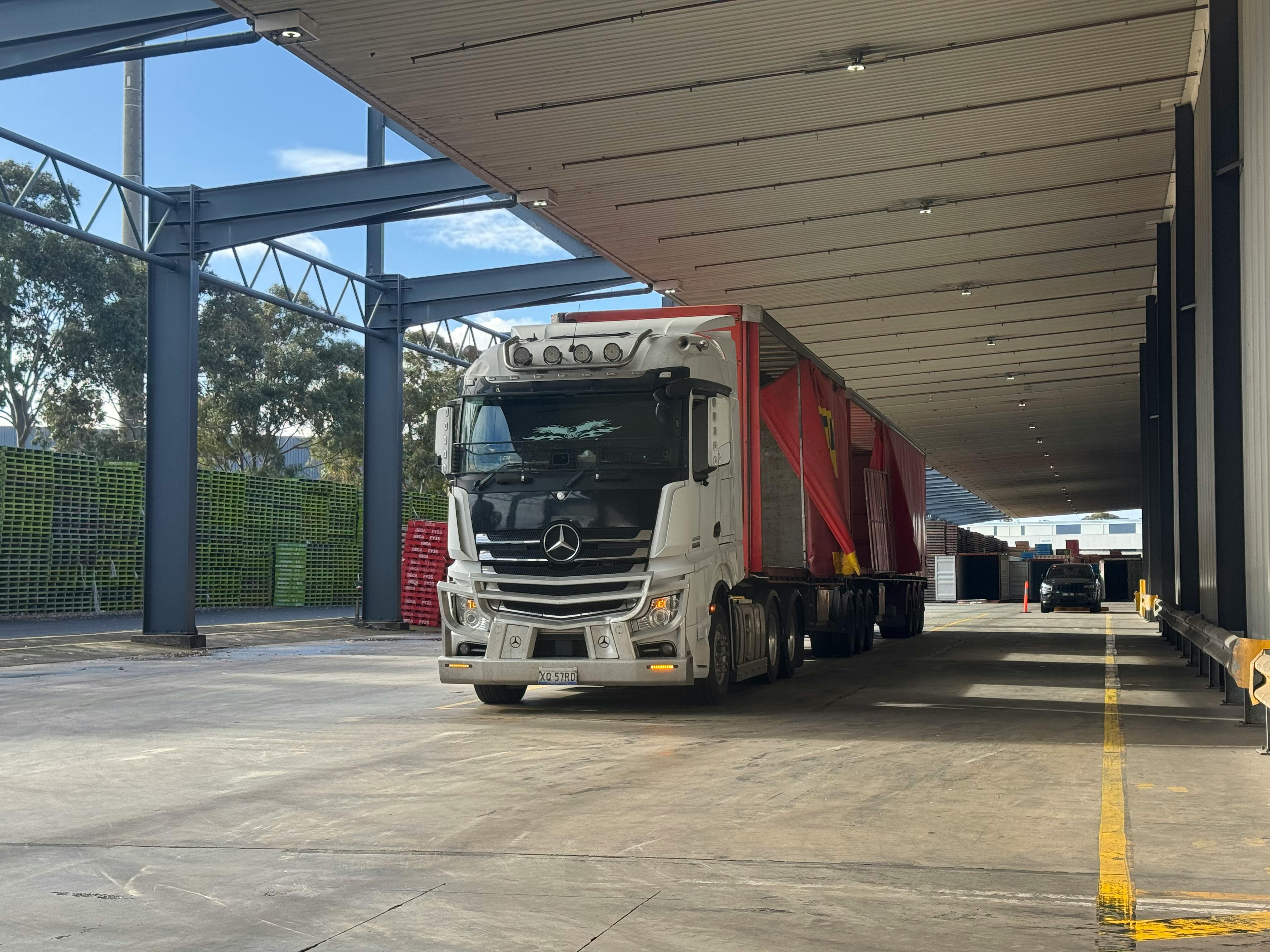
In practice, this means a B-double operator running a 60-vehicle fleet in regional Queensland can equip drivers with ruggedised Android devices already sourced through their existing IT procurement channels. The telematics software installs like any business application. Drivers log in, and the platform functions identically to what would have run on a dedicated tablet — with the added benefit that the device is one the operator chose, at a price point they negotiated, on a replacement cycle they control.
For mixed fleets — refrigerated transport in Victoria, tanker operations in Western Australia, last-mile delivery in metropolitan Sydney — this flexibility allows operations managers to select hardware that suits the specific in-cab environment rather than accepting a one-size-fits-all solution.
Driver Experience: The Factor That Affects Your Bottom Line
Australia's road transport industry is facing a structural driver shortage. Industry bodies have consistently identified a shortfall of more than 26,000 qualified heavy vehicle drivers nationally, driven by an ageing workforce, high training costs, and increasing competition for skilled labour from adjacent industries.
In this environment, driver experience is no longer a secondary concern. It is a retention and recruitment lever.
Proprietary in-cab tablets are often running interface designs that lag significantly behind the consumer and business devices drivers use in their personal lives. When the technology in the cab feels unfamiliar, clunky, or unintuitive, it creates friction — with daily tasks like job dispatch, messaging, EWD compliance logging, and safety alert acknowledgement taking longer than they should.
Device-agnostic platforms allow operators to deploy modern, well-designed driver interfaces on hardware that drivers already know how to use. The reduction in training time is measurable. Where a driver new to a proprietary tablet might need two to four weeks to reach full operational proficiency with in-cab systems, familiar device environments can reduce that window significantly — with some operators reporting up to 30% faster onboarding.
For a fleet onboarding 20 new drivers per year, that time saving translates directly into reduced training costs and faster time-to-productivity.
Compliance Without Compromise
Device-agnostic does not mean compliance-optional. For Australian heavy transport operators, the telematics platform in the cab is a compliance tool first — supporting fatigue management, Chain of Responsibility obligations, and increasingly, Electronic Work Diary requirements.
Under the Heavy Vehicle National Law (HVNL) and associated Chain of Responsibility legislation, operators must demonstrate that drivers are working within legal fatigue limits and following safe practices. The platform in the cab is part of that evidence trail.
The leading device-agnostic platforms fully support EWD integration with the major Australian providers, such as Logmaster, and align with NHVR guidance and TCA certification requirements. Changing the device does not change the compliance capability.
What it does change is the flexibility to adopt better compliance tools as the regulatory landscape evolves. With HVNL reforms continuing through 2026 and EWD adoption accelerating, fleets that are locked into proprietary hardware face the real risk of finding themselves unable to adopt new compliance solutions without a full hardware refresh.
The Business Case: What the Numbers Look Like
The economic case for device-agnostic platforms becomes clearest when modelled against real fleet scale.
Hardware savings: A 100-vehicle fleet replacing proprietary tablets ($1,200 average) with commercially sourced Android devices ($450 average) could save approximately $75,000 on a single refresh cycle. Over a three-year hardware lifecycle, that differential compounds.
Onboarding efficiency: At an average of two new drivers per month, a 30% reduction in technology onboarding time — conservatively estimated at one week saved per driver — represents 24 weeks of recouped productivity annually across the fleet.
Provider flexibility: Operators locked into proprietary hardware face switching costs that effectively trap them with underperforming providers. Device-agnostic platforms remove that barrier, creating genuine competitive pressure among telematics providers to deliver on service and capability.
Scalability: Adding vehicles to a device-agnostic fleet does not require waiting on hardware procurement from a single supplier. Compatible devices can be sourced from multiple channels, reducing lead times and allowing faster fleet expansion.
Evaluating a Device-Agnostic Platform: What to Check
Not all device-agnostic solutions deliver equally. Australian fleet operators should assess the following before committing:
| Evaluation Area | What to Ask |
|---|---|
| EWD compatibility | Does the platform integrate with Logmaster? |
| In-cab usability | Is the interface designed for glove-friendly use, high-vibration environments, and direct sunlight visibility? |
| Device certification | What devices has the provider tested and certified? What are the minimum hardware specifications? |
| Local support | Is Australian-based technical support available, and what are the SLA commitments? |
| Back-office integration | Does the platform connect with your existing scheduling, dispatch, and fuel management systems? |
| Data ownership | Who owns the data generated by drivers on the platform, and what happens to it if you change providers? |
What Geotab Delivers
Geotab's device-agnostic driver platform gives Australian fleet operators the flexibility to run powerful telematics on any approved device — without compromising on capability, compliance, or data quality.
The platform supports real-time driver behaviour monitoring, EWD integration, fatigue management alerts, job dispatch, in-cab messaging, and fuel consumption tracking — all accessible from the device that best fits your operation. MyGeotab provides the back-office visibility that lets fleet managers act on data in real time, from anywhere.
Key capabilities:
- Real-time driver behaviour coaching and safety alerts
- EWD integration with leading Australian providers
- Job dispatch and two-way driver messaging
- Fuel consumption and idling monitoring
- Compliance reporting for Chain of Responsibility
- Scalable across fleets of any size
You cannot control the cost of a telematics provider's proprietary hardware refresh cycle. But you can control whether your fleet is locked into one.
Device-agnostic driver platforms put that control back where it belongs — with the operator. And in an industry where margins are tight, drivers are scarce, and compliance obligations are growing, that flexibility is worth more than most hardware contracts will ever tell you.
Ready to explore how Geotab's device-agnostic approach can work for your fleet? Speak with a Geotab telematics specialist today.
Frequently Asked Questions
Hardware savings depend on fleet size and the cost differential between your current proprietary devices and commercially sourced alternatives. For most Australian fleets, the per-unit saving ranges from $400–$800, with additional savings from reduced replacement contracts and improved provider flexibility over time.
No. Leading device-agnostic platforms, including Geotab's, fully support EWD integration with Australian-certified providers. Compliance capability is delivered through the software, not the hardware. Changing devices does not change your compliance posture.
Compatibility depends on the platform, but most device-agnostic solutions support a broad range of Android devices meeting minimum hardware specifications. Rugged devices from manufacturers such as Mitac, available through the Geotab Marketplace, Samsung and Zebra, are commonly certified. Your telematics provider should supply a tested device list.
For most fleets, transitioning to a device-agnostic platform is significantly faster than a hardware-tied changeover. Software deployment can often be completed remotely, with driver onboarding completed in hours rather than days.
Device-agnostic platforms are particularly well-suited to large and growing fleets, where the cost advantages of hardware flexibility and the operational benefits of scalable onboarding are most significant.
The Geotab Team write about company news.
Table of contents
Related posts
.jpeg)
Beyond Van Tracking: Turning Fleet Data into Bottom-Line Growth
October 6, 2026
3 minute read

Asset tracking: Halting Australian Construction Site Theft
September 23, 2026
2 minute read
.jpeg)
Calculating Small Fleet ROI: Is the Investment Worth It?
September 22, 2026
2 minute read


The growing role of AI in fleet management: from optimisation to competitive advantage
September 15, 2026
3 minute read

HVNL compliance checklist: 4 areas fleet operators should review in 2026
September 10, 2026
4 minute read