Maximising high-value machinery management via construction asset tracking to protect your business
The Geotab 2026 report reveals asset tracking is essential for Australian construction. By leveraging digital oversight to secure remote sites and optimize crew schedules, firms significantly reduce theft, slash labor costs, and boost productivity, with 50% achieving positive ROI within one year.

By Geotab Team
Jun 17, 2026
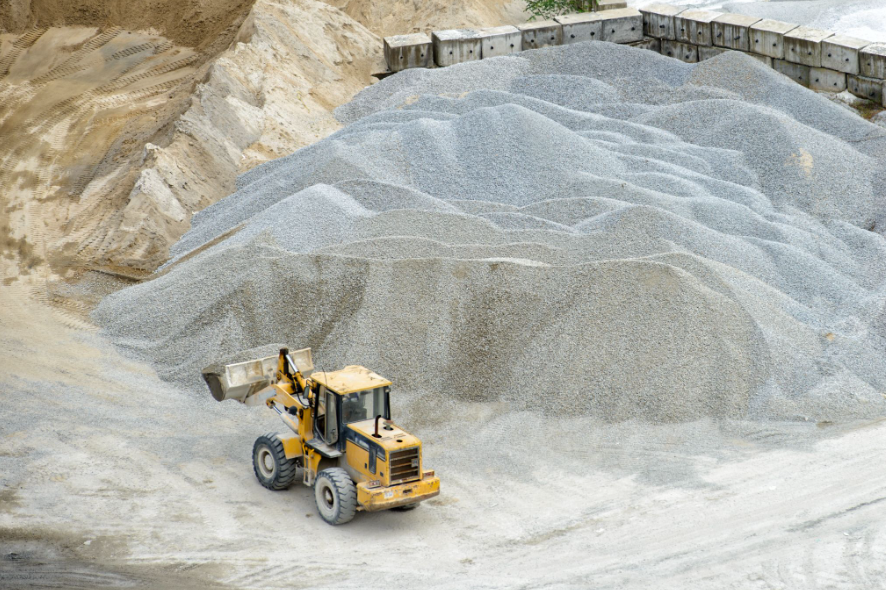
Operating in the Australian construction sector in 2026 is a high-stakes exercise in managing the "tyranny of distance." Whether it is a massive transport project in Western Sydney or a remote infrastructure build in the Northern Territory, the logistics of machinery management are fraught with operational friction. With diesel prices reaching 245.6 cents per litre (March 2026) and the economy growing above its sustainable "speed limit," the Geotab Report 2026: Connected Fleets in Australia delivers a clear message: asset tracking is the definitive shield for both project timelines and shareholder value.
For Australian construction firms, "Site Precision" isn't just a goal—it is a survival mandate in an era of high-capital costs and stringent Chain of Responsibility (CoR) obligations.
Securing Assets in the remote
Australia’s vast geography creates unique vulnerabilities. High-value machinery often sits on remote, unmonitored sites, making it a prime target for theft and unauthorised use. In 2026, the industry has turned to digital oversight to close these security gaps.
The Australian data reveals that 70% of construction firms now validate the strategic importance of asset tracking technology. The security benefits are immediate:
- Improved Safety & Security: 56% of companies reported improved safety outcomes, while 51% enhanced total asset security.
- Theft Mitigation: Implementation has resulted in a 42% reduction in theft incidents, a vital result for protecting long-term capital investments.
Stolen Vehicle Recovery: 47% of small businesses (often those hardest hit by a loss) successfully increased their recovery rate of stolen vehicles, ensuring that a single theft doesn't stall their livelihood.
Neutralising "ghost hours" and labour costs
In the Australian market, labor costs often eclipse all other line items, representing up to 35% of the total operational budget. When heavy machinery sits idle because of poor scheduling, the financial drain is compounded by these high wage costs.
Australian construction leaders are using the "Connected Fleets Pulse" to eliminate this "unbillable latency."
- Productivity surge: 60% of Australian construction firms reported a significant boost in productivity through optimized vehicle and equipment utilisation.
- Labor efficiency: By synchronising machinery arrivals with crew schedules, project managers achieved a 35% reduction in labor costs.
- Asset yield: 44% of organisations improved their asset and trailer utilisation, turning what were once dormant, "buried" assets into active revenue generators.
Compliance, ROI, and the fiduciary shield
For Australian heavy vehicle operators, the Heavy Vehicle National Law (HVNL) makes equipment oversight a legal duty. Asset tracking ensures that maintenance is proactive rather than reactive, protecting the boardroom from liability.
- Rapid ROI: Despite the high cost of acquisition (accounting for 25% of the budget), 50% of Australian construction businesses achieved a positive ROI in under 12 months.
- Maintenance mastery: Roughly 55% of the Australian market has successfully contained "break-fix" costs to just 5% of their budget by using engine diagnostics and hour-tracking to stay ahead of repairs.
- Fuel resilience: In a 245c/L diesel environment, 32% of construction firms have used tracking data to cut fuel consumption by reducing unnecessary idling on-site.
The strategic edge for 2026
In 2026, competitiveness in Australia is defined by the ability to turn technical oversight into a strategy of "preventative health" for the entire enterprise. As the gap between traditional site management and tech-first construction logistics widens, the most resilient firms are leveraging integrated intelligence to protect their margins and their assets.
By refining the "connected fleets sector pulse" of their daily operations, Australian construction leaders are ensuring that every gear turn on a remote site and every kilometer driven on a metropolitan corridor contributes directly to the bottom line. This is the roadmap to a safer, more sustainable, and infinitely more productive future for Australia’s connected fleets.
The Geotab Team write about company news.
Related posts
.jpg)
How Small Businesses Use Telematics to Optimise Operational Expenditures
October 13, 2026
2 minute read
.jpeg)
Beyond Van Tracking: Turning Fleet Data into Bottom-Line Growth
October 6, 2026
3 minute read

Asset tracking: Halting Australian Construction Site Theft
September 23, 2026
2 minute read
.jpeg)
Calculating Small Fleet ROI: Is the Investment Worth It?
September 22, 2026
2 minute read


The growing role of AI in fleet management: from optimisation to competitive advantage
September 15, 2026
3 minute read