How route optimisation helps cut costs, boost efficiency and deliver better
Learn how smarter route planning boosts productivity and sustainability in this blog.

By Geotab Team
Feb 11, 2026
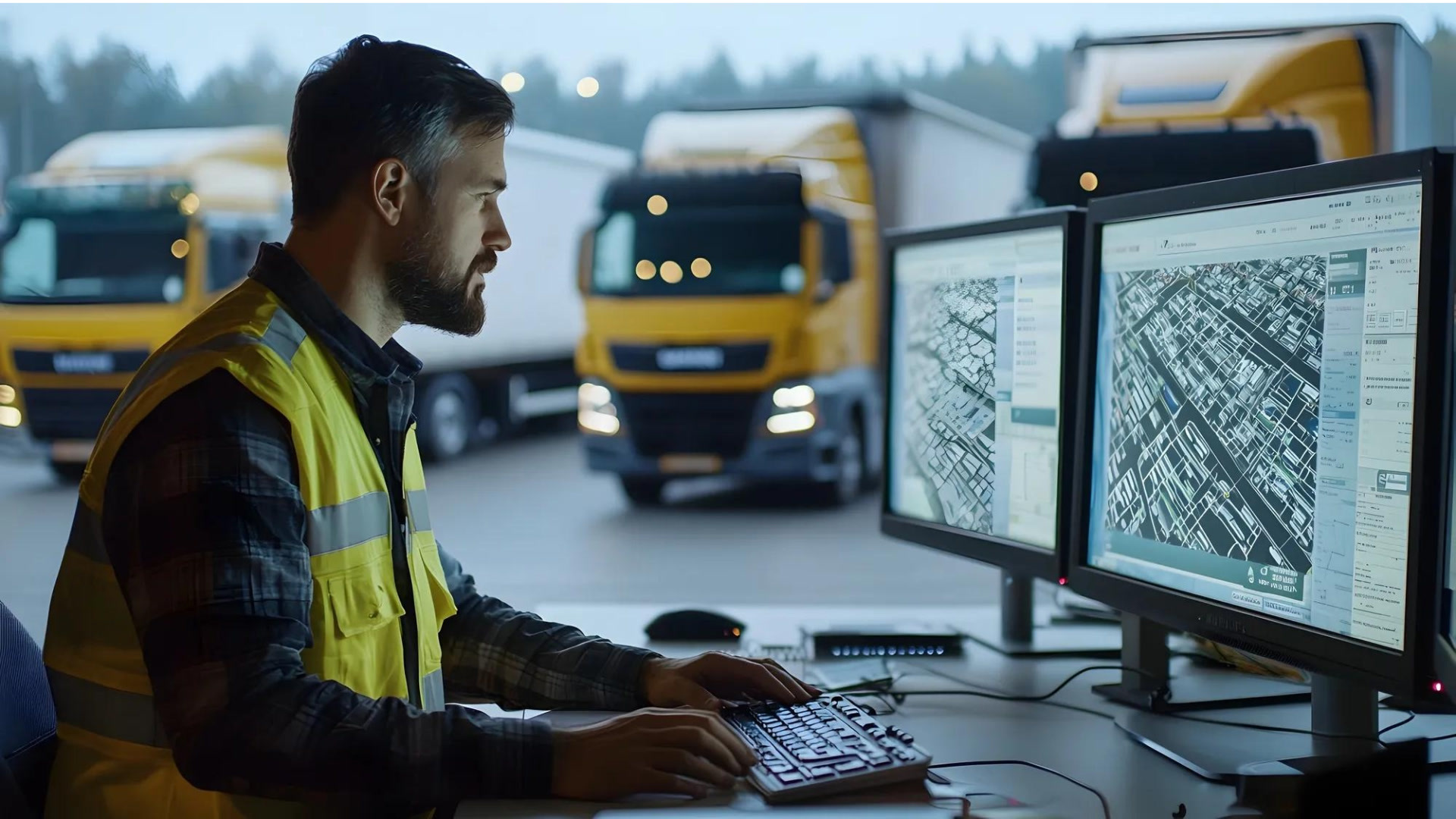
Route optimisation helps businesses reduce costs and improve delivery performance by planning smarter, more efficient routes. With rising fuel prices and increasing customer expectations, optimised routing has become essential for staying competitive. Even small efficiency gains can create significant operational savings.
Key insights
- Route optimisation cuts fuel use by reducing unnecessary miles, avoiding traffic, and improving route sequencing which ultimately helps businesses save on fuel costs.
- It boosts productivity by allowing drivers to complete more stops per day with less time wasted, improving overall fleet efficiency without adding extra vehicles.
- Smart routing strengthens last-mile delivery by providing accurate ETAs, faster drop-offs, and fewer missed appointments, leading to better customer satisfaction.
If you operate a delivery, field-service, or logistics-driven business in the UK, you already know how complex routing can get. Between rising fuel costs, traffic congestion, low-emission zones, and customer expectations for fast deliveries, running routes efficiently is no longer optional — it’s essential.
That’s exactly where route optimisation delivers enormous value.
Below you’ll find a conversational, easy-to-read breakdown of the biggest benefits:
1. Reduce fuel costs and lower operating expenses
Fuel costs have remained volatile, and for many fleets, fuel can represent up to 30% of their total operating costs. Route optimisation helps reduce this financial pressure by eliminating unnecessary miles and improving route efficiency.
How route optimisation reduces your fuel spend
- Eliminates wasted miles by calculating the smartest, shortest route sequence.
- Avoids congestion using real-time traffic data. In this sense idling “can use up to 2 litres of fuel per hour, emitting over 5 kg of CO2”.
- Reduces unnecessary detours, ensuring drivers stay on track with fewer manual adjustments.
- Optimises vehicle allocation by matching the best vehicle to each type of job or delivery.
Together, these improvements can reduce fuel consumption.
2. Boost productivity and complete more jobs per day
Managing multiple deliveries or service visits manually is inefficient and time-consuming. Route optimisation helps teams work smarter, not harder, allowing businesses to grow without adding more vehicles or staff.
How route optimisation increases productivity
- Automates planning, replacing hours of manual scheduling with optimal routes generated in seconds.
- Maximises stops per route, allowing technicians or drivers to complete more visits per day.
- Balances workloads so no driver is overloaded while another is underutilised.
Improves time management, reducing delays and creating predictable, efficient daily operations.
3. Reduce vehicle wear and tear and extend fleet lifespan
Every unnecessary mile costs money, not just in fuel but in mechanical degradation. Route optimisation helps protect your fleet and reduce costly repairs.
How it protects your vehicles
- Cuts total miles driven, lowering general wear on tyres, brakes, and engines.
- Avoids rough or restricted roads, reducing shock impact and maintenance issues.
- Supports better maintenance planning by improving route predictability.
Reduces breakdown likelihood, thanks to smoother, more consistent operations.
4. Deliver better customer service
Customer expectations have shifted dramatically: people want faster delivery windows, real-time updates, and reliably on-time arrivals. Route optimisation helps you deliver exactly that.
How it improves the customer experience
- More accurate ETAs, powered by real traffic and distance calculations.
- Fewer missed deliveries, since routes are planned to avoid delays and bottlenecks.
- Real-time notifications, giving customers visibility into arrival times or delivery progress.
Improved first-attempt success rates, reducing rescheduling and failed drop-offs.
5. Improve last-mile delivery performance
The last mile is considered as one of the most expensive, inefficient, and polluting parts of the supply chain and can account for a great deal of the total supply chain cost. Route optimisation helps businesses improve this stage without needing a larger fleet or more drivers.
How route optimisation transforms the last mile
- Clusters stop intelligently, reducing stop-to-stop travel time.
- Supports dynamic rerouting, adjusting instantly to urgent orders, traffic, or cancellations.
- Complies with European low-emission zones, avoiding fines and improving punctuality.
According to research, “route optimisation improved fuel efficiency, minimised idle time and redistributed traffic load".
6. Improve sustainability and meet emission standards
Sustainability is a requirement, not a trend. Europe’s Fit for 55 and national CO₂ reduction policies make efficient routing essential for compliance and for customer trust.
How route optimisation reduces environmental impact
- Cuts CO₂ emissions by reducing total distance and idling time.
- Supports EV fleets, selecting routes with charging availability in mind.
- Lowers fuel consumption, directly reducing emissions per vehicle.
- Enhances ESG reporting, with clearer, data-driven sustainability metrics.
By 2030, delivery vehicles may add up to five minutes to the average urban commute and account for 13% of total carbon emissions in cities”.
7. Make work easier and safer for drivers
Your drivers or field technicians are the backbone of your business. Efficient routing helps reduce stress, improve job satisfaction, and increase safety.
How route optimisation supports drivers
- Clearer navigation, reducing confusion or manual planning on the go.
- Less stress and fatigue, thanks to predictable, smooth routes.
- Avoidance of dangerous roads, improving risk prevention.
- Higher retention, because happier drivers stay longer.
Efficient routes can reduce driver stress levels by mitigating fatigue, preventing overwork, and increasing confidence in completing daily tasks
8. Gain better visibility and smarter operational control
Modern route optimisation tools offer real-time data that helps make more informed decisions. This visibility used to be available only to large enterprises — but not anymore.
What better visibility means for your business
- Live tracking and real-time updates for each vehicle.
- Performance metrics like distance, time, cost per route, and driver efficiency.
- Detailed reporting for compliance, invoicing, and audit readiness.
- Insight into bottlenecks, enabling smarter, data-backed improvements.
With clearer data comes better planning and more predictable business growth.
9. Scale your business efficiently without extra fleet costs
Route optimisation helps scale sustainably, enabling them to take on more customers and deliveries without expanding their fleet immediately.
How route optimisation helps you grow
- Increases route capacity, allowing more deliveries per day.
- Reduces administrative workload, freeing staff to focus on service quality.
- Makes geographic expansion easier, thanks to precise route modelling.
- Delays the need for additional vehicles, saving capital expenditure.
This is one of the biggest advantages of route optimisation. This means you grow profitably, not expensively.
Route optimisation is no longer an option, it’s a competitive advantage
In Europe’s fast-moving, regulation-heavy, customer-centric logistics environment, route optimisation is one of the most impactful upgrades an SMB can make. It saves fuel, boosts efficiency, extends vehicle life, improves customer satisfaction, and reduces environmental impact — all while helping businesses scale sustainably.
If you want to operate smarter, reduce costs, and improve delivery or service performance, adopting a route optimisation solution is one of the best investments you can make.
Subscribe to the Geotab Blog
The Geotab Team write about company news.
Table of contents
- Key insights
- 1. Reduce fuel costs and lower operating expenses
- 2. Boost productivity and complete more jobs per day
- 3. Reduce vehicle wear and tear and extend fleet lifespan
- 4. Deliver better customer service
- 5. Improve last-mile delivery performance
- 6. Improve sustainability and meet emission standards
- 7. Make work easier and safer for drivers
- 8. Gain better visibility and smarter operational control
- 9. Scale your business efficiently without extra fleet costs
- Route optimisation is no longer an option, it’s a competitive advantage
Subscribe to the Geotab Blog
Related posts
.jpg)
AI dash cams vs. traditional: which delivers better fleet safety?
March 10, 2026
4 minute read
Complete guide: how to reduce your fleet operational costs
March 6, 2026
4 minute read
.jpg)
How dash cams protect your drivers and your business: a practical guide
March 4, 2026
5 minute read

Official guide to the Geotab Innovation Awards – Europe
February 24, 2026
2 minute read
.jpg)
6 proven ways to reduce fleet costs and boost efficiency with GPS tracking
February 13, 2026
3 minute read