Insights via OEM data with Geotab: A Source of Competitive Advantage for Businesses.
100% of new passenger cars in Europe ship with factory-installed telematics — but most fleets aren't using the data yet.

By Geotab Team
Jun 19, 2026
Key Insights
At Connect Europe 2026, practitioners from BMW, PepsiCo, and Matrix IQ shared how OEM-native connectivity is replacing hardware-driven telematics, what the four-phase integration looks like in practice, and where the next signals (battery health, remote charge control, predictive maintenance) are taking the industry.
Every passenger car sold in Europe today rolls off the production line already connected. The telematics control unit is factory-installed, the data pipeline is live, and the signals are waiting. For most fleet operators, none of that is being used yet.
By 2025, Berg Insight projected that 100% of new passenger vehicles sold in Europe are equipped with telematics control units. At the same time, 40% of all new Geotab subscriptions in Europe are now OEM-driven — a number that was negligible a few years ago. The question the industry had been asking — whether OEM connectivity would eventually matter — has been replaced by a more immediate one: how do you capture the value before the gap becomes a competitive disadvantage?
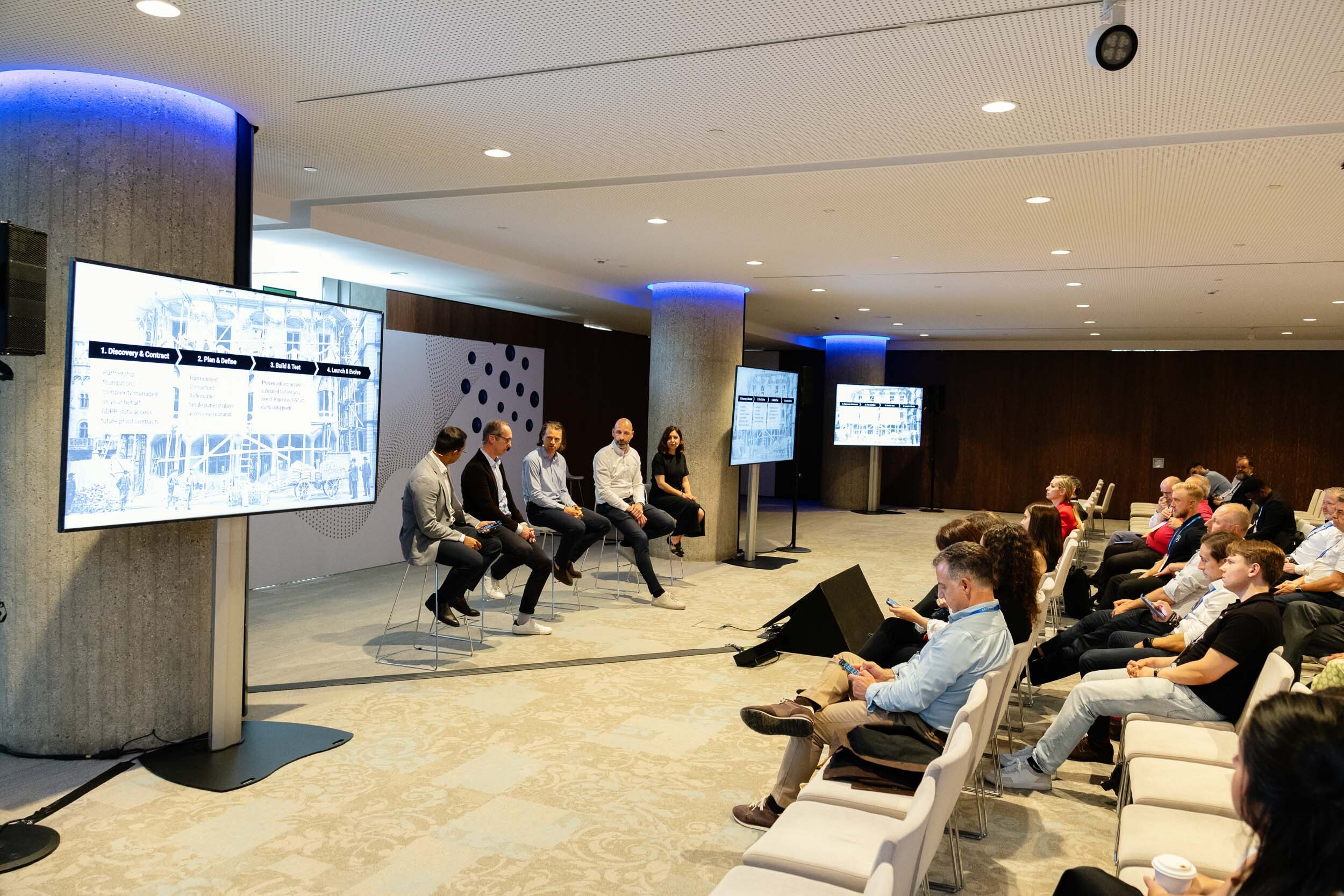
At Connect Europe 2026, Geotab’s annual EMEA conference, Arpan Mandal, Business Segment Manager OEM at Geotab, moderated a practitioner-level panel on exactly this: what it takes to move from hardware-driven telematics to factory-embedded connectivity, and what fleet operators gain — and have to manage — when they do. Joining him were Maximilian Eckes, responsible for business development at BMW for connected vehicle data; Felix Bodensteiner, Business Development Manager, OEM at Geotab; Phil Powell, Chief Revenue Officer at Matrix IQ; and Emma Iborra Tormos, SWE Fleet Sr Leader at PepsiCo.
The panel covered four phases of OEM integration, with live accounts from operators who have already moved through them.
The trigger nobody plans for
PepsiCo did not set out to rethink its telematics strategy. The trigger was electrification.
“We started to have new electric vehicles, and the way that we used to get the kilometers data was not useful because we used the fuel cards,” said Emma Iborra Tormos. The measurement model that had worked for decades — fuel cards as the proxy for consumption and distance — stopped working the moment vehicles stopped using fuel. “We realized that we were not measuring the important things for sustainability.”
The replacement had to be fast, accurate, and granular enough to feed real sustainability KPIs. OEM connectivity, Iborra explained, checked all three. “This is a fast solution. This is very accurate information.” PepsiCo started with a three-vehicle pilot, validated within three months, and now has 99% of its supported vehicle brands connected. The fleet changed the telematics technology because the fleet’s operating requirements had changed.
Four phases, one partnership
Arpan structured the session around the four phases of building an OEM integration — using Gaudí’s Casa Batlló as an analogy for what patient, structured construction produces. Two years of contract discussions, six months of sourcing, two more years of building: roughly 1.5 million visitors a year
The discovery & contracting phase is about more than contracts. For Maximilian Eckes at BMW, the value of working with Geotab became clear before a single signature: “Long before you sign a contract and before there is actual technical connectivity, for us it was important to be with Geotab because the knowledge of the use cases — this precise know-how of the requirements — is just something that is really important to us.”
The plan and defined phase is where harmonization happens. Fleet operators arrive with mixed-brand fleets. The integration has to deliver a single experience regardless of what is on the road. “You all bring to us a mixed fleet, various brands, and we want to deliver one experience,” said Felix Bodensteiner. OEM language and Geotab language have to be mapped to each other — not once, but continuously, through what BMW calls innovation forums rather than one-off workshops.
The build and test phase is where the work gets rigorous. BMW’s position is direct: “BMW is a premium manufacturer of premium cars, and we have really high standards on producing quality cars, and that counts the same for the data.” Geotab’s side of that rigor involves automated checks across six million activations — detecting if an OEM drops a data point before a fleet operator misses a compliance deadline.
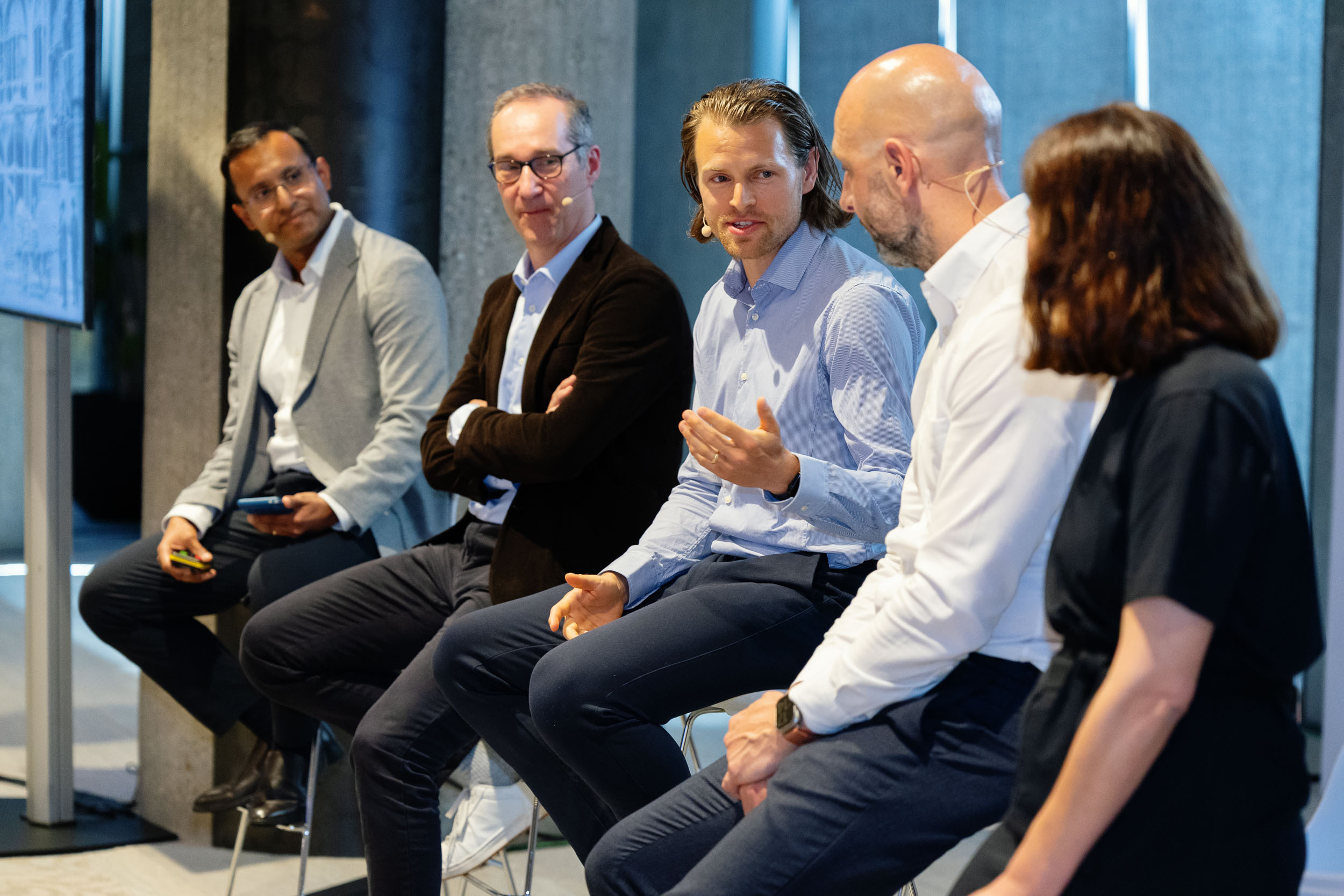
Not connecting pipes. Driving decisions.
Once the integration is live, the conversation changes. Raw signals become context.
For Matrix IQ, the highest-value use case in their current portfolio is predictive maintenance for vehicles deployed to drivers for six months to a year at a time. “If the drivers aren’t reporting defects — worn brakes, tire issues — they’ll never know until something bad happens,” said Phil Powell. The data from OEM-connected vehicles now surfaces those issues in the format of days and miles to service. “It could save lives as well as saving money.”
For PepsiCo, the value is more foundational. “If we don’t know where we are, we cannot build where we want to be,” said Ibora. The data doesn’t just measure — it makes the sustainability roadmap possible.
What comes next is already being built
The OEM signal universe is expanding. BMW will be introducing battery care data, damage detection, digital tire diagnosis, and remote charge control — the ability for fleet managers to start and stop charging remotely based on grid pricing. “He can charge when the electricity costs are low and stop charging when he’s getting up,” said Maximilian Eckes.
For Felix each new signal is both a product expansion and a negotiating position: “It helps me with my conversation with Mercedes or other OEMs to say, where’s that state of health for the battery, for example.” The benchmark moves. And so does the expected baseline.
The momentum is real and accelerating. “We see more and more signals being offered at higher frequency for OEM native connectivity,” said Felix . “It’s the perfect time to start a pilot and see where it takes us.”
The anatomy of an OEM partnership
Arpan closed the session with the frame that had opened it — not a product pitch, but a structural observation: “The anatomy of this OEM partnership is a sequence of deliberate decisions. It’s about trust, data architecture, commercial terms, testing, and rigor.”
By the time a fleet operator logs into MyGeotab and sees their vehicle data, years of partnership work are invisible behind the interface. The data needs to be there. It needs to be consistent. And it needs to help the operator drive a decision.
“The data is already in your vehicles,” said Arpan Mandal. “For the fleet customers, what you do with it is really up to you. Geotab's OEM Pilot Program offers fleet operators a structured way to test that value. Up to 20 factory-connected vehicles — no hardware to install, no commercial commitment — across eligible makes including BMW, Ford, Mercedes-Benz, Renault, Volvo, and Toyota, free for +60 days. Please reach out to oem-emea@geotab.com or visit our website to register your interest.
The momentum doesn't end here.
Join us next year in Paris, June 7–9, 2027, as we push the boundaries of fleet intelligence even further.
Subscribe to the Geotab Blog
The Geotab Team write about company news.
Table of contents
Subscribe to the Geotab Blog
Related posts

Flipping the switch on overhead: the real cost savings of fleet telematics
October 21, 2026
2 minute read
How small businesses use telematics to slash operational costs
October 19, 2026
2 minute read

The 5 most common digital tachograph penalties in EMEA (and how SMBs can avoid them)
October 9, 2026
2 minute read

Beyond van tracking: turning fleet data into bottom-line growth
October 9, 2026
3 minute read

Why the OEM versus device-level telematics debate misses the point for mixed-fleet operators
September 25, 2026
2 minute read

How small construction fleets use asset tracking to halt site theft
September 9, 2026
2 minute read