How asset tracking can support cargo security for Australian fleets
Equipment tracking and the right asset tracker give fleets the visibility required for up-to-date cargo theft prevention.

By Geotab Team
Nov 5, 2026
Key Insights
- TAPA APAC's January-August 2026 cargo crime report recorded 14 reported Australian incidents and losses of US$280,448. These reported cases are not a national estimate.
- The pattern points to physical site security and access control as practical areas for fleets to review, alongside tracking and freight verification.
When a load goes missing, fleet managers need to respond quickly to customers, insurers and their teams. Cargo theft can involve more than a break-in, so security needs to go beyond a padlock and a vehicle location on a map.
TAPA APAC's TIS Cargo Crime Statistics for January to August 2026, published on 13 September 2026, recorded 14 reported Australian incidents and losses of US$280,448. The original US-dollar figure is retained without conversion. This small sample describes reported cases in the TAPA dataset, not the total number or value of cargo thefts across Australia.
TAPA APAC's report also describes cyber-enabled cargo crime across the Asia-Pacific region, including misuse of compromised customs-system credentials. That regional evidence should not be treated as a measure of Australian fraud prevalence. For Australian operators, practical controls include verifying pickup details and reviewing unexpected asset movements.
Review physical security and freight verification together
The Australian sample in TAPA APAC's report highlights physical site security: origin facilities and intrusion each accounted for 64.3% of the 14 reported incidents, equivalent to approximately 9 cases in each category. This small sample does not establish a national trend or show a shift from physical theft to fraud.
Site security and freight verification address different risks. Access controls help manage who enters a depot or storage area. Checking driver, carrier and pickup details through trusted channels helps staff decide whether a collection is authorised. Asset tracking does not perform those identity checks.
TAPA APAC's separate regional cybercrime analysis covers multiple years and countries. It illustrates why account security matters, but does not establish how often cyber-enabled cargo theft occurs in Australia.
For Australian fleets, practical controls include confirming carrier and driver details through trusted channels, using agreed pickup codes or procedures, checking for unexpected route or location changes and ensuring staff know who to contact when something does not match the plan.
Cargo theft costs more than the value of the load
The immediate value of stolen goods is only part of the impact. A theft can also mean missed deliveries, time spent investigating, replacement freight, additional customer communications and disruption to other work.
Customer confidence can also be affected. Shippers need a clear account of what happened and what steps are being taken to reduce the chance of a repeat incident. A fleet that can provide reliable location and event information may be better placed to respond.
Equipment tracking closes the visibility gap on non-vehicle assets
Theft risk is not limited to freight in transit. Trailers, containers, generators and other equipment can be left at depots, customer sites or remote work locations between shifts.
A fleet may know where its vehicles are but have limited visibility of the equipment those vehicles carry or tow. That gap can make it difficult to notice when an asset has moved unexpectedly or to locate it after a theft.
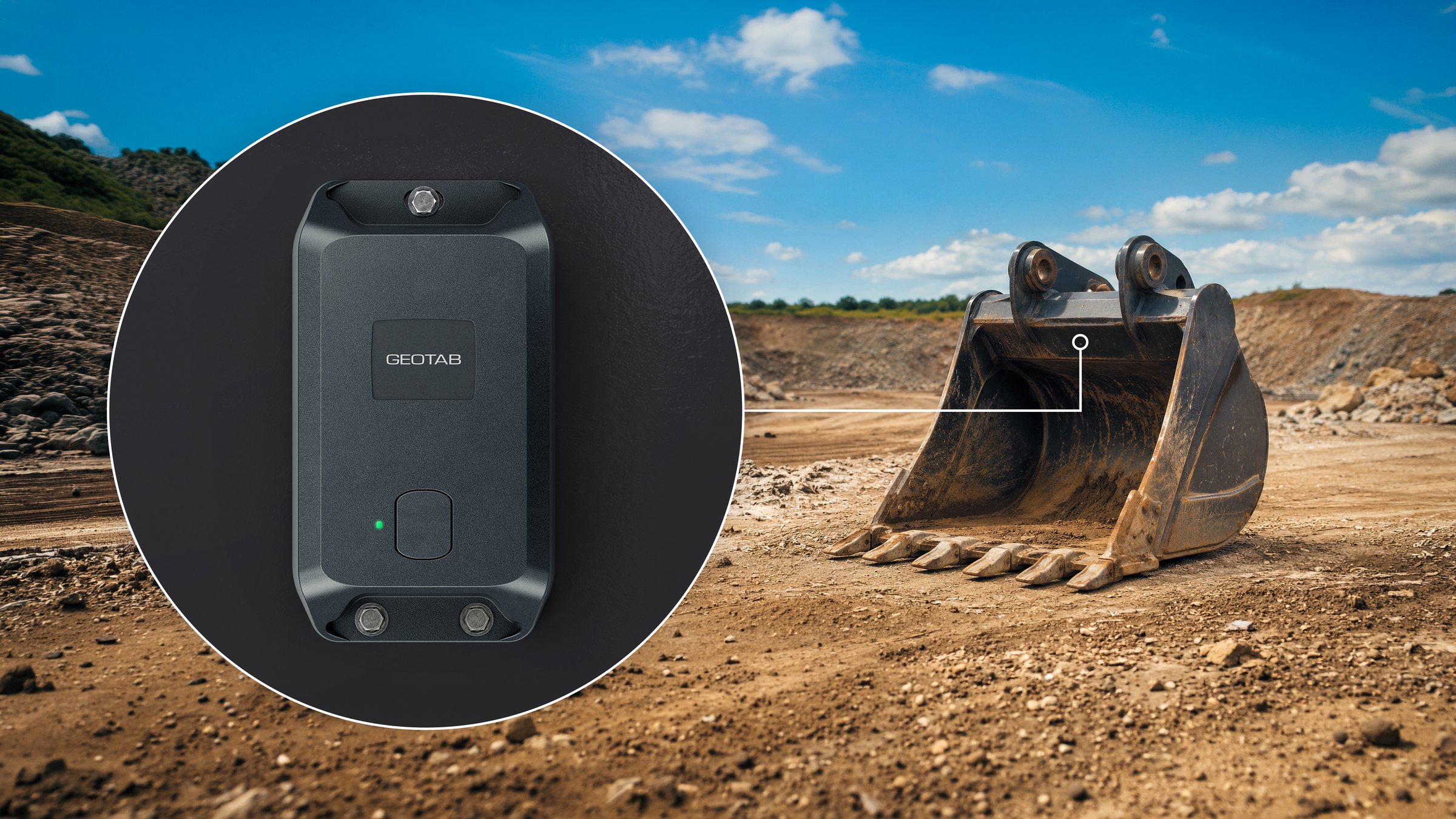
An asset tracker attaches to an individual piece of equipment and reports its location independently of the vehicle carrying it. Depending on the device and configuration, a fleet can set up movement or geofence alerts. An alert may prompt the team to check whether movement is authorised. Its timing depends on the device's power state, reporting settings and connectivity; it does not guarantee immediate detection.
Tracking does not prevent every theft, and it will not identify identity fraud by itself. It provides another source of information that can support a broader security process, including carrier verification, access controls and clear escalation steps.
By extending tracking beyond the vehicle, fleets can improve visibility across the assets that support their operation.
Australian fleet safety and compliance: technology supports the process
Cargo security is one part of operating a safe and compliant heavy vehicle fleet. In Australia, Chain of Responsibility (CoR) obligations under the Heavy Vehicle National Law (HVNL) apply to parties in the supply chain, not only drivers. The National Heavy Vehicle Regulator (NHVR) administers the HVNL in participating jurisdictions. Operators should confirm which laws and regulator requirements apply to their locations and routes, particularly where state or territory arrangements differ.
Asset tracking and video telematics may support incident reviews and operational checks. Neither establishes CoR compliance or replaces a safe system of work, appropriate training, vehicle inspections, maintenance or fatigue management. Consult the NHVR's Chain of Responsibility guidance and obtain Australian legal/compliance review before publication.
Work health and safety requirements also vary by jurisdiction. For workplace safety guidance and incident reporting, follow the relevant state or territory regulator, such as SafeWork NSW or WorkSafe Victoria. WorkCover agencies may handle workers’ compensation processes, which are separate and vary by jurisdiction.
Video and location data also need to be handled appropriately. Where an organisation is covered by the Privacy Act 1988, the Australian Privacy Principles (APPs) may apply to how it collects, uses, stores and discloses personal information. State and territory privacy, workplace surveillance and employment requirements may also be relevant. Set clear policies for access, retention and use of footage and location data, and seek advice for your specific circumstances.
This information is general only and is not legal advice. The legal and compliance wording requires local review before publication.
Complete equipment tracking starts with the right asset tracker
Effective tracking starts with matching the device to the asset and the job it needs to do. A powered trailer used every day may need different tracking features from a portable tool or an unpowered container stored for long periods.
Geotab’s asset tracking solutions connect tracked assets to MyGeotab, giving fleet teams a place to view relevant vehicle and asset information. GO Anywhere Plus provides wired insights for powered assets in MyGeotab, including engine hours, ignition and inferred distance. Near-real-time visibility applies only when connected to power and remains subject to connectivity and configuration. Select a solution according to its supported use:
- For powered assets, confirm the appropriate GO Anywhere Plus installation and reporting configuration with your Geotab provider. Ignition or movement data does not establish whether activity is authorised.
- For non-powered assets, confirm battery requirements, reporting frequency and device suitability.
- For portable tools, confirm that the selected tracking device or compatible solution is available and supported in Australia.
The right configuration depends on the asset, operating environment, required battery life and how often the team needs location updates. Fleets should also decide who receives alerts, how an alert is checked and what action staff should take if movement is not authorised.
A practical blueprint for cargo theft prevention
Cargo theft prevention is an ongoing operational responsibility. A useful approach combines visibility with clear processes:
- Identify which vehicles, trailers, containers and equipment need tracking.
- Set sensible movement and location alerts for each asset type.
- Verify carrier, driver and pickup details using agreed procedures.
- Define who reviews alerts and how suspected theft is escalated.
- Use dashcam footage and video telematics appropriately to support driver coaching and incident reviews.
- Review privacy, data retention, workplace safety and CoR processes for the jurisdictions where the fleet operates.
Explore Geotab's Australian asset tracking solutions, then confirm the device, reporting configuration and response processes that suit your assets and operating environment.
Frequently Asked Questions
| Cargo theft can involve physical intrusion as well as deception, such as someone using false carrier details or arranging an unauthorised pickup. An asset tracker can help fleet teams monitor an asset’s location and flag unexpected movement. It cannot verify carrier identities, detect fraudulent paperwork or prevent double brokering on its own. Use tracking alongside identity checks, agreed pickup procedures and clear escalation steps. |
GPS asset tracking can provide location history and, where supported and configured, movement alerts. Update timing depends on power, reporting settings and connectivity. This information may support an investigation or police recovery effort, but does not verify cargo contents, prevent theft or guarantee recovery. Follow your incident procedures and contact police rather than attempting recovery yourself.
TAPA APAC's January-August 2026 report recorded 14 reported Australian cargo crime incidents and losses of US$280,448. This small sample is not a national estimate and provides no measure of GPS tracking effectiveness or recovery rates. |
TAPA APAC's January-August 2026 Australian sample recorded 14 incidents. Origin facilities accounted for 64.3% (approximately 9 of 14 cases), and intrusion was recorded in 64.3% (approximately 9 of 14 cases).
These separate classifications do not necessarily describe the same incidents. The sample supports reviewing site security, but cannot establish the national prevalence of physical theft, identity fraud or double brokering.
The Geotab Team write about company news.
Table of contents
- Review physical security and freight verification together
- Cargo theft costs more than the value of the load
- Equipment tracking closes the visibility gap on non-vehicle assets
- Australian fleet safety and compliance: technology supports the process
- Complete equipment tracking starts with the right asset tracker
- A practical blueprint for cargo theft prevention
Related posts

Trailer telematics: How fleets track and manage trailers in real time with GO Anywhere Plus
November 9, 2026
4 minute read
Asset tracking for Australian fleets: Reduce idle time, theft and downtime
November 5, 2026
4 minute read

AI-Driven Logistics Orchestration: Route Optimisation for Better Margins
October 30, 2026
3 minute read

Predictive Maintenance: How to Reduce Unplanned Downtime and Repair Costs
October 30, 2026
4 minute read
Small Fleet Asset Tracking: Total Control Guide for Australia
October 30, 2026
3 minute read

AI Video Intelligence: Advancing Aussie Fleet Safety Culture
October 27, 2026
3 minute read