Trailer telematics: How fleets track and manage trailers in real time with GO Anywhere Plus
Trailers are amongst a fleet’s most valuable assets, but can be the hardest to track. Learn how to monitor assets, cargo and maintenance costs with near real-time data.

By Geotab Team
Nov 9, 2026

Key Insights
- Improve trailer visibility and utilisation: Location and movement data help fleets find misplaced trailers, reduce idle time and allocate assets more effectively.
- Support smarter maintenance planning: Usage insights help inform servicing alongside inspections and maintenance records, reducing avoidable downtime.
- Choose technology that fits your operations: Assess power, coverage, reporting frequency and integrations. GO Anywhere Plus offers near-real-time visibility when powered; advanced sensor monitoring requires separately supported hardware.
Trailers are valuable, but they're hard to track. Unlike powered vehicles, trailers don't generate their own location data, so they often go unseen by dispatchers. That gap leads to lost or misplaced trailers, underused assets and missed maintenance. Trailer telematics can help reduce that visibility gap, depending on the device, power and coverage.
Trailer telematics connects asset location and usage data to a fleet management platform. GO Anywhere Plus provides near-real-time visibility only when connected to power, subject to network coverage and configuration. For wired powered assets, it brings engine hours, ignition and inferred distance into MyGeotab. Below, we distinguish that product value from broader trailer-telematics options.
What is trailer telematics?
Trailer telematics uses GPS tracking and cloud-based software to report a trailer's location and usage. Some systems also use compatible sensors to monitor particular conditions. Updates depend on device capability, power, reporting configuration and coverage; they are not necessarily continuous, and location accuracy can vary.
Across the broader trailer-telematics category, possible data includes the following, subject to compatible hardware and supported integrations:
- Location and movement
- Cargo conditions, such as temperature and load status
- Door open and close events
- Tyre pressure and brake health
- Maintenance status and fault codes, where supported by the selected system
Why trailer telematics matters for Australian fleets
Many fleets run more trailers than powered vehicles, which can create significant tracking gaps. For every powered vehicle you track, there's an unpowered asset that can go missing, sit idle or fall behind on maintenance. That lack of visibility leads to lost equipment, missed servicing and inefficient trailer use.
Trailer telematics options range from location tracking to systems with additional sensors. Their usefulness for maintenance planning or cargo monitoring depends on the hardware, supported integrations and fleet processes. This is why the trailer telematics market has grown so quickly. What began as basic location tracking now uses GPS, IoT sensors and cloud-based software to support fleet-wide maintenance, compliance and cargo monitoring.
Fleet owners can assess a solution against priorities such as:
- Maximise asset uptime
- Protect cargo integrity
- Lower total cost of ownership (TCO)
How trailer telematics works
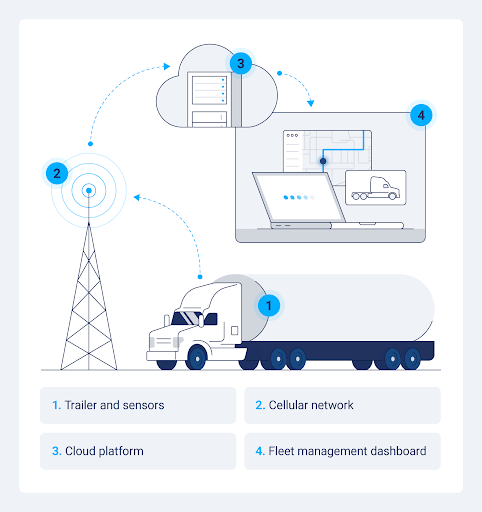
A telematics unit is fitted to the trailer, using a battery or a wired power connection, either as a battery-powered slap-and-track device or as a hard-wired sensor package.s. It sends supported data to the fleet management platform at configured intervals, communicating via cellular or satellite networks, sending location pings and sensor readings to your fleet management platform at regular intervals. Sensors, if required, need compatible hardware and a supported integration.
Modern GPS trailer tracking systems surpass simple location data. They combine inputs from multiple sensors like tire pressure monitors, cargo load sensors, door sensors and brake wear indicators, to deliver a comprehensive picture of trailer health. That data flows into a central dashboard alongside your tractor telematics for a full fleet view.
Benefits of smart trailer technology
Here are four ways trailer telematics supports fleet management:
Keeps track of your assets
Available location history may help your team and the relevant authorities respond if a trailer is missing or suspected stolen.
Where supported and configured, movement or geofence alerts may help flag unexpected activity. Alerts depend on power, reporting intervals and coverage, so they may be delayed or unavailable. Tracking does not guarantee theft detection, prevention or recovery. Door-event monitoring requires separately supported sensors and is not a native GO Anywhere Plus capability.
Location data also supports other metrics, such as dwell time. Dwell time reporting flags trailers that have sat too long, so you can redeploy underused equipment before it becomes a cost problem. Historical movement data helps you rebalance the fleet, reduce empty running kilometres and improve fuel efficiency and profitability.
Supports maintenance and safety processes
With many violations resulting from brake, light and tire issues, smart trailers alert you to issues before they occur, to help you proactively maintain your fleet, preventing fines and unplanned downtime for your trailer.
A solid maintenance program supports road safety. Major failures could jeopardise your drivers, other motorists, and, ultimately, your fleet’s reputation.
By staying on top of your trailer status, you can keep your assets road-ready and safe.
Improves efficiency
As a fleet manager, you want to maximise your investment in vehicles, trailers, technology and people.
Asset usage data can inform maintenance planning alongside inspections and service records. For wired powered assets, GO Anywhere Plus provides engine hours, ignition and inferred distance in MyGeotab. These insights do not perform automated pre-trip checks or confirm roadworthiness, and they do not replace required inspections.
Utilisation data can help you identify underused assets and assess how to allocate trailers across the fleet. Matching loads to the right trailers and staying on top of maintenance keeps your fleet moving, reduces downtime and keeps customers happy.
Improves driver and customer satisfaction
Customers expect clear communication and an effortless experience. Available asset location data may help your team provide updates to shippers, customers and brokers. Confirm the latest report's timestamp and coverage before sharing an update. Tracking alone does not provide proof of delivery or guarantee immediate awareness of a problem.
You can also prepare trailers for pick-up more efficiently, so drivers aren't left searching the yard for the right trailer or finding an unexpected maintenance issue. They spend more time driving and less time waiting.
How to choose trailer telematics
Compare solutions against your fleet size, asset power, cargo requirements and operating routes. We'll break down the top three leading trailer telematics providers on the market so you can make the best decision. .
Whichever you choose, consider:
- Battery life and power source (solar-rechargeable vs. long-life internal battery)
- Simple installation and compatibility with your assets
- Required platform or transport management system (TMS) integrations and confirmed support
- Reporting frequency, alert availability and configuration under powered and battery operation
Network coverage, outage behaviour and support in regional and remote areas
Geotab
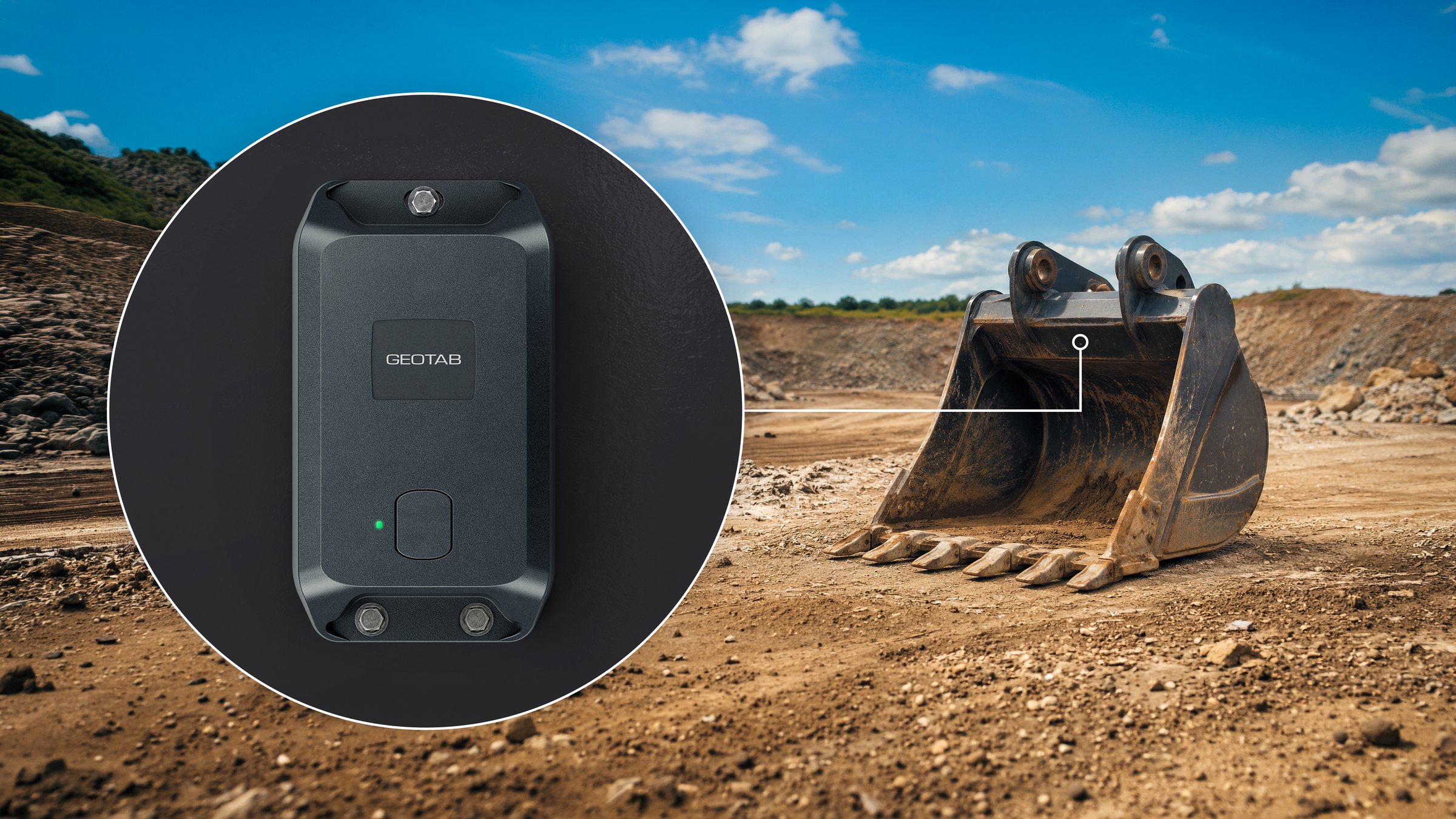
GO Anywhere Plus brings asset data into MyGeotab alongside your vehicle data. For wired powered assets, it provides engine hours, ignition and inferred distance to help inform utilisation and maintenance planning. Near-real-time visibility is available when connected to power, subject to coverage and configuration.
GO Anywhere Plus offers battery life of up to 3–5 years, depending on reporting frequency, usage, network conditions and operating environment. Confirm local availability, installation requirements and battery-mode reporting with Geotab.
FleetPulse
FleetPulse is a trailer-first telematics solution that prioritizes trailer health and safety. It offers a commercial trailer fleet management solution that delivers high-resolution data like tire pressure, brake performance and cargo monitoring from an integrated sensor ecosystem.
Thermo King TracKing
For fleets operating refrigerated trailers (reefers), Thermo King TracKing provides features critical to the food safety compliance and cold chain integrity industries, like remote reefer control and automated temperature logging.
Netstar STARtag
Netstar’s STARtag range helps Australian businesses keep track of trailers, equipment and other mobile assets through a dedicated app and web portal. Its Bluetooth Low Energy trackers include rugged, long-battery-life options for outdoor assets, helping operators locate misplaced equipment and reduce losses.
Teletrac Navman
Teletrac Navman’s TN360 platform brings trailer, vehicle and equipment tracking into one system. For trailer fleets, it combines GPS location data, movement and geofence alerts, utilisation reporting and digital maintenance planning to help operators allocate assets more effectively and respond to unauthorised movement.
The platform enables operators to adjust temperature set points and monitor cargo conditions remotely to reduce the risk of spoilage. Integration and visibility may vary compared to more comprehensive platforms though.
Frequently Asked Questions
Traditional fleet tracking focuses on powered vehicles such as trucks and vans. Trailer telematics extends location visibility to trailers using battery-powered or wired devices. Some systems offer additional sensor data, depending on compatible equipment and supported integrations. Those features are not native GO Anywhere Plus capabilities; reporting depends on power, configuration and network coverage.
Battery life varies by device, reporting frequency, usage, network conditions and operating environment. GO Anywhere Plus offers battery life of up to 3–5 years, depending on these conditions; this is not a guaranteed service life. Confirm the expected reporting configuration and power requirements for your deployment.
A device designed for battery operation may report location while a trailer is unhooked, subject to battery charge, reporting configuration and network coverage. Do not assume continuous updates or sensor reporting. GO Anywhere Plus provides near-real-time visibility only when connected to power, subject to coverage and configuration; confirm its battery-mode reporting for your use case.
Installation requirements depend on the device, asset and power connection. Follow the manufacturer's mounting, wiring and commissioning guidance, using a qualified installer where required. Confirm local product availability, compatible power and network coverage before deployment. Additional sensors require separately supported hardware or integrations; do not assume GO Anywhere Plus supports them.
Insurance terms are set by the insurer. Trailer telematics does not guarantee a premium reduction, and no insurance-premium outcome is claimed for GO Anywhere Plus. Ask your insurer what information it requires; available data depends on the device, power, configuration and coverage.
The Geotab Team write about company news.
Related posts
10 ways telematics can help heavy transport and logistics
November 23, 2026
5 minute read
How asset tracking can support cargo security for Australian fleets
November 5, 2026
4 minute read
Asset tracking for Australian fleets: Reduce idle time, theft and downtime
November 5, 2026
4 minute read

AI-Driven Logistics Orchestration: Route Optimisation for Better Margins
October 30, 2026
3 minute read

Predictive Maintenance: How to Reduce Unplanned Downtime and Repair Costs
October 30, 2026
4 minute read
Small Fleet Asset Tracking: Total Control Guide for Australia
October 30, 2026
3 minute read