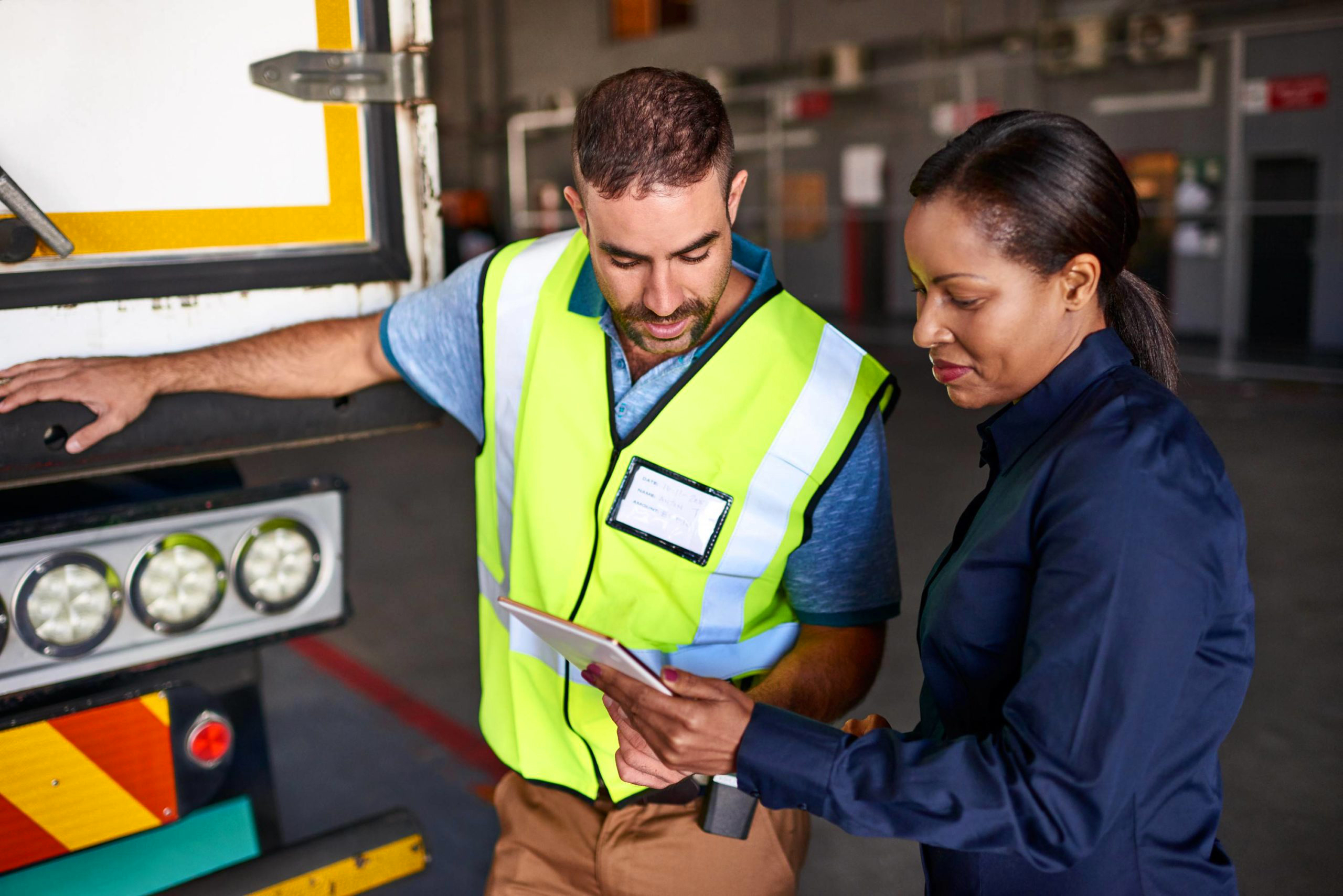
Telematics safety data remains the primary engine for Australian fleet success
In the Australian commercial landscape of 2026, the conversation often gravitates toward AI video breakthroughs. But the Geotab Report 2026 reveals a deeper truth: the core of the industry's success is still anchored in fundamental telematics safety data.

By Geotab Team
Jul 28, 2026

In the Australian commercial landscape of 2026, the conversation around fleet management often gravitates toward the latest AI video breakthroughs. However, the Geotab Report 2026: Connected Fleets in Australia reveals a deeper truth: while video is a powerful "visual shield," the core of the industry's success is still anchored in fundamental telematics safety data.
For many Australian firms, winning a deal or securing a contract isn't just about showing a camera feed; it's about proving a rigorous, data-backed commitment to the Chain of Responsibility (CoR). Safety remains the number one driver of telematics adoption, proving that even without video, the "connected pulse" of a vehicle is a fleet's most valuable asset.
Winning on the fundamentals: beyond the camera
While video adds a layer of visual intelligence, the "hidden" data within a standard telematics device is what currently secures the most significant operational wins in the Australian market.
1. The "invisible" safety shield: seat belts & speeding
Basic telematics data provides an unfiltered look at driver behaviour that allows for immediate intervention.
- Seat belt usage: Across the board, Australian fleets are seeing a massive surge in compliance. 47% of Services and 40% of Government fleets increased seat belt usage by up to 60% using standard telematics alerts.
- Speeding suppression: In the high-stakes Oil & Gas sector, businesses achieved 100% success in reducing speeding incidents by at least 21% through real-time GPS monitoring alone.
2. Fatigue management: protecting the long-haul
In a country defined by the "tyranny of distance," managing fatigue is the difference between a successful delivery and a dangerous incident.
- The fatigue pulse: Even without in-cab cameras, telematics provides the critical "hours of service" data needed to prevent exhaustion. 66% of Government organisations and 59% of Services firms reduced fatigue-related events by over 40% simply by orchestrating better rest breaks and monitoring driving patterns.
The ROI of a "safety-first" culture
The 2026 report confirms that a safer fleet is, by definition, a more profitable fleet. Australian businesses are finding that a commitment to safety data directly correlates with a reduction in the "Big Two" overheads: Fuel and Labour.
- Lowering incident costs: 35% of Construction and Services firms reported a definitive reduction in accident-related costs.
- Insurance advantages: By providing insurers with verifiable safety data (even without video), 43% of Government fleets and 33% of Utilities successfully negotiated lower premiums.
- Labour efficiency: Safer driving leads to less wear and tear. The Utilities sector realised a 50% reduction in labour costs by moving to a proactive, safety-led maintenance model.
The compliance mandate: safety as a legal duty
In Australia, safety is not an elective—it is a legal mandate.
The 2026 data shows that safety-centric goals are the leading drivers of ROI:
- Regulatory backbone: 58% of Small Businesses and 54% of Enterprises cited Regulatory Compliance as their top achieved goal.
- Fiduciary responsibility: In the Government sector, where accountability is paramount, 72% of agencies categorised GPS tracking as "extremely beneficial" for maintaining service integrity and public safety.
Safety is the strategic edge
The Australian market has made its choice clear: safety is the primary engine of operational sovereignty. While AI video represents the future of the "Visual Shield," the foundation of every successful deal today is the ability to prove, through raw telematics data, that a fleet is compliant, controlled, and committed to the safety of every Australian road user.
With the Heavy Vehicle National Law (HVNL) placing a shared burden of responsibility across the entire supply chain, fleet managers are using telematics as their primary mechanism for meeting NHVR obligations.
The gap between "traditional hauling" and "safe logistics" is widening. For the forward-thinking Australian enterprise, winning the next deal starts with the data that protects your people.
Download the Full Geotab Report 2026: Connected Fleets in Australia
The Geotab Team write about company news.
Related posts

How video telematics helps drivers trust the safety program
October 19, 2026
5 minute read
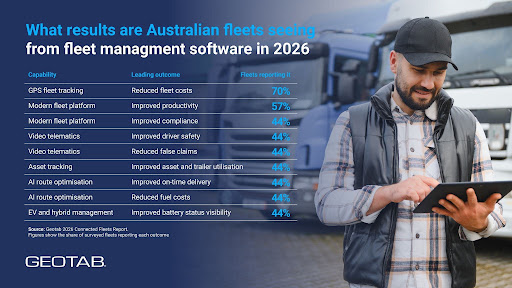
How does fleet management software help reduce costs and improve compliance in Australia?
October 15, 2026
2 minute read

How video telematics is improving safety and reducing risk for Australian fleets
October 8, 2026
2 minute read
The Visual Shield: How Video Platforms Protect Small Fleets
August 12, 2026
4 minute read