AI Video Intelligence: Advancing European Fleet Safety Culture
For European transport operations navigating expansive cross-border transit networks and dense metropolitan freight hubs, driver safety is the cornerstone of structural resilience.

By Geotab Team
Nov 2, 2026

Key Insights
- AI dash cams help European fleets reduce safety incident costs by 63% and strengthen safety performance.
- Video telematics helps 45% of European fleets secure more competitive insurance terms.
- 47% of European businesses using video solutions achieve positive ROI within 12 months.
The Evolution of Fleet Protection Across the European Landscape
For small and medium-sized enterprises coordinating commercial vehicle fleets across Europe, the preservation of mobile assets represents a primary operational focus. In an environment filled with evolving macroeconomic parameters and shifting logistics requirements, corporate health demands absolute efficiency.
When an organisation relies on traditional, passive tracking frameworks, they merely capture the historical coordinates of an asset on a map. This year, staying ahead of volatile expenditures requires a paradigm shift from basic visualisation to predictive, high-fidelity driver orchestration.
Managing daily fleet expenditures ranks as a top-tier challenge for 63% of operational managers across the continent. The corporate budget remains heavily influenced by key variable segments, with driver allocation and fuel consumption representing the largest core expenditures.
Data demonstrates that driver salaries constitute a massive baseline commitment, with 62% of enterprise fleets positioning operator compensation at 25% or more of total running outlays. Simultaneously, a significant tenth of small operators observe fuel pump metrics swallowing up to 30% of their entire enterprise budget.
To insulate these massive investment centres from capital erosion, forward-thinking European leadership teams are replacing old-fashioned assumptions with automated, intelligent vision technology. Moving beyond standard tracking allows organisations to cultivate a modern fleet safety culture that proactively defends corporate margins and preserves human resources.
Download the complete Geotab Report 2026: Connected Fleets in Europe
The Three Pillars of an Advanced Safety Culture
The implementation of dual-facing camera systems, seamlessly integrated with vehicle telemetry diagnostics, transforms raw fleet data into an active inflation hedge. This connected vision infrastructure targets hidden waste and eliminates unbillable operational friction by focusing directly on three strategic areas of performance optimisation:
1. Instant Driver Self-Correction via Vision-Based Telemetry
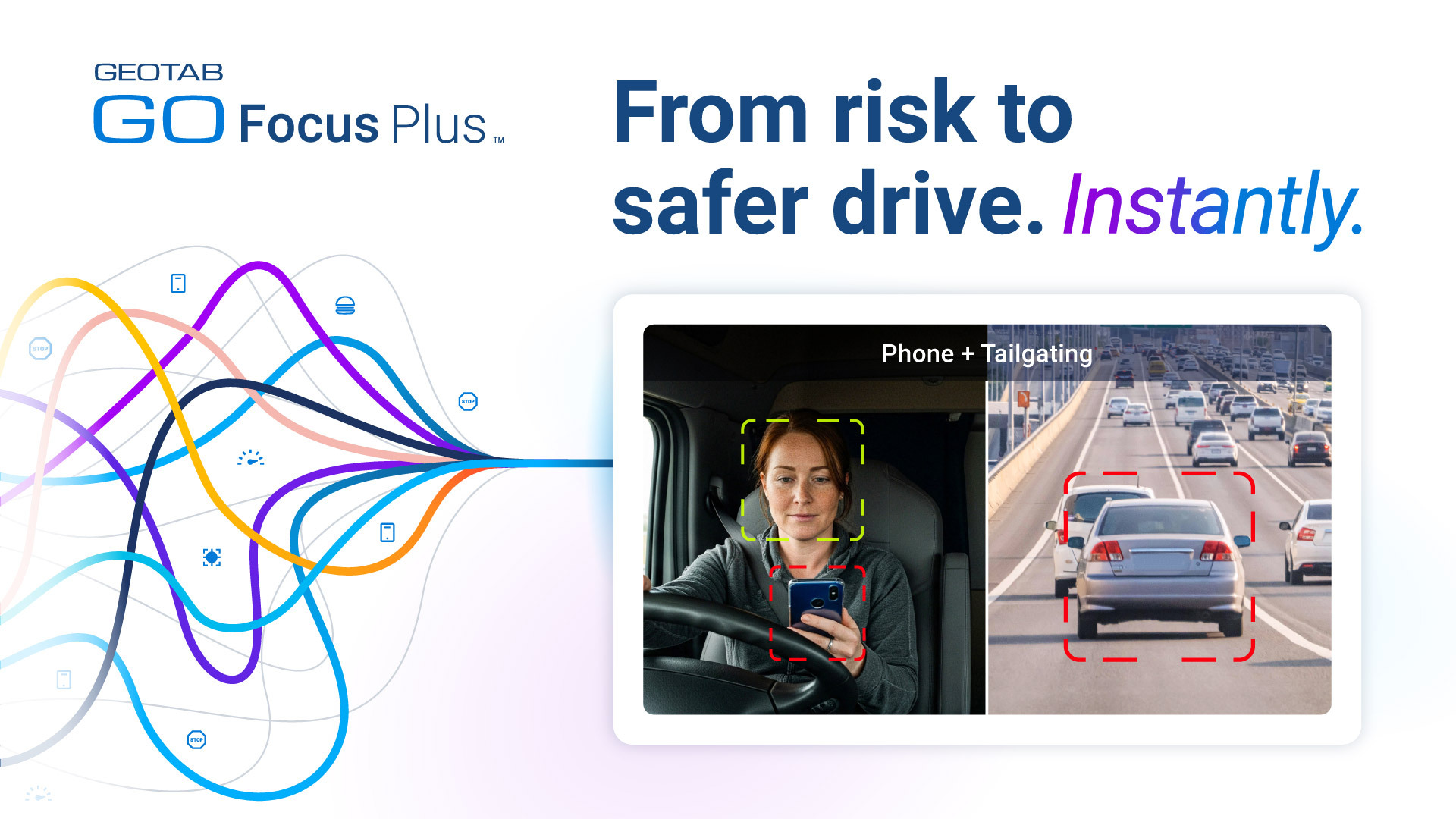
True safety advancement is built on continuous, proactive coaching rather than punitive back-office review loops. Traditional tracking monitors the mechanical effects of aggressive driving—such as harsh braking or rapid acceleration—after the event has occurred. Advanced AI video intelligence captures the exact contextual behaviour preceding the scenario, such as operator fatigue or distraction.
Across the general freight and services sectors, a staggering 42% of firms successfully used this automated visual pulse within the cabin to reduce driver fatigue by up to 60%. By utilising precise machine vision algorithms, the platform delivers instant, in-cab audio prompts that empower drivers to immediately self-correct their habits on the roadway. This near real-time partnership fosters an environment of personal accountability, directly mitigating high-risk behavioural trends before they influence the organisation's incident profile.
2. Unprecedented Insurance Resilience and Asset Verification
Rising insurance parameters and prolonged claims processing continue to threaten small business cash flow. When an incident occurs on complex urban intersections or multi-state transit routes, establishing absolute clarity is paramount to defending the organisation. Deploying a "visual shield" through connected cameras removes all guesswork from liability assessments, providing insurers and legal bodies with objective, high-definition truth.
Across commercial transport operations, providing underwriters with this level of verifiable safety data secures more competitive insurance conditions for 45% of fleets cross-industry. This advantage is exceptionally pronounced in the services sector, where 29% of businesses achieved an immediate decrease in insurance costs. Concurrently, this high-fidelity telemetry drives a substantial 63% reduction in total accident and safety incident expenditures , while 68% of operators successfully strike down false liability claims.
3. Predictive Maintenance and Vehicle Longevity
A sophisticated driver safety culture is intrinsically linked to the physical integrity of the vehicle. High-risk driving patterns accelerate mechanical wear-and-tear, leading to premature component failure, increased tyre degradation, and unexpected asset downtime. By integrating intelligent camera alerts with engine diagnostic tracking, fleet managers transition from reactive "break-fix" maintenance emergencies to structured, preventative workflows.
This predictive model delivers a definitive 24% average reduction in vehicle maintenance expenditures across all European industries. At the same time, smoothing out aggressive driving habits directly optimises fuel footprint metrics, enabling 55% of small fleets to significantly lower their daily fuel outlays.
Download the complete Geotab Report 2026: Connected Fleets in Europe
Cross-Industry Adoption: Validation on the Ground
The operational advantages of advancing a data-led safety culture are recognised across every primary commercial sector in Europe. The widespread transition toward intelligent tracking platforms proves that automated data coordination serves as an essential performance multiplier across diverse operating environments:
- Field Services Fleet Integration: The services sector leads the marketplace with an overall adoption rate between 81% and 88% depending on company scale, leveraging connected intelligence to coordinate high-density urban schedules safely.
- General Freight Logistics: Long-haul transport and general freight configurations maintain adoption rates reaching 76% across large fleets, using unified safety monitoring to protect massive international cargo lines.
- Construction Infrastructure Operations: The construction industry demonstrates a robust adoption rate of up to 78% within enterprise-level setups, utilising continuous tracking to ensure heavy equipment and transport vehicles operate within strict safety parameters.
Download the complete Geotab Report 2026: Connected Fleets in Europe
High-Velocity Capital Protection
The ultimate validation for any technology integration within a lean enterprise is the speed with which the system self-funds. Because advanced camera infrastructure targets the root causes of daily variable drains—such as incident overhead, maintenance costs, and fuel waste—the timeline to realise a full return on capital is remarkably short.
Comprehensive industry metrics confirm that 47% of European operations utilising a video solution achieve a fully positive ROI in one year or less. The fiscal turnaround is exceptionally rapid across specific compliance-heavy areas; fully 62% of government configurations and 55% of services fleets secure a complete return on their safety visual investment within the very first 12 months of deployment. This rapid turnaround ensures that transport teams can seamlessly fund their digital evolution while building a lasting competitive edge.
Strengthen Your Safety Infrastructure Today
Ensure every single transit hour actively protects your workforce and your bottom line. Stop letting unbillable latency and safety liabilities erode your hard-earned margins. Explore how turning raw vehicle analytics into predictive vision intelligence transforms your fleet into an agile, high-performance competitive advantage.
Download the complete Geotab Report 2026: Connected Fleets in Europe
Subscribe to the Geotab Blog
Frequently Asked Questions
AI dash cams combine advanced machine vision with near real-time engine telemetry to identify high-risk behaviours, such as distraction or fatigue. The system then delivers immediate in-cab audio notifications, enabling the operator to self-correct instantly and prevent incidents before they occur.
Yes. Providing underwriters with clear, verifiable safety telemetry and high-definition video documentation optimises the claims environment. This enables 45% of European fleets overall—and an exceptional 53% within the government sector—to secure significantly lower insurance costs.
The financial transition is high-velocity. Cross-industry tracking confirms that 47% of European businesses realise a fully positive return on investment within the first 12 months of deployment, rising to 55% within the services sector and 62% for government operations.
The Geotab Team write about company news.
Related posts

Predictive maintenance: how to reduce unplanned downtime and repair costs
October 30, 2026
2 minute read

AI-driven logistics orchestration: route optimisation for better margins in EMEA
October 30, 2026
3 minute read
The 12-Month Driver Safety Coaching Blueprint: A Step-by-Step Plan to Cut Fleet Accidents by 30%
October 28, 2026
7 minute read

Flipping the switch on overhead: the real cost savings of fleet telematics
October 21, 2026
2 minute read

How small businesses use telematics to slash operational costs
October 19, 2026
2 minute read
The 5 most common digital tachograph penalties in EMEA (and how SMBs can avoid them)
October 9, 2026
2 minute read