AI in fleet management: 3 real-world ways to boost SMB profitability
For small and medium-sized businesses (SMBs) running commercial fleets across Europe, "artificial intelligence" can sound like an expensive, high-complexity buzzword.

By Geotab Team
Nov 26, 2026

Key Insights
- Demystifying AI for SMBs: rather than an over-engineered enterprise luxury, 55% of small European fleet operators (1–29 vehicles) achieve a fully positive ROI in under 12 months by deploying right-sized AI fleet tools to target daily operational waste
- Neutralising fuel price volatility: fuel expenditures represent a massive drain on European fleet budgets, consuming up to 20% to 30% of total operational spend. AI-powered route optimisation allows 51% of small fleets to directly cut fuel costs despite persistent fuel price pressures, while 64% compress their last-mile delivery windows.
- Targeting driver fatigue & false claims: driver fatigue and safety is identified as a top daily challenge for 64% of small fleet managers in Europe. Edge AI in-cab video delivers real-time audio coaching to prevent fatigue events while driving a 68% reduction in false liability claims across industries.
Demystifying AI: from enterprise luxuries to practical margin protection
If you run a small-to-medium business coordinating 1 to 29 commercial vehicles across European transport corridors, mentions of "AI in logistics" might make you hesitant. It often sounds like an over-engineered technology reserved for multi-national corporations with massive IT budgets.
However, operating an SMB fleet today means navigating a severe margin squeeze:
- Volatile fuel pressures: fluctuating diesel pump prices directly consume 20% to 25% of total operational budgets for most European fleets—and up to 30% of total spend for one in ten small operators.
- Persistent safety & fatigue risks: Managing driver fatigue and road safety ranks as a primary daily operational disruption for 64% of small fleet managers.
- Customer & scheduling friction: 66% of small European operators struggle to meet escalating customer punctuality expectations, while 58% grapple with rising insurance costs.
Practical AI in fleet management isn't about replacing human decision-making or installing intrusive surveillance. It is an automated co-pilot inside your dispatch console and vehicle cabs that surfaces only the top 5% of data that impacts your balance sheet.
According to the Geotab Report 2026: Connected Fleets in Europe, 72% of small business operators categorise telematics intelligence as "very" or "extremely" beneficial for navigating daily operational chaos.
Here are 3 real-world ways AI drives practical profitability for European SMBs.
1. AI route optimisation: shielding margins from fuel volatility
When fuel prices fluctuate unpredictably across national borders and regional routes, every unbillable kilometre, wrong turn, or idle period erodes profit margins. Manual dispatching using static schedules or consumer mapping apps cannot adapt to dynamic urban congestion or strict low-emission zones.
AI-powered route optimisation uses machine learning to dynamically calculate multi-stop paths based on live traffic conditions, weather delays, vehicle capacities, and precise customer availability windows.
For a European service, delivery, or trade fleet, this intelligent routing delivers immediate financial relief:
- 51% of small businesses achieve a direct reduction in fuel costs using AI routing.
- 64% of small operators compress their last-mile delivery times, allowing field teams to execute a higher density of service calls per day without adding extra vehicles.
- 74% of small fleets improve on-time delivery rates, boosting customer retention scores.
- 64% of small businesses measurably lower their carbon footprint (CO₂ emissions), supporting European environmental benchmarks.
"AI route planning ensures every drop of volatile fuel is converted into billable revenue rather than lost to transit latency."
2. AI in-cab video: proactive fatigue coaching & driver exoneration
Navigating dense European urban centres and long-distance freight corridors requires constant driver vigilance. Furthermore, staged accidents or unfair liability claims from third parties can trigger severe legal bills and insurance premium surges.
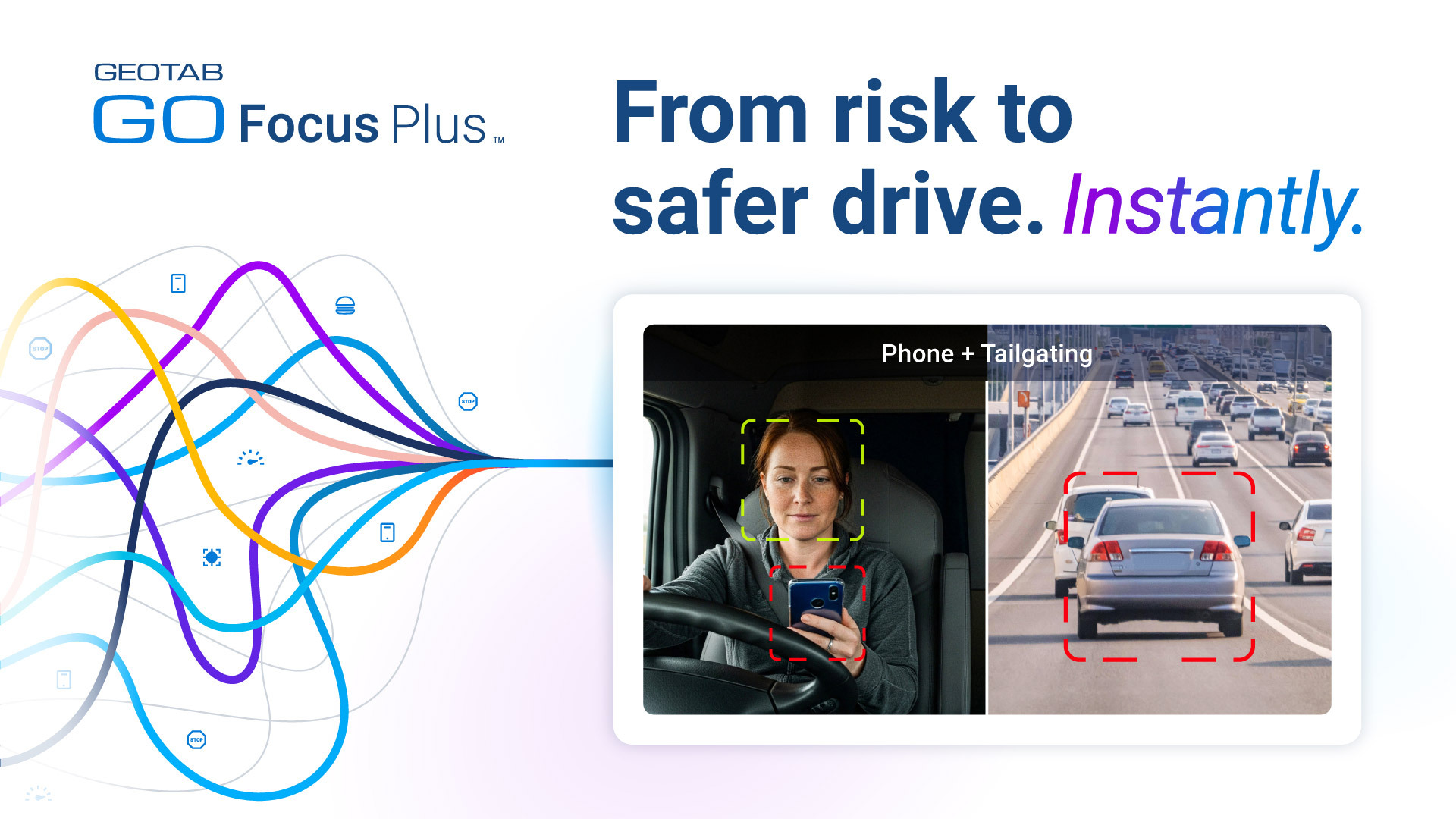
Modern dual-facing AI cameras serve as digital armour for your workforce. Edge AI units process video locally inside the cab to detect microsleeps, heavy yawning, head drooping, or mobile phone distraction in real time.
Rather than sending an alert to a manager hours after an event, the system delivers an instant, respectful audio prompt inside the cab, enabling the driver to self-correct or pull over safely before a hazard turns into a collision.
When an unpreventable incident does occur on the road, the exterior lens provides an objective eyewitness that clears your driver from unfair liability.
The European data highlights the protective power of AI video telematics:
- 73% of European fleets report direct improvements in overall driver safety habits.
- 68% of operators successfully use video evidence to strike down false claims (climbing to 73% in general freight).
- 42% of freight and field service fleets reduce driver fatigue by up to 60%.
- 45% of businesses achieve direct reductions in commercial insurance costs by providing video-verified safety records.
3. Predictive diagnostics & exception management: ending "ghost downtime"
For a lean enterprise running a small fleet, an unexpected engine breakdown during a busy dispatch week causes severe disruption. Unplanned vehicle downtime leads to cancelled jobs, emergency maintenance bills, and damaged client trust.
Standard telematics alerts managers after a fault code trips. AI predictive diagnostics goes a step further by analysing engine sensor patterns and diagnostic trouble codes (DTCs) to flag impending mechanical failures before a warning light appears on the dashboard.
Additionally, AI solves the "data overload" problem for busy managers. Instead of requiring you to sift through hours of trip logs, AI exception models filter out 95% of routine data, surfacing only critical action items:
- An engine component showing abnormal thermal wear.
- A driver exhibiting a sudden spike in harsh braking events due to route fatigue.
- An unscheduled asset movement outside designated work hours.
By transforming reactive "break-fix" repairs into scheduled maintenance, small operators keep vehicles road-ready and eliminate expensive emergency repair outlays.
High-velocity financial recovery: the SMB ROI benchmark
The ultimate test for any technology in a small enterprise is how fast it self-funds. Because practical AI directly targets variable daily leaks like fuel waste, driver overtime, and unbillable latency, capital recovery is remarkably swift:
- 55% of small European businesses (1–29 vehicles) achieve a fully positive ROI in under 12 months.
- 57% of small operators confirm a total reduction in fleet running costs.
- 56% of small fleets increase their recovery rate of stolen vehicles, securing vital business capital.
Take command of your fleet margins today
Relying on manual schedules and reactive maintenance in a high-cost economic climate creates an artificial ceiling on your business growth.
Practical AI in fleet management isn't about complexity; it’s about giving your small business an intelligent co-pilot that protects your drivers, stops fuel waste, and defends your bottom line.
Subscribe to the Geotab Blog
Frequently Asked Questions
Yes. Modern telematics platforms scale down seamlessly for small fleets (1–29 vehicles). Hardware connects easily to vehicle diagnostic ports, and intuitive cloud dashboards require zero IT staff. 55% of small European operators realize a full return on investment in under 12 months.
AI route optimisation uses machine learning to dynamically sequence multi-stop jobs around real-time traffic, eliminating unnecessary transit mileage, reducing idle times, and preventing route backtracking. This enables 51% of small European fleets to directly lower their fuel bills despite fuel market volatility.
Yes. AI dash cams do not stream live footage to management continuously. Edge AI processes video locally inside the cab, issuing real-time audio prompts to alert drivers of fatigue or distraction events. Video clips are only uploaded when a verified safety exception or collision occurs, serving as digital armour during third-party claim disputes.
AI analyzes real-time engine fault codes and performance anomalies to flag mechanical issues before a major component fails. This shifts your operation from costly emergency repairs to planned, scheduled maintenance, contributing to the 57% total cost reduction reported by European small fleets
The Geotab Team write about company news.
Table of contents
- Demystifying AI: from enterprise luxuries to practical margin protection
- 1. AI route optimisation: shielding margins from fuel volatility
- 2. AI in-cab video: proactive fatigue coaching & driver exoneration
- 3. Predictive diagnostics & exception management: ending "ghost downtime"
- High-velocity financial recovery: the SMB ROI benchmark
- Take command of your fleet margins today
Subscribe to the Geotab Blog
Related posts


Predictive maintenance: how to reduce unplanned downtime and repair costs
October 30, 2026
2 minute read
Small fleet asset tracking: total control guide for EMEA
October 29, 2026
3 minute read
The 12-Month Driver Safety Coaching Blueprint: A Step-by-Step Plan to Cut Fleet Accidents by 30%
October 28, 2026
7 minute read

Flipping the switch on overhead: the real cost savings of fleet telematics
October 21, 2026
2 minute read