Euro 1 to Euro 7: complete guide to vehicle emission standards
Euro emission standards (Euro 1 to Euro 7) set strict limits on vehicle exhaust pollutants to improve air quality across Europe. Understanding these regulations is essential for fleet managers, vehicle buyers, and businesses operating in low-emission zones.

By Geotab Team
Jul 15, 2026
.jpeg)
Key Insights
- Euro standards set strict limits on pollutants like nitrogen oxides and particulate matter to improve air quality.
- European low-emission zones, such as France’s ZFE, restrict commercial fleet access based on vehicle Euro classes.
- The upcoming Euro 7 standard (November 2026) will introduce highly rigorous real-driving emissions monitoring.
What are Euro emission standards?
Euro emission standards are EU regulations that define the maximum levels of pollutants a vehicle can emit. The main pollutants targeted include:
- Nitrogen oxides (NOx)
- Carbon monoxide (CO)
- Hydrocarbons (HC)
- Particulate matter (PM)
Petrol vs. Diesel differences
- Petrol engines: tend to emit higher levels of CO and HC, but lower NOx and particulate matter.
- Diesel engines: typically produce higher NOx and PM levels, even though they are more fuel-efficient overall.
The Evolution: Euro 1 to Euro 7
Euro 1 (1992)
- Definition: the first EU-wide emission standard, establishing limits for petrol and diesel vehicles.
- Petrol vs. Diesel differences: petrol vehicles were required to install catalytic converters to reduce CO and HC. Diesel vehicles focused on lowering NOx and particulate matter, but controls were less strict than today.
- Impact on fleets: introduced basic compliance requirements and started the path toward cleaner urban air.
Euro 2 (1996)
- Definition: tightened limits for passenger cars and light commercial vehicles.
- Petrol vs. Diesel differences: petrol engines had stricter CO and HC limits. Diesel engines faced reduced NOx levels but still produced significant PM.
- Impact on fleets: encouraged early adoption of cleaner engines and better fuel systems.
Euro 3 (2000)
- Definition: introduced separate limits for NOx and HC for petrol engines and stricter PM limits for diesels.
- Petrol vs. Diesel differences: petrol vehicles had independent NOx and HC limits. Diesel vehicles needed better exhaust filtration, including particulate traps.
- Impact on fleets: required fleet managers to track which vehicles complied with Euro 3 for city access.
Euro 4 (2005)
- Definition: Further reduced NOx emissions for diesel engines and introduced limits on PM for diesel vehicles.
- Petrol vs. Diesel differences: petrol engines were largely compliant with minor NOx reductions. Diesel engines required particulate filters to meet Euro 4 standards.
- Impact on fleets: fleets with diesel lorries needed additional investment in filters; urban restrictions began affecting older vehicles.
Euro 5 (2009)
- Definition: set stricter PM limits for diesel engines and HC+NOx limits for petrol engines.
- Petrol vs. Diesel differences: petrol focused on combined HC+NOx reductions, leading to cleaner petrol combustion. Diesel required diesel particulate filters (DPFs) and improved engine management.
- Impact on fleets: vehicle replacements or retrofits became necessary for older commercial lorries to meet city access and LEZ regulations.
Euro 6 (2014)
- Definition: Current standard for new vehicles, drastically reducing NOx and PM emissions.
- Petrol vs. Diesel differences: petrol required gasoline particulate filters (GPFs) for some vehicles. Diesel mandated selective catalytic reduction (SCR) systems and DPFs.
- Impact on fleets: Euro 6-compliant commercial vehicles reduce air pollution and often benefit from tax incentives and access to low-emission zones.
Euro 7 (Coming November 2026)
- Definition: next-generation standard aimed at stricter real-driving emissions (RDE) monitoring and extended pollutant categories.
- Petrol vs. Diesel differences: petrol faces ultra-low NOx and PM limits alongside stricter real-driving emissions monitoring. Diesel faces even tighter NOx and PM limits, pushing fleets toward hybrid and electric alternatives.
- Impact on fleets: Euro 7 will require investment in the newest vehicle technology, including electrification for commercial fleets, to comply with urban air quality regulations.
Benefits of Euro emission standards
- Environmental: lower CO, NOx, HC, and PM emissions improve urban air quality.
- Health: fewer respiratory and cardiovascular illnesses linked to vehicle emissions.
- Operational efficiency: modern engines are often more fuel-efficient and reliable.
- Economic incentives: tax breaks and grants encourage fleets to upgrade to Euro 6 or higher vehicles.
Petrol vs. Diesel benefits
- Petrol: cleaner in terms of NOx and PM; often simpler maintenance.
- Diesel: higher fuel efficiency; long-range operations are more cost-effective.
- Urban air quality regulations across Europe
Ireland: Urban Access & Low Emission Zones
While Ireland does not yet have a single, national "sticker" system, access to major cities is heavily regulated based on vehicle type and emissions.
Dublin’s HGV management strategy: HGVs with 5+ axles are restricted from the city centre cordon from 07:00 to 19:00, seven days a week. Access requires a valid load/unload permit monitored via real-time enforcement apps.
The Dublin City Centre Transport Plan (2024–2026): significant sections of the North and South Quays (such as Bachelors Walk and Aston Quay) are restricted to public transport, cyclists, and taxis. Traditional commercial "through-routes" are unavailable.
Cork & Regional Cities: under the clean air strategy 2025, Cork City and Galway have accelerated low emission neighbourhood initiatives, shifting focus toward Zero-Emission Delivery Zones (ZEDZs) for last-mile logistics.
Implications: transitioning to Euro 6 and preparing for Euro 7 electric or hybrid lorries is vital to avoid penalties or massive operational detours.
How fleet management supports Euro compliance
- Real-time monitoring: track emissions, fuel consumption, and engine diagnostics live.
- Predictive maintenance: ensure exhaust, SCR, and filtration systems consistently meet strict Euro standards.
- Fleet replacement planning: identify older assets approaching LEZ or Euro 7 restrictions.
- Reporting & analytics: instantly generate compliance documentation for internal tracking and regional regulators.
France: Zones à Faibles Émissions (ZFE)
- Regulation: local authorities define restrictions based on regional air quality assessments.
- Crit’Air System: France utilises a Crit’Air vignette (sticker) system, classifying vehicles into classes (Crit’Air 1–6) depending on Euro class and emissions treatment.
- Deadlines: by law, certain Crit’Air classes are banned in large city ZFEs. As of 2025, 25 cities in France have active ZFEs.
- Implications: fleets must verify allowed Crit’Air classes for delivery vans or lorries to avoid fines.
Germany: Umweltzonen and Umweltplakette
- Regulation: vehicles must display a colored emissions sticker (Umweltplakette)—green, yellow, or red—depending on their emission group.
- Enforcement: driving inside an Umweltzone without the required sticker results in fines. Stickers are assigned based on the Euro emissions standard or registration date.
- Implications: fleets operating in German cities must obtain the correct sticker from authorized inspection centres (like TÜV or DEKRA) or look into retrofitting older vehicles.
Spain: Zonas de Bajas Emisiones (ZBE)
- Madrid Example: a permanent low-emission zone covers all public urban roads in the municipality.
- Restrictions: vehicles classified as “A” under the DGT environmental labeling system are prohibited from access and circulation.
- Enforcement: monitored via automatic license-plate reading (OCR) cameras.
- Implications: fleet vehicles must hold the correct environmental label to legally enter the ZBE and avoid automated fines.
Italy: Low‑Emission Zones (LEZs)
- Regulation: LEZ usage is rising across Italian cities and regions, restricting circulation based on Euro class (Euro 0–Euro 6).
- Framework: the “Fascia Verde” (green band) classification is a standard LEZ setup based on European emission norms. Note that some Italian LEZs currently lack automated gate enforcement.
- Implications: fleet managers must map relevant urban routes and intentionally deploy compliant Euro-class vehicles to Italian branches.
Euro 1 to Euro 7: Final thoughts
Understanding Euro 1 to Euro 7 standards and the clear operational differences between petrol and diesel assets is a critical baseline for European fleet management. Navigating Umweltzonen, ZFEs, and ZBEs smoothly protects your bottom line. Preparing for the Euro 7 transition right now will future-proof your logistics, maximize asset ROI, and keep your business moving.
Subscribe to the Geotab Blog
The Geotab Team write about company news.
Table of contents
- What are Euro emission standards?
- Petrol vs. Diesel differences
- The Evolution: Euro 1 to Euro 7
- Euro 1 (1992)
- Euro 2 (1996)
- Euro 3 (2000)
- Euro 4 (2005)
- Euro 5 (2009)
- Euro 6 (2014)
- Euro 7 (Coming November 2026)
- Benefits of Euro emission standards
- Petrol vs. Diesel benefits
- Ireland: Urban Access & Low Emission Zones
- How fleet management supports Euro compliance
- France: Zones à Faibles Émissions (ZFE)
- Germany: Umweltzonen and Umweltplakette
- Spain: Zonas de Bajas Emisiones (ZBE)
- Italy: Low‑Emission Zones (LEZs)
- Euro 1 to Euro 7: Final thoughts
Subscribe to the Geotab Blog
Related posts
Beyond van tracking: turning fleet data into bottom-line growth
October 9, 2026
3 minute read

The 'ghost fleet' crisis: Why idle rental vehicles are your biggest liability
August 27, 2026
4 minute read
What an EV battery is actually worth at the end of a lease
August 20, 2026
2 minute read
The architecture gap behind Europe's vehicle theft crisis
August 14, 2026
2 minute read

The vehicle is one puzzle piece, but you need a full solution to scale electrification.
June 17, 2026
5 minute read
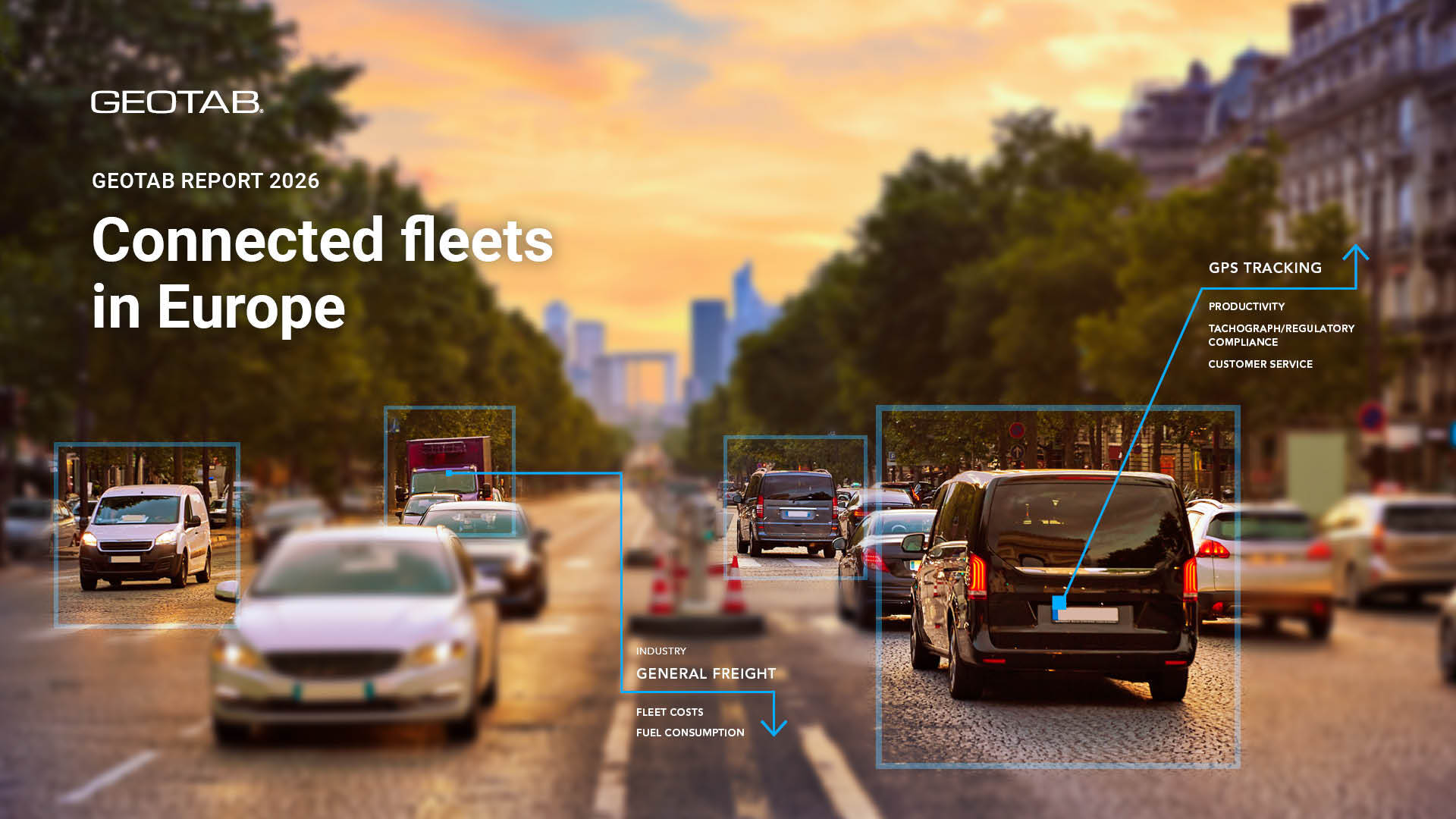
Geotab launches the 2026 Report: Connected Fleets in Europe
June 15, 2026
2 minute read