What an EV battery is actually worth at the end of a lease
Fabian Seithel on how battery degradation is the biggest variable in EV residual values and how most fleets are still managing it blind.

Associate Vice President, Sales and Business Development EMEA
Aug 20, 2026
Key Insights
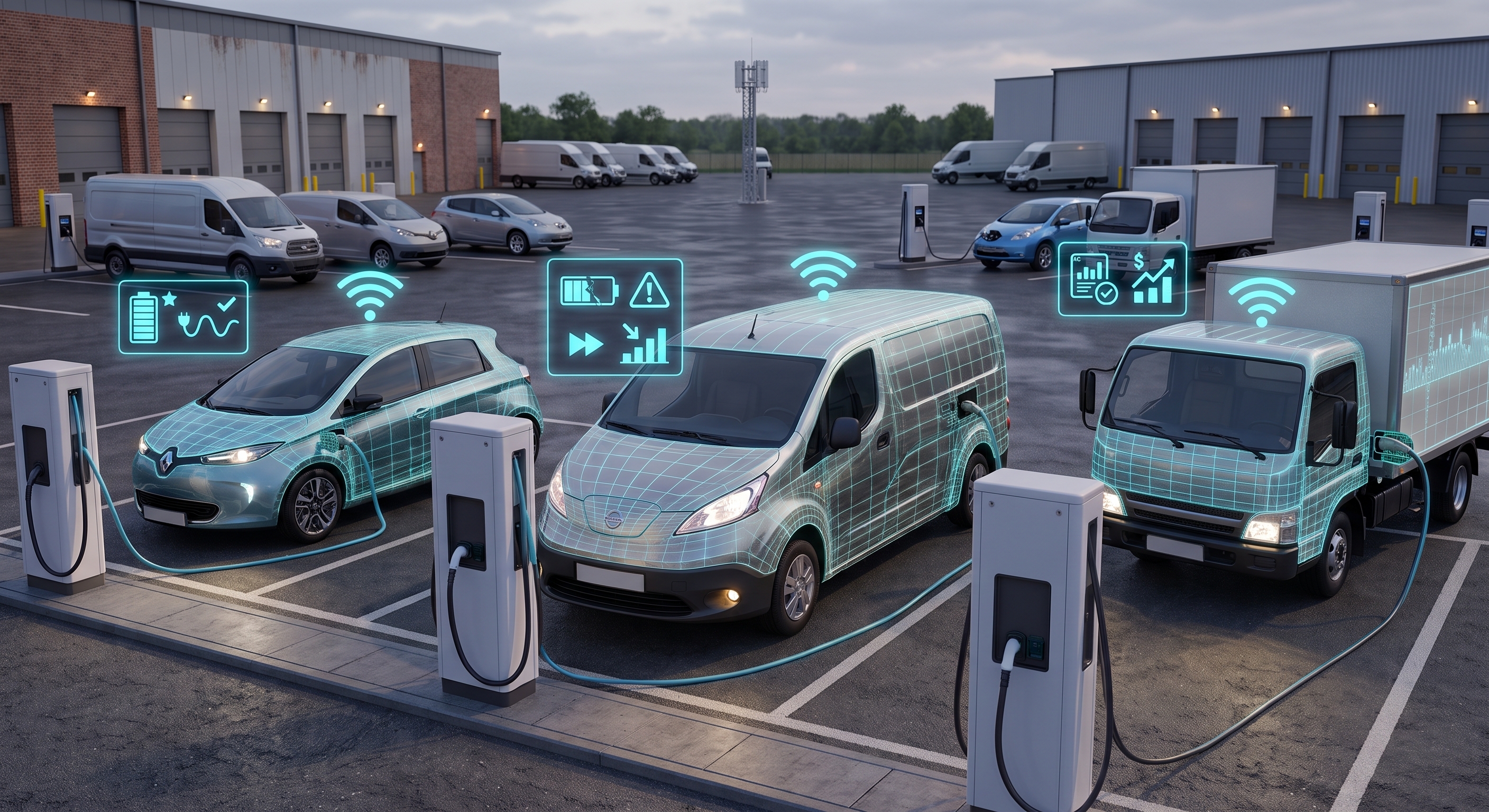
- EV batteries degrade at an average of 2.3% per year, but charging behaviour can push that rate to 3.0% and most fleets have no visibility into which vehicles are diverging.
- EVs with verified battery health documentation achieve on average 4% higher resale values, with some models reaching 9%.
- For the first time, leasing companies can see which vehicles are degrading faster than expected while there's still time to do something about it.
The residual value question is the one European leasing companies keep coming back to on EVs. Range anxiety has faded. Charging infrastructure is catching up. The question that hasn't gone away: when this vehicle comes back in three or four years, what will the battery be worth?
Until recently, the honest answer was that nobody knew with any precision.
Data from more than 22,700 electric vehicles across 21 makes and models gives the industry something more useful to work with. Average annual battery degradation runs at 2.3% per year, which means most batteries, managed properly, will retain well above 80% of their original capacity at the end of a typical leasing cycle. That is a reasonable baseline for residual value planning. The problem is the variance around that average.
Charging behaviour is the dominant variable
How a fleet charges its EVs matters more than almost any other operational factor. Vehicles relying heavily on DC fast charging above 100kW degrade at 3.0% per year, roughly double the rate of vehicles that primarily use lower-power AC charging. Hot climate operation adds around 0.4% per year on top of that. Neither is catastrophic on its own. Across thousands of vehicles, the cumulative effect on residual values adds up fast and it's largely invisible until the vehicles start coming back.
The difficulty is that most leasing companies have been managing this exposure without visibility. They've understood in principle that charging behaviour affects battery life. They haven't had a way to track it continuously across the fleet, identify which vehicles are degrading faster than modelled, or act before the gap shows up as a loss at vehicle return.
What monitoring changes
What changes with continuous monitoring is that problems become visible while there's still a lease period left to act on them.
In practice, fleet managers get a clear view of how every vehicle's battery is holding up; with the ones that need attention clearly separated from those that don't. The system also tracks the things that drive wear: how fast the vehicle charges, at what levels and in what conditions. The useful output is knowing exactly which vehicles are underperforming against the model and by enough to matter.
When the vehicle comes back at the end of the lease, the accumulated data can become a battery health certificate verified through an independent platform. Research based on used vehicle listings shows EVs with documented battery health achieve on average a 4% higher resale value, with certain models reaching 9%. For a leasing company managing tens of thousands of EVs, that is a number worth building into the business case.
The practical implication
Rather than discovering a battery performance problem when the vehicle comes back, fleet managers can catch it during the active lease period, adjust charging behaviour where possible and time the resale to recover more of the vehicle's value.
Geotab's battery health monitoring runs as a software layer within the existing platform, drawing on tracking hardware or manufacturer connections already in place. Nothing needs to be installed separately and there's no new system to learn. For fleets already on MyGeotab, it applies data already being collected to a direct commercial outcome.
The residual value question on EVs gets harder to avoid as return cycles start coming in at scale.The leasing companies building real answers now, from continuous operational data rather than depreciation assumptions, will be better placed when the returns start coming in.
Subscribe to the Geotab Blog
Associate Vice President, Sales and Business Development EMEA
As Associate Vice President of Sales & Business Development for EMEA, Fabian Seithel is an expert in connected cars, sustainability and fleet management platform solutions.
Table of contents
Subscribe to the Geotab Blog
Related posts
.jpeg)
Euro 1 to Euro 7: complete guide to vehicle emission standards
August 25, 2026
4 minute read


The vehicle is one puzzle piece, but you need a full solution to scale electrification.
June 17, 2026
5 minute read

How integrated data can help fleets scale up their EVs
November 5, 2025
2 minute read


Practical strategies for bus fleets to cut fuel costs and carbon emissions
November 3, 2025
2 minute read