Europe's congestion is costing fleets millions in wasted fuel, new Geotab data reveals
Geotab's European Urban Freight Efficiency Index exposes €2.6M in idle fuel waste. London ranks 6th, recording the highest passenger fuel consumption in the study.
July 14, 2026
•3 minute read
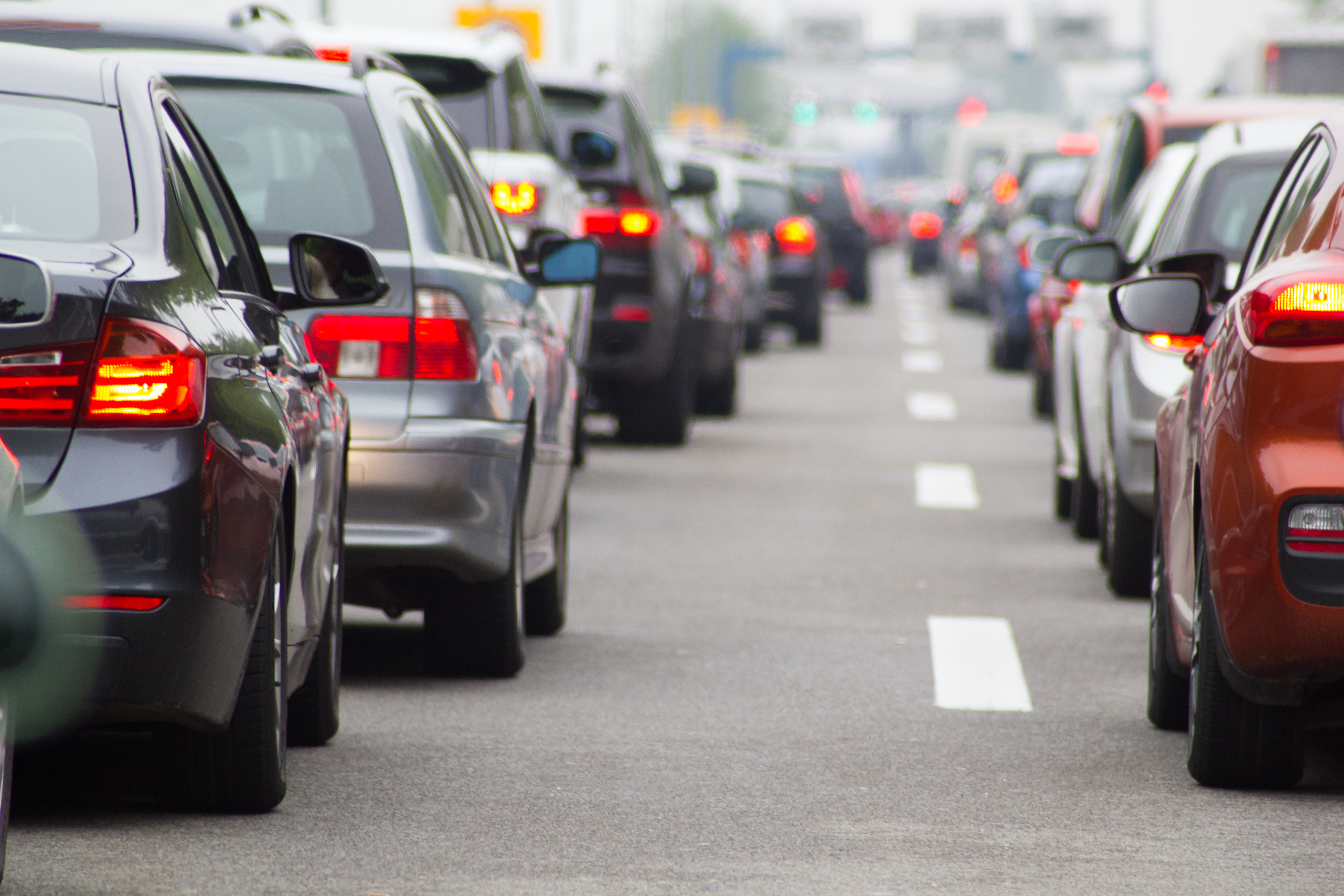
London ranks near bottom for efficiency as stop-start traffic pushes vehicle fuel consumption to the highest level in Geotab study
London, UK — 14 July 2026 — Geotab, a global leader in connected vehicle and asset management solutions, today revealed that more than 1.58 million litres of fuel were burned while Geotab-connected vehicles sat stationary in traffic across Europe's major capitals during 2025. Across the vehicles analysed, idle fuel waste reached an estimated €2.6 million over twelve months.
The findings form part of Geotab's European Urban Freight Efficiency Index, which analysed a full year of connected vehicle data across seven major capitals: London, Berlin, Amsterdam, Dublin, Rome, Paris and Madrid.
The €2.6 million figure reflects 2025’s average European fuel prices. European diesel has risen above €2 per litre in the first half of 2026, a 30% increase triggered by geopolitical instability in the Middle East. These fuel prices would bring the cost of the same volume of idle waste to approximately €3.6 million.
London: Europe’s unpredictable stop-start capital
Across the seven cities in the study, the relationship between congestion and fuel efficiency diverges sharply depending on how traffic moves, not just how much of it there is. The most congested city is not necessarily the one costing fleets the most in fuel.
London represents one of the most challenging operating environments for fuel efficiency among the seven cities. Ranked sixth (out of seven) in the Index, its stop-start traffic patterns prevent engines from reaching operating temperature, while its unpredictability compounds the problem. London recorded the highest passenger vehicle fuel consumption of any city analysed, at 15.60 litres per 100 kilometres, almost two-and-a-half times higher than Paris.
Of every litre of fuel burned in London by passenger vehicles, 13.6% is consumed while stationary. Commercial trucks idle at 11.1% of total fuel consumed. Lower than the passenger rate, but still among the higher truck figures across the study, reflecting the loading restrictions, bus lane exclusions and concentrated delivery windows that make London uniquely challenging for commercial vehicle operations.
The findings also show that slow traffic and wasteful traffic are not always the same thing. Berlin leads the overall Index and records lower truck idle waste than London, at 8.5% compared with 11.1%, while Amsterdam ranks second and keeps passenger vehicle idle waste to 10.5%, below London’s 13.6%. Dublin sits third overall but shows a similar passenger vehicle idling issue to London, with 12.9% of fuel consumed while stationary, although its trucks perform better at 5.8%. Rome and Madrid are the clearest counterpoints: both record just 2.8% truck idle waste, the lowest in the study, because traffic may be slow but continues to move. Paris shows the reverse pattern, with predictable journey times but the highest truck idle waste rate in the study, as commercial vehicles lose almost one in every five litres of fuel while stationary.
Edward Kulperger, Senior Vice President, EMEA at Geotab, said: “Congestion has traditionally been measured through the lens of time. How long journeys take, how busy roads become and how delays affect operations. What this analysis shows is that there is another layer of cost sitting beneath that discussion. When vehicles are idling, fleets are effectively burning money. Our data shows it costs them millions: fuel consumed with engines running and wheels going nowhere. Every litre of that is also an emissions cost. Beyond the time lost, the burden of congestion is financial and environmental. The fleets navigating it best are those with the clearest picture of where those costs are falling.”
Read the full report here.
Methodology
The European Urban Freight Efficiency Index scores each city on a scale of 0 to 100, based on two dimensions evaluated separately for passenger vehicles and trucks, then combined using a 60/40 weighting (passenger/truck) to reflect that most road demand comes from passenger vehicles while the truck component captures logistics efficiency specifically.
The first dimension, how traffic flows, accounts for 75% of each vehicle score and measures three things: congestion burden (cumulative congestion across the day, 50% weight), uncongested windows (hours per day of free-flowing traffic, 25% weight), and travel time variability (journey time predictability, 25% weight). The second dimension, what congestion costs, accounts for the remaining 25%, measuring mid-trip vehicle idling as a proxy for waste produced by the system. Higher idle ratios indicate congestion, poor signal timing and bottlenecks.
Idle fuel costs were estimated using 2025 average pump prices from the European Commission's Weekly Oil Bulletin for EU cities, and the UK Government's Weekly Road Fuel Prices dataset for London, converted at the 2025 average GBP/EUR rate of 1.185.
All scores are based on full-year 2025 data (January–December) from Geotab's connected vehicle platform across seven cities: Berlin, Amsterdam, Dublin, Rome, Paris, London and Madrid. Scores represent normalised, relative comparisons from a sample of connected vehicles, not a census.
Media Contact
pr@geotab.com
About Geotab
Geotab is a global leader in connected operations, video telematics and AI-powered insights. Trusted by more than 100,000 customers — from small and mid-size fleets to Fortune 500 enterprises and public-sector organisations, including the U.S. federal government, Geotab connects approximately 6 million vehicles and assets and processes 100 billion data points daily. With ISO/IEC 27001:2022, SOC2, FIPS 140-3 and FedRAMP authorisations, Geotab’s open platform and 700+ partner ecosystem unify safety, compliance and operations in a single system. Our mission: a safer, more efficient, and more sustainable world in motion. Learn more at www.geotab.com/uk and follow us on LinkedIn or visit our blog.
GEOTAB and GEOTAB MARKETPLACE are registered trademarks of Geotab Inc. in Canada, the United States and/or other countries.
Related News

Geotab launches Investigations and new safety capabilities to help fleets make every journey safer
September 14, 2026
3 minute read

September 8, 2026
3 minute read

Spain’s Summer Football Victory and Its Unexpected Impact on Traffic in Madrid
July 23, 2026
4 minute read