Geotab’s 2025 Sustainability and Impact Report shows fleets cutting fuel waste, reducing idling by up to 30%, and electrifying as energy costs rise
Geotab’s fifth Sustainability and Impact Report highlights how fleet data cuts fuel costs, reduces emissions and accelerates electrification across Europe.
March 25, 2026
•3 minute read
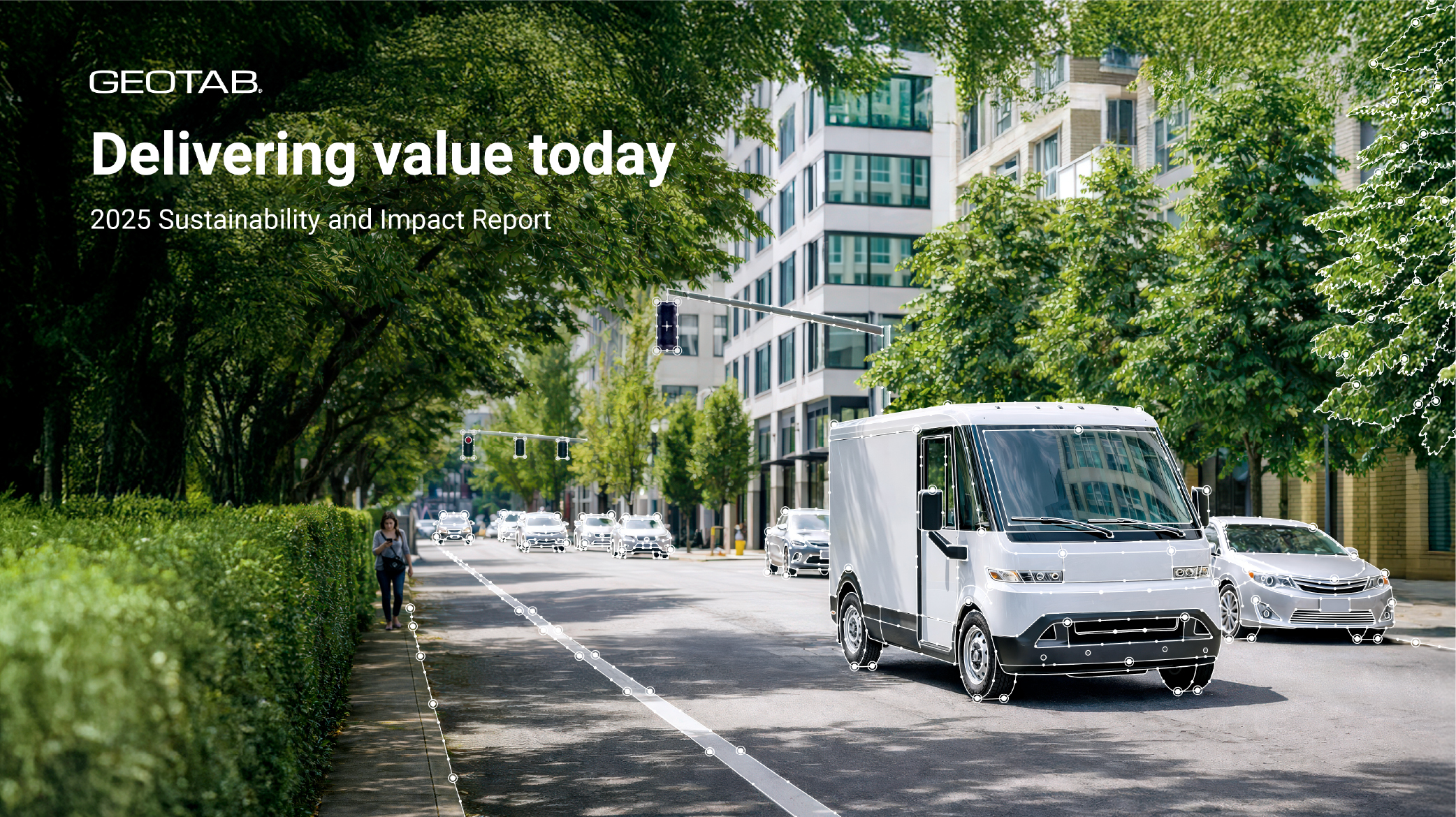
Businesses turn to data to cut costs and improve efficiency as fuel volatility persists, says Geotab
London, UK — March 25, 2026 — As rising fuel prices and ongoing energy volatility puts pressure on margins, businesses are turning to data driven strategies to improve efficiency and control costs. New findings from Geotab, a global leader in connected transportation, video and asset tracking solutions, show how organisations are reducing fuel waste, cutting idling by up to 30%, reducing collisions and accelerating electrification.
These insights come from Geotab’s fifth annual Sustainability and Impact Report. In the report, Geotab examines how organisations across five continents are using connected vehicle data to lower emissions, reduce fuel costs and improve road safety.
“Fuel volatility is a reminder that sustainability is a business strategy,” said Neil Cawse, Founder and CEO of Geotab. “When integrated with a pragmatic focus on short-term value, sustainability measures can drive both efficiency and profitability. Every operational improvement is an immediate, measurable step toward resilience and growth.”
Real-world impact: How global fleets are using data to decarbonise
Across industries and geographies, organisations are already translating fleet data into measurable environmental and financial outcomes. In 2025 alone, Geotab-connected electric vehicles travelled more than 870 million miles (1.4 billion kilometres), as fleets used data to make more informed decisions about vehicle efficiency, driver behaviour and electrification strategy.
- Construction & Infrastructure (UK): Tarmac reduced idling by 30% within three months, achieved 25% improved fuel economy, and cut speeding violations by 50%.
- Postal & Logistics (Belgium): bpost SA saved €1.6 million (£1.38 million) in fuel costs — equivalent to 1 million liters of diesel — by using EV data from Geotab to right-size its 10,000-van fleet and optimise charging schedules as it targets 100% CO₂ neutrality by 2030.
- Public Transit (Italy): Autolinee Federico achieved a 20% fuel reduction and approximately 40% decrease in violations and fines through driving behaviour optimisation and tachograph compliance.
- Wholesale Distribution (U.S.): Richards Building Supply projected $195,000+ (£146,000+) in annual savings from a 90-day pilot with Geotab Vitality, with a 41% improvement in safe driving behaviour and 8% reduction in collision risk.
- Municipal Government (U.S.):The City of Carmel, 2025 Geotab Innovation Award Winner for Sustainability, used a custom dashboard to validate emissions reductions from a biodiesel fuel pilot program.
As fleets face pressure from energy costs, emissions regulations and operational risk, many are turning to connected vehicle data to identify efficiency gains and guide long-term electrification strategies.
“Geotab’s greatest contribution to sustainability is helping the transportation industry optimise operations. Everyday we see businesses reduce fuel use, cut emissions and make more strategic choices around electrification using data and AI insights. But sustainability is a collective effort, so we must also hold ourselves accountable. This report highlights both the progress of our customers and the steps we are taking as a company to reduce our own impact,” added Cawse.
Geotab’s sustainability progress
Alongside customer impact, the report also outlines Geotab’s own progress.
- CDP Climate Change score improved to B, reflecting strong performance in environmental policies, risk disclosure, and industry collaboration.
- EcoVadis Silver Medal sustainability rating, placing Geotab in the top 15% of companies assessed.
- Reduced Scope 2 emissions by 42.5% year-over-year (location-based) — an 87.5% reduction from the 2019 baseline.
- Reduced Scope 3 emissions by 14% through supplier engagement and the adoption of primary activity-based data, providing a more accurate reflection of its true value chain impact.
- First Climate-Related Disclosure Report published, voluntarily evaluating climate risks and opportunities under different future climate pathways.
- Product Carbon Footprint baseline established for the Geotab GO device and core hardware portfolio — enabling targeted reduction across the product life cycle.
- 8,500+ lbs of devices recycled through the GO Recycle program, a 52% increase year-over-year
The company continues to work toward its science-based target of reducing absolute emissions across Scopes 1, 2 and 3 by 50% by 2030, with a long-term commitment to reach net-zero emissions by 2040.
Investing in people and the transition
Geotab is investing directly in its workforce's shift to cleaner transportation. More than $2 million USD (£1.5 million) was provided through the Geotab Electric Vehicle Incentive, which offers employees a subsidy of up to $6,000 USD (£4,500) to purchase or lease an EV. The company maintains 41 free EV charging stations, offers full reimbursement for employees who commute using public transit, and launched a zero-emission electric pool car programme for business travel in 2025.
Geotab was recognised with a SEAL Business Sustainability Award for its sustainable transportation programme and an EPEAT Purchaser Award for sustainable IT procurement. The company was also ranked the #1 commercial telematics vendor worldwide for the fourth consecutive year by ABI Research.
About the Report
The Geotab 2025 Sustainability and Impact Report is an annual report highlighting how Geotab is reducing emissions and environmental impact across its operations. The latest report covers January 1 to December 31, 2025 results and was prepared with reference to the Global Reporting Initiative (GRI) Standards and aligned with the United Nations Sustainable Development Goals (SDGs), and the Greenhouse Gas (GHG) Protocol. Geotab has also released a complementary Climate-Related Disclosure report, which provides a comprehensive analysis of Geotab’s climate strategy in full alignment with the Task Force on Climate-related Financial Disclosures (TCFD) recommendations.
The full report is available in English, French, German, Italian, Portuguese, Spanish and Dutch. View the 2025 Sustainability and Impact Report and learn more about sustainability at Geotab at: https://www.geotab.com/uk/about/corporate-sustainability/.
Media Contact
pr@geotab.com
About Geotab
Geotab is a global leader in connected vehicle and asset management solutions, with headquarters in Oakville, Ontario and Atlanta, Georgia. Our mission is to make the world safer, more efficient, and sustainable. We leverage advanced data analytics and AI to transform fleet performance and operations, reducing cost and driving efficiency. Backed by top data scientists and engineers, we serve approximately 100,000 global customers, processing 100 billion data points daily from more than 5 million vehicle subscriptions. Geotab is trusted by Fortune 500 organisations, mid-sized fleets, and the largest public sector fleets in the world, including the US Federal government. Committed to data security and privacy, we hold FIPS 140-3 and FedRAMP authorisations. Our open platform, ecosystem of outstanding partners, and Geotab Marketplace deliver hundreds of fleet-ready third-party solutions. This year, we're celebrating 25 years of innovation. Learn more at www.geotab.com/uk and follow us on LinkedIn or visit our blog.
GEOTAB and GEOTAB MARKETPLACE are registered trademarks of Geotab Inc. in Canada, the United States and/or other countries.
Related News

Geotab’s Aaron Jarvis climbs the GreenFleet 100 Most Influential list
March 10, 2026
1 minute read

Data Privacy Day: What Do Modern Fleets Need to Consider When Navigating Data Stewardship
January 28, 2026
2 minute read

Noise Across the Channel: Why UK Fleets Must Hold the Line on Electrification
December 18, 2025
2 minute read
%20(1).jpeg)
Chaotic Black Friday ahead: Geotab warns of gridlock and delays
November 11, 2025
2 minute read