How Australian fleets are managing the switch to EVs
More than half of Australian fleets now run Electric Vehicles (EVs) or hybrids. A new Geotab survey of 517 fleet managers shows what is driving the shift and how telematics data is shaping electrification plans.

By Geotab Team
Oct 15, 2026
Key Insights
Key insights
- 55% of Australian fleets already include EVs or hybrids and 43% plan to increase electrification within one to three years.
- Battery status visibility is the single most common gain reported by fleets running EVs alongside GPS tracking, at 60%.
- 50% of fleets achieve their sustainability goals and 44% cut operational costs by switching to EVs.
Fuel prices, emissions targets and customer expectations are at the top of the agenda for most Australian fleet managers. EVs help to address all of these pressures, which is prompting more Australian organisations to start switching their fleets.
A Geotab analysis of real-world EV performance found that an electric vehicle can save approximately $25,000 over its lifetime and 75% of light commercial vehicles could already be replaced by a comparable EV based on current driving patterns.
Fuel is the biggest single cost pressure for most Australian fleets, with 37% of small fleets and 30% of mid-sized and large fleets allocating around a fifth of their operational budget to it. It is also one of the five biggest daily challenges named by 60% of fleet managers we surveyed for Geotab Connected Fleets in Australia Report 2026. However, the benefits extend beyond cost savings, particularly when managers have the data to support their decisions.
How many Australian fleets are already running EVs?
While most Australian fleets have begun integrating EVs, few have moved beyond pilot programs.
According to the Connected Fleets Report, 55% of Australian fleets now include EVs or hybrids. But among those already operating EVs or hybrids, 49% report that they account for less than 5% of their fleet.
Some have progressed further. In fact, 28% say that EVs and hybrids now represent over 25% of their vehicles.
While many fleets are taking a gradual approach, the research suggests electrification is becoming a near-term priority. In fact, 43% of organisations planning to expand their electric vehicle fleet expect to do so within the next one to three years, while 14% intend to increase adoption within the next 12 months.
Is EV uptake driven by cost or by sustainability?
The short answer is both. For most organisations, the transition to electric vehicles is delivering environmental and operational benefits.
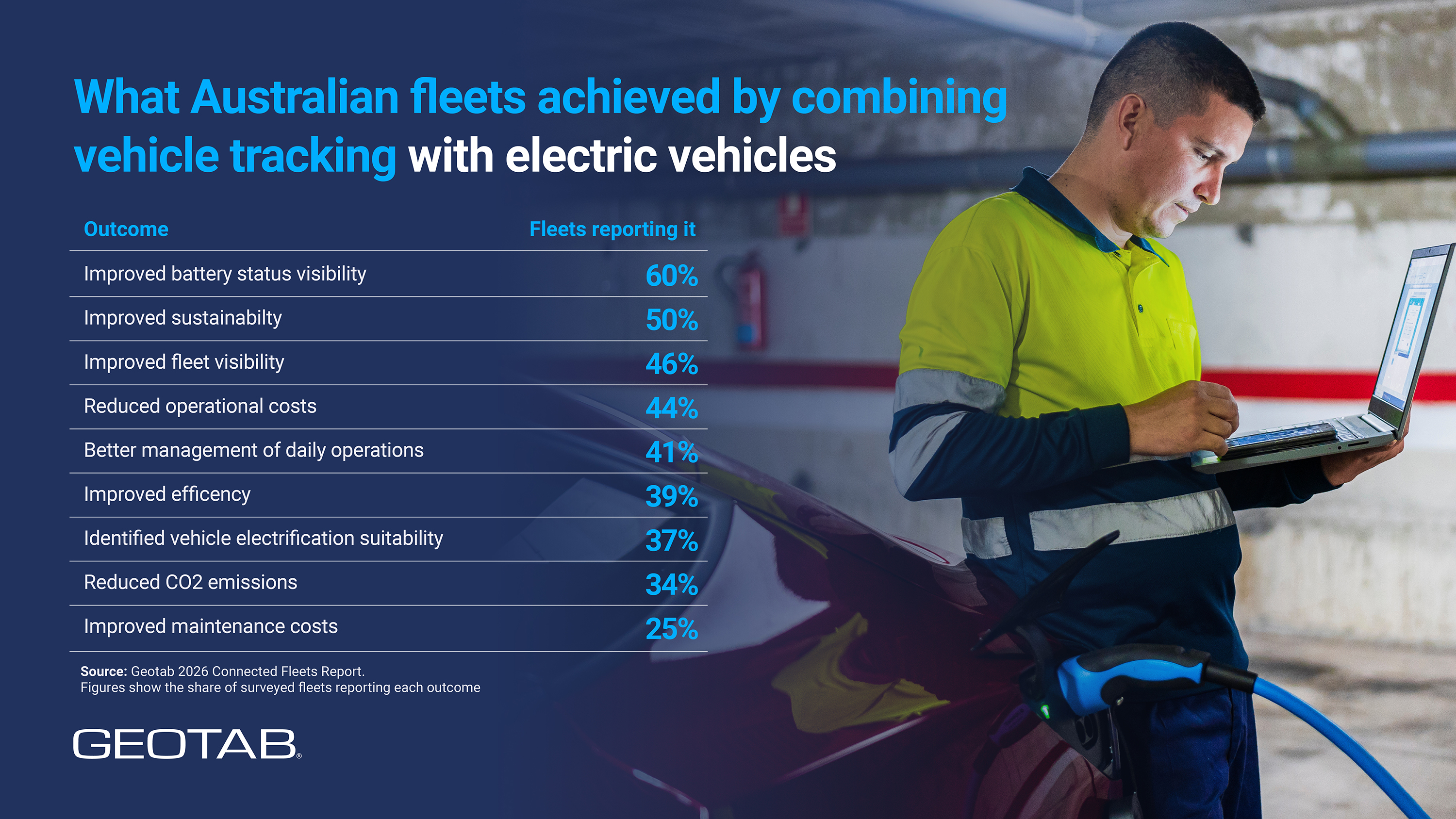
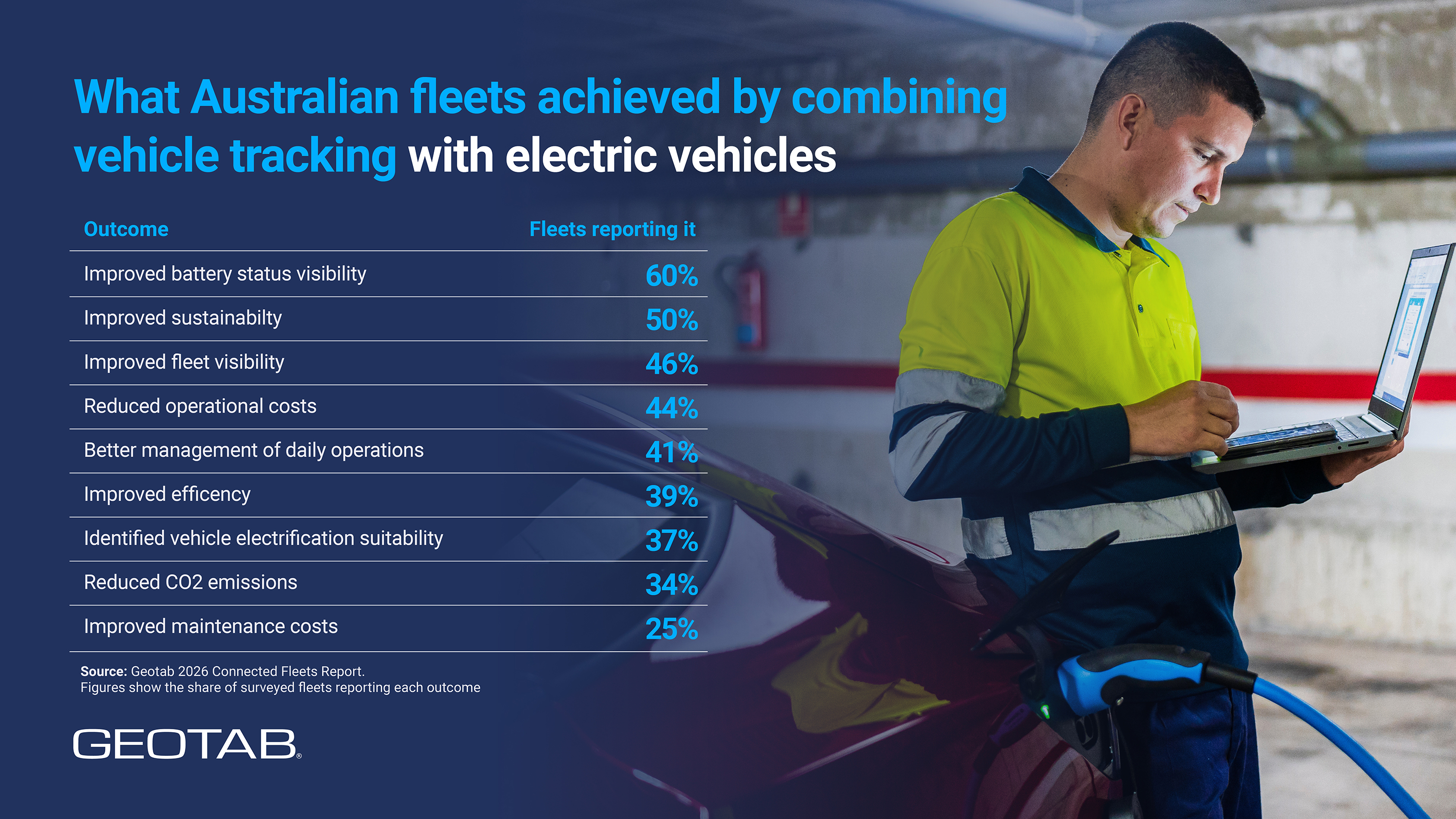
The report found that among the fleets that combine GPS tracking with electric vehicles, 50% reported improvements in sustainability, while 44% reduced operational costs and 34% achieved lower CO₂ emissions.
As more organisations add electric vehicles to their fleet, the focus shifts from why to electrify to how to manage them effectively. Accurate, real-time vehicle data is essential for managing this shift effectively.
Sustainability reporting is also an increasingly important consideration for larger fleet operators. Organisations are often asked to demonstrate emissions performance to customers, insurers and procurement teams as part of tender processes.
For fleets already using telematics, this information can be drawn directly from operational data rather than estimates, helping organisations track progress and report on emissions with greater confidence.
What Australian fleets achieved by combining vehicle tracking with electric vehicles
Why is battery visibility the number one gain?
Battery status visibility was the most commonly reported benefit among fleets combining GPS tracking with electric vehicles, with 60% identifying it as a key advantage. As organisations introduce more EVs into their fleet, access to real-time battery data becomes an important part of day-to-day operations.
Fleet managers need to know which vehicles are charged, whether they have sufficient range to complete their assigned routes, and whether charging has occurred as planned. Without that visibility, vehicles can be underutilised or unnecessary range concerns can influence scheduling decisions.
Battery health is also an important consideration over the life of the vehicle. Geotab's analysis of more than 10,000 electric vehicles found average battery degradation has improved from 2.3% per year in 2019 to 1.8% per year, suggesting many EV batteries can remain in service for 20 years or more under normal operating conditions.
How do you decide which vehicles to electrify first?
This is where the data does the heavy lifting. In fact, 37% of fleet managers surveyed said telematics helped them identify which cars to switch for EVs.
Daily distance, route profile, dwell time at depot, load patterns and duty cycles all come out of existing telematics records. When they are matched against the EV models on the market, it’s easy to identify which vehicles could be deployed immediately, which ones might need more charging infrastructure and which ones are not a good fit.
Geotab's Electric Vehicle Suitability Assessment does this analysis using six to 12 months of a fleet's own driving data, then makes brand-agnostic model recommendations based on what is available in Australia, with projected cost savings and avoided emissions attached.
Charging infrastructure is usually the largest cost in an electrification business case, and the number of chargers you need depends on where vehicles sit and for how long. Fleets that make these decisions based on their own dwell data tend to make more cost-effective decisions than those that work on assumptions.
What changes once the EVs are on the road?
A key argument for EV adoption is a reduction in maintenance costs. With no engine oil, spark plugs, exhaust system or transmission to service, EVs are easier to maintain. In fact, among respondents who have switched, 25% reported lower maintenance costs.
Even so, there are some complexities to EV adoption. Organisations are transitioning gradually, which means many are managing mixed fleets made up of both electric and internal combustion vehicles. This introduces new operational considerations, from charging requirements and battery monitoring to differing maintenance schedules and operating costs.
Connected fleet technologies help bring these vehicle types together through a single view of fleet performance. Among organisations combining GPS tracking with electric vehicles, 46% reported improved fleet visibility, 41% improved day-to-day operations and 39% improved efficiency.
Where should fleet managers start?
For many Australian fleets, the question is no longer whether to electrify, but where to start. The organisations making the greatest progress are leading with data, running the numbers on their fleet, working out which vehicles and routes already suit an EV, and which don't.
Geotab's EV Suitability Assessment is specifically built to help fleet managers who are considering AI adoption. It gives them a clear vehicle-by-vehicle starting point, using real driving data to identify which vehicles could switch to electric right now without disrupting operations.
With more than half of Australian fleets already incorporating EVs or hybrids, electrification is already mainstream. The fleets seeing the strongest results are the ones that swapped guesswork for data before they made the switch.
Do you already have the data to figure out which vehicles to switch? Find out what Australian fleets are doing. Download the full report. And find out which of your vehicles might be ready to switch right now.
The Geotab Team write about company news.
Related posts
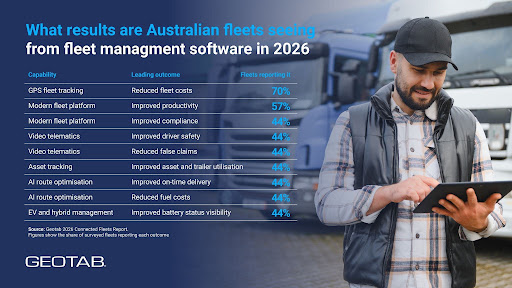
How does fleet management software help reduce costs and improve compliance in Australia?
October 15, 2026
2 minute read

.jpg)
How Small Businesses Use Telematics to Optimise Operational Expenditures
October 13, 2026
2 minute read

How video telematics is improving safety and reducing risk for Australian fleets
October 8, 2026
2 minute read
.jpeg)
Beyond Van Tracking: Turning Fleet Data into Bottom-Line Growth
October 6, 2026
3 minute read

Asset tracking: Halting Australian Construction Site Theft
September 23, 2026
2 minute read