Fleet connectivity at scale is an organisational decision — not a product one
At Connect Europe 2026, Alphabet International, Alphabet UK, and TotalEnergies shared what it took to turn connected fleet data into measurable outcomes. The consistent finding across three vantage points: simplicity and driver trust matter more than platform capability.

By Geotab Team
Jun 9, 2026

Key Insights
- Start with one problem. Alphabet International narrowed 25 potential use cases to two. TotalEnergies focused on three safety metrics. Six months in: zero active compliance flags.
- Driver trust is not a soft metric. It determines whether outcomes are achievable at all. Policy and communication work must come before platform activation.
- Build on what is universally available today — mileage and consumption — and expand as OEM data standardisation matures.
- ROI is organisational before it is financial: the shift from reactive fleet management to anticipatory decision-making is the primary return.
- Three questions that determine whether a rollout creates value: What problem are we solving today? Do we have driver buy-in? Can we actually act on this data?
Six months into a fleet telematics pilot, TotalEnergies ran its compliance report. The result: zero active flags. Not a reduction from a previous baseline. Zero. Every driver hitting mandatory rest breaks, every vehicle within speed limits, every seat belt in use — consistently, without enforcement.
That outcome did not come from technology. It came from how the rollout was handled.
This is the part of connected fleet ROI that rarely makes it into a business case.
The real bottleneck is not data access
Most fleets today have access to vehicle data. Telematics penetration across the European leasing market is growing, OEM data sharing is expanding, and platforms like Geotab can surface hundreds of data points per vehicle in real time.
The bottleneck is activation — the gap between data flowing into a platform and decisions actually being made on the back of it.
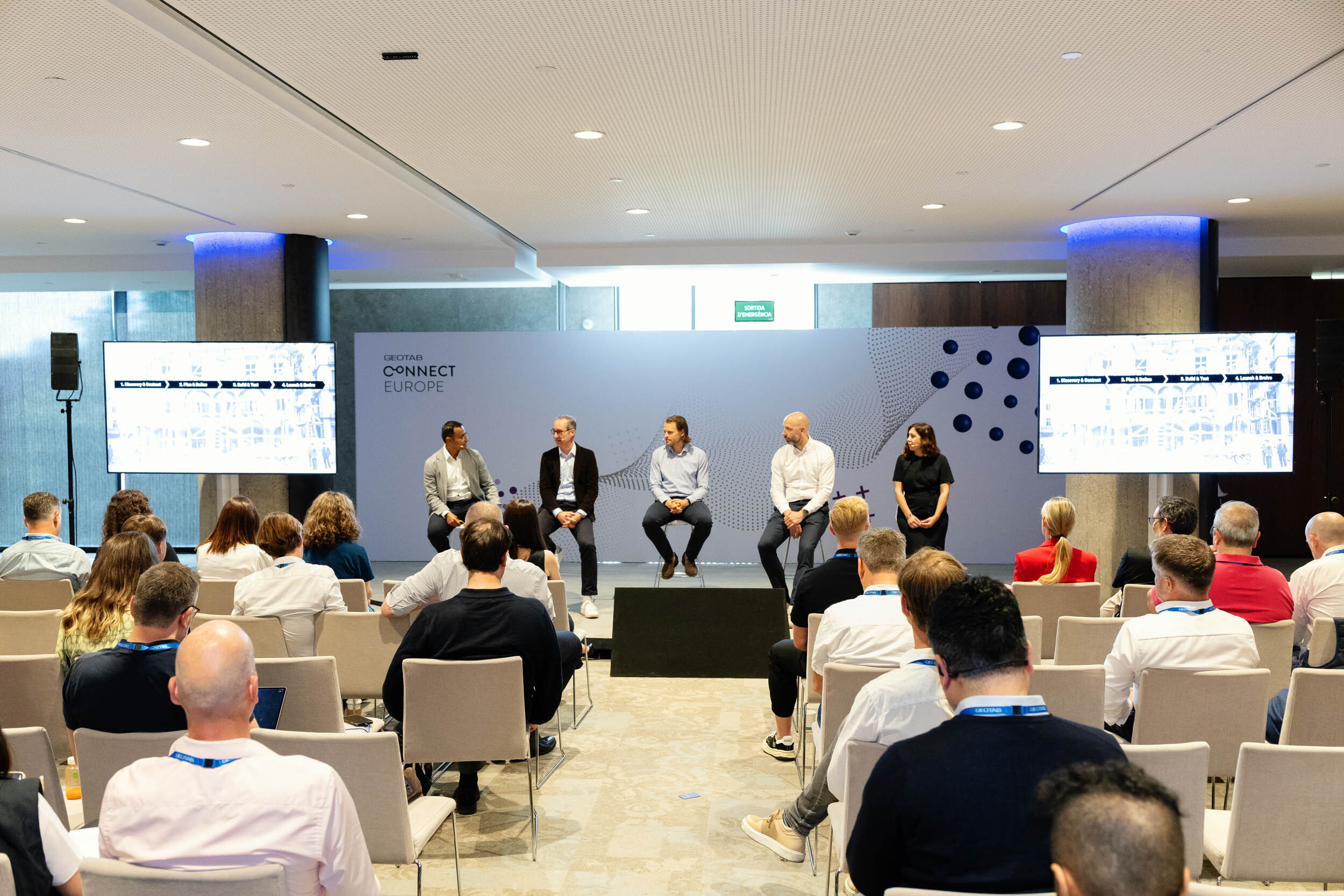
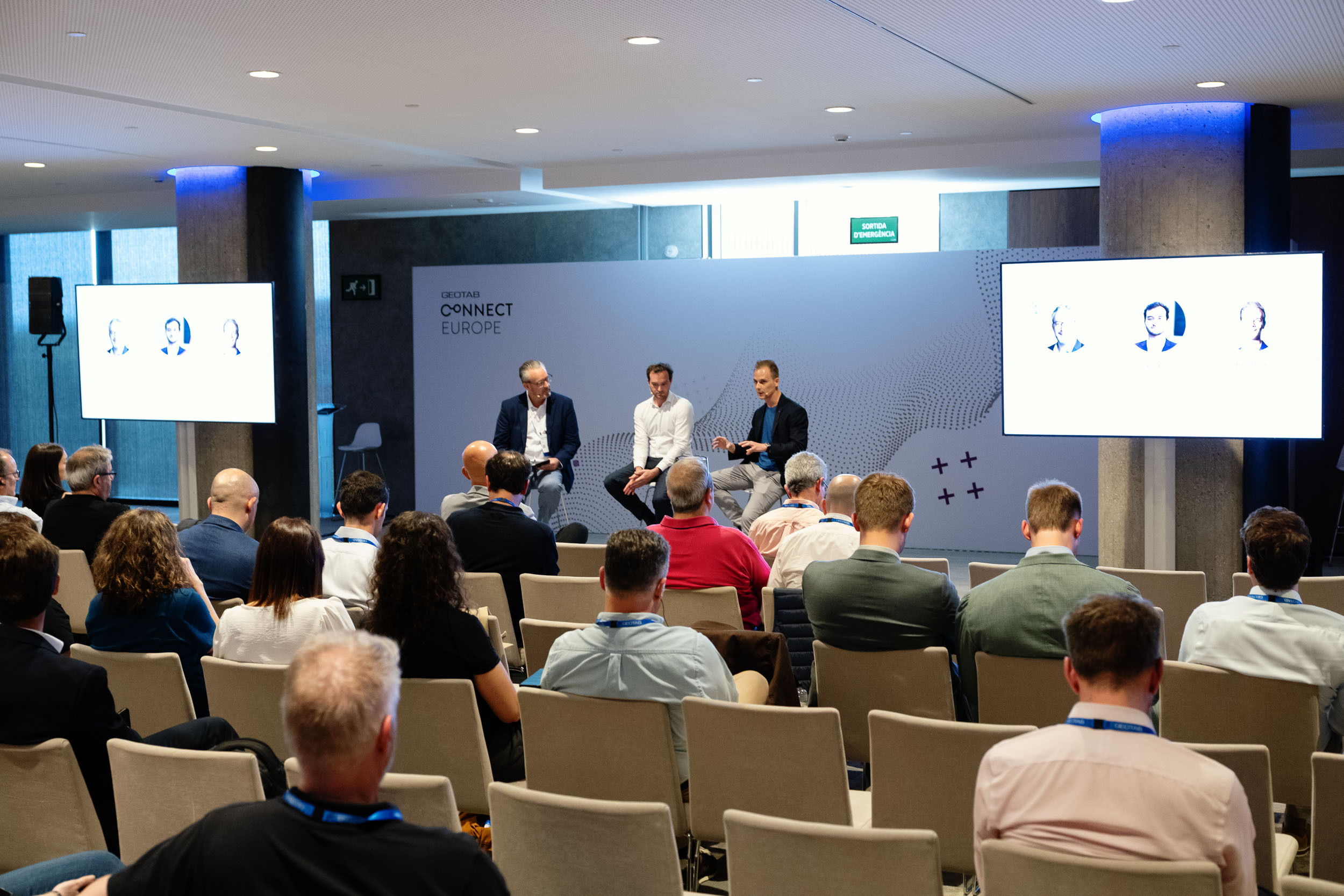
At Connect Europe 2026, Geotab EMEA yearly conference, three organisations that have crossed that gap shared what it took: Alphabet International across multiple European markets, Alphabet UK balancing internal efficiency with customer-facing value, and TotalEnergies as a fleet customer six months into a safety pilot. The consistent finding: start simpler than you think you need to, and spend as much time on the human rollout as on the technical one.
What made the panel’s perspective distinctive was not three organisations sharing telematics experience in isolation — it was three vantage points on the same challenge. Alphabet International brought the strategic lens: scalability and standardisation across European markets. Alphabet UK brought the operational rollout and customer enablement perspective: how to structure data so customers can actually act on it. And TotalEnergies brought the customer outcome view — what compliance, safety, and driver trust look like when a rollout is executed with the human dimension at the centre.
Start with one problem. Solve it completely.
Alphabet International identified approximately 25 potential use cases when it first assessed what a connected fleet platform could deliver. Mileage tracking, consumption monitoring, predictive maintenance, driver behaviour scoring, geo-fencing, route optimisation. They pursued two.
“Focus on the low-hanging fruits,” said Julia Frieden from Alphabet International. “Focus on the real needs instead of looking at the bigger picture and all the opportunities.
For Alphabet UK, the starting point was mileage — not because it is the most sophisticated metric, but because it is the one that directly enables proactive servicing, reduces vehicle off-road time, and creates a foundation customers can immediately act on. When the team initially activated a broader data set, they had to pull back. “We went fully fledged with quite a few data points,” said Danielle Whitehouse, Product Manager at Alphabet UK, “and then had to wind it back to make sure that we had the foundation solid.” The working dataset the team settled on was intentionally constrained: VIN, odometer, and fuel consumption. Simplicity and scalability were the explicit design principles — not interim compromises while waiting for a more sophisticated setup.
For TotalEnergies, the scope was even tighter: safety, and nothing else. As an energy company, road safety is non-negotiable. The pilot focused on three metrics — mandatory rest breaks every two hours, speed limit adherence, seat belt usage. Six months later: zero active flags. Full compliance.

The variable most organisations underestimate: driver trust
Neither of those outcomes — Alphabet UK’s service efficiency gains or TotalEnergies’ compliance results — happened because the platform worked. They happened because the drivers accepted it.
It is also the variable that appears last in most implementation plans.
The first reaction from TotalEnergies drivers when the pilot was announced was concern about surveillance. A reasonable concern: the platform tracks location, speed, rest stops, and driving patterns in real time. The response from the team was not to minimize those capabilities. It was to be direct about intent — safety, not monitoring — and to build trust through design. The platform was configured to switch off outside working hours. GDPR implications were addressed explicitly before a single device was activated. Drivers were invited into the pilot, not enrolled in it.
“They trusted us,” said Carole Gallon from TotalEnergies. “And it worked very well.”
At Alphabet UK, driver involvement went further. Once the platform was live, drivers proposed enhancements — how to log mileage, how to annotate vehicle checks, which geo-fencing rules made sense for their routes. Team leaders flagged use cases the product team had not considered.
A platform that drivers tolerate produces data. A platform that drivers trust produces behaviour change.
What “one data layer” actually means at scale
Alphabet International’s model answers a question that leasing companies operating across multiple markets consistently struggle with: how do you deliver consistent data-driven services to fleet customers when every market has different regulations, different OEM relationships, and different levels of telematics maturity?
Their answer: don’t try to deliver everything everywhere at once. Build one data layer centrally — ingesting mileage and consumption from connected vehicles across OEMs — and expose it through existing fleet management tools. Alphabet’s fleet reporting platform now includes enriched data from Geotab’s integration, giving fleet managers access to the metrics they actually use without requiring them to log into a separate system.
OEM data is not yet standardised — not every manufacturer shares the same variables at the same granularity. Building around what is universally available today — mileage, consumption — creates a foundation that expands as the data landscape matures. “The moment the OEMs are ready,” said Julia, “we will be ready as well.”
ROI is not a number. It is a shift.
The financial return on connected fleet data — reduced downtime, lower repair costs, fewer reactive interventions — is real and measurable. But it is the secondary ROI. The panel was deliberate about framing ROI more broadly than financial return: reduced operational friction, compliance achieved by design, driver safety and wellbeing, and behavioural change that compounds across the fleet over time.
The primary one is organisational: the shift from a fleet management model that responds to problems to one that anticipates them. From reactive maintenance to scheduled intervention. From compliance audits to compliance as a default state. From driver monitoring to driver partnership.
Leon Aink framed it directly at the close of the session: “The most important thing over a day of a driver is to come back home safe. And the value is really coming from acting on it.” The right conversation, in his framing, does not start with what the platform can do — it starts with the problem the fleet has today, and how it gets solved.
The challenge, consistent across all three perspectives, is no longer access to data. The challenge is acting on it — operationally and consistently, with the processes and mandate to turn insight into decision.
Three questions that determine whether a rollout creates value
Three questions that separate successful deployments from stalled ones:
- What problem are we solving today? Not in 18 months. Not eventually. Today. The answer should be specific enough that you can measure it in six months.
- Do we have driver buy-in? If the answer is “not yet,” everything else waits. The policy and communication work comes before the platform.
- Can we act on this data? If the reporting exists but no one has the mandate, the process, or the time to respond to it, the data creates overhead — not value.
Fleet connectivity at scale is not a product decision. It is an organisational one. The organisations getting it right are the ones treating it that way.
And now? Join us next year in Paris, June 7–9, 2027, for more.
Subscribe to the Geotab Blog
The Geotab Team write about company news.
Table of contents
Subscribe to the Geotab Blog
Related posts

Why manual spreadsheet fleet tracking fails UK small businesses
September 9, 2026
2 minute read

How small UK fleets hedged against the 2026 fuel price surge
September 9, 2026
3 minute read


Insights via OEM data with Geotab: A Source of Competitive Advantage for Businesses.
June 19, 2026
4 minute read
The vehicle is one puzzle piece, but you need a full solution to scale electrification.
June 17, 2026
5 minute read