Rethinking Last-Mile Delivery
How Cargo Bikes Outperformed Trucks Across Every Metric
View the ebook
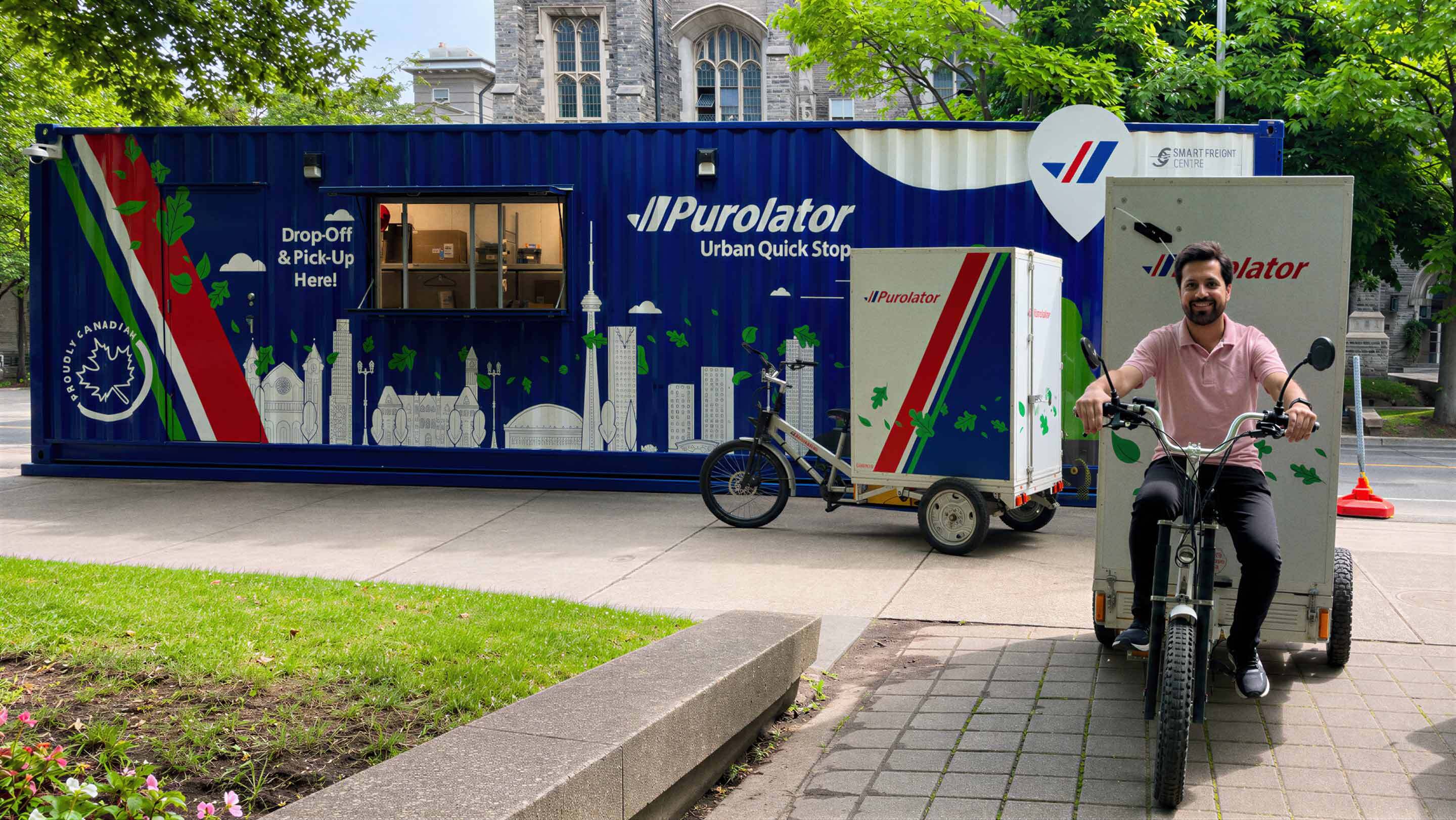
A research collaboration between the University of Toronto, Purolator, the City of Toronto, and Geotab tested an unconventional hypothesis: what if we replaced the delivery truck entirely? The answer — backed by GPS data, air quality sensors, and operational analysis — was more surprising than anyone expected.
Report at-a-glance:
- The service area surprise: Cargo bikes dominated a vastly larger urban zone than the research team anticipated, outperforming trucks on cost efficiency across most of downtown Toronto's core — challenging the assumption that trucks are the default mode for urban deliveries.
- More stops, shorter stops: E-cargo tricycles made 30% more stops per day than trucks (25 vs. 19), yet spent just 7.2 minutes per stop compared to 17.8 minutes for trucks — a 2.5x reduction in curbside dwell time.
- A worker health finding: Truck drivers are exposed to 25% higher levels of fine particulate matter (PM2.5) inside their cabs than pedestrians walking the same streets. E-cargo tricycles eliminate this occupational health risk entirely.
- 3 tonnes of CO₂ per truck, per year: Replacing one delivery truck with an e-cargo tricycle eliminates up to 3,400 kg of greenhouse gas emissions and removes approximately 5,000 km of vehicle travel from city streets annually.