Unified data: The key to fleet liability reduction for government agencies
Fleet risk grows when data operates in silos. Discover how integrating three key data streams drives meaningful fleet liability reduction.

By Nicki Schill
Mar 18, 2026
Key Insights
- The agencies most exposed to collision liability are often not those with the worst drivers, but those operating with the most fragmented data infrastructure.
- Coaching decisions made without correlated data don't just miss the mark — they erode driver trust and quietly undermine the safety program from within.
- A unified data record allows agencies to close liability gaps before a claim is ever filed, shifting fleet safety from reactive crisis response to a defensible, proactive prevention strategy.
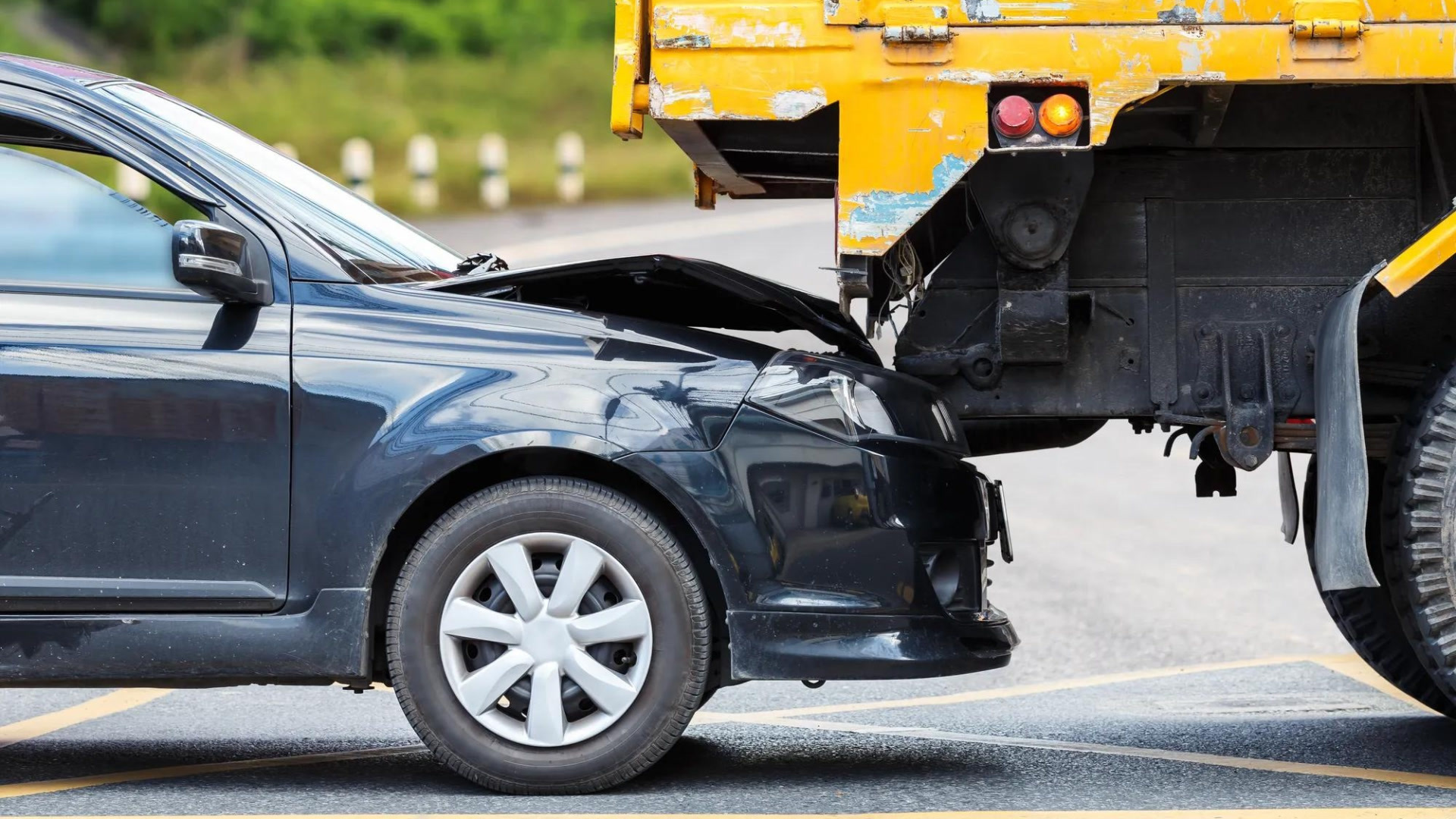
Fleet risk doesn't always announce itself with a major collision or a seven-figure lawsuit. Sometimes it hides in a coaching decision made without enough context, a maintenance issue that went unconnected to an incident or a footage gap that left your agency without a clear answer when one was urgently needed. By the time the exposure becomes visible, a claim has already been filed, a driver's record has already been questioned and the data that could have told the full story no longer exists in a form that holds up.
Municipal fleet managers are navigating one of the most demanding risk environments in recent memory. According to a 2025 Geotab survey of U.S. fleet professionals, 86% believe collision risk has increased over the past five years. Bodily injury severity has spiked 9.2% according to LexisNexis' 2025 Auto Insurance Trends Report, and average third-party bodily injury payouts now exceed $27,000 per injured party (up 38% since 2020).
Many agencies already have telematics, cameras or both, and that investment creates a reasonable assumption that risk is being managed. But having data is not the same as having insight, and that gap is where exposure quietly builds. When driver, vehicle and contextual data operate in isolation, each stream tells a partial story that can be as misleading as having no data at all. The result is coaching decisions that miss the mark, maintenance risks that go undetected and incident records that won't withstand scrutiny when it counts most. The context that emerges from connecting those streams is what transforms raw data into defensible intelligence. That shift from fragmented data to a connected safety record is the foundation of any serious fleet liability reduction strategy.
This post explores the three key data streams driving fleet safety, why viewing them in isolation undermines their value and how unifying them into a single view produces the kind of smart, context-rich insights that protect both the agency and the people behind the wheel.
The gap that leaves agencies exposed
Most agencies are not starting from zero. GPS data, engine diagnostics and dash cam footage are increasingly common across government fleets. The challenge lies in what happens when those sources never communicate with one another.
Fragmented data doesn't just limit what agencies can see; it also limits what they can do. In a claims context, it determines what they can prove. A harsh braking flag without road context becomes a coaching exercise delivered to a driver who acted correctly. A clean vehicle health report that ignores behavioral factors leaves a mechanical failure without explanation at precisely the moment one is needed. Camera footage, unsupported by telematics, hands investigators an open timeline and no reliable way to close it. Incomplete records are not a neutral condition. They are a liability position, and in litigation, the agency that cannot tell a complete story is already at a disadvantage.
The consequences of these gaps extend beyond the agency. Drivers bear a disproportionate share of that exposure, often shouldering blame for incidents that complete data would have contextualized or disproved. Without tools like telematics and road-facing cameras to provide incident context, agencies are left reconstructing events from memory, witness accounts and incomplete reports. But closing these gaps requires more than better individual tools. It requires a framework for integrating the agency's existing data into a coherent, correlated whole. That integration is what makes fleet liability reduction achievable in practice, not just in principle.
The role of driver, vehicle and contextual data in fleet risk management
Fleet safety records draw from three data streams, each measuring a different dimension of risk and each with its own limitations when reviewed alone.
How driver data informs fleet risk and liability exposure
Driver data from driver monitoring systems (DMS) captures the behavioral risk factors within an operator's control: harsh acceleration, hard braking, distracted driving, fatigue indicators and seatbelt compliance. A second layer of driver data comes from outward-facing advanced driver assistance system (ADAS) alerts, which capture forward collision warnings, lane departures and tailgating behavior. Together, these two systems document both what the driver was doing and how they were navigating the environment immediately around them.
Without environmental context, however, behavior alone cannot establish whether an action reflected poor judgment or sound decision-making. A driver flagged repeatedly for hard braking may have been responding correctly to a hazardous road corridor each time. Coaching based on that flag alone risks penalizing appropriate responses and undermining the trust that any effective fleet safety program depends on. ADAS data adds another dimension to that same scenario. A lane departure alert recorded in the same corridor might reflect a driver avoiding a road hazard rather than inattentively driving. Without the outward-facing context that ADAS provides, that alert carries the same ambiguity as any other isolated flag.
Driver data also serves as the agency's primary verification layer for operator behavior. Without it, there is no way to confirm whether a driver was speeding or accelerating aggressively along a route, even when vehicle diagnostics show a healthy asset and contextual data indicate clear conditions. Those behavioral factors carry direct liability implications and without driver data, they remain undocumented.
Liability implication: Acting on driver data without contextual support risks misattributing fault and weakening your agency's coaching credibility. Failing to collect it at all leaves your agency without any behavioral record to draw on when a collision occurs.
How vehicle data supports fleet safety and incident defense
Vehicle data documents the mechanical health, diagnostic history, maintenance record, fuel usage and collision history of each asset in your fleet. In a liability investigation, it answers a critical secondary question: what was the vehicle's condition at the time of the incident?
A clean maintenance record alone is insufficient. It does not reflect how the vehicle was operated or the environmental conditions it was subjected to. A mechanical fault that contributed to a collision, like underinflated tires, a degraded brake component or an unresolved diagnostic trouble code, may go entirely unconnected to the incident if vehicle data is reviewed in isolation from behavioral and contextual records. Agencies relying solely on vehicle data also lose visibility into how operator behavior and road conditions contribute to wear and performance degradation over time.
Liability implication: Without correlating vehicle condition with incident data, agencies risk missing preventable mechanical failures before they cause harm and forfeiting a legitimate line of defense when the vehicle record could support the driver's account.
How contextual data completes the fleet safety record
Contextual data captures the external environment surrounding a driving event: weather conditions, road surface quality, traffic density, infrastructure hazards and the behavior of other motorists. It provides the circumstances that explain why an incident unfolded the way it did.
Reviewed in isolation, however, contextual data can obscure accountability rather than establish it. Environmental factors provide explanation, not exoneration. Without corroborating behavioral and vehicle data, contextual records can’t confirm whether driver actions were appropriate or whether an asset’s condition contributed to an incident. An over-reliance on context alone leaves behavioral risk patterns unaddressed and weakens the evidentiary foundation your agency depends on.
Liability implication: Contextual data is most powerful as a corroborating layer. Paired with driver and vehicle records, it transforms a partial account into a defensible, multi-factor safety record.
How a unified data view drives fleet liability reduction
A unified safety view integrates driver, vehicle and contextual data into a single correlated record. The strategic value is not in aggregating the streams but in the relationships between them, the way each one validates and enriches the others to surface insights no single source could produce alone.
Consider this scenario:
- A driver records three hard braking events within a single week. Based solely on driver data, the result is a coaching flag and a scheduled conversation about following distance.
- Add vehicle data: tire pressure readings confirm the asset was significantly underinflated throughout that period, measurably extending stopping distance on every trip.
- Add contextual data: all three events occurred in the same high-pedestrian corridor during peak traffic hours.
The unified view produces a precise, multi-factor analysis. The appropriate response is not a driver reprimand. It is immediate vehicle maintenance, a route or scheduling review for that corridor and targeted coaching informed by accurate context, rather than an isolated flag.
That is the operational difference between fragmented data and an integrated fleet safety record, resulting in the kind of proactive, evidence-based approach that drives sustained fleet liability reduction across coaching, maintenance and claims response.. Geotab's fleet intelligence platform, including telematics devices, AI dash cameras and MyGeotab, brings all three streams together in a centralized view, enabling agencies to base decisions on the complete picture.
The real cost of leaving those gaps open
Sovereign immunity is often the first line of defense fleet managers cite when discussing liability exposure. It provides a real foundation, but it is not an unconditional shield, and it is being tested more frequently than ever. For many agencies, tort claims represent the most direct financial threat, particularly in states where sovereign immunity protections are limited or easily overridden by statute.
State tort claims acts vary significantly by jurisdiction, but their effect is consistent: they waive sovereign immunity in cases of employee negligence, enabling claimants to file directly against government agencies. The Federal Tort Claims Act does the same at the federal level, requiring that incidents involve a government-owned vehicle or an employee acting within the scope of their duties. Many states impose caps on damages, but not all do. California, for example, has no such caps in government liability cases, leaving agencies fully exposed to jury-determined awards.
The financial scale of that exposure is significant. Case histories illustrate the stakes clearly. In 2025, a jury awarded over $5.77 million against the Los Angeles County Metropolitan Transportation Authority after a bus driver failed to stop at a designated bus stop and violated multiple agency safety policies, a ruling that tied liability directly to inadequate policy compliance. In Connecticut, a jury returned a $4 million verdict against the state after finding it partially at fault for a multi-vehicle crash that killed a young father. These are not outliers. They reflect a pattern of courts holding government agencies to the same standards of duty and care as private entities. Collision liability claims against government entities have grown in both frequency and severity, making a complete and correlated data record an essential component of any agency's financial defense.
Beyond individual verdicts, nuclear verdicts (jury awards exceeding $10 million) are increasing sharply. According to Sedgwick's 2025 Liability Litigation Commentary, nuclear verdicts rose 52% in 2024, with the average verdict now exceeding $51 million. Sedgwick's analysis also found that the claims driving the most severe outcomes account for less than 1% of total claim volume, but nearly half of all claims costs.
The consequences extend beyond finances. Operational disruptions, reputational damage and erosion of community trust are equally difficult to recover from and equally unlikely to be resolved without a clear evidentiary record.
A unified data record isn't just how agencies defend against claims. It's how agencies fulfill their duty of care to the drivers who serve their communities. Every gap in a fleet's data record is a gap in the agency's defense. A unified view closes those gaps before a claim is ever filed.
Where to start if your data is still working in silos
Protecting your agency starts with an honest assessment of your current data infrastructure.
Begin by evaluating whether your fleet data sources are truly integrated or simply operating in parallel. Many agencies have telematics and camera systems deployed simultaneously, but not integrated, which means the data they pull exists in silos and delivers fragmented insights.
Assess whether your platform can correlate events across driver behavior, vehicle health and environmental conditions in real time, or whether it requires manual cross-referencing to connect the dots.
Account for your agency’s specific operational environment. Union considerations, privacy requirements and fleet composition all factor into the right configuration. Geotab offers both road-facing and dual-facing AI dash camera options to accommodate varying agency privacy needs, alongside telematics and predictive fleet intelligence tools that connect all three data streams in a single platform, giving department heads a complete, correlated record.
Closing the gap between fleet data and fleet risk protection
The fleet risk facing government agencies is a product of incomplete information and the exposure that follows when agencies can’t tell the full story of an incident with confidence.
A unified view of fleet safety that integrates driver, vehicle and contextual data into a single correlated record is the most effective tool an agency has to mitigate liability, reduce collision risk and dispute claims. Not just reactively when a claim is already filed, but proactively through smarter coaching, better maintenance decisions and a stronger evidentiary foundation built before an incident occurs.
Geotab's fleet intelligence platform brings all three data streams together in a single correlated view through the combination of telematics devices, MyGeotab and AI dash cameras. GO Focus Plus cameras capture both DMS and ADAS alerts, giving agencies an inward and outward-facing record of critical driving events. Road-facing and dual-facing configurations are available to accommodate varying agency privacy requirements, while AI-enabled event detection automatically flags forward collisions, lane departures, tailgating, distracted driving and fatigue indicators, without requiring manual footage review. When an incident occurs, that correlated record is already built, timestamped and ready to support a claims response.
Agencies that make the move from fragmented data to a connected safety record manage risk more effectively. They defend their budgets, protect their drivers from unjust fault and maintain the community trust that government service depends on.
For a deeper look at how a unified fleet safety view can protect your agency from liability, download our complete guide.
Subscribe to get industry tips and insights
Frequently Asked Questions
A unified fleet safety view integrates driver behavior, vehicle health and contextual data into a single correlated record, rather than treating each source independently. Standard telematics captures location and vehicle diagnostics but stops short of connecting those signals to driver behavior or environmental conditions. The unified view closes that gap, enabling agencies to draw accurate, defensible conclusions from the complete picture (rather than fragments of it).
Integrated fleet data reduces liability exposure in two ways. First, it enables proactive risk reduction through more accurate driver coaching, predictive maintenance and pattern recognition across all three data streams. Second, it produces a correlated evidentiary record that agencies can draw on when a claim is filed, providing documented context that can exonerate drivers, disprove false claims and demonstrate duty of care.
Geotab's GO Focus Plus is a dual-facing AI dash camera that delivers two layers of real-time protection: inward-facing driver monitoring that detects distracted driving, drowsiness and seat belt noncompliance, and outward-facing alerts that capture lane departures, tailgating, rolling stops and swerving. When a risky event is detected, the driver receives an immediate verbal in-cab alert — correcting behavior in the moment, not days later in a review. Smart Sequence™ then prioritizes the highest-risk events for safety managers, eliminating hours of manual footage review. All alerts feed automatically into MyGeotab, where they are correlated with telematics and vehicle health data to produce a complete, context-rich record of every event. The result: a defensible evidentiary record that enables proactive coaching, exonerates operators from false claims in minutes and has been proven to reduce phone use behind the wheel by up to 95%. For privacy-conscious agencies, a road-facing only configuration is available without in-cabin video.
Nicki Schill is a Marketing Manager, Public Sector Communications for Geotab.
Table of Contents
- The gap that leaves agencies exposed
- The role of driver, vehicle and contextual data in fleet risk management
- How a unified data view drives fleet liability reduction
- The real cost of leaving those gaps open
- Where to start if your data is still working in silos
- Closing the gap between fleet data and fleet risk protection
Subscribe to get industry tips and insights
Related posts

Beyond the hype: Real AI priorities for field service leaders
March 26, 2026
6 minute read




Building a proactive government fleet safety program with data and AI
March 9, 2026
5 minute read