What is telemetry? How it works and why fleets need it
December 24, 2025
•4 minute read
Definition
- Telemetry is a process that turns raw vehicle sensor data into real-time insights. Fleet managers can use these insights to optimize costs, improve safety and make smarter business decisions.
Your fleet vehicles are generating data on engine performance, fuel consumption, driver behavior and location every second. Telemetry is how you can automatically collect those insights and turn them into actionable intelligence.
This allows fleet operators to understand exactly what is happening to their vehicles in real time. This guide explains how telematics platforms keep tabs on vehicle health, track driver patterns and optimize routes, and how this information helps organizations make stronger decisions.
What is telemetry?
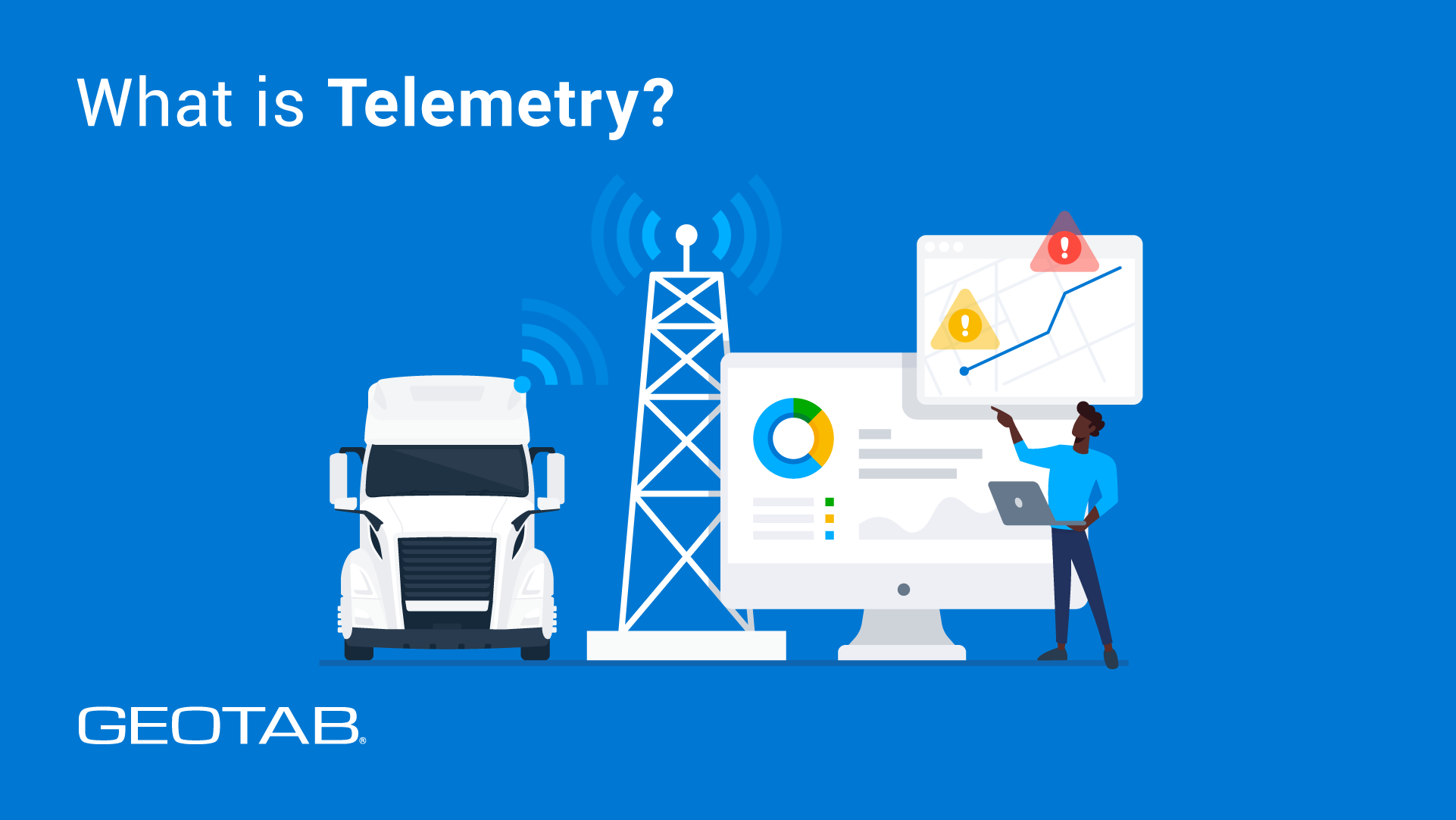
Telemetry is the automated process of collecting data and measurements from remote sources. In fleet management, that means wirelessly transmitting numbers like vehicle speed, engine rotations per minute (RPM), fuel levels and even brake status.
This ability to collect and send data is why telemetry is the backbone of fleet telematics systems.
Telemetry vs. telematics
Telemetry is the mechanism for gathering and transmitting data from vehicles to a central system, focusing purely on data collection and providing no interpretation.
Vehicle telematics takes telemetry data and generates fleet management-relevant insights, reports and actionable recommendations. Think of telemetry as the data pipeline and telematics as the system that makes sense of the numbers.
For fleet managers, the distinction between telematics vs. telemetry matters, especially when it comes to tech solutions. Strong telemetry means accurate and reliable vehicle data, while effective telematics turns that data into actionable insights like maintenance alerts, safety scores or fuel efficiency reports.
How does telemetry work?
Fleet telemetry software follows a multi-stage process that starts at the vehicle level and ends with actionable data on your management platform. The term comes from the Greek words “tele” (remote) and “metron” (measure), which directly reflects its ability to measure things from a distance.
The first step of the telemetry process is data collection. Vehicles equipped with telemetry devices like OBD-II ports or direct integrations provide data on engine temperature, fuel consumption, engine RPM, brake status or acceleration data that gets transmitted to a cloud-based server.
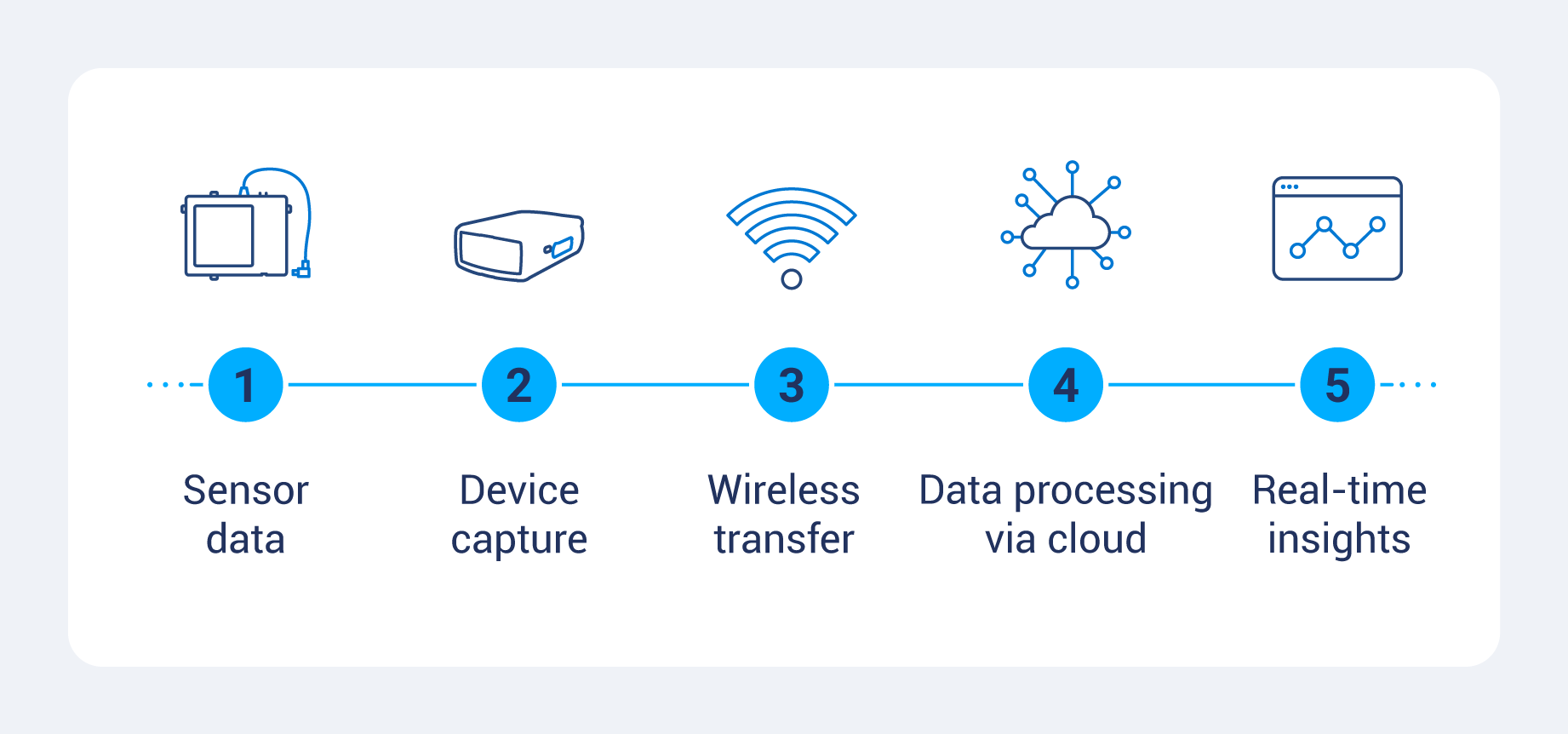
Cloud platforms then have to process those numbers to turn raw measurements into actionable insights for IoT fleet management. That transmission occurs in real time, so fleet managers can monitor current vehicle conditions. Alerts notify teams about urgent issues like engine malfunctions, low tire pressure and harsh braking events.
Geotab’s telematics platform captures over 250 data points per second on speed, fuel consumption, engine performance, tire pressure, drive behavior and more. This data gives fleet managers the insights they need to optimize routes, improve efficiency, enhance safety and prevent costly downtime.
Benefits of telemetry for fleets
Fleet telemetry enables organizations to gain visibility into operations that were previously inaccessible or required tedious manual data collection to understand. This makes it possible to optimize for safety, fuel efficiency and cost management across the entire fleet.
Improved visibility and control
Real-time telemetry gives fleet managers a complete view of vehicle location, status and performance at any moment. Instead of having to wait for drivers to report an issue, managers can be proactive.
This ability to monitor fleet telemetry with real-time numbers helps managers make data-informed decisions and optimize assignments. That means reductions in empty miles and stronger customer service, as fleets can provide more accurate arrival estimates.
Enhanced safety and compliance
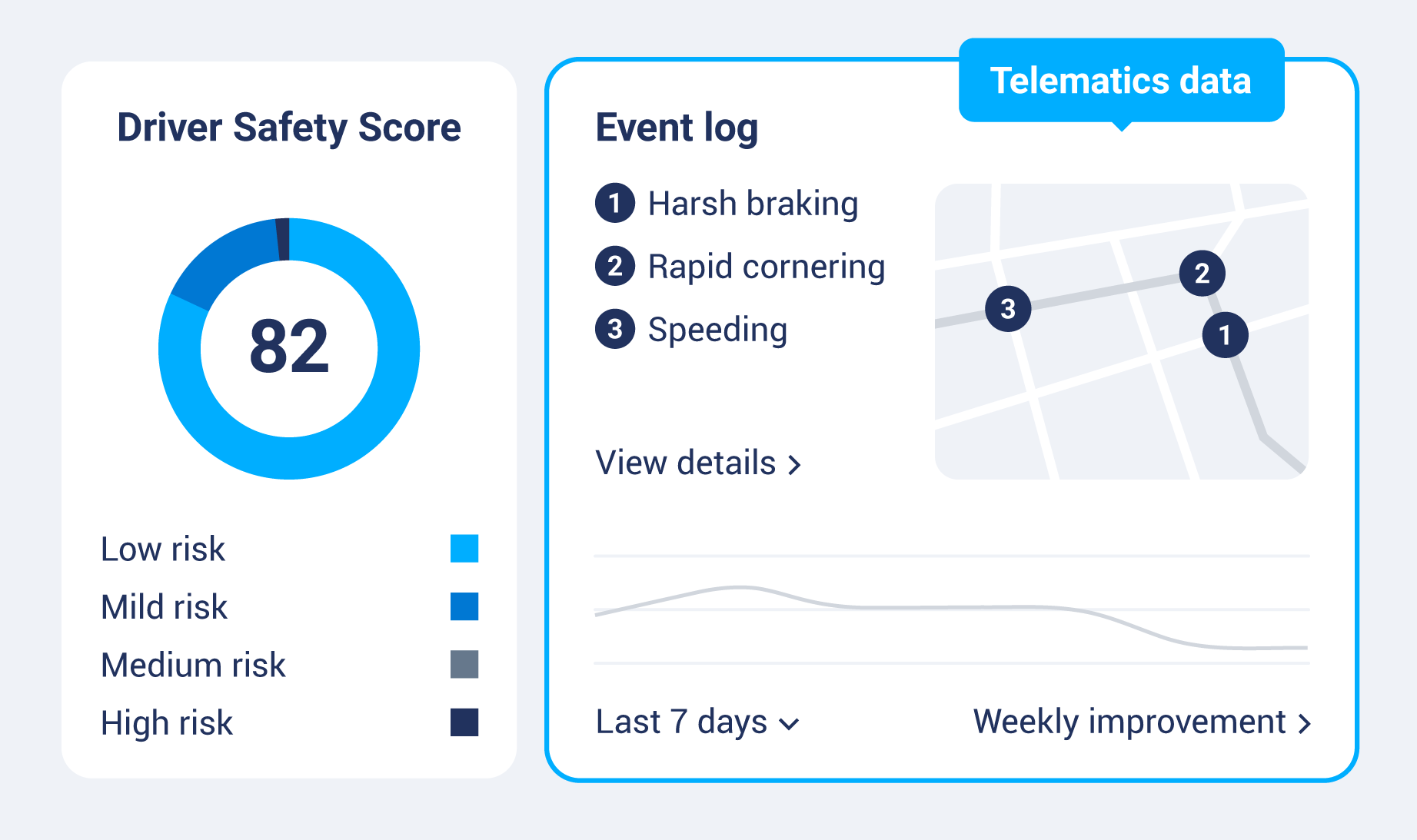
Telemetry systems help teams identify risky driving behaviors like harsh acceleration or braking, rapid cornering and speeding. These insights allow for targeted driver behavior monitoring and coaching to reduce collision rates and associated costs.
Regulatory compliance becomes simpler when you have automated telemetry tracking hours of service, vehicle inspection data and maintenance records. Electronic logging also means no more manual paperwork — and better accuracy. Some telematics insurance programs even offer premium discounts based on telemetry data.
Reduced costs and downtime
Real-time vehicle data enables proactive maintenance, allowing teams to predict issues before they become major problems by monitoring engine health indicators like low battery voltage or coolant temperature. This means no more worrying about costly roadside failures or surprise maintenance check-ins.
It also helps improve fuel efficiency since fleet managers can identify inefficient driving patterns like excessive idling and harsh braking. Fuel represents a major ongoing expense for most fleets, so this offers a big cost savings advantage.
Telemetry challenges
Fleet telemetry offers significant benefits but is not without implementation and maintenance challenges. Recognizing these potential obstacles can help your organization prepare for seamless implementation.
System integration
Fleet operations typically utilize multiple software platforms for dispatch, maintenance management, fuel cards, driver payroll and accounting. Integrating telemetry data across these systems means you will either need native integrations or custom development to avoid data silos.
Fleets should prioritize telemetry support with open architecture like the Geotab Marketplace, which features hundreds of pre-built integrations to connect telemetry data with the business systems you are already using.
Data accuracy and connectivity
Telemetry systems need reliable cellular connectivity to transmit data from your vehicles to the cloud. Areas with poor coverage can lead to data collection gaps and decreased reporting accuracy. GPS accuracy also varies depending on:
- Signal quality
- Weather conditions
- Urban canyon effects
Fleet managers should carefully evaluate if their chosen provider offers features like onboard data storage to preserve information during these connectivity gaps. Understanding the limitations of telemetry data can help avoid over-reliance on systems during edge cases.
Data security and management
Telemetry systems have to collect and transmit sensitive data about vehicle locations, driver behavior and even business operations. Protecting this data from unauthorized access is imperative. That means investing in transmission encryption, secure cloud storage and access controls to limit who can view what data.
The volume of data generated by fleet telemetry can also be overwhelming, especially if you do not have a strong data management strategy. Geotab’s fleet management solutions use industry-leading encryption and security protocols to keep sensitive data safe, with an intuitive interface that automatically puts your most important insights first.
Applications of telemetry
Fleet management is usually the most visible application of telemetry, with undeniable benefits like vehicle tracking, fuel management, driver safety monitoring, maintenance scheduling and compliance reporting.
But telemetry types also extend past the automotive and transportation industry. For example:
- Healthcare uses telemetry data for remote patient monitoring to track vital signs.
- Industrial and manufacturing need it to keep tabs on equipment performance.
- IT uses it to review application performance and user behavior.
Telemetry systems will only increase in importance with the rise of artificial intelligence. AI fleet management systems can analyze patterns to predict maintenance needs, optimizing routes dynamically and identifying efficiency opportunities that would have been invisible with manual analysis.
Turn telemetry data into smarter fleet decisions with Geotab
The true value of telemetry is not the data it provides, but the decisions that data enables. Fleet managers can use those insights to move from reactive to proactive — but that shift requires the right technology foundations and an organization-wide commitment to act on insights.
Choosing the right platform is the most important step. Tools that combine robust telemetry capabilities with intuitive integrations are far more powerful than a system that simply collects data and offers no actionable insights. Fleet managers who embrace telemetry position their operations for continuous improvement and success.
Geotab’s fleet safety solutions integrate telemetry data with coaching tools, safety scoring and automated workflows creating a comprehensive program that measurably reduces collisions and associated costs.
Ready to see how telemetry can transform your fleet operations? See Geotab in action for yourself.
Frequently Asked Questions
In fleet management, telemetry refers to the automated collection and transmission of vehicle data from hard-to-reach sources, like engine sensors and GPS units, to centralized monitoring systems.
This includes information such as engine diagnostics, driver behavior, maintenance indicators and GPS coordinates. Fleet telemetry provides real-time and historical data to help optimize operations.
Telemetry’s ability to continuously monitor driver behavior — such as harsh braking, rapid acceleration and speeding and sharp cornering — means fleet managers receive immediate alerts about unsafe driving events and can act accordingly.
Over time, this feedback loop reduces collision rates, lowers insurance costs and creates a culture of safety.
Fleet telemetry systems collect a diverse range of data types, including:
- Location coordinates with GPS
- Vehicle speed and odometer readings
- Engine diagnostics like RPM and coolant temperature
- Fuel consumption and tank levels
- Brake and acceleration patterns
- Idle time
- Battery voltage
- Diagnostic trouble codes and maintenance indicators
More advanced systems can also capture environmental data such as external temperature, driver identification and cargo weight, depending on the sensors installed.
Other Stories

What is a CAN Bus? How it impacts fleet management
December 1, 2025
6 minute read
August 5, 2025
5 minute read
July 17, 2025
4 minute read