Anticipating the Crash: How AI Will Close the Gap in Road Safety
A new path from detection to prediction
View the white paper
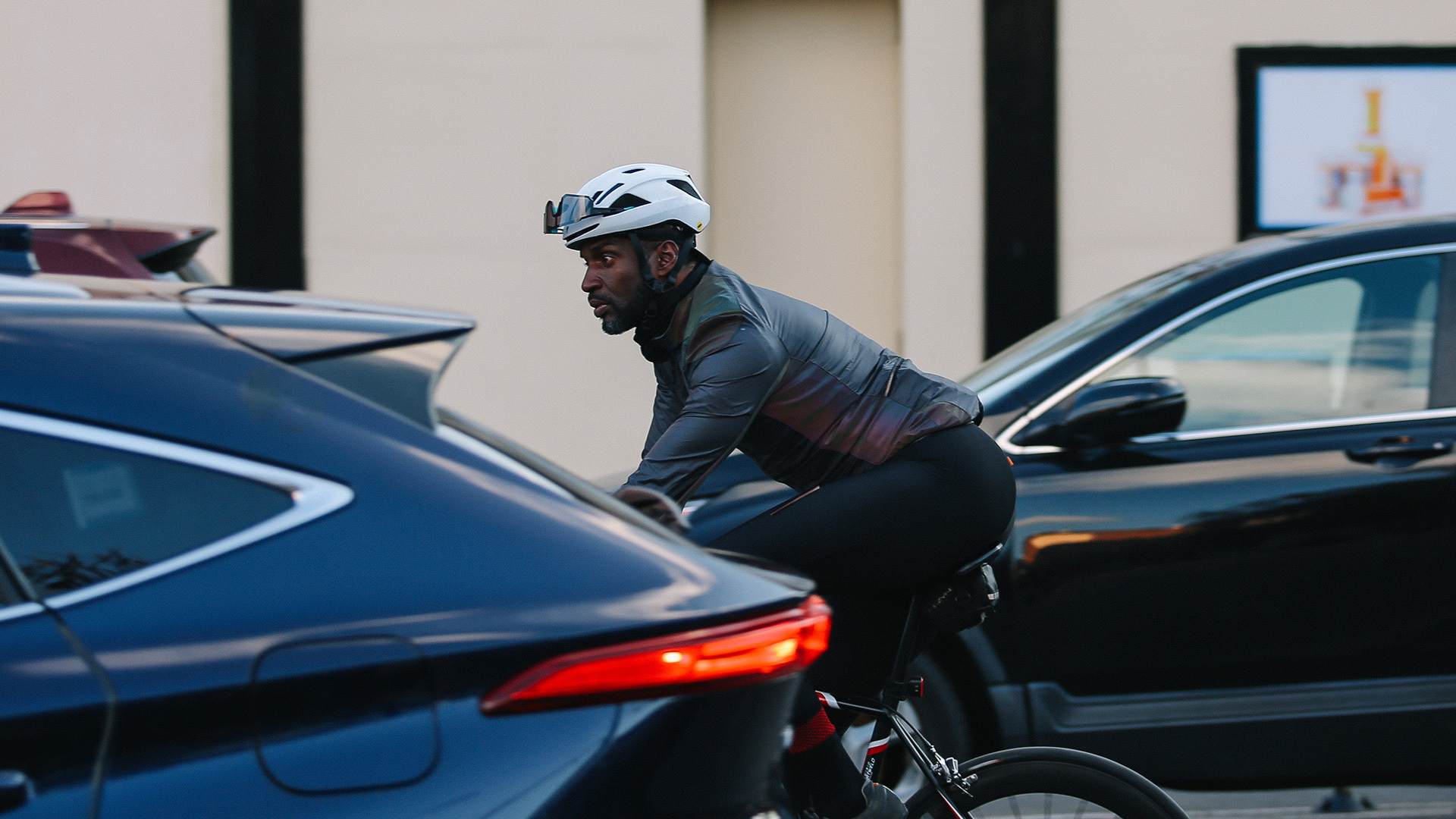
Cyclists make up just 6% of AI training data — and it shows. Cameras already installed in commercial fleet vehicles can detect a bicycle in frame, but today’s systems can’t assess whether a collision is developing or how much time remains. Research supported by Geotab, Queen’s University and NSERC is changing that.
The Anticipating the Crash white paper details how a multidisciplinary team built the tools, datasets and models needed to go from “cyclist detected” to “collision likely” — using the same dashcam footage commercial fleets already capture.
Research at-a-glance:
- A dataset built for prediction: CycleCrash is 3,000 dashcam video clips, triple-annotated across 14 attributes covering collision dynamics, cyclist behavior and scene context — the first dataset designed to answer “is this cyclist about to be hit?”
- A model that sets the benchmark: VidNeXt outperformed all baselines across cyclist collision prediction tasks and was approximately 20% more accurate on collision severity than the next-best method.
- Closing the deployment gap: Standard pedestrian detectors miss up to 18 percentage points more pedestrians outside their training environment. New detection methods and synthetic training data narrow that gap without expensive manual data collection.
- Continual learning that gets better, not worse: In 67% of common-object categories, re-training to recognize rare road users (children, wheelchair users, cyclists) actually improved performance on common ones too.
- Built for existing hardware: Every method works with standard dashcam video — no specialized sensors, lidar or proprietary data formats required.