Video telematics: How fleets use AI dash cameras for safety
Video telematics combines dash camera footage with vehicle data and AI analysis to give fleet managers a comprehensive picture of driver safety and road events.

By Geotab Team
Jun 2, 2026
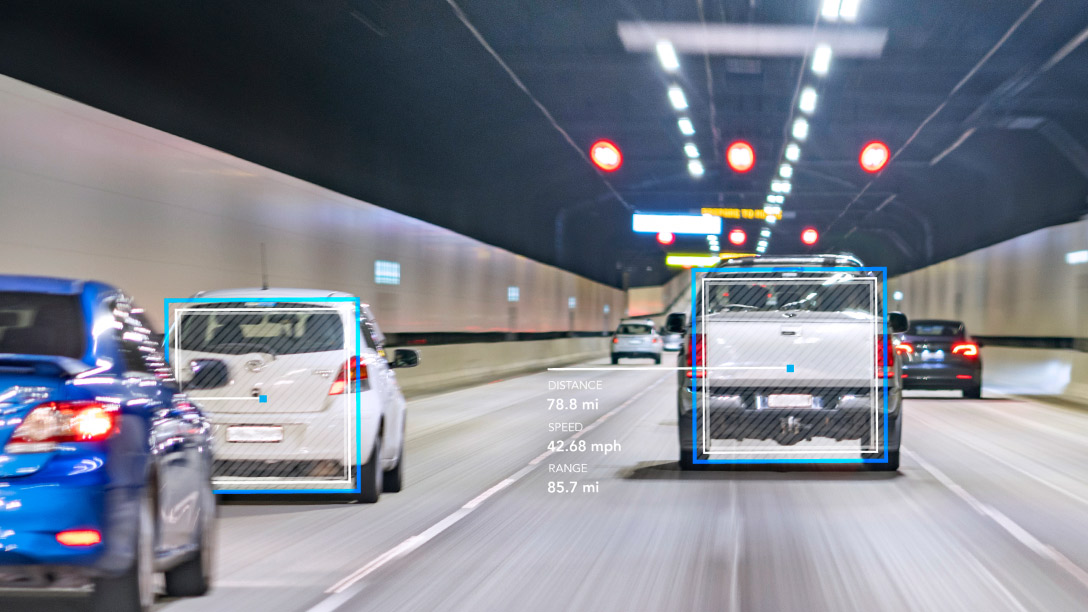
Although once considered a nice-to-have, dash cams have become a cornerstone of fleet safety programs. They offer fleet managers more visibility into what happens on the road and provide in-depth evidence after a collision. Combined with vehicle data and AI-powered analysis, video telematics takes incident support to the next level.
Today, Advanced Driver-Assistance Systems (ADAS) are adding another layer to what fleet cameras can do, from forward collision warnings to lane departure alerts. This is why fleet managers evaluating are seriously considering how much cameras can elevate their organization. Learn exactly what video telematics are and if they are worth investing in below.
What is video telematics?
Video telematics helps fleet managers gain insights from dashcam footage and camera sensor data. It is the intelligent part of the dash cam solution that, when rulesets are activated, can automatically generate in-cab alerts for real-time driver coaching. Those rulesets also ensure risk events are flagged and automatically uploaded to the cloud for review.
Companies can use vehicle telematics to record and review risk events, collect collision evidence, identify driver-coaching opportunities, and monitor driver and asset security. A video telematics system uses ADAS to go beyond simply recording footage, connecting camera data with GPS location, vehicle speed and event triggers to provide meaningful context.
How video telematics works
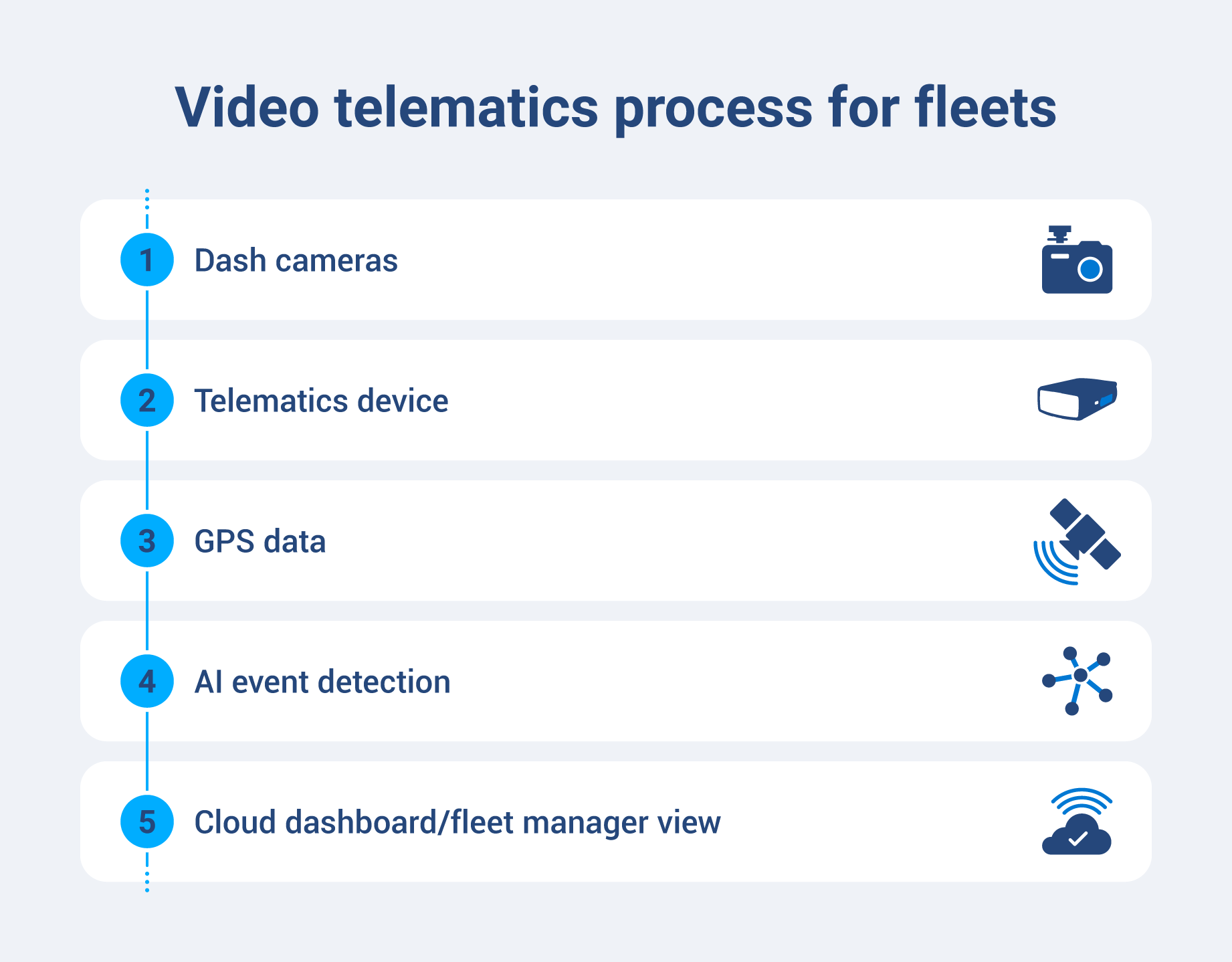
A fleet video telematics system combines several components to capture, process and deliver safety data to fleet managers. These core components include:
- Dash cameras: These cameras are forward- and driver-facing devices that record continuously or activate during specific events.
- Telematics devices: This is onboard hardware that collects vehicle data, such as speed, acceleration and braking.
- GPS data: This is what provides real-time location video fleet tracking tied to each recorded event.
- Cloud platforms: This is where footage and data is stored, organized and accessed remotely.
- AI event detection: These are the algorithms dash cameras use to identify unsafe behaviors and trigger automatic alerts or video uploads.
When a safety event occurs, like harsh braking or a detected forward collision risk, the system automatically tags the clip, logs vehicle data at that moment and uploads it to the fleet manager's dashboard. Safety teams can then review that footage alongside factors such as vehicle speed, location and time data to get a complete picture of what happened.
Key features of video telematics
These are the key benefits fleet video telematics have to offer your fleet.
AI-powered event detection
AI-powered event detection is what sets a video telematics system apart from a basic dash cam. AI fleet management tools continuously analyze camera and sensor data to identify unsafe driving behaviors, such as harsh braking, sudden acceleration and distracted driving. When a safety event is detected, the system flags the clip and alerts the safety manager.
ADAS safety alerts
Advanced Driver-Assistance Systems (ADAS) provide real-time alerts based on the conditions road-facing cameras see, enhancing driver safety. Common ADAS collision avoidance features include:
- Forward collision warnings: These alerts tell the driver when their vehicle is approaching another car too quickly.
- Lane departure alerts: These notify the driver when their vehicle is drifting out of its lane without signaling.
- Tailgating detection: These flags indicate when the driver's following distance falls below a safe threshold.
These in-cab alerts give drivers the chance to correct unsafe behaviors in the moment to reduce the likelihood of a collision.
Driver-facing camera
A driver-facing camera (DFC) monitors in-cab activity to detect dangerous behaviors like distracted driving, mobile phone use, eating behind the wheel or drowsiness. When the camera detects concerning behavior, it triggers an in-cab audio alert to prompt the driver to refocus, providing a real-time coaching opportunity.
Cloud storage
Dash cams automatically upload video footage and event data to a cloud platform where fleet managers can access them remotely at any time. Cloud storage eliminates the need for manual SD card retrieval and concentrates all critical footage — like collision evidence – in one easy-to-access location.
Integrated video and telematics data
One of the most valuable capabilities of a video telematics system is the ability to review footage with vehicle data. Using fleet telematics, safety managers can see the exact speed, location and direction of the vehicle at the moment of the event. This context makes incident investigations faster, more accurate and easier to defend in disputes or insurance claims.
Geotab's vehicle telematics platform connects data from any source, giving fleet managers a comprehensive view of safety, efficiency and compliance across your entire fleet.
Benefits of video telematics for fleets
Video telematics offer benefits that make drivers safer and extend vehicle longevity.
Improved driver safety
Video telematics help fleet managers identify risky driving behaviors like speeding, distraction and harsh braking before they lead to collisions. Safety teams use driver behavior monitoring to spot fleet-wide patterns and provide coaching where it is needed. This combination of real-time in-cab alerts and event-based video creates a continuous safety loop.
Faster incident investigation
When a collision or dispute occurs, video evidence helps compliance teams understand what happened. Footage time-stamped with speed, GPS location and event-based triggers removes any ambiguity from incident reviews and can exonerate drivers in cases of false liability. This can directly translate to lower insurance premiums and legal exposure.
Better driver coaching programs
Video clips tied to specific safety events make coaching conversations far more impactful. Instead of relying on general feedback, safety managers can share a short clip and discuss what went right and what went wrong. Building a driver-coaching culture around real data, not assumptions, leads to lasting behavioral change.
Pairing these programs with driver scorecards enables safety teams to track improvements over time and recognize drivers making the most progress.
Common industries that use video telematics
Video telematics are used by any industry with a large or high-risk fleet. Common cases include:
- Transportation and logistics: Long-haul and last-mile drivers benefit greatly from video telematics for safety and compliance.
- Construction: This industry benefits from the ability to document jobsite travel and protect against liability claims.
- Oil and gas: Managing driver safety across more and higher-risk routes is made much easier with video telematics.
- Utilities: Video telematics help oversee field service vehicles and reduce risk on public roads.
- Field service: This field benefits greatly from improved technician-driver coaching.
These industries benefit from stronger safety oversight and clearer incident documentation.
Video telematics solutions available through the Geotab Marketplace
Geotab's open platform connects fleets with a wide range of video telematics providers through the Geotab Marketplace. Instead of locking customers into a single hardware decision, Geotab offers integrations with leading camera partners so fleets can choose the best fit for their operations.
Marketplace video solutions integrate directly with MyGeotab, Geotab's fleet management software. This lets safety managers review footage and events and manage driver coaching from a single platform. Regardless of the camera solution you choose, the data flows into the same dashboard as your video telematics, ELD and compliance information.
Explore video telematics for safer fleet operations
For fleet managers and safety compliance officers, video telematics is one of the best tools for reducing risk, protecting drivers and lowering operating costs. The combination of AI-powered event detection, ADAS alerts and integrated vehicle data can turn your safety program from reactive to proactive with a single investment.
Explore Geotab's vehicle telematics platform and learn how to build a comprehensive fleet safety program based on real data.
Subscribe to get industry tips and insights
Frequently Asked Questions
Video telematics helps reduce collisions, improve driver coaching and resolve incidents faster. Safety managers gain more visibility into risky behaviors thanks to the combination of dash camera footage and vehicle data, and can more accurately document events and build data-driven coaching programs.
AI removes the manual work of reviewing footage by automatically detecting unsafe events like harsh braking, collision risks or distracted driving. Safety managers automatically receive a curated feed of flagged events with vehicle data attached. AI also enables ADAS features that alert drivers in real-time, preventing incidents before they occur.
Video telematics costs vary based on hardware, software subscription and the size of your fleet. For small fleets, hardware costs for a dash camera range from $80 to $500 per unit, with monthly software subscription fees falling at around $10 to $20 per vehicle.
A dash camera records video footage, capturing what happened. A video telematics system, on the other hand, helps you understand video data. It adds a layer of intelligence to that footage, connecting camera data with vehicle sensors, GPS, AI event detection and cloud storage.
The Geotab Team write about company news.
Table of Contents
Subscribe to get industry tips and insights
Related posts
Unlocking more jobs per day: How smart dispatch management improves tech performance
October 13, 2026
3 minute read


Fleet accident management: How to improve safety and reduce costs
September 4, 2026
5 minute read

Driver risk management: How public fleet managers save time with smarter video tools
September 2, 2026
3 minute read
How video telematics helps drivers trust the safety program
August 27, 2026
4 minute read