The leasing industry helped build the autonomous future
The AV timeline debate tends to miss who is already in the room. Edward Kulperger on what the data shows about the leasing industry's role.

Senior Vice President, EMEA at Geotab
Aug 25, 2026
Key Insights
- The companies entering the autonomous vehicle market first are largely fleet and leasing operators, not individual consumers.
- Real-world driving and video data are the foundational input for AV development and commercial fleets are generating it at scale, often without realising it.
- The transition to mixed autonomous and human-driven fleets isn't a future scenario. For many European operators, it is already underway.
When I first wrote about the convergence of autonomous vehicles and telematics in 2015, the question was whether self-driving cars were even feasible. That question has been answered. The one the industry hasn't fully reckoned with yet is who runs the fleet.
The organisations generating the largest volumes of real-world driving data in Europe (the kind AV systems need to learn, validate and improve) are not technology companies. They are commercial fleet operators. They run vehicles across diverse road conditions, in weather consumer vehicles rarely encounter, with professional drivers whose behaviour is documented in detail. The industry most likely to be affected by autonomous vehicles has been building the evidence base for them, without necessarily framing it that way.
The leasing sector is already a participant
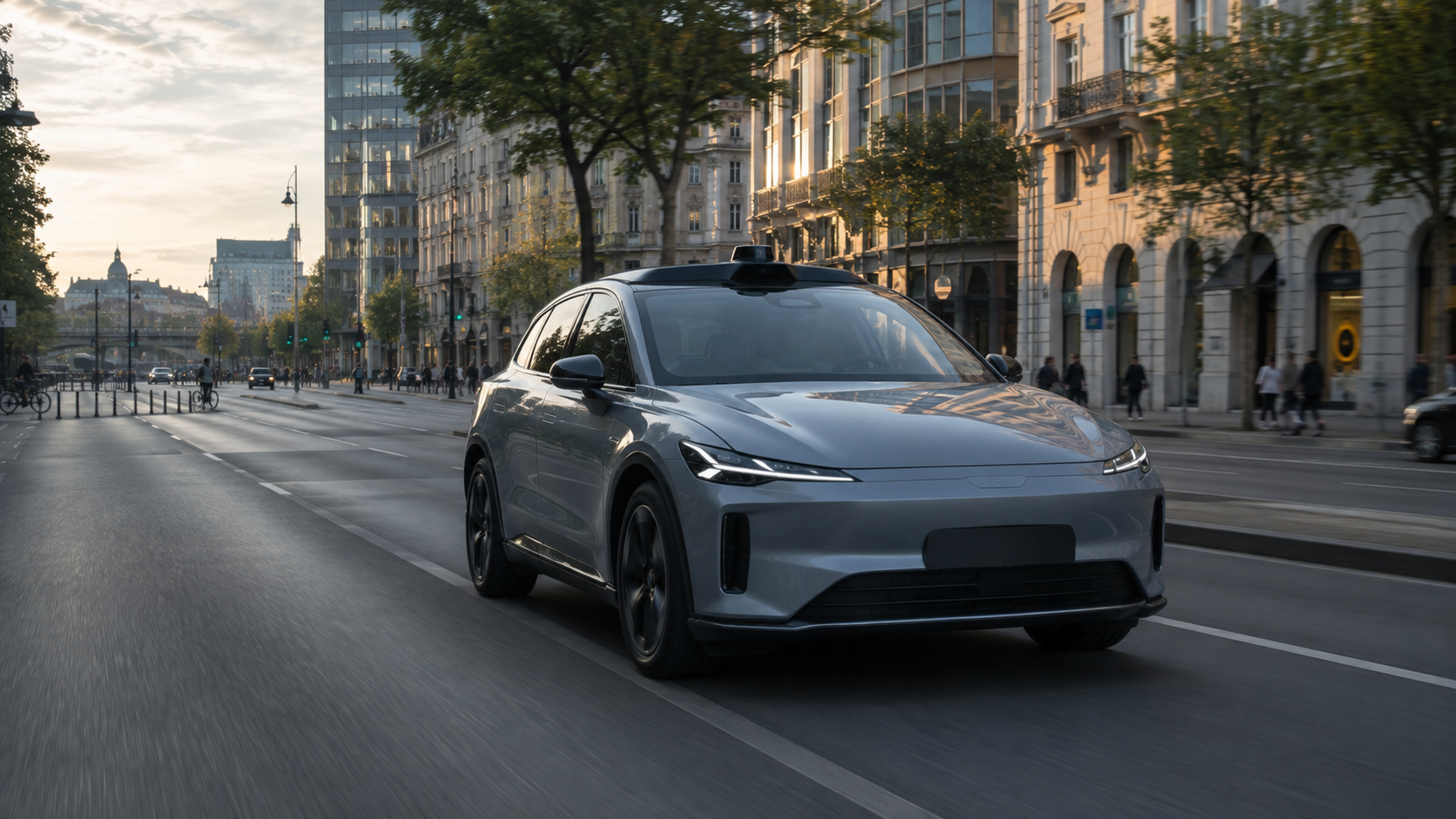
The companies entering the autonomous vehicle space first are not individual consumers. They are fleet, rental and leasing operators: robotaxi deployments, last-mile autonomous delivery, goods movement on fixed high-volume routes. The commercial logic is straightforward: the economics of autonomous vehicles improve with utilisation and nobody utilises vehicles more intensively than commercial operators.
Several of the organisations I work with are already managing mixed fleets: autonomous or semi-autonomous units alongside conventional vehicles, on the same operational platform, in the same European markets. The transition they were planning to prepare for has, in more than a few cases, already started.
Geotab is already the operational platform behind a number of leading AV deployments in Europe, which means the fleet companies already running MyGeotab are starting from a different position than those that aren't.
The infrastructure question can't be deferred
A platform built around conventional vehicles doesn't automatically handle autonomous ones. The data looks different. Maintenance needs change. Liability sits differently.In a conventional fleet, roughly 1 in 40 OBD-enabled vehicles carries a high or critical fault at any given time. A driver notices the warning signs. In an autonomous fleet, that detection falls entirely to the data layer. There's no one in the cab. And the handover between human and autonomous operation requires its own logic. The organisation that discovers this at the point of deployment is in a worse position than one that thought about it earlier.
My read of where the European market is heading:The operators with the smoothest transition into mixed and autonomous fleet management will be the ones who already have their vehicle data centralised, structured and actually usable before the new vehicles arrive and complicate things further. The timing matters less than the foundation.
AI and the computational power behind it are compressing the timeline faster than the industry expected, which makes the infrastructure question more urgent than it might appear. What autonomous operations need is the same foundation that makes current fleet operations work better, so the investment is justified regardless of when the vehicles arrive. The autonomous future will run on what operators build today. For most, that means starting with the data foundation, before the vehicles arrive and complicate things further.
Subscribe to get industry tips and insights
Senior Vice President, EMEA at Geotab
Edward Kulperger is the Senior Vice President EMEA at Geotab, focusing on expanding Geotab's global footprint.
Table of Contents
Subscribe to get industry tips and insights
Related posts

A 95% location rate in 2026: what Geotab brings to rental, leasing and mobility fleets
October 22, 2026
2 minute read

Why the OEM versus device-level telematics debate misses the point for mixed-fleet operators
September 25, 2026
2 minute read



European data sovereignty: the next step we've been building toward
September 9, 2026
2 minute read
What an EV battery is actually worth at the end of a lease
August 20, 2026
2 minute read