How distracted driving cameras improve fleet safety
Learn about the dangers of distracted driving and how to avoid it.

By Geotab Team
Jun 2, 2026

In 2023 alone, distracted driving statistics show that poor driving habits caused 3,275 deaths and injured 324,819 people. For commercial fleets, these collisions cost over an estimated $129 billion. This is why distracted-driving cameras and AI-powered driver-facing sensors that monitor behavior inside the vehicle are becoming so important for modern fleet safety.
Standard dash cams only record what happens in front of the vehicle. They do not tell you if a driver has their seat belt unbuckled or is looking at their phone. Modern distracted-driving cameras use artificial intelligence and machine vision (MV) to analyze drivers in real time, proactively alerting them to dangerous behavior, reducing collision frequency, protecting drivers from false liability claims, and even lowering insurance premiums.
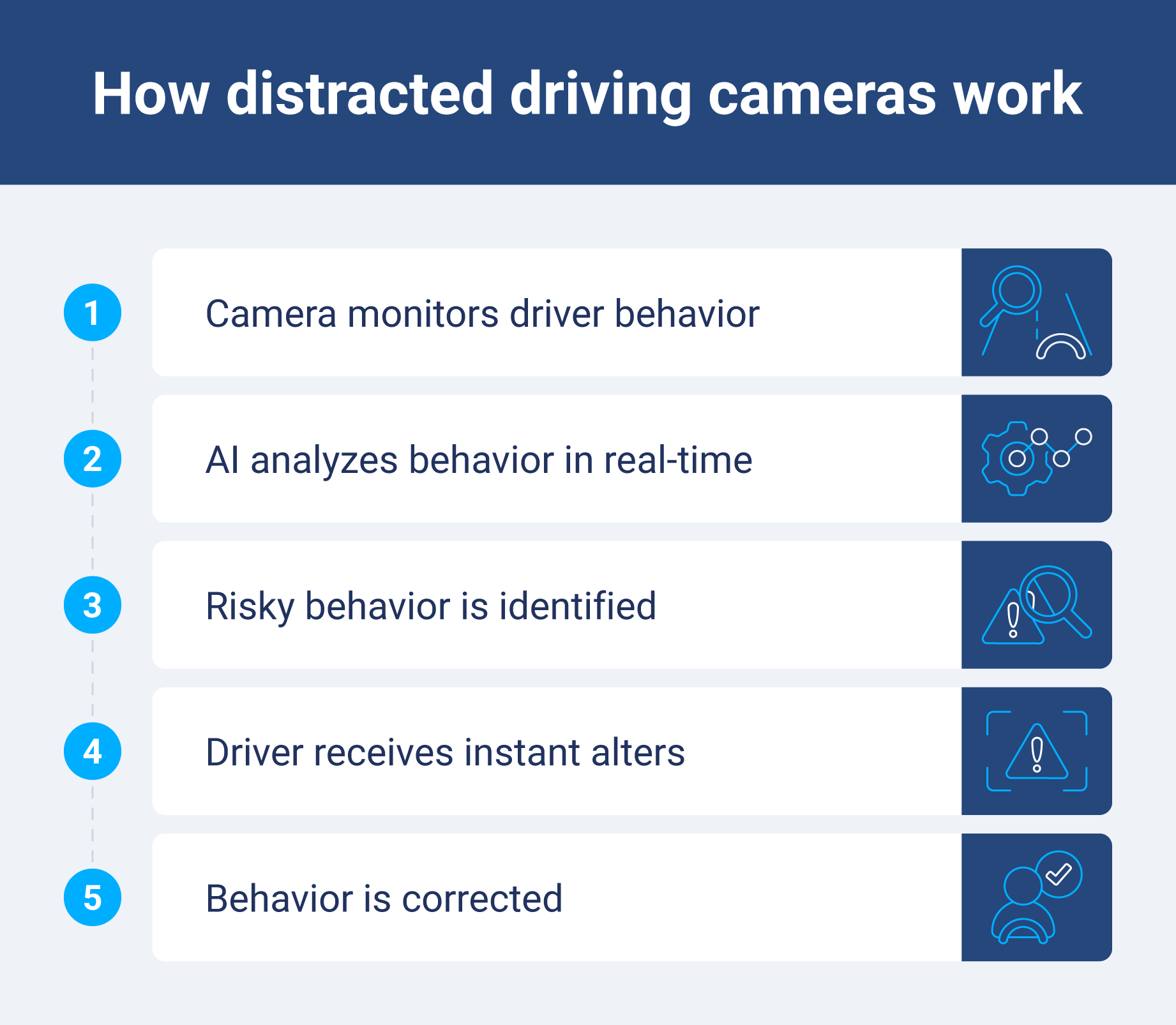
How distracted driving cameras work
AI-powered distracted-driving cameras continuously analyze driver behavior and act in the moment. Unlike traditional recording devices where you can only review footage after an incident, these new systems use machine vision and AI to recognize patterns and flag risks before they become dangerous.
These cameras are trained to detect all kinds of risky behaviors, including:
- Mobile phone use (handheld calls, texting, scrolling)
- Seat belt non-compliance
- Signs of fatigue or drowsiness
- Eyes off the road
- Smoking or vaping
These cameras are proactive too, alerting drivers when their eyes leave the road. This is because they use edge computing, which allows processing to occur on the device itself. This means the camera can evaluate visual data inside the cab in real time, so all alerts are immediate, even in areas with limited cellular connectivity.
The cameras include infrared sensors that can track driver eye movement and head position, even in low-light conditions or when the driver is wearing sunglasses. This means your fleet will have accuracy all hours of the day, not just during daylight.
Types of distracted driving cameras
There are two main categories of distracted-driving camera systems used by commercial fleets: roadside AI cameras and fleet AI dashcams.
Roadside AI cameras are fixed infrastructure solutions installed at intersections, highway on-ramps and other high-risk corridors. This distracted driving software is most commonly used by traffic authorities and large logistics networks to monitor multiple lanes for behaviors such as handheld phone use, missing seat belts or speeding.
Fleet AI dash cams are installed directly inside commercial vehicles. They use a road- and driver-facing lens (or a dedicated driver monitoring system, DMS) to capture the environment outside and inside the cab. This option is the most relevant to fleet managers and safety compliance officers.
| Types of systems | Key features | Use case |
| Roadside AI cameras | Fixed infrastructure, wide-area monitoring, license plate recognition, speed detection, multi-lane coverage | Enforcement zones, highways, intersections, and high-risk corridors where fleet-wide behavior can be noted at scale |
| Fleet AI dashcams | In-cab driver monitoring, real-time alerts, event-triggered recording, GPS-synced footage, coaching integration | Commercial fleets seeking driver-level visibility, offering protection and coaching workflows based on vehicle data |
Benefits of distracted driving cameras
Distracted driving cameras can help coach drivers by enabling them to identify and reduce risky driving behaviors, including distracted driving.
Here is how driver coaching and intelligent commercial truck dash camera systems with MV and AI can help:
- Improve driver behavior
- Learn from real-world examples of distracted driving
- Encourage drivers to course correct
- Reduce the risk of collisions
- Increase road safety
The operational and financial benefits extend well beyond safer roads. The areas that have the greatest impact are driver exoneration, cost reduction and data-driven risk management.
- Driver exoneration: Video evidence significantly lessens he-said, she-said collision disputes with GPS coordinates and timestamps that prove the driver was attentive and following safe practices.
- Financial impact: Fewer collisions mean lower deductibles, fewer vehicles out of service and reduced litigation exposure. Many commercial insurers now offer discounts for fleets that adopt AI safety camera systems.
- Data aggregation: Fleet managers can view aggregated safety data across the entire organization to identify systemic patterns and improve route selection, among other uses.
Geotab's video telematics solutions sync driver footage directly with vehicle data. Fleets can access leading camera solutions, which automatically detect and alerts distracted driving behavior and harsh driving incidents. Integration with the MyGeotab platform means companies can access all fleet cameras from a single cloud dashboard.
Subscribe to get industry tips and insights
Frequently Asked Questions
Driver-facing cameras are triggered by specific AI-detected behaviors, such as mobile phone use, failure to wear a seat belt, signs of fatigue or eyes-off-road events. Vehicle-based events, such as hard braking, sharp acceleration or collision-level G-force, can also trigger cams.
No, most professional fleet systems do not continuously record and store footage. They use event-triggered recording, saving and uploading clips only when the AI detects a safety-related behavior or a G-force event occurs.
Yes, AI driver monitoring systems use infrared sensors to track blinking frequency, eye closure duration and head position. When the system detects drowsiness, it issues a cab alert to prompt the driver to refocus.
Many commercial insurers now offer premium discounts to fleets that adopt AI safety camera systems because the technology has been shown to reduce collisions and associated claims. Some insurers go even further and subsidize the hardware costs for qualifying fleets.
High-definition dash cam footage that includes timestamps, GPS coordinates and vehicle data is widely accepted as evidence in legal proceedings and insurance adjustments.
The Geotab Team write about company news.
Table of Contents
Subscribe to get industry tips and insights
Related posts

Fleet accident management: How to improve safety and reduce costs
September 4, 2026
5 minute read

Driver risk management: How public fleet managers save time with smarter video tools
September 2, 2026
3 minute read

How video telematics helps drivers trust the safety program
August 27, 2026
4 minute read

Lone worker safety for utility fleets: A checklist for the sites beyond cellular reach
August 24, 2026
3 minute read

Before the storm call: Five ways to know your utility fleet is ready
August 6, 2026
3 minute read