How to choose dash cameras for maximum fleet efficiency: Guide and tips
Learn how to choose the right fleet dash cam system. Explore key features like AI alerts, night vision and telematics integration to reduce risk and maximize ROI.

Apr 30, 2026
.jpg)
Key Insights
- Choosing the right dash cam means matching advanced features like AI-powered alerts, cloud storage and night vision to your fleet's specific risks and operational goals.
- The most effective dash cam systems integrate seamlessly with your existing telematics platform, offering unified views of vehicle data, driver behavior analytics and video evidence.
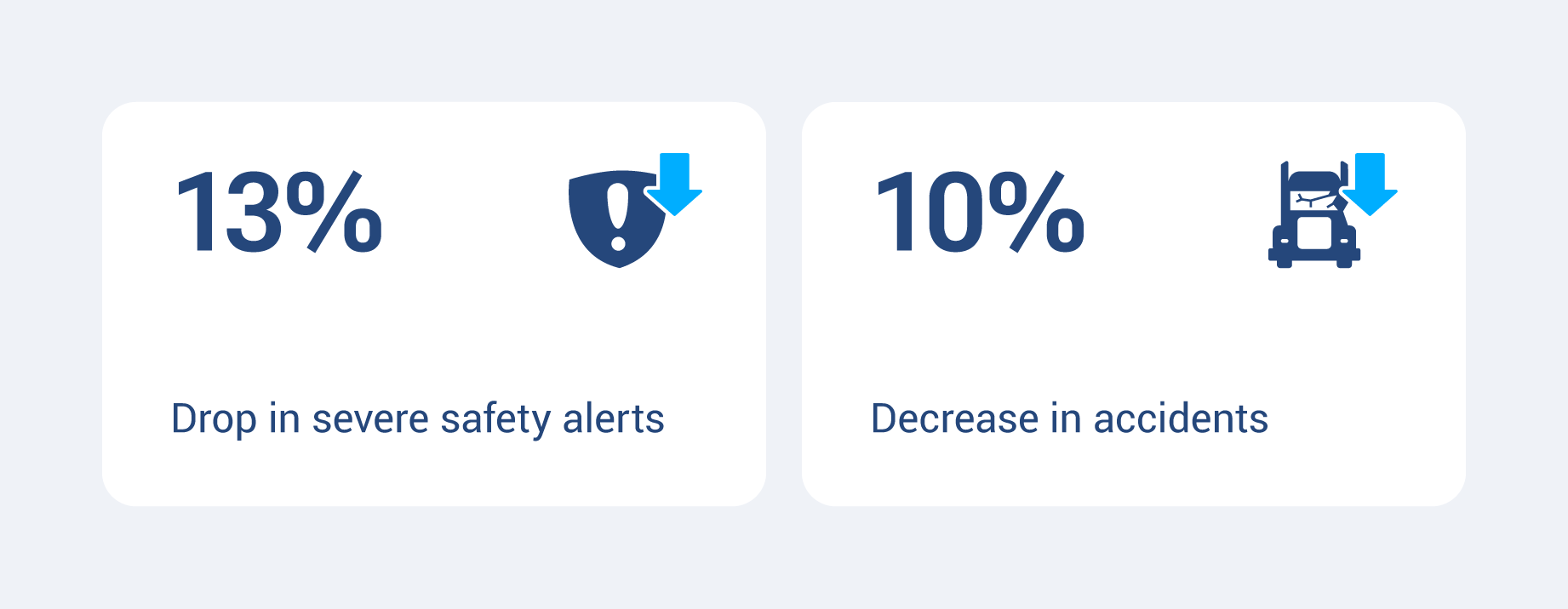
- Implementing an integrated dash cam solution has been shown to reduce severe safety alerts by 13% and decrease traffic accidents by 10%.
- From camera type and video quality to storage, installation and privacy compliance, the right commercial dash cam system protects your drivers, your fleet and your bottom line.
Knowing how to choose dash cameras for your fleet is one of the most impactful decisions a fleet manager can make. A well-chosen fleet dash cam system provides video evidence that protects drivers from false insurance claims and reduces legal costs. Fleets using camera-based feedback programs reported an 86% reduction in vehicle collision costs.
Choosing a dash camera goes beyond comparing basic specs. It means understanding how video integrates with your existing setup. Learn how to pick the best system and how it can help lower collision-related costs, reduce insurance exposure and improve fleet risk management.
How to choose the right dash camera
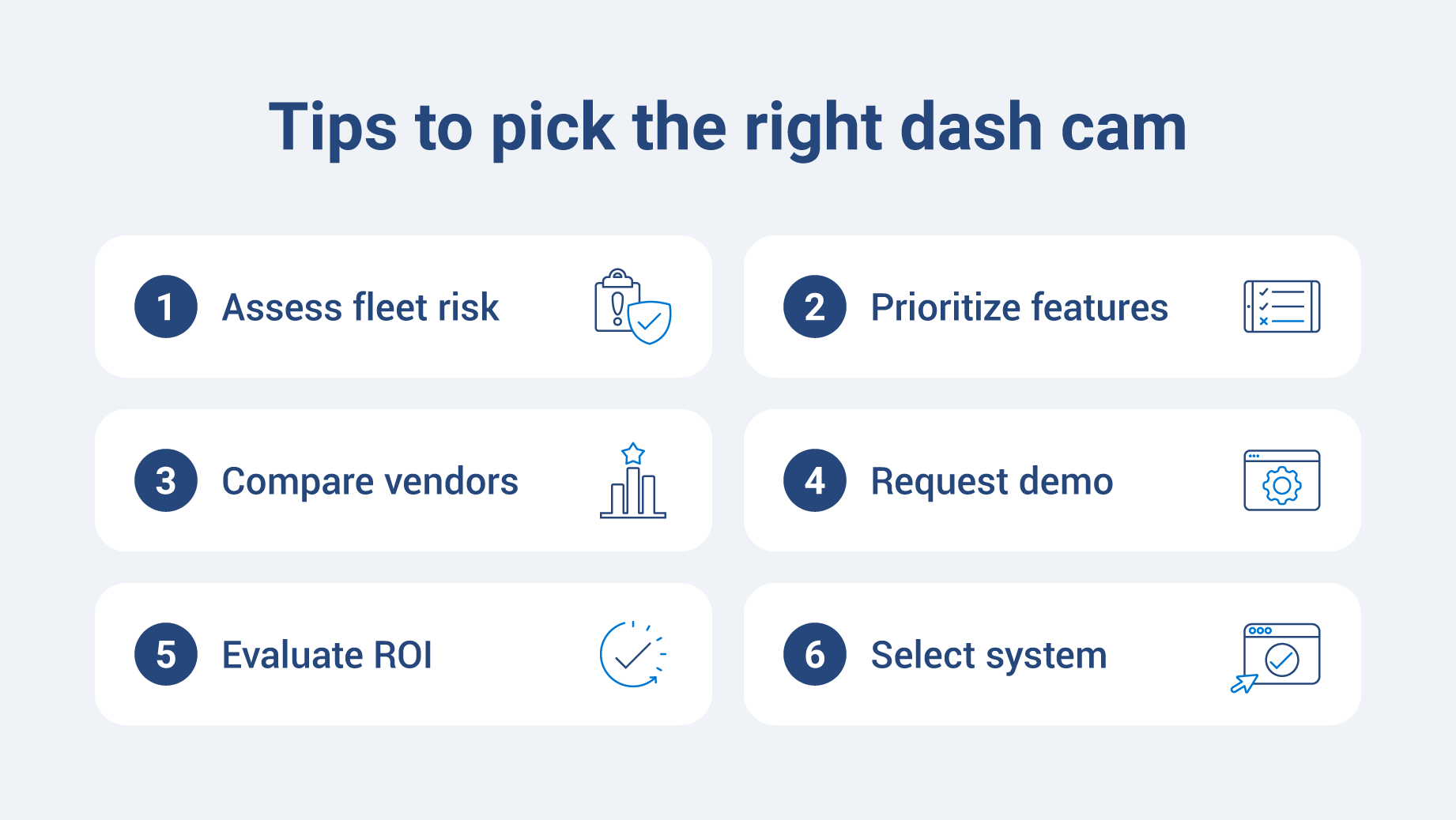
Follow this step-by-step process on how to choose dash cameras for your fleet:
- Assess your fleet's needs: Conduct a risk assessment. Analyze your fleet size, route complexity, vehicle types and historical incident data to identify your main challenges.
- Research and prioritize features: Based on your needs, determine which features are non-negotiable. Do you need dual-facing cameras? Is AI-powered distracted driving detection critical?
- Compare system options: Evaluate vendors based on video quality, any additional AI capabilities, cloud storage, integration options and data compliance safeguards.
- Request live demos: Ask for demonstrations to see how the system integrates with your existing video telematics and how easy it is to retrieve footage and manage alerts.
- Decide based on long-term ROI: Select a scalable solution that can help protect long-term investment based on its total cost of ownership and long-term return on investment, not just the initial hardware price.
Take a look at Geotab’s dash cam selection tool to compare your options.
Types of dash cameras for commercial vehicles
Commercial vehicle dash cam systems come in a few different hardware configurations, each suited to different operational needs. Understanding these options will help you find the best setup for your fleet.
Road-facing cameras
Road-facing cameras are the most common entry point for commercial fleets. These devices record the road ahead through the windshield and capture external events like near-misses, road hazards and collisions.
Their primary purpose is to provide clear, timestamped video evidence for traffic incidents. For fleets with frequent liability disputes or insurance claims, a road-facing camera can provide incontrovertible evidence of what happened on the road.
Dual-facing and cabin-view cameras
Dual-facing cameras monitor the road ahead and the driver, with a second lens pointed at the cab. Since this setup provides visibility into behaviors such as distracted driving, fatigue and seatbelt noncompliance, it's appealing to fleets focused on driver safety.
Multi-channel and 360-degree systems
Multi-channel systems use four or more cameras to cover the front, rear and sides of a vehicle. This setup eliminates blind spots that single or dual-camera devices can't address. For heavy trucks, buses and specialized equipment, the comprehensive situational awareness these setups offer is particularly valuable.
360-degree coverage is also valuable in high-risk environments where incidents are more likely to occur outside the driver's direct line of sight, like tight urban routes, loading docks or construction zones. These systems are also useful for fleet managers reviewing maneuvers, parking incidents or interactions with pedestrians or other vehicles.
Benefits of implementing fleet dash cameras
The primary benefits of implementing fleet dash cameras are financial, operational and safety-related. Fleets that adopt dash cameras see quantifiable improvements, like a 13% drop in severe safety alerts and a 10% decrease in accidents.
Key benefits include:
- Risk mitigation: Proactive alerts prevent accidents.
- Insurance and liability support: Video evidence protects against false claims and can help reduce insurance premiums.
- Improved driver coaching: Use real-world examples for targeted training.
- Litigation defense: Incontestable fleet video proof clarifies what happened during an incident.
- Positive safety culture: Fosters driver accountability and transparency.
Key features to look for in dash cams
The right combination of hardware and software allows safety, legal, and maintenance teams to get the answers they need without administrative bottlenecks. Viewing these capabilities as a complete system ensures the technology actively supports your business, rather than just recording video.
Here are some key features you should consider when choosing a commercial fleet dash cam.
Video quality and night vision
High-definition video (1080p or 1440p) offers the right balance between image clarity and storage for most fleets. At these resolutions, you can read license plates and identify road signs, capturing details needed to support insurance claims or driver coaching reviews.
Infrared night vision is essential for capturing actionable evidence regardless of weather or lighting conditions. While standard cameras may struggle in rain or darkness, a system with wide-angle lenses and infrared LEDs ensures road details remain legible.
Real-time alerts and AI-powered detection
AI-powered dash cams move safety from reactive to proactive by analyzing road conditions and driver behavior in real time. By detecting high-risk behaviors and issuing instant in-cab alerts, the system gives drivers the chance to self-correct in the moment. This immediate feedback loop helps prevent collisions before they occur.
Key behaviors detected by AI include:
- Distracted driving (e.g., mobile phone use, eating while driving, smoking, etc.)
- Tailgating
- Harsh braking
- Signs of fatigue
Storage and connectivity
Fleet cameras usually have two approaches to storing footage: local storage with SD cards and automatic cloud uploading for current events.
Local storage offers continuous loop recording — new footage overwrites older files, making it a reliable fallback when connectivity is limited. Cloud uploading automatically pushes flagged events to a remote server the moment they occur, keeping footage tamper-proof and immediately accessible.
4G or 5G connectivity enables live video streaming so fleet managers can review vehicles in real time. When evaluating storage and connectivity options, consider your fleet's daily driving hours and route coverage. A camera running eight hours a day on cellular will consume significantly more data than one that only uploads event-triggered clips.
Technical considerations for fleet deployment
Choosing the right camera hardware is only the beginning. System installation, data management and product longevity can all make or break your investment's long-term value.
Installation and mounting
Hardwired installations draw power directly from the vehicle's electrical system. They offer a more stable connection, allowing for features like parking mode that will keep recording even after the engine turns off. It does require professional installation but provides a cleaner, more reliable performance after setup is finished.
For fleets that want something more flexible, simpler installations using the vehicle's OBD port or direct power connection offer much faster deployment. Adhesive mounts are generally more reliable than suction cups for commercial use because they maintain a more secure hold through vibrations and temperature changes.
Data management and privacy
A fleet of cameras generates substantial video data. Managing that data is just as important as capturing it. Cloud-based systems reduce administrative burden by automatically organizing and storing footage. But that benefit comes with a higher learning curve and more complicated data retention policies.
Data privacy is important to consider here. Transparency builds trust. It is best to clearly communicate with drivers what footage cameras record, explain that camera use is about safety, not surveillance, and that fleets use cameras to protect driver privacy.
Durability and operating temperature
Commercial vehicles must operate in extreme heat, freezing temperatures and through constant long-haul vibrations. Fleet-grade cameras deliver reliable performance in extreme conditions thanks to automotive-grade housing rated for wider temperature ranges.
One overlooked factor is the camera's internal power source. Supercapacitors are generally better than lithium-ion batteries for commercial applications, as they better handle heat and have a longer lifespan. For fleets operating in hot climates, this distinction is especially impactful for the long-term reliability of your camera system.
Planning your fleet dash camera strategy
The best fleet camera systems are based on a clear deployment plan, not just a hardware purchase. Before acting on all that you have learned here on how to choose dash cameras, take your time defining your goals, aligning with stakeholders and establishing a process that ensures success.
Understanding what camera and storage type you need, and how to handle installation and privacy compliance, will make all the difference. Each decision shapes how well your fleet camera program performs in the field. Explore Geotab's best dash cams for fleet vehicles to see how leading solutions compare, or connect with a Geotab expert to find the best approach for your fleet.
Subscribe to get industry tips and insights
Frequently Asked Questions
Fleet dash cameras are legal for commercial use in most areas, but compliance requirements vary by jurisdiction. In the United States, regulations vary by state, especially regarding audio recording. Camera placement rules also differ, with some states restricting windshield-mounted devices to specific areas.
Most fleet dash cam systems offer two recording modes: continuous loop and event-based. Continuous loop recording means the camera runs continuously and overwrites older footage when storage is full. Event-based recording is triggered based on certain driving events and uploads them to the cloud.
Data consumption varies depending on the camera's resolution, connectivity type and upload settings. A cloud-connected commercial dash cam that transmits event-triggered clips over 4G LTE might use between 1 and 3 GB of data. Fleets that enable live streaming will use significantly more.
Yes, many commercial insurers offer discounts or subsidies for fleets that deploy approved dash camera systems, especially those with AI-powered detection and pre-existing telematics investments. This is because fleets with cameras tend to have fewer at-fault claims, faster claims resolution and stronger documentation against fraudulent incidents.
Consumer dash cameras target individual users. They record footage locally and offer limited software features. Fleet dash cam solutions support scale and integration. They offer centralized management so fleet managers can monitor multiple vehicles, review footage remotely and create operation-wide safety reports.
Christine is the Content Manager for the Commercial sector
Table of Contents
Subscribe to get industry tips and insights
Related posts


Fleet accident management: How to improve safety and reduce costs
September 4, 2026
5 minute read

Driver risk management: How public fleet managers save time with smarter video tools
September 2, 2026
3 minute read

How video telematics helps drivers trust the safety program
August 27, 2026
4 minute read

Lone worker safety for utility fleets: A checklist for the sites beyond cellular reach
August 24, 2026
3 minute read