Why field service routing decisions are costing you more than fuel (and how to fix it)
Unnecessary miles don’t just increase fuel spend, they reduce productivity, delay jobs and tank revenue. See how economic route optimization can help find a more profitable route.

By Geotab Team
May 14, 2026

Key Insights
- Field service dispatchers lose 40%+ of technician workdays to travel and inefficiency, directly eroding revenue per technician.
- Unnecessary miles from poor routing decisions scatter costs across fuel, overtime, and missed jobs, obscuring true impact on P&L statements.
- Economic route optimization considers technician expertise, appointment revenue value, and customer experience—not just distance—to maximize profitability.
A field service dispatcher can spend hours carefully planning a schedule that unravels with a few calls.
7:00 am: a technician calls in sick kicking off the need for route reassignments.
7:45 am: an emergency call comes in demanding more schedule reshuffling.
8:10 am: a crew reports their arrival time will be delayed 30 minutes due to traffic.
8:45 am: a technician arrives at a job to find the customer isn’t there yet.
By 9:00 am, the plan that was efficient two hours earlier is now outdated. This isn’t a rare bad day: it’s a regular Tuesday in field service.
Just because these disruptions are common doesn’t make them any easier to manage. Across fields like HVAC, plumbing, electrical, pest control and property maintenance, dispatchers are forced to make routing decisions under pressure all day long:
- Which technician is most qualified to take the emergency call?
- How do these jobs shift to accommodate delayed crews?
- Who can realistically absorb another stop or two in their day?
- How do I minimize technician windshield time when priorities keep shifting?
Each of those reactions — the reroute, the traffic detour, the no-show — adds miles that weren’t in the plan. When dispatchers work from incomplete information, those miles accumulate fast. By the end of the day, the fuel bill, the overtime and the missed jobs all trace back to the same source.
Three places unnecessary miles are hurting you
Every unnecessary mile driven carries costs that hit your bottom line.
Rising fuel costs
Fuel price volatility is the norm in fleet management, but fuel spend is often connected to a larger routing problem. Every unnecessary mile created by inefficient routing increases fuel consumption. The result: higher operating costs that compound throughout the day.
Lost technician time
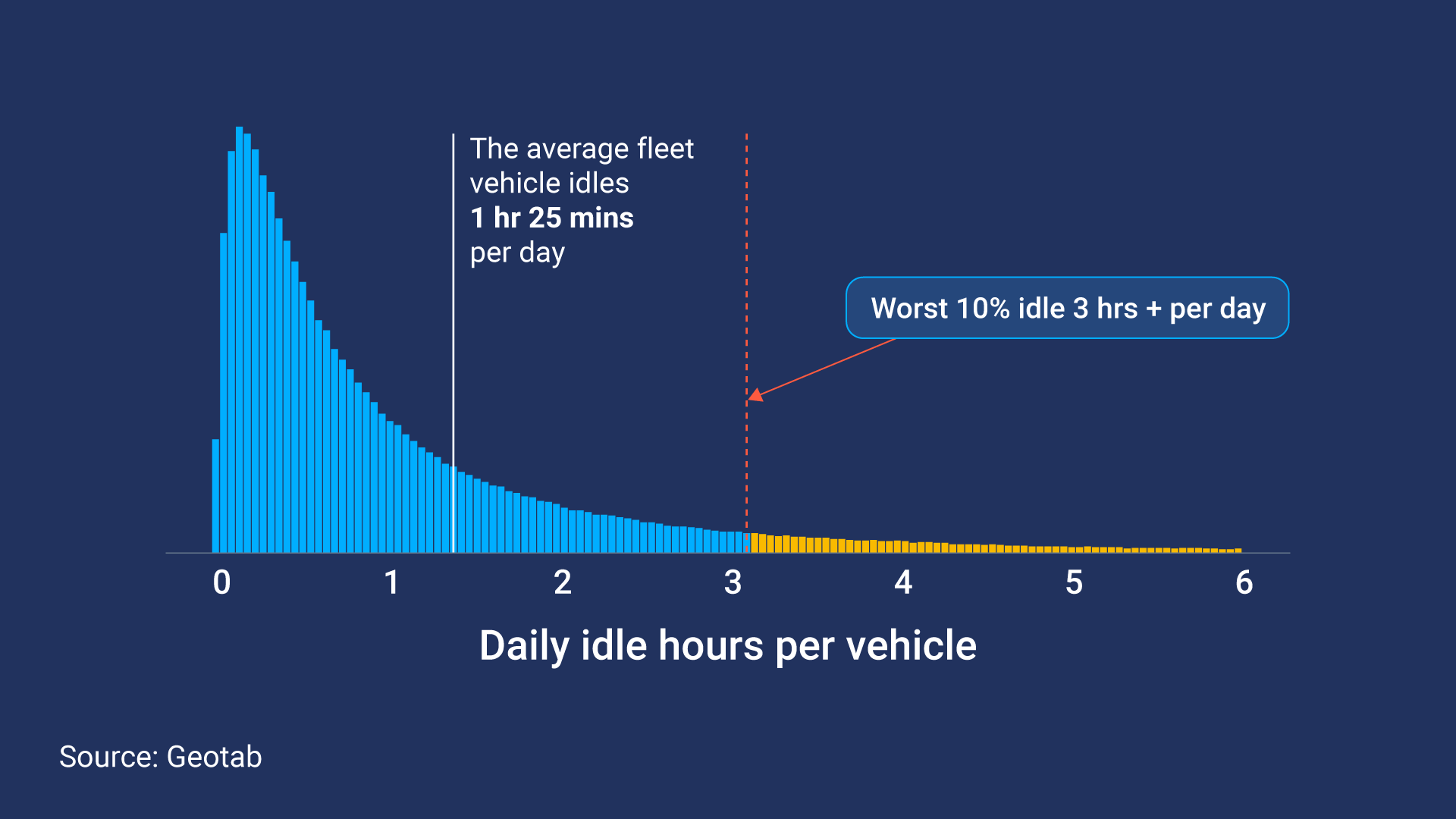
The average field service technician loses 40%+ of their workday to travel, idle time and scheduling inefficiency. Poor routing decisions drive a significant share of that lost time — unnecessary backtracking, inefficient sequencing and last-minute reroutes all reduce the number of jobs a technician can complete in a day. In an industry already facing a nationwide technician shortage, every unproductive hour creates direct revenue erosion.
Missed jobs
When routes are inefficient, schedules become tighter, delays compound throughout the day and technicians run out of capacity faster. Customers increasingly expect precise arrival windows — the kind of reliability that Amazon-style logistics have normalized. When field service operations can’t deliver that, dissatisfaction follows. The result is missed appointments, rescheduled jobs, longer customer wait times and fewer completed service calls per technician. Over time, those inefficiencies constrain revenue growth by reducing how many jobs your operation can realistically complete each day.
Many field service operators are stuck in a frustrating loop. They’re managing costs, tracking fuel spend and dispatching on time — and costs keep climbing anyway. The causes are difficult to isolate because they’re spread across different budget lines.
Why the problem is hard to diagnose
Connecting high operating costs to unnecessary miles is challenging because the impacts show up on different budget lines. Extra fuel burned lands in one budget. When a technician arrives late, the time spent finishing that job shows up as overtime. The revenue impact of missed service calls often isn’t measured at all.
These issues can seem unrelated on the surface, making the total impact invisible on most profit and loss statements (P&Ls). In reality, they’re often driven by the same routing decisions. Let’s look at an example to illustrate.
A dispatcher at a mid-sized HVAC company receives an emergency no cooling service call at 4:00 p.m. during a heat wave. Operating under time pressure and with incomplete visibility into technician capabilities and inventory, he reroutes the nearest available technician.
- Once onsite, the dispatched technician realizes the repair requires a specialized skill set and part the technician doesn’t have available.
- The dispatcher locates a second technician with the appropriate expertise to reroute to the emergency call. The original technician is sent back across town to resume his delayed service appointments.
- By the time the second technician arrives, several customers have already been affected by the reshuffling. The emergency repair stretches into after-hours work, while other appointments are delayed or rescheduled altogether.
While dispatching the closest technician seemed like the most efficient decision based on the information available, it triggered an expensive ripple effect.
One decision — dispatch the nearest technician — triggered fuel waste, overtime, delayed customers and a compounding schedule breakdown.
None of these costs get magically grouped under “routing inefficiency.” They show up separately as fuel spend, overtime, lost productivity and customer dissatisfaction.
This is where optimized routing starts to matter. It’s not just a mileage reduction tool, but a way to reduce operational disruption across the entire schedule.
Route optimization delivers measurable outcomes
A traditional routing tool acts as a basic cost-reduction lever. It aims to produce the shortest route so technicians drive fewer miles, spend less on fuel and potentially serve more customers.
Economic route optimization does all of this while also unlocking revenue and margin because the shortest drive isn’t always the most profitable. For example, Geotab’s routing solution considers multiple factors beyond distance and drive time, including fuel costs, maintenance schedules, technician expertise and availability, the revenue value of appointments and the impact of customer experience.
As priorities change throughout the day, route recommendations adjust in real time to help fleets stay efficient and responsive. Field service organizations using Geotab experience ROI payback in under 6 months.
| Costs related to inefficient routing | Route optimization goals | Geotab platform outcomes |
|---|---|---|
| Rising fuel spend | Significant reduction in unnecessary miles | 15-30% mileage reduction |
| Lost technician time, unproductive hours | Each technician gets more jobs done in a day; no need to add headcount | 2-3 additional completed stops per driver each day |
| Missed jobs, late arrivals and customer dissatisfaction | Improved scheduling reliability as a driver of contract retention and repeat business | Up to 98% on-time arrivals |
Fleets don’t have to rebuild their operations to make better routing decisions. Geotab connects into existing field service management tools, so dispatchers get route recommendations inside the workflows they already use.
Make every routing decision a revenue decision
Most field service operators feel the pain of rising costs associated with unnecessary miles. Traditional routing tools reduce miles. They don’t optimize for the most profitable route — and that’s where the real opportunity sits.
You don’t have to settle for leaving revenue behind on every route. If you’re interested in optimizing for total business profitability, not just finding the shortest distance between two points, there’s practical advice available.
Want to model your own potential savings? Use the routing optimization ROI calculator.
Subscribe to get industry tips and insights
The Geotab Team write about company news.
Table of Contents
Subscribe to get industry tips and insights
Related posts

Unlocking more jobs per day: How smart dispatch management improves tech performance
October 13, 2026
3 minute read

Top seven best fleet fuel cards: How to choose the right one for your business?
October 1, 2026
7 minute read


How dispatch management software contains the compounding costs of a sick call
August 10, 2026
3 minute read