What is route optimization? How to improve fleet efficiency
Tired of inefficient routes and missed deliveries? Discover how route optimization can improve fleet operations.

By Geotab Team
Jul 8, 2026

Key Insights
- Route optimization leverages data and technology to improve fleet vehicle route efficiency, reduce fuel costs and improve delivery performance.
- Manual route planning can't keep up with modern fleet traffic, delivery windows, driver availability and compliance requirements.
- The right route optimization software scales from small businesses to enterprise fleets, delivering measurable ROI through lower operational costs and better customer experience.
- Integrating telematics with routing gives fleet managers a complete, real-time picture of fleet performance.
Not too long ago, fleet drivers relied on paper maps and memory to navigate routes. However, with recent advances in fleet technology and fleet management solutions, businesses have recognized the power of route optimization to find the best path for a vehicle based on delivery windows, vehicle capacity, driver schedules and live traffic conditions.
Manual planning simply cannot keep pace with modern fleet demands. Between rising fuel costs, unpredictable traffic and growing customer expectations for fast, accurate deliveries, the margin for error is thin. Route optimization tools turn complex delivery variables into predictable and streamlined operations.
What is route optimization?
Route optimization is the process of planning the most efficient routes to reduce time and costs. But it goes beyond finding the shortest distance between two points.
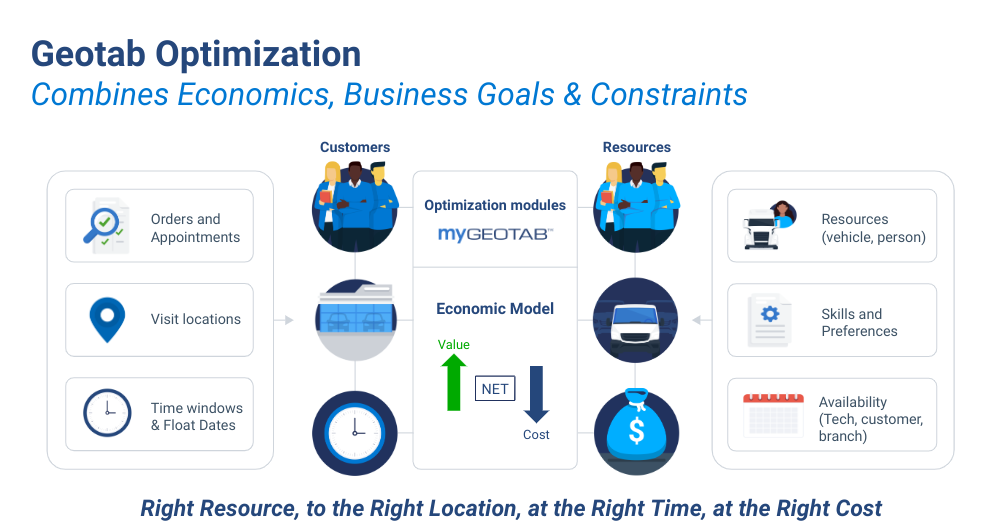
True optimization sequences multiple stops to account for variables like delivery windows, vehicle load capacity, driver availability and real-time traffic patterns. The difference between simple navigation and route optimization is the difference between a GPS giving you one path and a system intelligently mapping your stops for maximum efficiency.
This is why route optimization is especially important for industries where even small inefficiencies compound, like delivery, field services and transportation.
.svg)
How does route optimization work?
In an economy of rising fuel prices, routing has proven to be one of the most important features in fleet management. According to trucking statistics, it can significantly increase the efficiency and productivity of the fleet while simultaneously reducing costs. But how does it work?
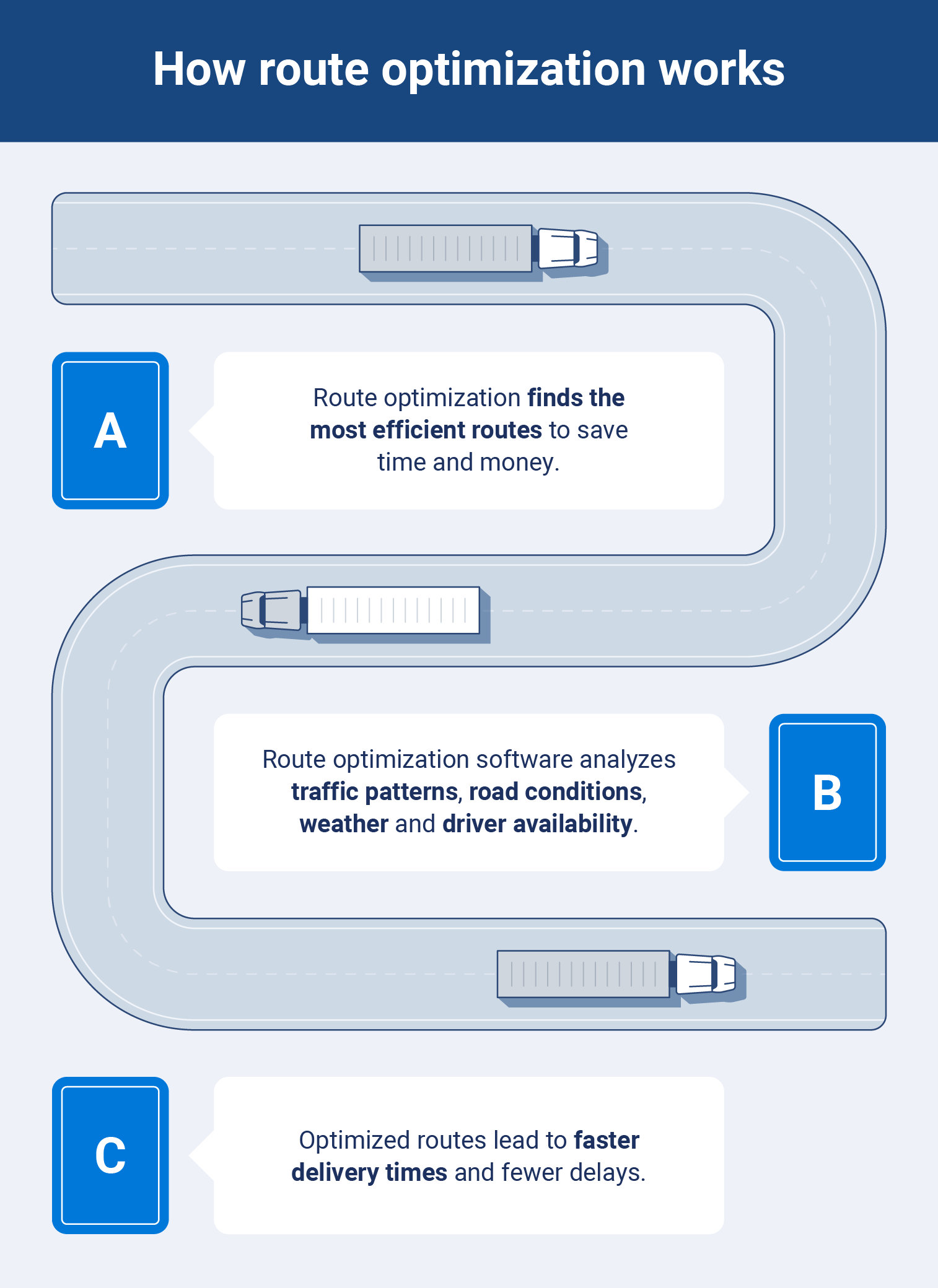
Fleet route optimization uses algorithms and real-time data to create the most efficient routes. Route optimization GPS tracking provides precise location data, while telematics systems gather information on vehicle speed, fuel consumption and engine performance using AI-driven insights to make fleet management easier.
This data is then fed into routing software that considers factors to determine the most efficient route for each driver, including:
- Traffic patterns
- Road conditions
- Weather forecasts
- Driver availability
By utilizing this technology, businesses can significantly reduce fuel costs, minimize vehicle wear and tear and improve driver productivity. Delivery route optimization can also lead to fewer delays and improved customer satisfaction.
Benefits of route optimization
Finding ways to boost efficiency and reduce operational costs is crucial for a successful fleet. Real-time route optimization offers a powerful solution to achieve both of these goals.
From cutting down on fuel consumption and miles logged to enhancing customer satisfaction and increasing delivery capacity, optimization technology empowers businesses to streamline their operations through improved route planning.
.png)
Lower operational costs
For most fleets, reducing operational costs is a daily mission. With efficient routing, vehicles undergo less strain, translating to fewer fleet maintenance needs and lower expenses. Drivers who complete routes within their standard shifts also mean less overtime pay, a cost that adds up quickly for larger fleets.
For example, route optimization tools can help technicians avoid recently reported collision sites, which improves safety, saves time and reduces fuel use in heavy traffic.
Better driver productivity
Automated stop sequencing allows drivers to complete more deliveries per day without increasing their workload. Instead of wasting time figuring out the best order of stops, drivers receive digital manifests with turn-by-turn directions that update in real time. This keeps teams focused on the road and the job.
Improves resource utilization
Thanks to intelligent scheduling, businesses can handle more appointments without the need to expand their fleet. This leads to improved fleet asset utilization.
Not only does this mean you can increase your service capacity, but you’ll also enjoy greater scheduling flexibility to meet customer needs efficiently. Servicing more customers within the same amount of time has transformed technicians from cost centers to strategic assets.
Enhances customer satisfaction
Meeting tight delivery windows and providing accurate arrival times are table stakes in today's market. Route optimization makes both reality. When unexpected delays do occur, real-time updates help manage customer expectations before frustration sets in, contributing to an overall increase in customer satisfaction.
Route optimization challenges
In an ideal world, route planning and optimization for fleets would be straightforward. However, the reality of fleet management is far more complex.
Real-world routing is complicated and filled with variables that can change at a moment's notice. Factors such as traffic conditions, customer availability and unexpected delays transform routing into a challenging task that requires flexibility and strategic planning.
Unexpected delays
Unexpected delays and service needs are one of the most frequent challenges fleets face. Accidents, road construction and even unexpected bad weather can disrupt plans.
Without preventative route optimization software, these delays can negatively impact everything from customer experience to vehicle maintenance needs.
Driver schedules
Creating driver schedules that maximize efficiency can be difficult. It’s not just about finding the shortest routes but also factoring in driver availability, breaks and hours-of-service limits. Overlapping shifts, unexpected absences and varying skill sets among drivers further complicate the scheduling process.
A well-optimized schedule needs to consider driver preferences and expertise alongside route efficiency, ensuring that the right driver with the right skills is assigned to the right job at the right time.
Manual planning
Manual route planning is inefficient and time-consuming. Without the insights provided by data analysis and route optimization software, planners often struggle to create efficient routes that account for real-time traffic, delivery windows and driver availability.
These challenges are only amplified when managing EV fleets. Planners need to consider charging station locations, charging times and battery range alongside traditional routing factors. Manually calculating these variables and adjusting routes in real time becomes incredibly complex.
Customer expectations
Customers expect timely and reliable deliveries, which can be a significant challenge for businesses, especially with the growing demand for quick delivery services.
Unexpected delays, traffic congestion and inaccurate ETAs can lead to missed deadlines, frustrated customers and, ultimately, damage to brand reputation.
.png)
Why fleet efficiency depends on smart routing
Routing decisions have a direct impact on the bottom line. Fuel accounts for approximately 40% of total fleet operation costs, which means even modest reductions in mileage deliver significant savings.
Reducing unnecessary miles also means less vehicle wear, fewer breakdowns and lower maintenance costs over time. Fleets that run tighter routes extend the working life of their assets and reduce the frequency of unplanned repairs.
There are workplace benefits too: drivers with predictable, well-planned schedules experience less frustration and fatigue. This directly supports driver retention in an industry where turnover is a persistent challenge.
How to improve fleet efficiency with route optimization software
Facing challenges with inefficient routes, missed deliveries or strained driver capacity? Route optimization software helps fleets address modern operational challenges.
Optimize routes in real time, gain complete visibility into your fleet, streamline driver management and enhance customer communication — all while maximizing efficiency for both traditional and EV fleets. Take a closer look below to see how this works in practice:
- Automated route planning: Instead of relying on manual calculations and guesswork, route optimization software automatically generates the most efficient routes considering factors like distance, traffic conditions and driver availability.
- Real-time visibility and updates: With real-time tracking, fleet managers can see the location and status of all vehicles. This allows for proactive monitoring, quick responses to unexpected delays and accurate ETAs for customers.
- Enhanced driver management: Route optimization software maximizes driver productivity and promotes a fair workload distribution, considering factors like hours-of-service regulations, breaks and skill sets.
- Improved customer communication: Businesses can provide accurate ETAs and real-time delivery updates to better manage customer expectations.
- EV fleet optimization: For electric vehicle fleets, route optimization software considers charging station locations, charging times and remaining battery range to minimize downtime and improve EV efficiency.
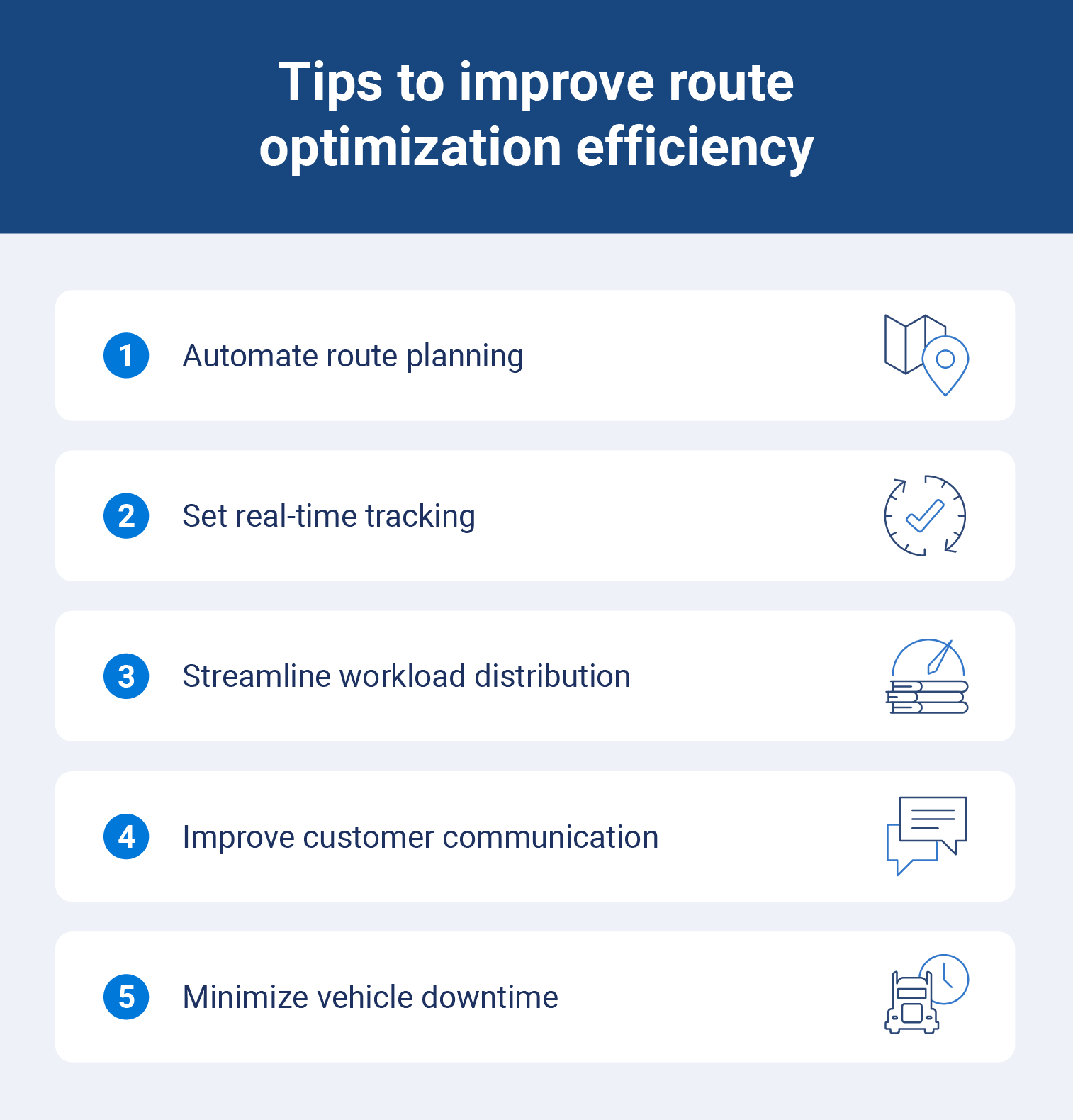
By leveraging these features, fleet managers can improve fleet-wide efficiency. Next, let's explore how Geotab's routing and optimization solutions bring these features to life.
Geotab routing and optimization
Geotab combines telematics data with routing software to give fleet managers a comprehensive view of fleet performance. Geotab's routing and dispatching solutions allow managers to design efficient multi-stop routes, monitor vehicles in real time and review summary reports on arrival and departure times and driving distances.
Features like real-time vehicle tracking, fuel usage monitoring and driver behavior insights help fleets refine routes over time. And because Geotab is built on an open platform, the solution scales from small businesses running on a handful of vehicles to large enterprise fleets with complex, multi-region operations.
Get real-time optimization with Geotab routing
Route optimization is far more than just a nice to have. It is a core driver of fleet efficiency, cost control and customer satisfaction. No matter if you are managing a small regional fleet or large national operation, the right tools make the difference between reactive route fixes and proactive performance improvements.
Geotab's routing and dispatch solutions give you the real-time data and automation needed to keep every route running at optimal performance. Contact Geotab to see what smarter routing looks like for your fleet.
Subscribe to get industry tips and insights
Frequently Asked Questions
Route planning is the process of selecting a sequence of stops. Route optimization is the math behind making that sequence as efficient as possible, factoring in traffic, vehicle capability, driver hours and delivery constraints to minimize cost and time.
Yes. Even fleets with only a few vehicles can see strong ROI through fuel savings, reduced overtime and better time management. Route optimization software for small businesses is designed to scale so you can get enterprise-grade insights without enterprise-level complexity.
Reducing total mileage and idle time directly lowers a fleet's carbon footprint. Fewer miles driven means less fuel burned and lower emissions. That is why route optimization is a practical tool for fleets working toward sustainability targets.
Route optimization software helps fleet managers plan the most efficient routes, which saves time and fuel costs and improves delivery speed.
The Geotab Team write about company news.
Table of Contents
Subscribe to get industry tips and insights
Related posts

Unlocking more jobs per day: How smart dispatch management improves tech performance
October 13, 2026
3 minute read
Top seven best fleet fuel cards: How to choose the right one for your business?
October 1, 2026
7 minute read

Fleet maintenance software for small business: 8 top tools and guide
September 29, 2026
7 minute read