11 best routing software solutions for efficient fleet operations

By Geotab Team
May 20, 2026

The best routing software is able to do far more than find the shortest path between two points. It automates multi-stop planning, updates routes based on variables like traffic and helps you reduce mileage while improving arrival accuracy. For fleet managers, routing software is a compliance and cost management tool in addition to a navigation guide.
This guide helps you choose the platform that saves you money. Read on to find the 11 best routing software tools and learn which is best for different types of organizations and other key features to consider when evaluating your options.
1. Geotab
Geotab is a global leader in connected transportation solutions and commercial telematics. It is trusted by thousands of customers across hundreds of countries. Its routing and optimization solution goes past traditional route planning by integrating economic factors like fuel costs, vehicle maintenance and customer satisfaction into routing optimization.
Geotab uses that data to help fleets of all sizes improve on-time arrivals and reduce mileage. Geotab is also the only telematics provider on this list that offers a robust Geotab Marketplace, giving fleet managers access to hundreds of integrations.
.jpg)
Key highlights:
- Economic optimization model: It takes into account fuel, labor, maintenance costs and distance, saving field service customers an average of 20 to 55% compared with other planning models.
- Real-time route adaptability: This includes live dispatching, instant stop resequencing and integrations with the Geotab Drive app for in-cab driver guidance.
- Increases on-time arrivals: Improve on-time arrivals while reducing mileage to improve fuel efficiency and reduce spend.
- Customizable routing: Allows for customizable zones, multi-resource routing and appointment scheduling for a fleet-wide balanced workload.
2. Upper
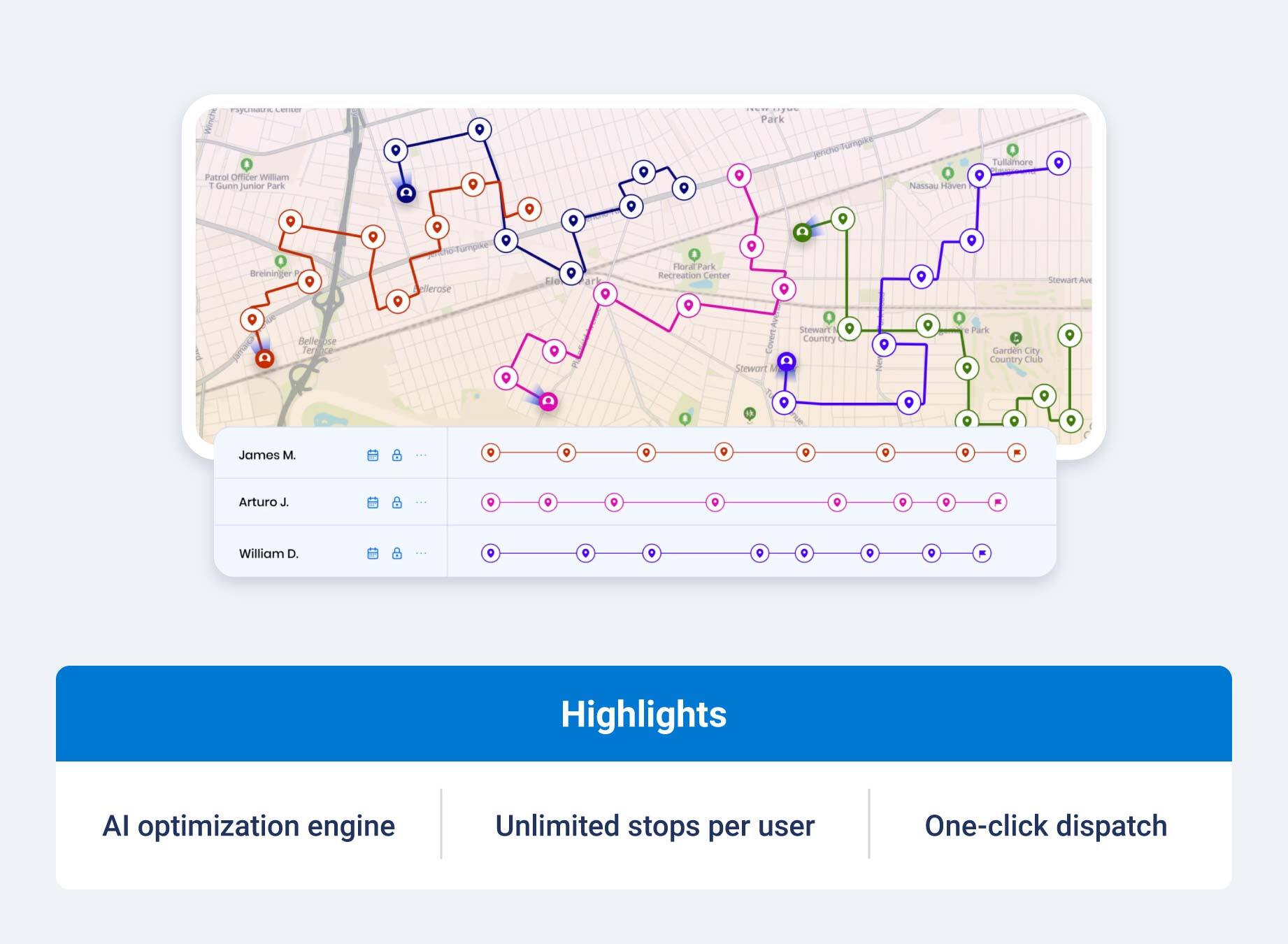
Upper is a cloud-based route-planning solution designed for small- to mid-sized delivery operations. It offers AI-powered route optimization with no monthly stop caps, making it a predictable and cost-effective choice for a growing team. Dispatchers can manage routes, drivers and schedules in a single dashboard, with drag-and-drop rescheduling.
Key highlights:
- Unlimited stops per user: This is offered on paid plans and eliminates surprise charges during high-volume periods.
- One-click dispatch: The driver app is accessible with a single tap and provides turn-by-turn directions and real-time stop updates.
- Proof of delivery: POD provided via photo and signature capture, plus automated customer notifications on certain plans.
3. Routific
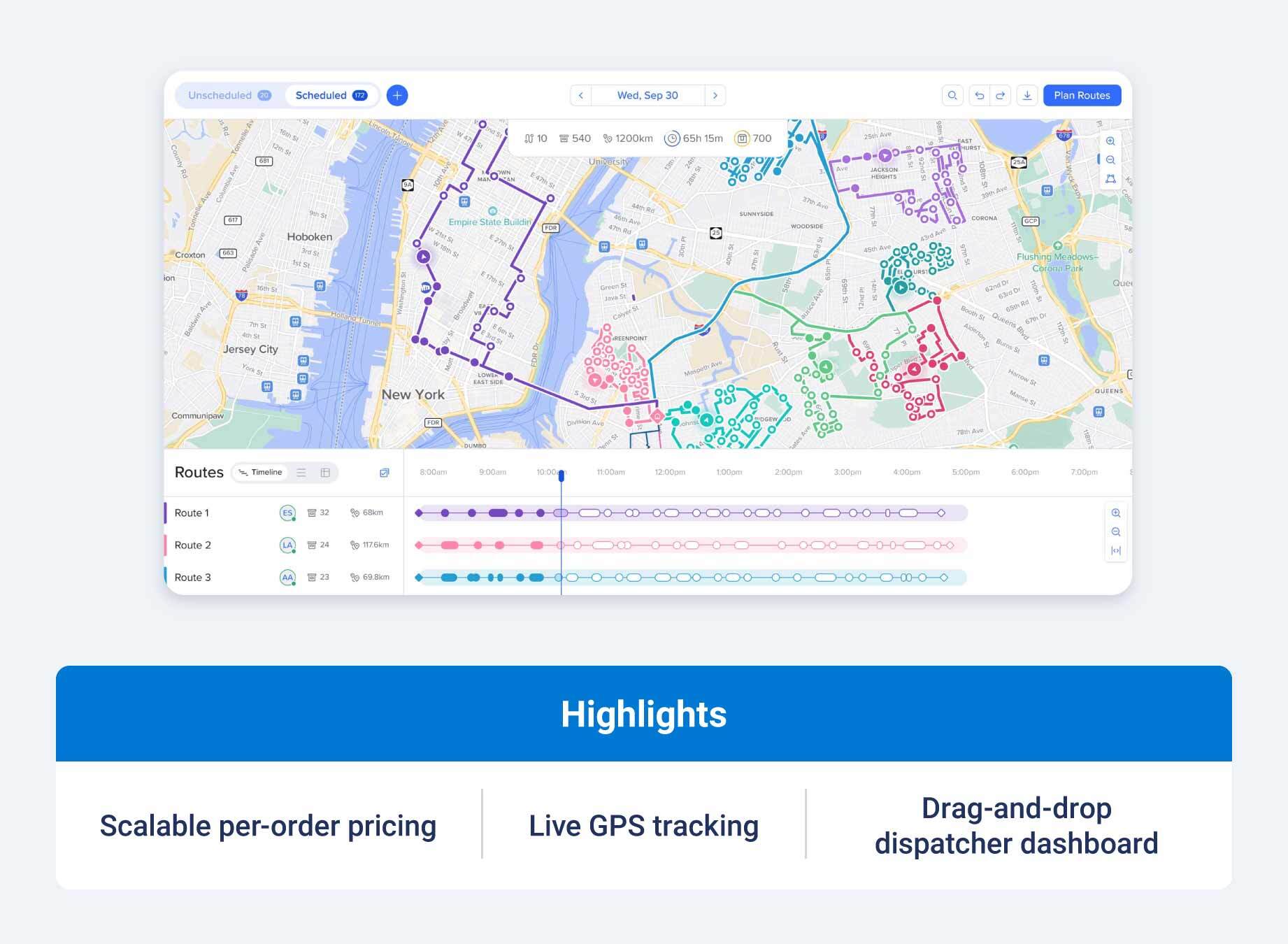
Routific is a strong delivery routing software solution. It is made for small to mid-sized businesses. Its per-order pricing model makes it the ideal choice for businesses with variable fleet sizes or seasonal delivery volumes. All plans include unlimited routes, unlimited drivers and unlimited dispatchers for maximum flexibility.
Key highlights:
- Scalable per-order pricing: The first 100 orders per month are free; $150 per month for up to 1,000 orders, with additional per-order pricing tiers based on volume.
- Drag-and-drop dispatcher dashboard: This dashboard provides a timeline view showing all routes and real-time driver progress.
- Live GPS tracking: Provides GPS tracking, photo and signature POD and automated customer delivery notifications.
- Shopify integration: Offers a two-way API for connecting with existing order management systems.
4. Route4Me
Route4Me is best suited for fleets with complex vehicle-specific requirements, such as road compliance by vehicle class. It serves a wide range of business sizes and use cases, from territory management to enterprise last-mile logistics. It is available as a standalone platform and a Geotab Marketplace integration.
.jpg)
Key highlights:
- Customizable routing engine: Supports 50+ dynamic constraints, including vehicle type, time windows, road compliance and multi-language dispatch.
- Route simulation and forecasting: Allows teams to model routes in advance to estimate costs, time and resource allocation before dispatch.
- Geotab Marketplace integration: This integration enables real-time vehicle tracking and route dispatching in a single platform.
- Strong mobile apps: iOS and Android apps offered with GPS tracking, geofencing for last-mile confirmation and driver performance monitoring.
5. Onfleet
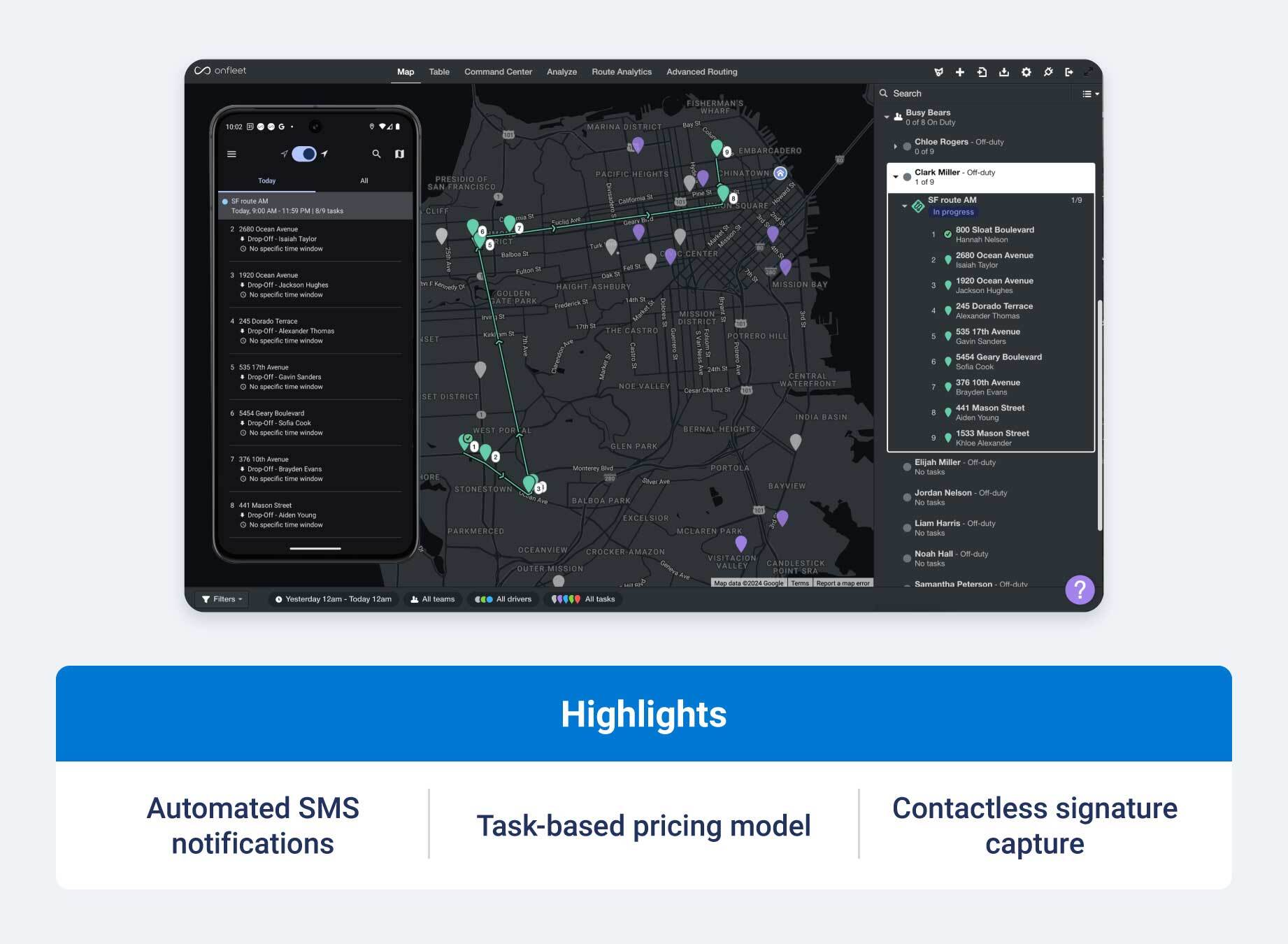
Onfleet is a delivery management platform known for its on-demand and courier delivery operations. It offers a clean dispatcher web dashboard and deliveries in real time. Automated customer communication, including SMS and in-app tracking, improves driver experience and reduces support inquiries.
Key highlights:
- Task-based pricing model: The Launch plan starts at $599 per month for 2,500 delivery tasks, making it a strong choice for mid-market and enterprise operations.
- Automated SMS notifications: Provides real-time ETA sharing and a live customer tracking experience similar to ride-share apps.
- Contactless signature capture: A link is sent to the customer via SMS for remote POD confirmation.
- Developer API and Zapier integration: These integrations help seamlessly connect Onfleet to existing warehouse and order management systems.
6. OptimoRoute
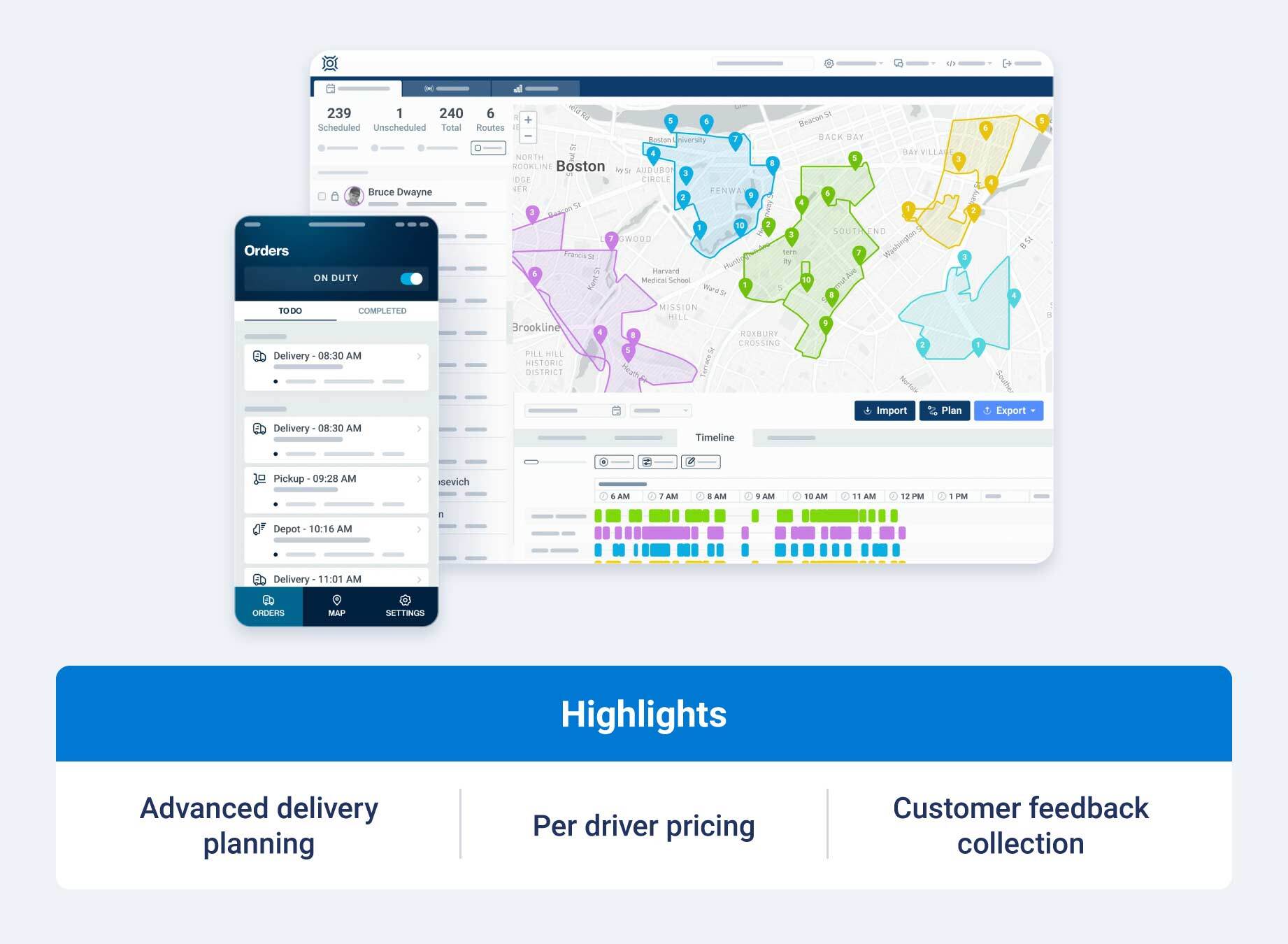
OptimoRoute is a cloud-based route planning platform made for field service and delivery businesses that need to schedule ahead. Its platform supports planning up to five weeks in advance, return-to-depot routing and live route adjustments. It is a strong fit for fleets with recurring or complex service schedules.
Key highlights:
- Advanced delivery planning: You can plan up to five weeks in advance with automated order scheduling based on driver hours, vehicle capacity and other time windows.
- Real-time route editing: Includes recalculated ETAs and live driver tracking via the mobile app.
- Per driver pricing: Pricing per driver starts at $35 per driver per month, with a 30-day free trial available.
- Customer feedback collection: Customer feedback is collected after each delivery to help teams monitor service quality and flag driver performance issues.
7. Spoke
Spoke (formerly known as Circuit for Teams) is a last-mile delivery management platform made for courier companies, small retailers and high-volume dispatch operators. It is a strong fit for businesses. that need to make frequent route changes. Its stop-based pricing model is especially appealing for cost-effective seasonal businesses managing fluctuating driver numbers.
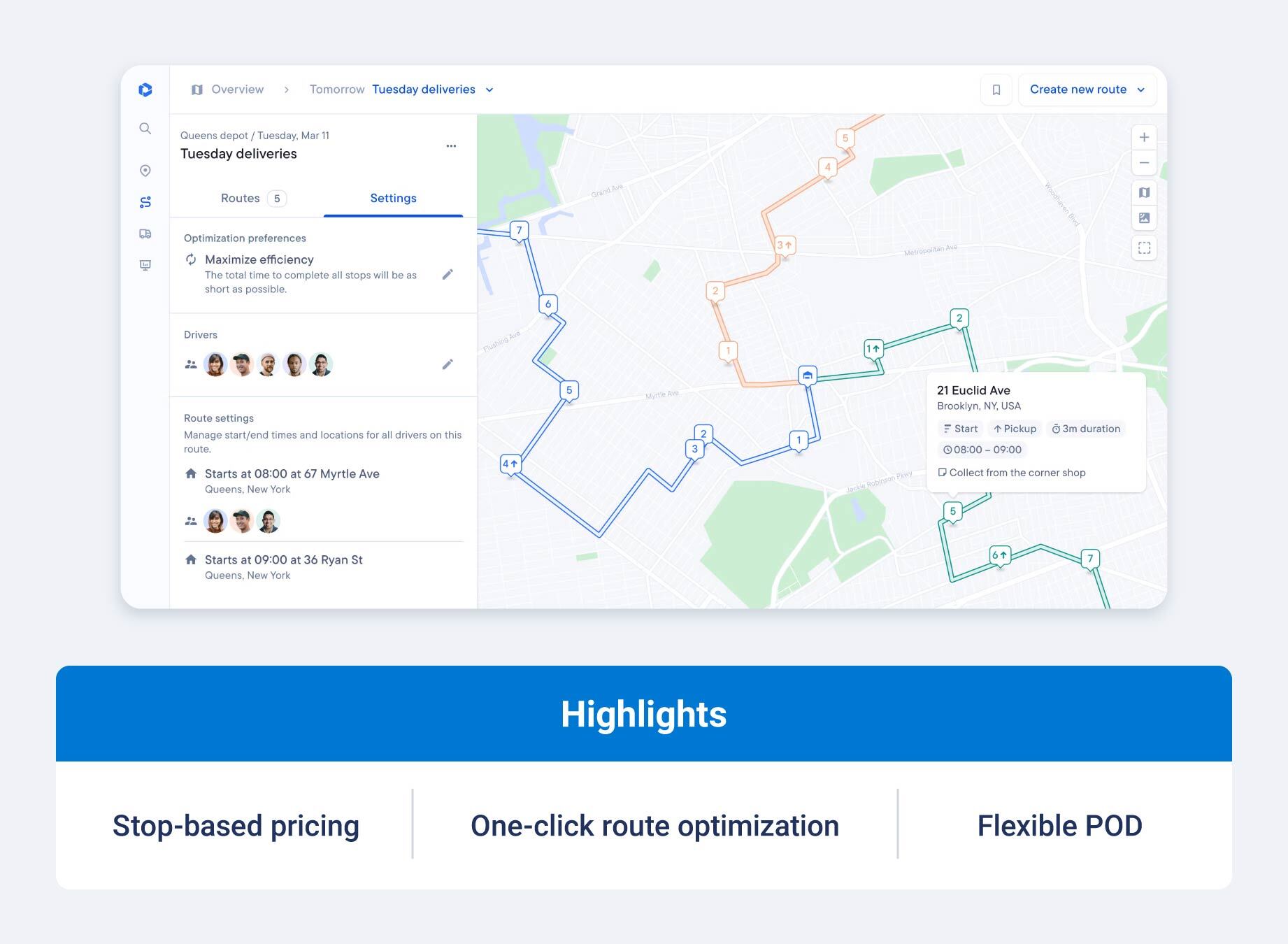
Key highlights:
- Stop-based pricing: The Starter plan starts at $125 per month for up to 1,000 stops with unlimited team members and drivers included, while the Premium plan is $200 per month for 2,000 stops.
- One-click route optimization: Provides live tracking, real-time ETA updates and direct dispatcher-to-driver chat via the driver app.
- Flexible POD: Includes photos, signature and barcode scanning and a customer-facing live package tracking page.
- Variety of integrations: Expect integrations with Shopify, Zapier and open APIs for easy connection with e-commerce and order management platforms.
8. WorkWave RouteManager
WorkWave RouteManager is a cloud-based fleet routing and scheduling solution perfect for field service companies, logistics providers and delivery businesses. It streamlines customer communication with automated notifications, improving transparency and on-time service.
It is favored by businesses with recurring route structures like pest control, landscaping and commercial cleaning for neat customer notification workflows.
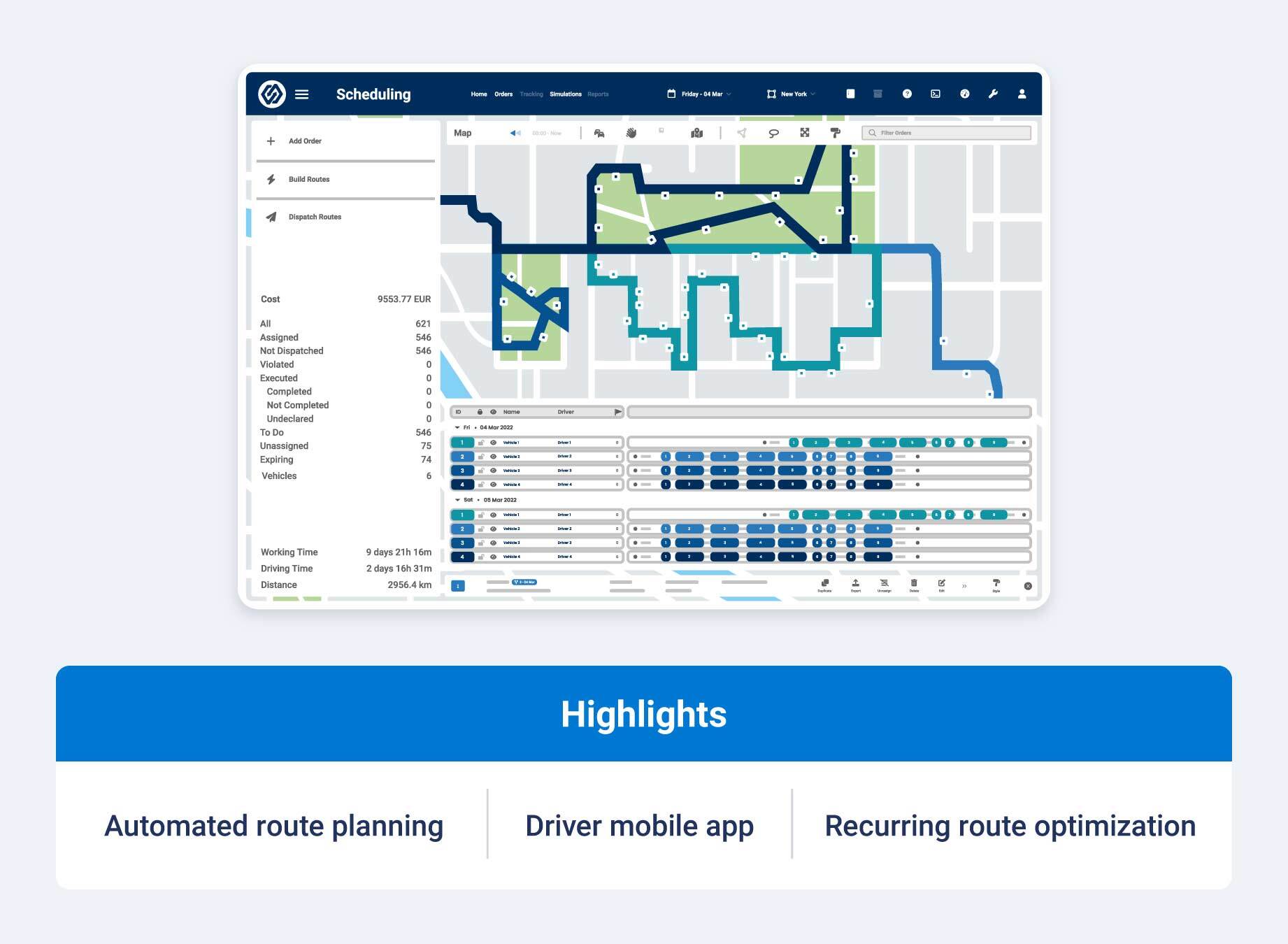
Key highlights:
- Simple per-vehicle pricing: Pricing starts at $54 per vehicle per month, with a minimum of four vehicles required. Custom pricing plans are available for larger fleets.
- Automated route planning: Provides daily, weekly and monthly route planning with real-time GPS tracking and on-the-fly rescheduling.
- Driver mobile app: This app provides proof-of-delivery capture, barcode scanning and direct customer notifications.
- Recurring route optimization: Automatically builds optimized routes for repeat customers and scheduled service visits.
9. RouteXL
RouteXL is a lightweight, browser-based routing tool. It is well-suited for small and local businesses with independent drivers, occasional use and low or predictable delivery volumes. It is one of the most affordable options on this list, with free plans up to 20 stops per route and additional low-cost upgrades for higher volumes.
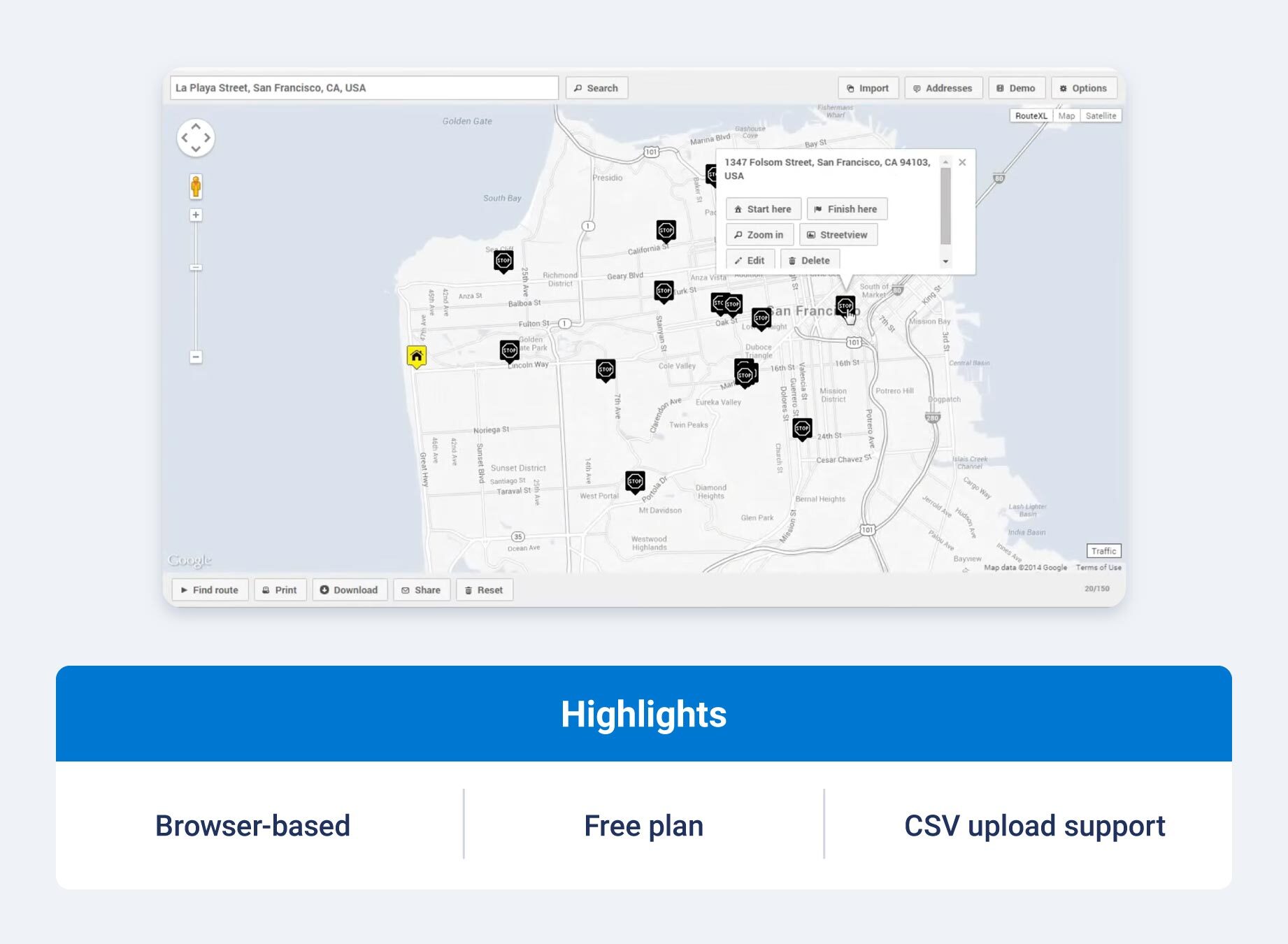
Key highlights:
- Free plan: Covers routes up to 20 stops, no account or credit card needed to get started.
- Browser-based: No mobile app is provided. Routes can be exported to GPS devices for in-vehicle use.
- CSV upload support: Users can upload stop lists in bulk, making it easier to plan routes at scale.
- Simple multi-stop optimization: Quickly calculates the most efficient route for multiple addresses without complex setup.
10. Badger Maps
Badger Maps is one of the more unique tools on this list. It is a route-planning and territory-management platform designed for field sales representatives and their managers. It stands out for combining multi-stop route optimization with CRM needs such as lead generation and check-in tracking.
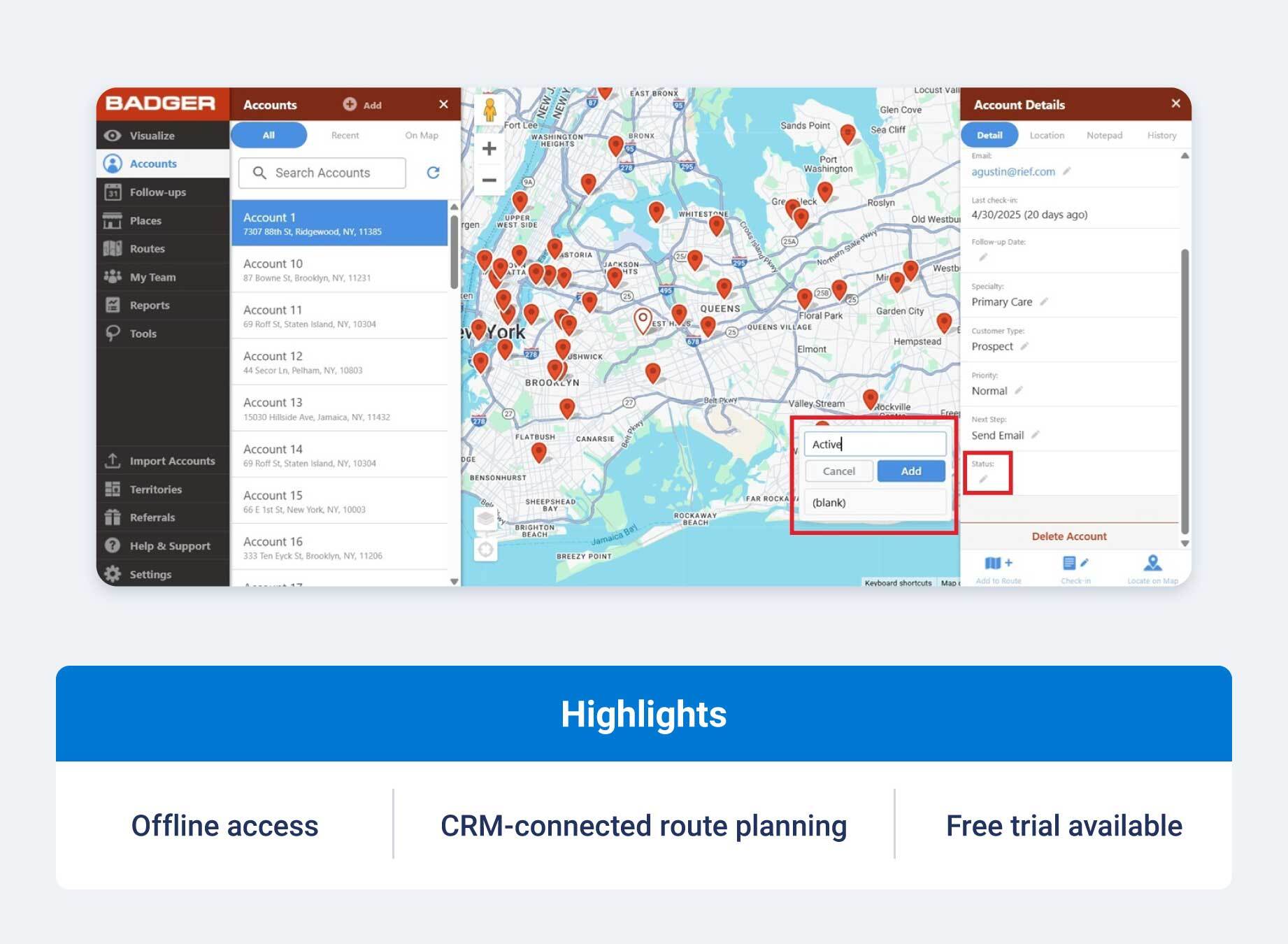
Key highlights:
- CRM-connected route planning: This lets sales reps visualize their territory, prioritize top accounts and build an optimized daily route based on existing customer data.
- Check-in and note-taking functionality: Drivers have access to these features at each stop, making it easy to automatically report on rep activity and mileage.
- Offline access: Allows reps to access routes and customer data even without an internet connection, making it ideal for field environments.
- Free trial available: 14-day free trial offered. Pricing is per user, with CRM integrations possible on annual plans.
11. MapQuest
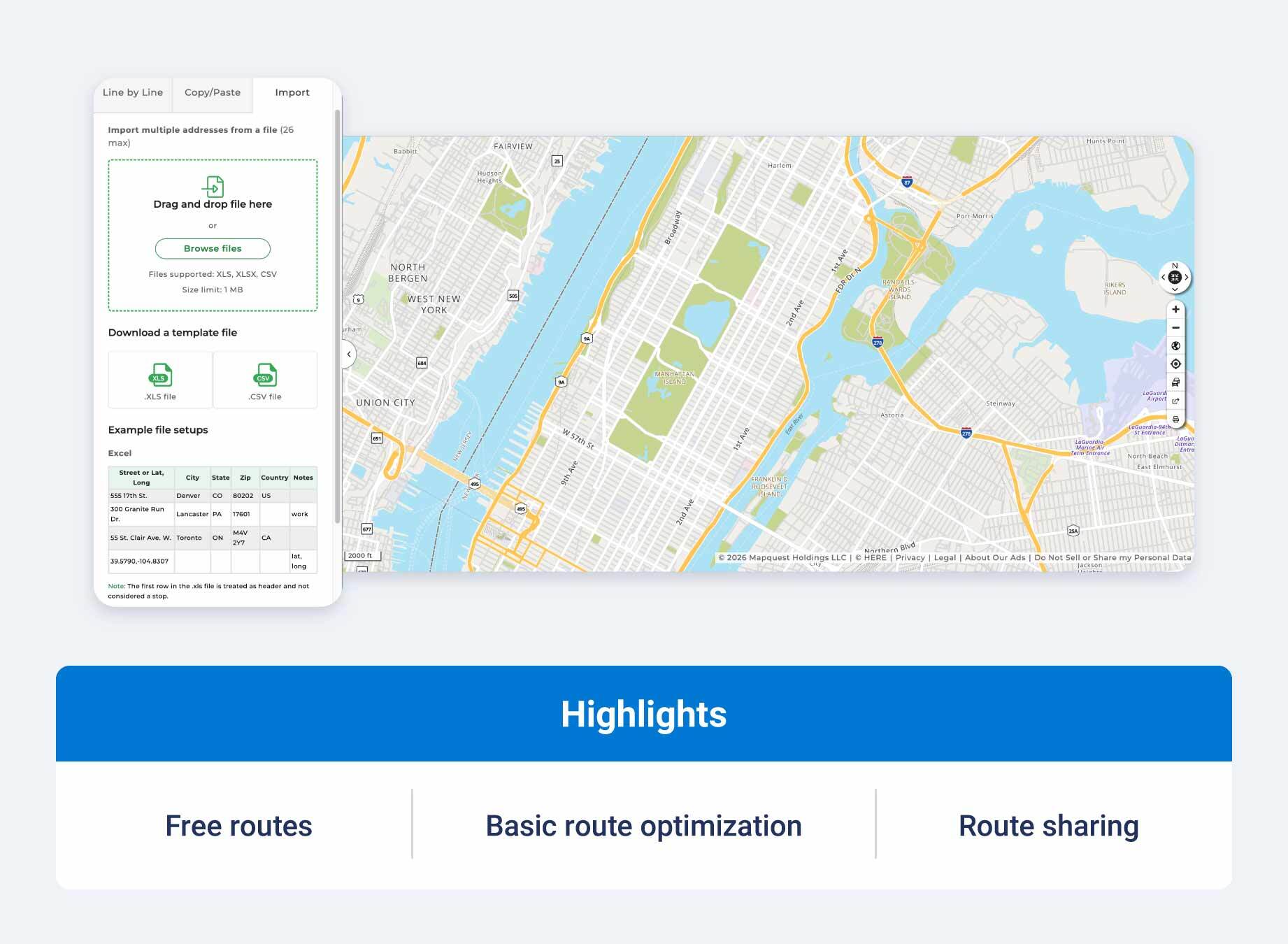
MapQuest was launched back in 1996, making it one of the oldest platforms in web-based navigation. It offers a free route planner that includes up to 26 stops and basic route optimization. It is a simple, no-cost starting point for those looking for an occasional-use tool. For businesses with regular deliveries, a purpose-built software platform delivers much more value.
Key highlights:
- Free routes: Users have access to free routes with up to 26 stops, accessible via a web browser without an account.
- Basic route optimization: This is available on the free tier, though without advanced features like time windows or vehicle capacities.
- Turn-by-turn voice directions: Provides basic navigation guidance for drivers after routes are generated.
- Route sharing: Users can generate shareable route links for easy collaboration or driver distribution.
How to choose the best routing software for your fleet
With so many options available, narrowing down to the best routing software comes down to key questions and understanding your fleet's own needs. Here's what you should focus on:
- How does this software handle last-minute cancellations or emergency stops mid-route? Look for a tool that offers real-time rescheduling and syncs instantly with the driver app.
- Can it account for vehicle-specific constraints like weight limits, hazmat restrictions or road access rules? This is especially critical for the best truck routing software used in regulated industries.
- What does proof of delivery look like? Ask specifically if photo, signature and barcode scanning are included in the base plan or add-ons.
- What type of pricing structure does it offer? Review if it provides per-driver pricing (paying a monthly fixed fee per driver), per-stop or per-order pricing (paying based on delivery model), or per-vehicle pricing. Different pricing structures work better for different types of fleets.
- What does the API maturity look like? If you need to connect the routing tool to a warehouse management system (WMS) or an order management platform, request documentation and confirm whether enterprise-level API access requires an upgrade.
Unlock more efficient routes for your fleet
The best routing software for your fleet is one that meets your business where it is and can scale as needed. That means stop-based pricing for courier companies, seasonal drivers, field service management features for mobile workforces, or enterprise-grade telematics for a large fleet.
For fleet managers who need routing software that goes beyond planning to connect with live vehicle data, driver behavior insights and economic optimization, Geotab's routing dispatching tool is built to deliver. Request a demo now to learn more.
Subscribe to get industry tips and insights
Frequently Asked Questions
Google Maps works well for basic navigation, but it isn't designed for multi-stop delivery route planning. It does not support time windows, driver dispatch, proof of delivery, load planning or fleet-wide tracking. For businesses managing more than a handful of deliveries per day, purpose-built route-planning software will save time and reduce fuel costs.
Yes, Geotab's Routing and Optimization solution has been shown to reduce mileage by 15 to 30%. Route optimization tools achieve this by eliminating backtracking, reducing idle time at stops and balancing workloads across drivers to avoid unnecessary trips.
Setup time varies by platform. Tools like Spoke and Routific are made for same-day onboarding. Dispatchers can usually import their stop list and send the first route to drivers within minutes.
WorkWave RouteManager and enterprise solutions like Geotab need a more structured onboarding process that accounts for fleet configuration, integration setup and driver training, though they also have dedicated teams to help.
The Geotab Team write about company news.
Table of Contents
Subscribe to get industry tips and insights
Related posts


How dispatch management software contains the compounding costs of a sick call
August 10, 2026
3 minute read
Beyond consumer apps: 5 ways integrated navigation protects your fleet
July 23, 2026
6 minute read
The safest mile in field service is the one nobody drives
July 22, 2026
2 minute read

Best small fleet management software providers and how to choose one for your business
July 16, 2026
8 minute read