Best software for small trucking companies: 5 tools to streamline your fleet
Running a small trucking company means wearing every hat in the office, from dispatch to billing to compliance. This guide compares five tools built to lighten that load, plus a clear framework for choosing the right fit for your fleet.

By Geotab Team
Sep 4, 2026

Key Insights
- The best software for a small trucking company's operations depends on if you need a transportation management system (TMS), a fleet management platform or an accounting tool.
- Geotab, TruckLogics, Tailwind TMS, AscendTMS, and QuickBooks each address different needs, from dispatch and driver safety to bookkeeping.
- A TMS handles load booking, dispatching, invoicing and compliance, while fleet management software covers vehicle visibility, safety and maintenance.
- Choosing the right fit comes down to fleet size, must-have features, ease of setup and total cost of ownership, not just sticker price.
Many owner-operators and small business fleet managers start out running their business on a spreadsheet. That approach can work, but it breaks down as you start to scale. Loads get lost between texts and emails, invoices go out late and compliance deadlines slip. That's where the best software for a small trucking company comes into play.
Finding the best software for small trucking company operations means looking past marketing claims and matching a tool to your actual needs. This guide is made for small fleet managers running fewer than 50 trucks who want to spend less time on paperwork and more time moving freight. Choose the best fit for your fleet size and budget from the five options below.
1. Geotab
Geotab is a connected fleet management platform built to give small trucking companies greater visibility into vehicles, drivers and operations. Geotab is not a traditional transportation management system, but it complements one by delivering real-time vehicle data, driver insights and compliance tools that help fleets run more efficiently from day to day.
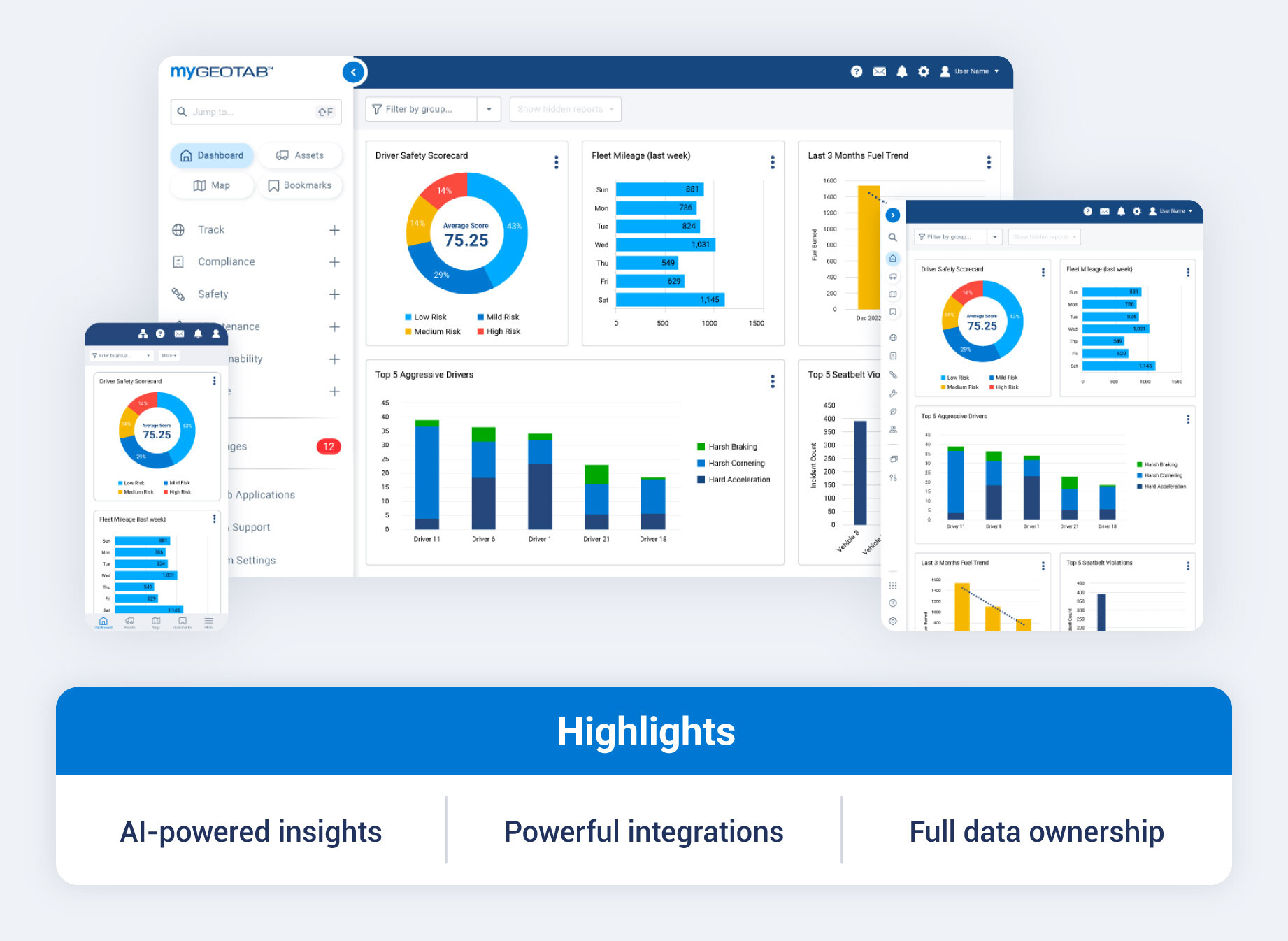
Geotab is especially useful for owner-operators and small fleets that want to reduce downtime, improve driver performance and simplify oversight as they grow. For teams researching options, it is worth comparing Geotab against other best fleet management software picks to see how features line up with your operations.
Key features:
- Real-time GPS fleet tracking: Live vehicle tracking helps fleet managers monitor locations, improve dispatch decisions and give customers more accurate arrival estimates.
- Vehicle diagnostics and maintenance: Engine fault codes, maintenance reminders and predictive insights reduce unexpected breakdowns and extend vehicle life. Fleets can pair this with remote fleet management workflows to review vehicle health without a trip to the yard.
- Driver safety and coaching: Geotab tracks speeding, harsh braking, seat belt use and other driving behaviors to help reduce risk and support driver coaching conversations.
- ELD and HOS compliance: Electronic logging, Hours of Service tracking and DVIR capabilities help fleets meet DOT requirements without manual paperwork.
- Scalable reporting and integrations: Geotab integrates with TMS, accounting and fleet management solutions while offering customizable reports and dashboards for growing teams.
- Strong AI fleet management capabilities: AI-powered analytics identify driver behaviors, detecting potential vehicle issues before they become costly repairs.
2. TruckLogics
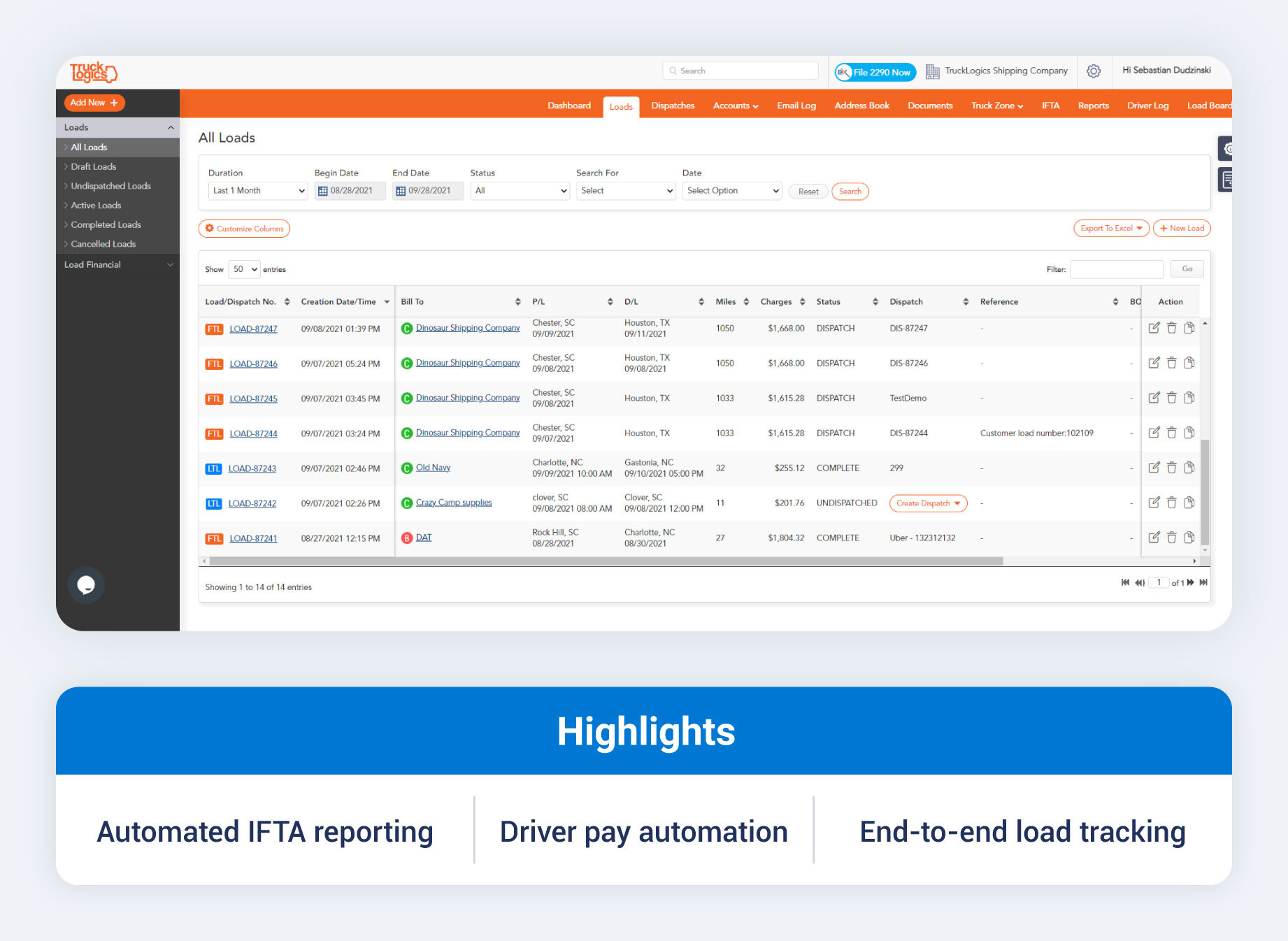
TruckLogics is a cloud-based trucking management system that centralizes dispatching, invoicing and IFTA reporting in one place. For small teams juggling multiple spreadsheets and disconnected tools, that consolidation removes a lot of repetitive back-office work.
Key features:
- Automated IFTA reporting: The system pulls mileage and fuel data to generate ready-to-file reports, saving hours of manual calculation each quarter.
- Load management dashboard: A visual interface lets teams track loads from booking to delivery and spot status bottlenecks at a glance.
- Driver settlements: The tool calculates driver pay based on loads, deductions and reimbursements to keep payments accurate and on time.
- Mobile app access: Drivers can upload documents and update load statuses in real time, which pairs well with dedicated trucking dispatch software for teams that want tighter control over daily assignments.
3. Tailwind TMS
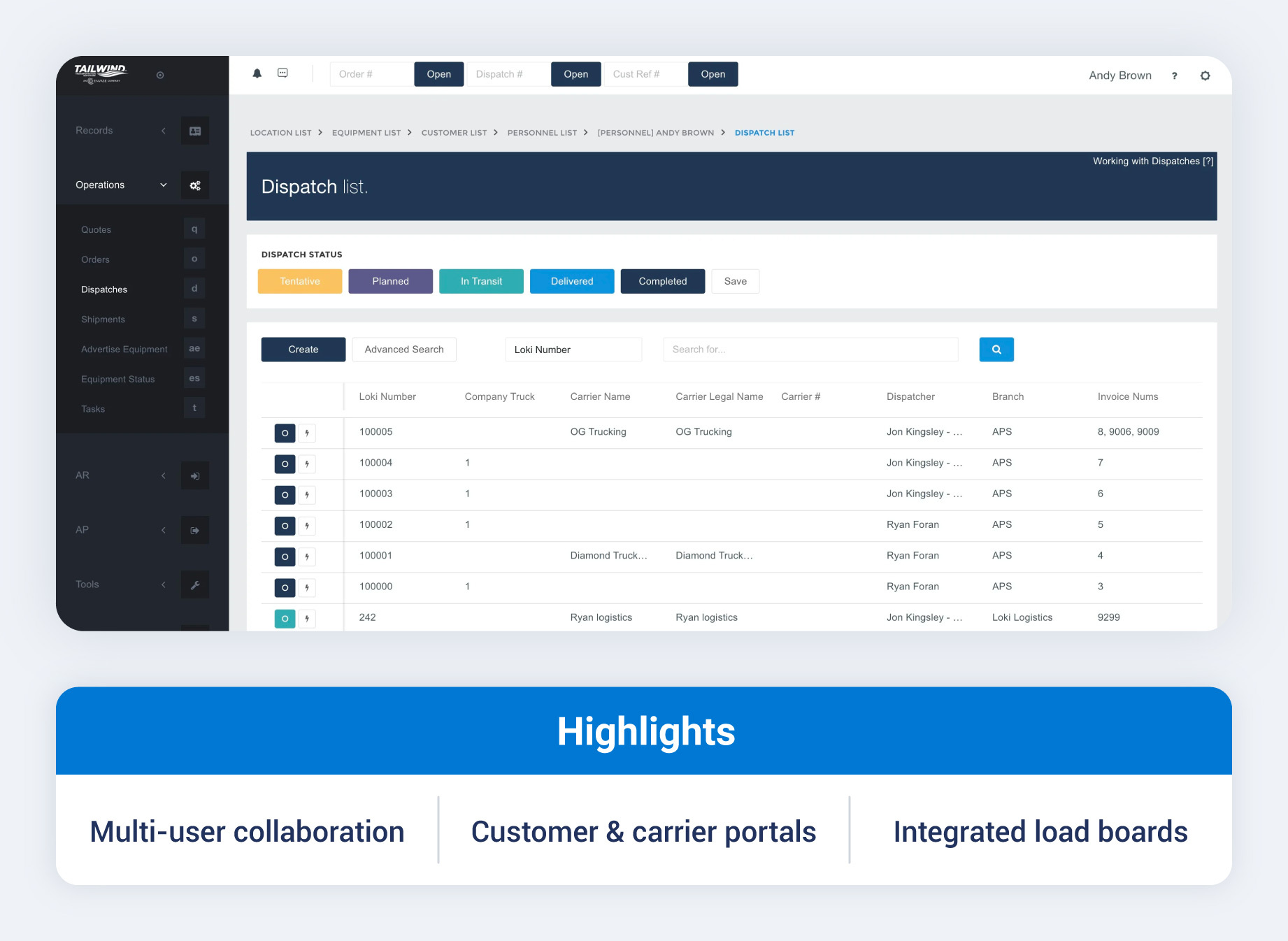
Tailwind TMS is a web-based platform that bridges the gap between basic dispatch tools and enterprise software. It handles both carrier and brokerage workflows, which makes it a flexible option as small fleets take on more complex freight arrangements.
Key features:
- Multi-user collaboration: Role-based permissions support multiple dispatchers and admins as the back office grows.
- Integrated load boards: Teams can post loads and search for freight directly within the platform, cutting down on switching between browser tabs.
- Customer and carrier portals: External partners can track shipments and upload documents through self-serve portals, reducing administrative back-and-forth.
4. AscendTMS
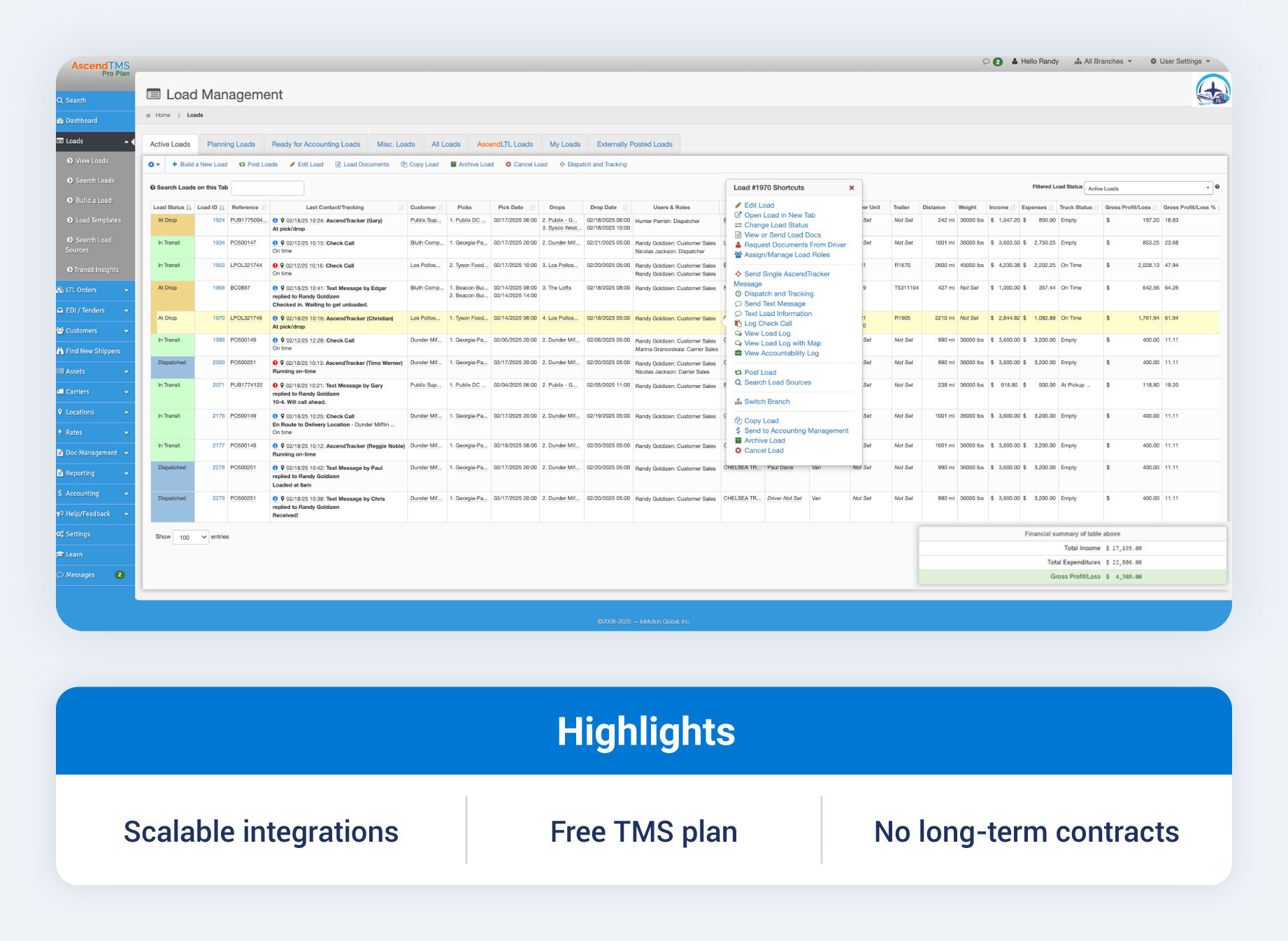
AscendTMS offers a robust free tier, making it one of the most accessible truck management software options for startups. It has a reputation for being easy to launch without upfront costs, which is especially important for a new company still proving out its processes.
Key features:
- Free basic TMS: The free version includes basic load management and document storage for a limited number of users.
- Premium integrations: Paid add-ons cover ELD, accounting and tracking so the software can grow alongside the company.
- No-contract flexibility: There is no long-term commitment, which suits new businesses testing their first management platform.
5. QuickBooks
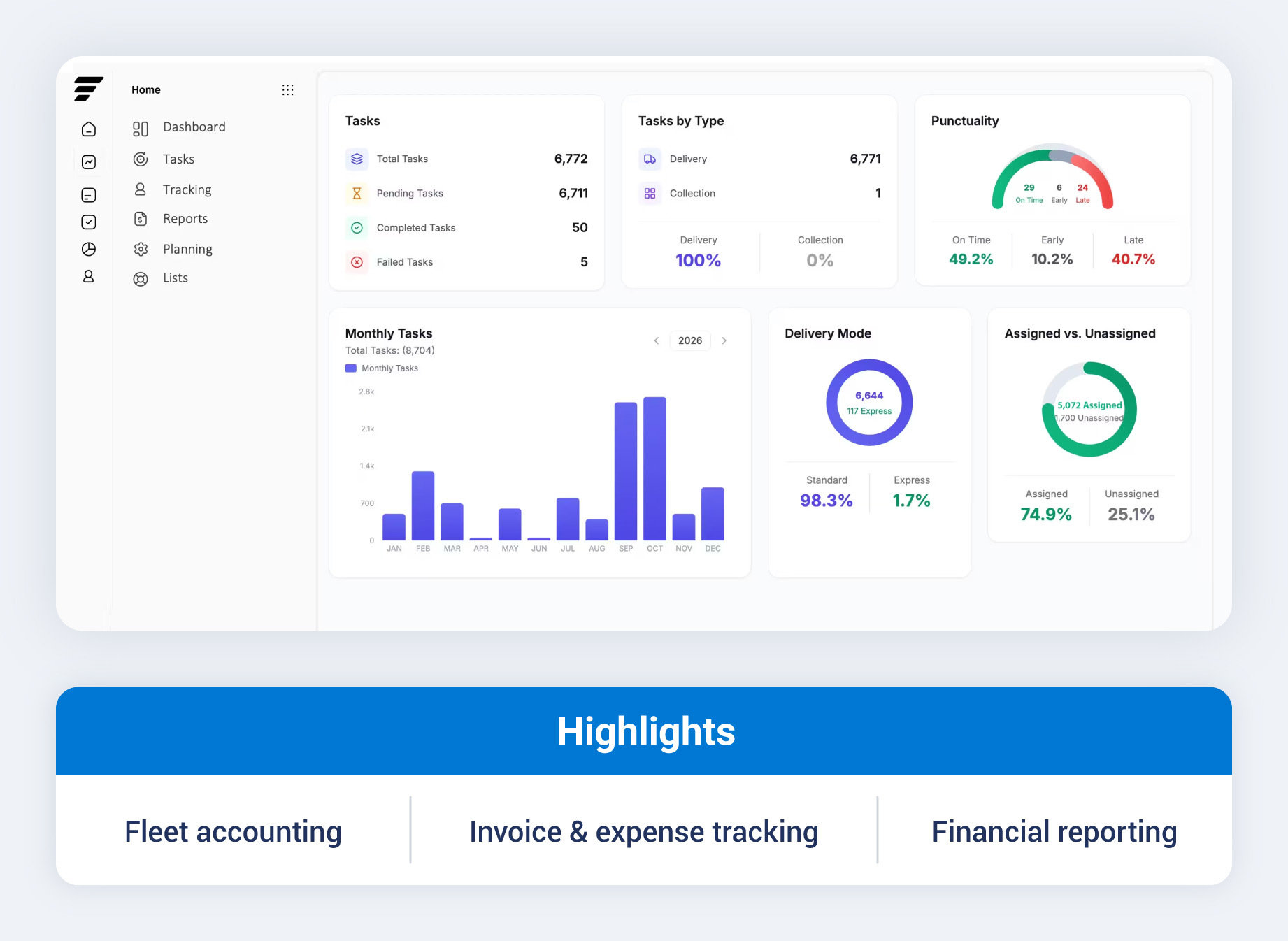
QuickBooks is not a trucking-specific tool, but it is the industry standard for financial management. It should complement, not replace, a dedicated trucking software platform or TMS built around dispatch and compliance.
Key features:
- Expense tracking: The mobile app and bank feeds automate the categorization of fuel, maintenance and permit costs.
- Profit and loss reporting: Carriers can view the financial health of the business and prepare for tax season with standard accounting reports.
- TMS integrations: Most top trucking software, including TruckLogics, syncs directly with QuickBooks integration for trucking workflows to prevent double entry of data.
What is trucking management software (TMS)?
A trucking management system is the digital backbone of a trucking company. It automates the full lifecycle of a load, from the moment it is booked to the moment it is invoiced. A true TMS typically covers:
- Load booking and dispatching
- Document management
- Invoicing and driver settlements
- Compliance reporting, including IFTA and DVIR
Consider a single load handled manually versus through TMS. On paper, a dispatcher writes down the pickup and delivery details, texts them to the driver, waits for a photo of the paperwork, then manually re-enters the numbers into an invoice days later.
In TMS, the same load is entered once, the driver receives it automatically, and the completed job flows straight into an invoice with no re-entry required.
It is worth separating a TMS from fleet management software like Geotab. A truck management system focuses on the business side of moving freight, like load booking, invoicing and driver pay. Fleet management software focuses on the vehicles themselves, covering GPS tracking, maintenance and driver safety. Many small fleets end up using one of each, since they two solve different problems.
Fleet size and growth plans
Choose a software that specifically targets your current fleet size. Enterprise tools often carry complex features that a five-truck fleet will never use but still pay for every month.
Essential feature checklist
List the non-negotiables before shopping. Think IFTA reporting, invoicing and document storage. If your truck management software option does not handle these three, it will not solve the primary administrative burdens most small fleets face, and is likely not worth the investment.
Ease of use and setup time
Small operators do not have a dedicated IT department. Look for tools with self-serve onboarding, a free trial and phone support based in the United States to guarantee ease of use and a fast and smooth setup.
Total cost of ownership
Break down costs beyond the monthly subscription fee. Make sure to take into account:
- ELD hardware
- Per-load fees
- Additional user seats
Calculating the cost per truck per month gives a more accurate comparison across your best software for small trucking company options than looking at the sticker price alone.
Choose the right software for your small fleet
The best software for a small trucking company's operations is the one that fits your fleet size, budget and daily workflow, not an option that has the longest features list. Start by identifying your biggest gaps — dispatch, accounting or vehicle visibility — then narrow the list from there.
Geotab's fleet management software gives small fleets the real-time visibility and compliance tools needed to run a safer, more efficient operation as they grow. Try a demo today to see how much this offering can make a difference for your organization.
Subscribe to get industry tips and insights
Frequently Asked Questions
Yes, trucking software is worth it for a one-truck owner-operator. The time saved on IFTA reporting and invoicing, often several hours per week, is worth more than the typical monthly subscription costs.
Most trucking software does not include an ELD as part of the platform itself, though most TMS platforms integrate with ELD hardware. Motive is the exception, since its software and hardware are built together as one system.
No, QuickBooks cannot fully replace a TMS. QuickBooks manages accounting, but it lacks the load-in and load-out functionality required to run a trucking business efficiently.
Switching from spreadsheets to a TMS typically takes one to two days for most small fleets. Platforms built for quick onboarding, like TruckLogics or AscendTMS, allow teams to migrate data and start booking loads within a day or two.
The most common mistake when buying trucking software is choosing a system based on the lowest price without verifying it handles IFTA reporting or driver settlements. This shortcut often leads to manual workarounds that negate the value of the software.
The Geotab Team write about company news.
Table of Contents
Subscribe to get industry tips and insights
Related posts


Fleet maintenance software for small business: 8 top tools and guide
September 29, 2026
7 minute read

Four ways to transform garbage fleet efficiency with data and video tools
September 28, 2026
4 minute read

Why the OEM versus device-level telematics debate misses the point for mixed-fleet operators
September 25, 2026
2 minute read

6 benefits of an open, AI-powered fleet data platform
September 17, 2026
8 minute read

Field service GPS fleet tracking: what mid-market fleet managers need to know
September 15, 2026
4 minute read