Best small fleet management software providers and how to choose one for your business
The best small fleet management software can transform how you run your business by reducing fuel waste and downtime and giving you real visibility into how every vehicle operates.

Jul 16, 2026

Key Insights
- Small fleet management software helps businesses with two to 50 vehicles automate tracking, maintenance scheduling and driver monitoring by replacing expensive and time-consuming manual processes.
- The best fleet management software for small businesses balances ease of use, mobile access and transparent pricing, all without locking you into features you do not need.
- Evaluate key capabilities like real-time GPS tracking, automated maintenance alerts, driver behavior monitoring, fuel reporting and integration with existing tools.
- Geotab scales from small operations to enterprise fleets, making it a strong choice for businesses planning to grow.
When you hear the word “fleet management," it might bring to mind entire yards full of trucks or taxis. However, many businesses with only a handful of vehicles engage in fleet management every day. Small business owners and fleet managers benefit from small fleet management software just as much as large ones, including fleet fuel telematics, and in some cases, those benefits are even bigger.
Manual tracking with spreadsheets and phone calls wastes time and increases the risk of missed maintenance and inefficient routes. This guide explains what small fleet management is, what to look for beyond software cost and how leading solutions compare.
What is small fleet management software?
There is no formal size threshold for when a fleet is considered small, medium or large. The small fleet label has been applied to fleets with up to 20, 50, or even 100 vehicles.
Small fleets typically have 50 or fewer vehicles, but many of the same challenges affect any business without a dedicated fleet manager.
Small fleet management software refers to digital tools that automate vehicle tracking, maintenance scheduling and fuel monitoring specifically for fleets in that range. Unlike enterprise systems made for hundreds of vehicles, these platforms prioritizes simpler interfaces, lower per-vehicle pricing and faster setup.
Core functions typically include:
- Telematics: Collects vehicle data to surface insights on location, speed, engine health and driver behavior.
- GPS tracking: Shows where every vehicle is in real time and records trip history.
- Driver behavior monitoring: Flags speeding, harsh braking and idling so you can coach proactively.
- Maintenance alerts: Schedules service reminders based on mileage, engine hours or calendar intervals.
- Reporting and dashboards: Turns raw data into actionable insights at a glance.
These tools are especially valuable in industries where vehicles are central to daily operations, such as delivery and logistics, construction, landscaping, HVAC and field services.
Why small businesses need fleet management software
As organizations grow beyond a few vehicles, manual processes like spreadsheets and phone calls quickly lead to missed maintenance, untracked fuel costs, and inefficient routing. These gaps create real financial risk for smaller businesses where a single breakdown or unplanned repair can disrupt cash flow.
Fleet management software for small businesses addresses these challenges by replacing manual processes with automated visibility, preventing issues like:
- Missed preventive maintenance leading to breakdowns or costly reactive repairs
- Fuel waste from inefficient routing, excessive idling or undetected fraud
- No visibility into driver behavior until after a collision or complaint
- Time-consuming compliance tasks like hours-of-service (HOS) tracking and IFTA fuel tax reporting
- Manual administrative work that pulls owners and managers away from higher-value priorities
Benefits of small fleet management software
The best small business fleet management software delivers measurable value across every part of your organization, providing:
- Reduced fuel costs: Identify inefficient routes, flag excessive idling and monitor monthly usage trends to keep fuel spend in check.
- Improved vehicle uptime: Automated maintenance alerts mean fewer breakdowns and less unplanned downtime.
- Better customer service: Live vehicle locations and accurate ETAs help you communicate proactively with customers.
- Lower insurance risk: Documented safe driving behavior and collision data can lead to lower premiums over time.
- Less administrative work: Automated reports, digital records and compliance tools free up hours each week.
- Better asset use: Usage data reveals over- and under-utilized vehicles so you can right-size your fleet and protect your investment.
What to look for in small fleet management software
Not every platform is made for small fleets. The right choice depends on your fleet size, industry and the specific challenges you want to solve. Use the criteria below to evaluate your options and choose the right software.
GPS tracking and real-time visibility
Real-time GPS tracking shows the live location of every vehicle on a map, recording trip history and flagging unauthorized use outside of approved hours or areas.
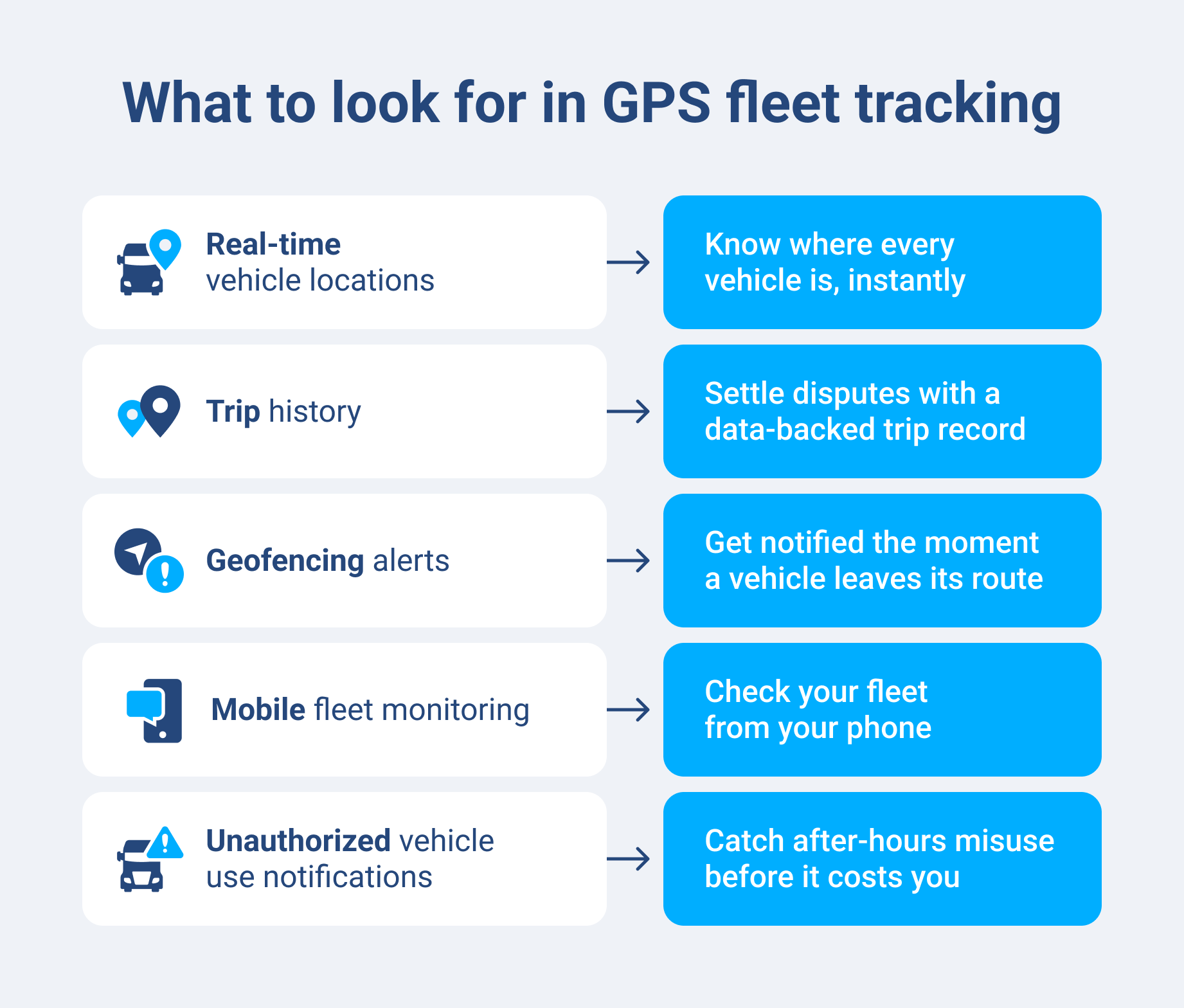
When it comes to small fleets and this capability, the most valuable features are often the simplest:
- Clean map view
- Geofencing (virtual boundary alerts)
- Mobile access that lets managers check data from anywhere
Maintenance scheduling and alerts
Automated maintenance alerts notify you when a vehicle is due for service based on mileage, engine hours or calendar intervals. In a small fleet, a single vehicle out of service can disrupt your entire day. Staying ahead of maintenance is one of the highest-ROI benefits fleet software can provide.
Driver behavior monitoring
Tracking metrics like speeding, harsh braking, rapid acceleration and idling gives you the data you need to coach drivers before a problem escalates. Beyond safety, these behaviors directly affect fuel cost and vehicle wear. Driver scorecards make it easy to see who needs attention and recognize drivers who are performing well.
Fuel monitoring and reporting
Fuel can make up 60% of a fleet's total expenses. Telematics-based fuel usage reports let you track and compare fuel consumption across vehicles. Fill-up reports let you monitor when and where drivers refuel vehicles and compare this information against fuel card data to protect against fraud.
For fleets that operate across state lines, IFTA reporting is a specific compliance requirement that the right software can automate, saving significant administrative time during reporting periods.
Ease of use and mobile access
Small businesses rarely have dedicated IT teams. That means your fleet software needs to be intuitive and accessible from a mobile device. Look for platforms that offer high-quality apps for both drivers and managers, with clear navigation and minimal training to get started.
Pricing and contract flexibility
Most platforms charge a per-vehicle monthly fee, with additional hardware costs. Watch for hidden fees around setup, support or data export. Month-to-month options or free trials are a good sign that a vendor is confident in their product. Also note that pricing transparency varies significantly in the small fleet space, so try to get a clear quote.
Integrations with existing tools
The best small business fleet management software connects with the tools you already use, offering integrations with accounting software like QuickBooks, dispatch platforms, payroll systems and fuel cards. Integrations reduce manual data entry, eliminate errors and save your team hours of administrative work each week.
Top small fleet management software platforms
Here is a side-by-side comparison of leading platforms based on the criteria above, followed by a closer look at each option.
| Software | Top features |
| Geotab |
|
| Linxup |
|
| Verizon Connect |
|
| Samsara |
|
| Motive |
|
| Azuga |
|
| Force Fleet Tracking |
|
Geotab
Geotab is a scalable fleet management platform made for fleets of all sizes. Through MyGeotab, fleet managers get real-time GPS tracking, automated maintenance schedule, customizable dashboard reporting and advanced fleet reporting to surface insights across fuel and driver behavior.
The Geotab GO device connects directly to a vehicle's OBD-II port and starts collecting data right away, no complex wiring required. The MyGeotab Marketplace extends the platform further with hundreds of third-party Add-Ins, covering everything from ELD compliance and video safety to route optimization and fuel card integrations.
Pricing is quote-based, which provides flexibility as your fleet grows but you will need to contact Geotab for a number. For very small fleets focused purely on basic tracking, the depth of reporting in MyGeotab may exceed immediate needs — but that headroom is exactly what makes Geotab a strong long-term choice.
Linxup
Linxup is built with small businesses in mind, offering real-time GPS tracking, driver alerts, maintenance reminders and an easy-to-use mobile app.
Pricing is transparent and available on a per-vehicle basis, often with month-to-month contract options that reduce commitment risk. Linxup suits fleets that prioritize simplicity and a quick setup, as its reporting and compliance depth are more limited than enterprise-grade platforms.
Verizon Connect
Verizon Connect offers a broad feature set, including live tracking, driver scorecards, route optimization and other dispatching tools.
For small fleets, the platform provides strong visibility, though new users report a steeper learning curve than simpler alternatives. Verizon has historically required longer-term contracts, so it is worth reviewing the terms carefully before committing.
Samsara
Samsara positions itself as a connected operations platform with video telematics and compliance capabilities. Features include real-time GPS tracking, dash cameras, HOS compliance and AI-powered driver coaching.
Hardware costs and annual contract structures mean it is better suited to larger fleets or those with clear compliance and safety priorities. Very small operations focused primarily on basic tracking often find stronger solutions elsewhere.
Motive
Motive (formerly KeepTruckin) leads with ELD compliance and AI-powered driver safety. It offers GPS tracking, HOS logging, AI dash cameras and driver scorecards.
All of these features make it a natural fit for small trucking operations with heavy regulatory requirements. Pricing and contract terms are quote-based, so fleets with more straightforward needs and no ELD mandate may find Motive to be more than what they need.
Azuga
Azuga differentiates itself through a rewards-based driver engagement model, where safe driving behavior earns points and recognition. Features include GPS tracking, driver scoring, maintenance alerts and fuel reporting.
Pricing tends to be competitive and flexible. For fleets where driver morale and engagement are priorities, Azuga is worth considering, though its depth in compliance and advanced, customizable reporting is more limited than that of larger platforms.
Force Fleet Tracking
Force Fleet Tracking is a straightforward, low-cost management software for small fleets that want real-time vehicle location tracking, trip history and a simple mobile app.
Transparent per-vehicle pricing and month-to-month contracts make it easy to get started. Fleets that need maintenance scheduling, driver behavior tools or ELD compliance will likely need to look elsewhere.
How to choose the right platform for your fleet
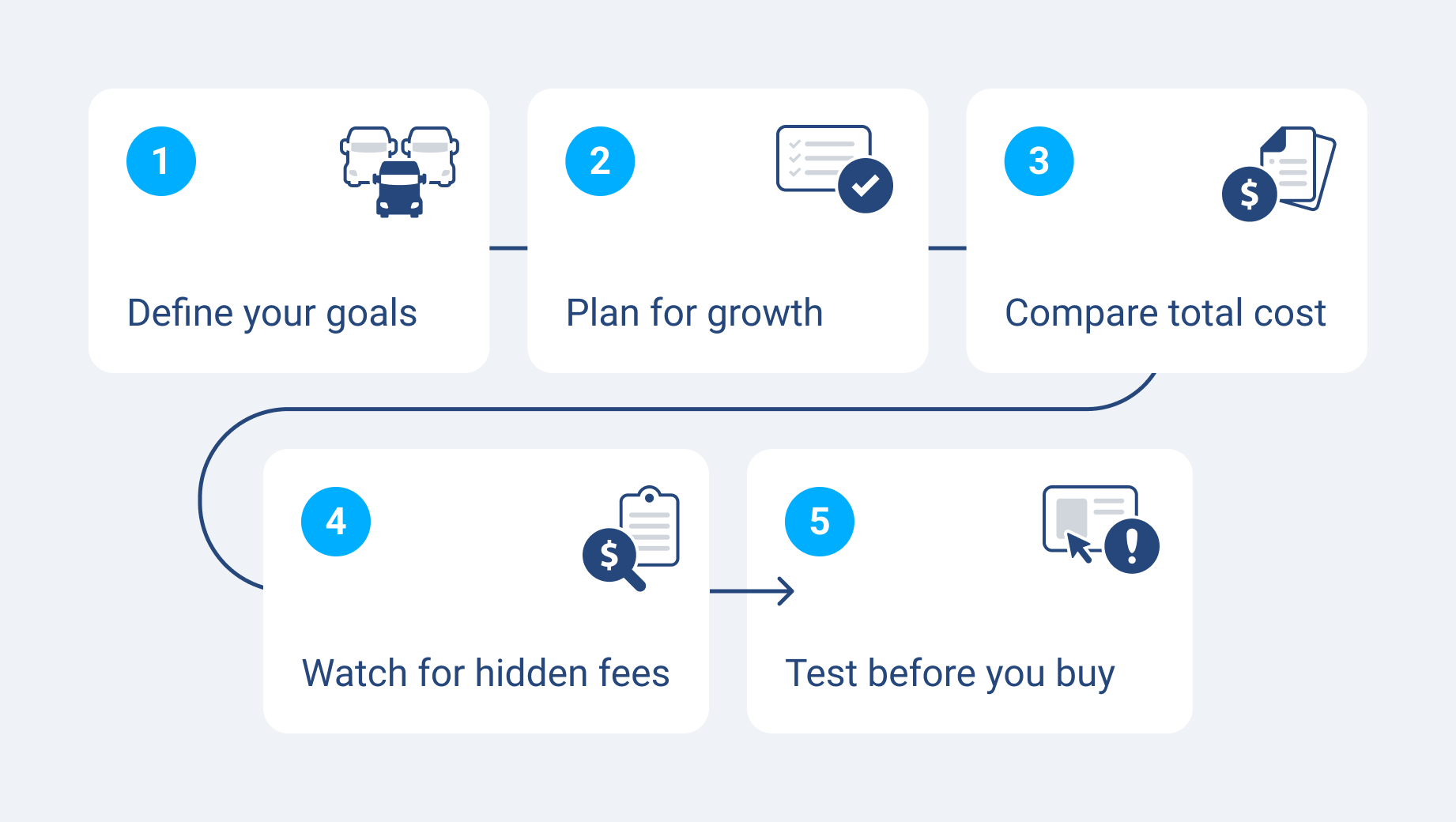
With so many options, picking the best fleet management software can feel overwhelming. Here is a practical step-by-step guide to help narrow your choice.
Start with fleet size and growth plans
A platform that fits your two-vehicle operation today may not scale cleanly when you reach ten vehicles in a few years. Think through your 12- to 24-month growth plans before evaluating tools. If you anticipate adding vehicles, hiring drivers or expanding to new regions, prioritize platforms built on an open platform architecture that can grow with you.
Match features to your biggest pain points
Before scheduling demos, ask yourself, "What is costing the most right now?" Fuel, downtime, driver safety or compliance paperwork? If your problem is:
- Fuel: Prioritize fuel monitoring and route optimization
- Driver safety: Look for platforms with strong coaching tools and dash camera options
- Compliance: Invest in tools with strong ELD capability and IFTA reporting
Evaluate total cost of ownership
The monthly per-vehicle fee is just one part of the picture. Make sure to also factor in:
- Hardware costs (devices and installation)
- Onboarding and training time
- Support costs
- Fees for additional data or integration
A platform with a slightly higher monthly rate but strong onboarding support and reliable hardware may cost less over two years than a cheaper option with frequent device issues or poor support response times.
Look for hidden costs
Ask vendors directly about data export fees, contract termination terms, charges for adding users or vehicles mid-term and the cost of support beyond basic questions. Some platforms also charge extra for historical data access or advanced reporting. Review the full contract carefully, and if the vendor cannot provide clear answers, treat that as a signal.
If your fleet also needs TMS, our TMS software guide outlines what to watch out for there before making any investments.
Test before you commit
Most reputable platforms offer a free trial or demo period. Use it. Involve the people who will actually use the software, like your dispatchers, drivers and operations managers. A platform that looks clean in a sales demo may feel clunky to use. Pay attention to how quickly you find the information you need and if the mobile device works well in the field.
Choose fleet management software that can grow with your business
The right small fleet management software helps businesses run a smarter, more efficient operation. The platforms in this guide help you find the best option for your fleet, whether you are looking to cut fuel costs, reduce vehicle downtime or finally gain visibility into driver behavior.
If you are ready to try a tool that scales with you, Geotab's small business fleet management solution gives small fleets the same access to data-driven tools used by the largest commercial fleets in the world — and without the enterprise complexity.
Subscribe to get industry tips and insights
Frequently Asked Questions
The best fleet management software option depends on your fleet size, industry and priorities. Geotab is a strong choice for fleets of any size, with deep reporting, an open platform and broad integration capabilities.
Yes, fleet management works for small fleets, and in many cases, small fleets see the biggest impact. Because every vehicle and every driver represents a much larger share of the business, improvements in fuel efficiency, maintenance scheduling and driver safety have an outsized effect on a small fleet's bottom line.
Most platforms charge a per-vehicle monthly fee, typically between $20 to $60 per vehicle, depending on the feature tier, with additional hardware costs for tracking devices. Pricing varies significantly by vendor and fleet size.
If you only have two or three vehicles, you can benefit from fleet management software. It depends on how central your vehicles are to your business. When your operation relies on them running efficiently and effectively, even a very small fleet can benefit from using automated maintenance alerts, GPS visibility and fuel tracking, shifting from reactive to proactive fleet safety.
GPS fleet tracking uses a small hardware device installed in each vehicle to transmit real-time location data to a cloud-based software platform. Managers use this to view live vehicle locations on a map, review trip history and set up alerts for events like speeding, geofence violations or unauthorized use.
Yes, fleet management software can help with fuel costs. Fleet software tracks fuel consumption across vehicles, identifying inefficient routing and flagging idling, all of which contribute to fuel waste. Fill-up reports also let you cross-reference fueling events against fuel card data, which helps detect discrepancies.
Most modern fleet management software is designed for straightforward setup. The Geotab GO device, for example, can often be installed in minutes by connecting directly to a vehicle's OBD-II port, with no wiring required for many lighter-duty vehicles.
Antonio Venutelli is a Partner Account Manager, Strategic Accounts for Geotab.
Table of Contents
- What is small fleet management software?
- Why small businesses need fleet management software
- Benefits of small fleet management software
- What to look for in small fleet management software
- Top small fleet management software platforms
- How to choose the right platform for your fleet
- Choose fleet management software that can grow with your business
Subscribe to get industry tips and insights
Related posts

Unlocking more jobs per day: How smart dispatch management improves tech performance
October 13, 2026
3 minute read

Fleet maintenance software for small business: 8 top tools and guide
September 29, 2026
7 minute read

Field service GPS fleet tracking: what mid-market fleet managers need to know
September 15, 2026
4 minute read
Best software for small trucking companies: 5 tools to streamline your fleet
September 4, 2026
4 minute read

How video telematics helps drivers trust the safety program
August 27, 2026
4 minute read