How fleet fuel telematics can lower your costs
Reduce fuel waste and improve efficiency with fleet fuel telematics. Learn how real-time data helps you monitor consumption and cut costs for your fleet.

By Geotab Team
May 20, 2026

Key Insights
- Fleet fuel telematics uses GPS tracking and engine diagnostics to provide real-time visibility into fuel consumption and costs.
- Driver behavior monitoring catches poor habits like idling and speeding, and can reduce total fuel spend by 6%.
- Integrating fuel cards with a fleet monitoring system helps detect and prevent unauthorized purchases before they can impact your bottom line.
- Automated IFTA reporting removes the manual burden of jurisdiction-by-jurisdiction mileage tracking, reducing errors and saving admin time.
Fuel can account for more than 60% of total operational costs, which is why having full visibility into usage is so critical. Fleet fuel telematics combines GPS tracking and engine diagnostics so fleet managers can monitor fuel use across all vehicles in real time and quickly spot waste.
This guide breaks down the three areas where fleet fuel telematics delivers the most impact: improving driver behavior, preventing fuel theft and automating compliance reporting. Learn exactly how fuel telematics works, its main benefits and how you can turn fuel data into measurable savings.
How fuel telematics works
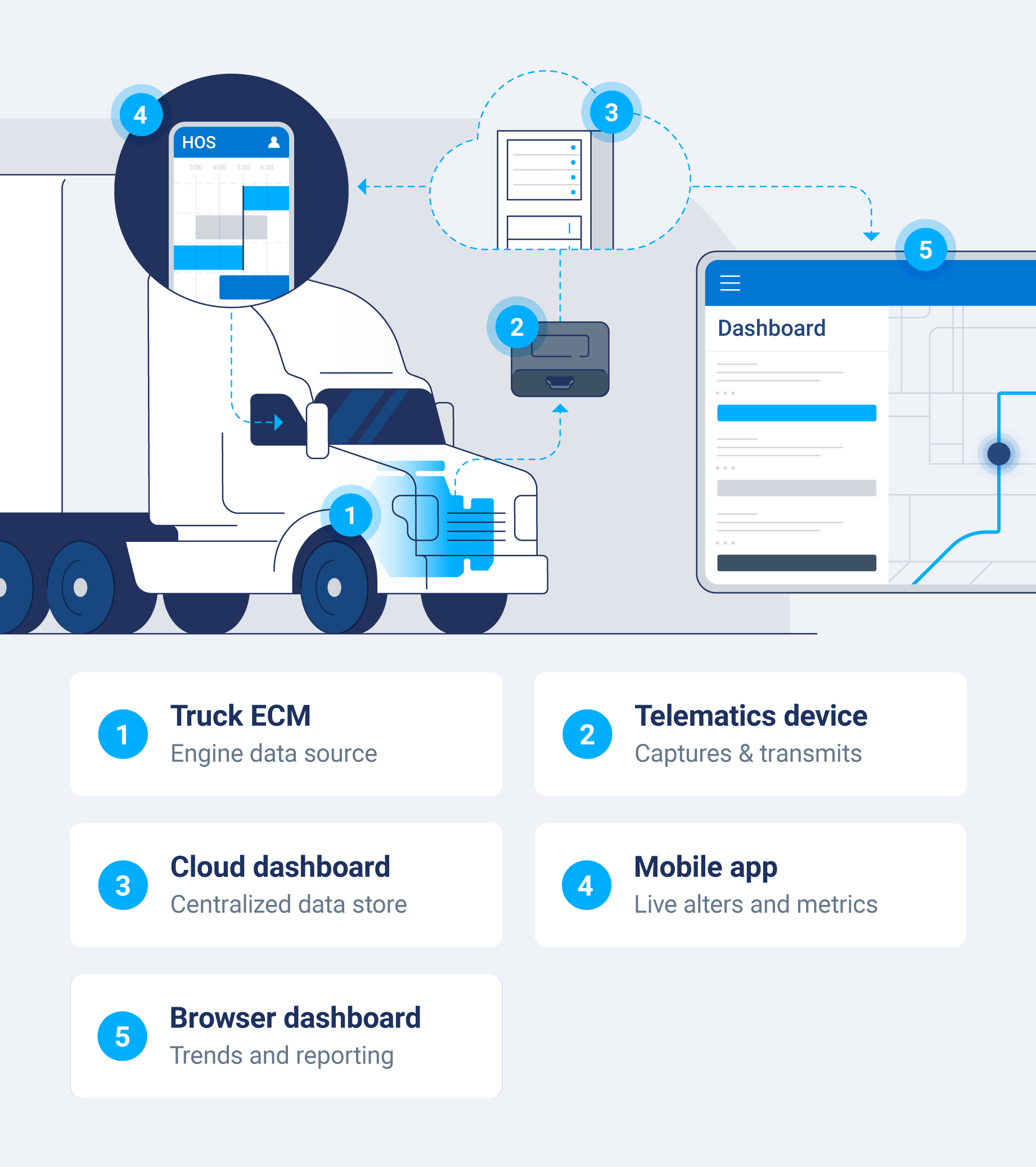
Every modern commercial vehicle has an engine control module (ECM), an onboard computer that tracks everything from fuel flow rates to idle time. A fleet tracking device connects directly to this module, usually through the vehicle's OBD-II or CAN bus port, and continuously captures that data. The device transmits that data into a central cloud dashboard.
This means fleet managers can access fuel level, engine hours, odometer readings, speed and more from any browser or mobile dashboard. Instead of relying on delayed logs or manual reporting, they can work with a live, continuously updated stream of vehicle data.
Modern fleet telematics solutions turn that raw data into actionable insights. By tracking patterns over time, they can reveal which vehicles are underperforming, where fuel is being wasted and when behavior or performance started to shift. Fleets use this data to turn aspirational budget tracking and dispatch efficiency goals into achievable checkpoints.
Main components of a fuel telematics system
A fleet telematics solution is made up of a few key components that work together to capture, transmit and interpret vehicle data in real time. Each piece plays a specific role in turning raw vehicle signals into actionable insights.
OBD-II and CAN bus integration
This is the foundation of any telematics system. By connecting directly to a vehicle's onboard computer, a telematics device can pull detailed engine data like:
- Fuel flow rate
- RPM
- Throttle position
- Engine load
- Idle time
With this data coming straight from the source, it is far more accurate than driver-reported logs or fuel receipts. It also helps fleet managers understand how and why fuel is being used.
GPS and geofencing
Location data adds critical context to fuel consumption. Fleet GPS tracking shows where vehicles operate throughout the day, while geofencing helps managers define virtual boundaries around job sites, fueling stations or approved routes.
When you pair fuel transactions with precise location data, it becomes much easier to validate purchases and identify inefficient or unauthorized vehicle routes.
Fuel card integration
Fuel cards provide detailed transaction data like:
- Gallons pumped
- Price per gallon
- Time of purchase
- Station location
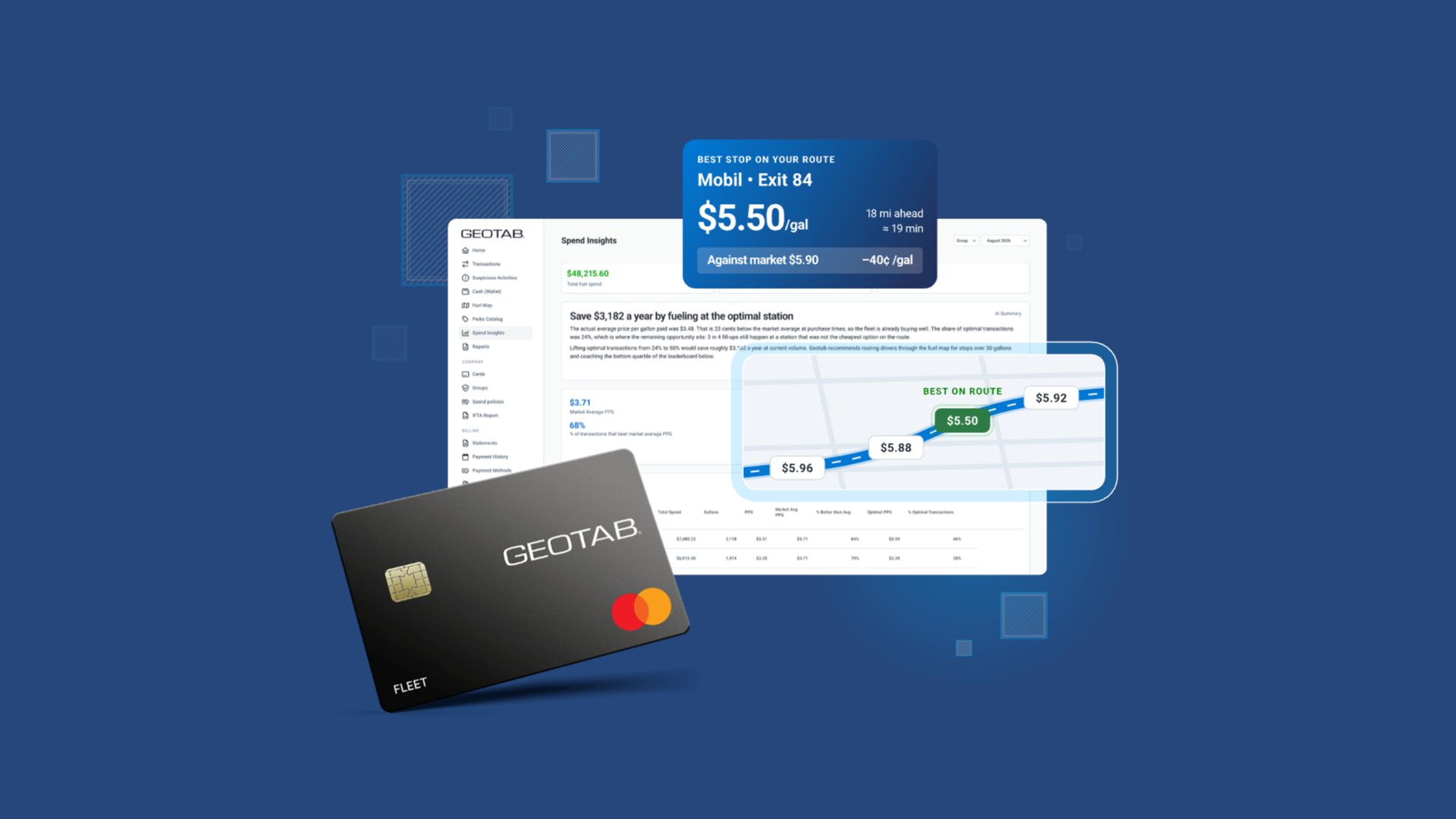
When integrated with telematics, this data is automatically matched with vehicle diagnostics and GPS records. This creates a unified view of fuel spend, making discrepancies immediately visible.
Combined, these components provide fleet managers with a holistic view of fuel usage across their organization. Instead of relying on fragmented data and manual processes, teams can proactively manage fuel with the accuracy and control that manual tracking simply cannot match.
Benefits of a fleet fuel telematics system
The right fuel management tool delivers measurable value across operations, compliance and administration by:
- Lowering overall fuel costs through proactive management: With clear visibility into fuel consumption, fleet managers can quickly identify inefficiencies like excessive idling or inefficient routes instead of reacting to high bills at the end of the month.
- Improving real-time visibility across the entire fleet: Telematics provides a live view of fuel levels, usage rates and vehicle activity. This eliminates blind spots and helps managers understand how fuel is used daily.
- Reducing fraud and unauthorized fuel spend: By automatically cross-referencing fuel card transactions with GPS location and vehicle data, telematics systems can instantly flag suspicious activity.
- Streamlining administrative work and reporting: Manual fuel tracking is cumbersome and slow. Telematics centralizes receipts, driver logs and compiled reports into one platform that automates reporting and frees up time for higher-value tasks.
- Supporting smarter, data-driven decisions: Access to consistent, high-quality data means fleet managers can make better decisions about routing, vehicle usage and driver performance. Over time, these improvements compound, leading to more predictable fuel costs.
- Extending vehicle lifespan and reducing maintenance costs: Identifying poor driver behaviors that harm fuel economy also helps reduce wear and tear on vehicles, lowering long-term maintenance costs.
- Improving accountability across teams: When drivers and managers have access to the same performance data, everyone understands what is expected of them. Driver performance metrics encourage accountability and make it easier to coach teams toward more fuel-efficient behaviors.
Reducing fuel waste through driver behavior monitoring
Driver habits have a direct impact on fuel spend, and idling is one of the biggest points of waste. A heavy-duty truck burns almost one gallon of fuel per hour while idling. Across 20 vehicles, that adds up fast. Telematics software alerts managers when a vehicle idles beyond a set time limit, so this issue can be corrected in near real time.
Speeding and harsh braking compound fuel waste. Aggressive driving behaviors consistently reduce fuel economy, and without proper visibility into these problems, it is difficult to fix them. Driver score cards make the process easier because drivers can learn how to improve. This encourages fuel-efficient habits that can lead to a 6% reduction in fuel spend.
Preventing fuel theft and card fraud
Fuel card fraud is a real and often underreported problem. Integrating fuel cards with a fleet telematics solution makes it much easier to detect. When a transaction is recorded, the system automatically captures the vehicle's GPS location at the time of purchase. If the two do not match, the system flags the transaction.
The system also checks if the amount of fuel pumped is consistent with the vehicle's tank capacity and current fuel level. Common red flags include:
- Multiple fill-ups in a single day from the same vehicle
- Fuel type mismatches, like a diesel charged against a gas-engine vehicle
- Fuel volumes that exceed tank capacity
Real-time alerts mean managers do not have to wait until the month-end data to address unauthorized purchases. The ability to act immediately is another practical advantage of a connected fleet monitoring system.
Automating IFTA reporting and tax compliance
The International Fuel Tax Agreement (IFTA) requires commercial fleets operating across multiple U.S. states or Canadian provinces to report miles driven in each jurisdiction and pay fuel taxes accordingly. Traditionally, that meant drivers had to keep paper trip sheets, and administrators calculated state mileage manually.
A fleet telematics system integrated with your trucking operations automates this process entirely. The device records miles driven in each jurisdiction, building an accurate, timestamped record for each trip. When it is time to file, the data is already prepared. Digital records give fleets the confidence they are paying the right tax — with the numbers to back it up.
Optimizing routes to save on mileage
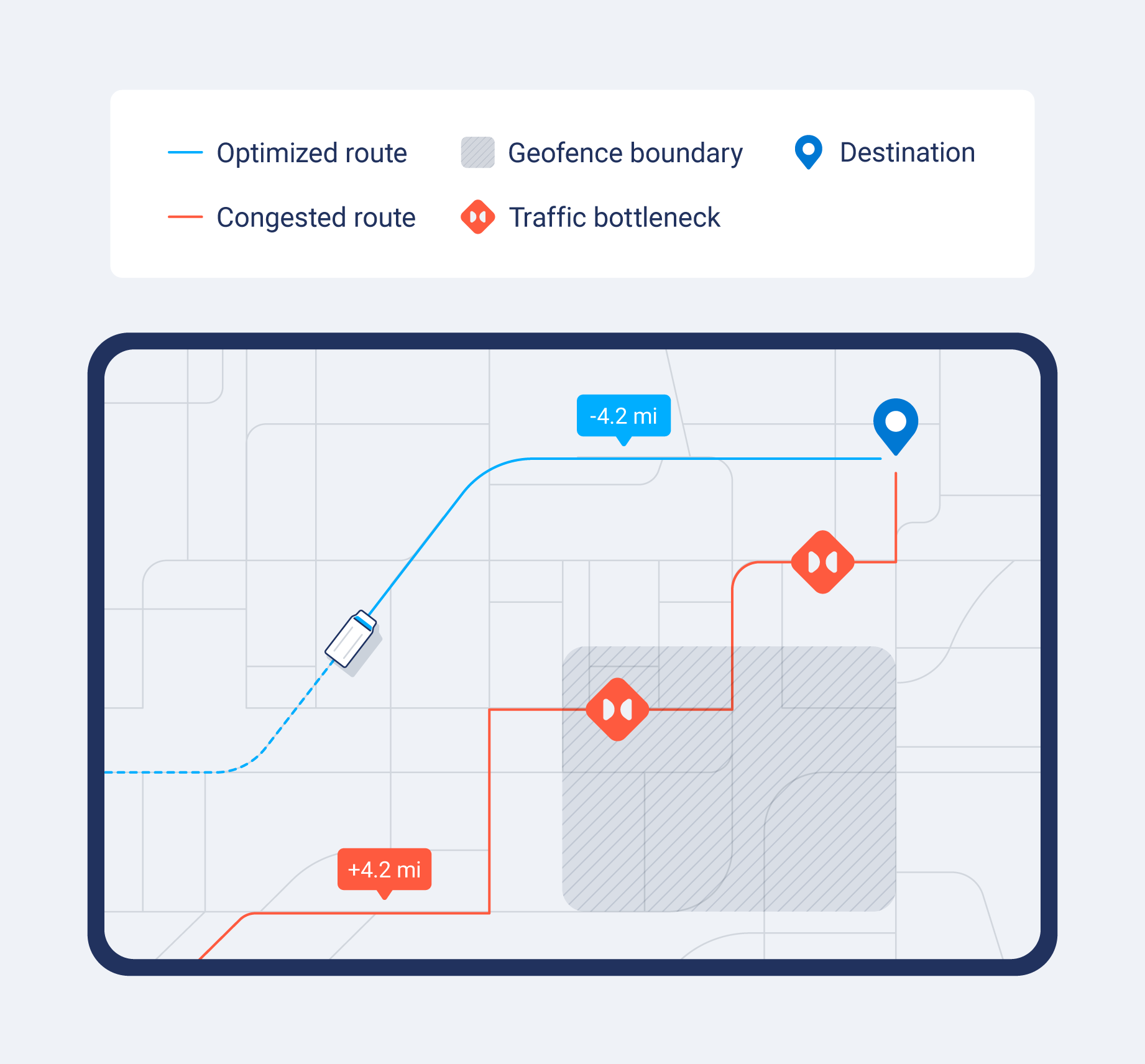
GPS data provides dispatchers with real-time traffic and route efficiency data, to identify the most direct and least congested paths. This reduces the total miles each vehicle travels, lowering fuel consumption and reducing tire and engine wear.
Geofencing adds another layer of control. When a vehicle crosses a set boundary or deviates from an assigned route, managers receive an alert. This prevents drivers from taking unauthorized detours and adding miles. Over time, route data also reveals patterns like which roads cause the most idling, which helps dispatchers make smarter scheduling decisions.
Turn fuel data into real savings
Fleet fuel telematics gives operators the data they need to make better decisions daily. From cutting idling time and catching fraudulent fuel card transactions to automating IFTA filings and optimizing routes, the data captured by a fleet fuel management system turns operational insight into measurable cost reductions.
If you are ready to see what it looks like for your operation, explore how Geotab's fleet fuel management tools work and see how much you can save.
Subscribe to get industry tips and insights
Frequently Asked Questions
The average ROI for fuel telematics is typically six to twelve months. Fleets often see a combination of improved fuel savings, reduced administrative labor and fewer fraudulent transactions. That timeline depends on fleet size and how actively managers use data, but even a modest reduction in daily idling can cover the cost of investment.
No, most modern fleet telematics are not difficult to install. Tracking devices can usually be installed via the OBD-II port with no additional wires or tools required. Vehicles that need a more permanent connection with a three-wire installation may require a technician. Most providers will cover software setup to help fleets get up and running without disruption.
The Geotab Team write about company news.
Table of Contents
- How fuel telematics works
- Main components of a fuel telematics system
- Benefits of a fleet fuel telematics system
- Reducing fuel waste through driver behavior monitoring
- Preventing fuel theft and card fraud
- Automating IFTA reporting and tax compliance
- Optimizing routes to save on mileage
- Turn fuel data into real savings
Subscribe to get industry tips and insights
Related posts
Top seven best fleet fuel cards: How to choose the right one for your business?
October 1, 2026
7 minute read


Fleet maintenance software for small business: 8 top tools and guide
September 29, 2026
7 minute read

The failure you didn't predict is more than just a repair bill
August 18, 2026
1 minute read