How fuel transaction controls help fleets manage costs in a volatile market
Fuel cost management gets harder as prices rise; most budget overruns come from undetected leakage — theft, idling, off-route fueling — that transaction controls can fix.

Content Marketing Manager • Corporate Marketing
Apr 28, 2026
Key Insights
- Fuel fraud rates hit 12% in 2024, including unauthorized card use and skimming, and most fleets don't catch it until weeks after it happens.
- Fuel already accounts for more than 20% of total operating costs for most fleets, and analysts expect pump prices to stay high through 2026.
- Most fleet fuel budgets don't overrun because of market prices — they overrun because of compounding, undetected leakage across fragmented data systems.
Geopolitical instability has sent shocks through the global energy market. As a result, some analysts predict that pump prices will remain high through 2026. For most fleets, fuel is already one of the top-three operating expenses, often accounting for more than 20% of total operating costs. As prices rise, this exposure increases, placing fleet managers under greater pressure to protect margins. While fuel market volatility is beyond any fleet manager’s control, how fuel spend is monitored and managed remains one of the most important levers available.
In this environment, unmanaged fuel expenditure impacts margins immediately and fleets start looking for ways to optimize their fuel spend. But while the pump prices get all the attention, most fleet fuel budgets don’t actually overrun because of the market volatility itself, but instead due to multiple, compounding sources of leakage that go undetected due to fragmented or disconnected data.
This article explores the key drivers of fuel cost leakage, and how fuel transaction management solutions help fleets reduce unnecessary spend and regain control, which is all the more important when these price volatilities arise.
Lack of visibility into fuel transactions
Despite being accountable for cost-per-vehicle, many fleet managers lack clear visibility into fuel card transactions. This means that they don’t always know where the leakage is, and when issues are detected, it could be weeks after the event, making it hard to understand what really happened.
In many organizations, teams rely on manual reconciliation across multiple systems at month-end. This process is inefficient and resource-intensive, making it administratively burdensome on both fleet and finance teams while obscuring patterns in the data that could otherwise highlight inefficiencies or emerging risks.
Unifying the data from the different systems into a single source of truth allows fleet managers to validate fuel purchases against actual vehicle diagnostics data to help identify activities that are eating into their bottom line. And, automatic mismatch detection improves the efficiency and efficacy of the process, eliminating the need for manual reconciliation and presenting a clearer, more reliable view of anomalous fuel spend across the operation.
Fuel fraud and misuse
Fuel fraud and misuse can silently drain budgets. According to WEX, fuel fraud rates were up to 12% in 2024, including unauthorized fuel card use and skimming (capturing cardholder PINs or data through illegally-installed devices on fuel pumps).
Without robust oversight, unauthorized purchases can be difficult to identify. Siloed fuel card data prevents fleets from verifying the legitimacy of each transaction, and with retrospective transaction reconciliation, it can be challenging to identify the mismatches that suggest potential misuse that may require further investigation, such as issues with transactions where purchased fuel volume exceeds the vehicle’s tank size, or the fuel type purchased doesn’t match the designated vehicle’s powertrain.
Fuel transaction investigation mechanisms connect the fleet’s fuel card data and allow for advanced detection of these anomalous transactions, helping you to safeguard against unnecessary financial losses and protect your bottom line.
Off-route fueling
With manual reconciliations across various fuel card reports, fuel transactions often don’t match the right vehicle. Location data is often incorrect, making it hard to identify these unusual occurrences and patterns.
When a vehicle refuels significantly outside its expected route, it may indicate inefficient routing decisions or potential misuse. Both scenarios increase operational costs, either through unnecessary mileage or inappropriate fuel purchases.
By linking transaction data with approximate vehicle location data, fleets can verify whether a vehicle was present at the point of purchase. This provides a clearer basis for identifying exceptions, addressing driver behavior, and improving route discipline over time.
From retrospective control to real-time decision-making
In practice, fuel overspend is rarely driven by a single issue. Instead, it’s the cumulative effect of limited visibility, delayed reconciliation, operational inefficiencies, and undetected misuse. When these issues are only identified after the fact, costs have already been absorbed, and opportunities to intervene have been lost.
Fuel cost management controls fundamentally change this position. By connecting fuel card data with vehicle and operational context, fleets gain the ability to monitor spend as it happens, identify exceptions early, and take action before inefficiencies escalate. This shift from retrospective analysis to real-time oversight is what enables more consistent cost control and stronger accountability.
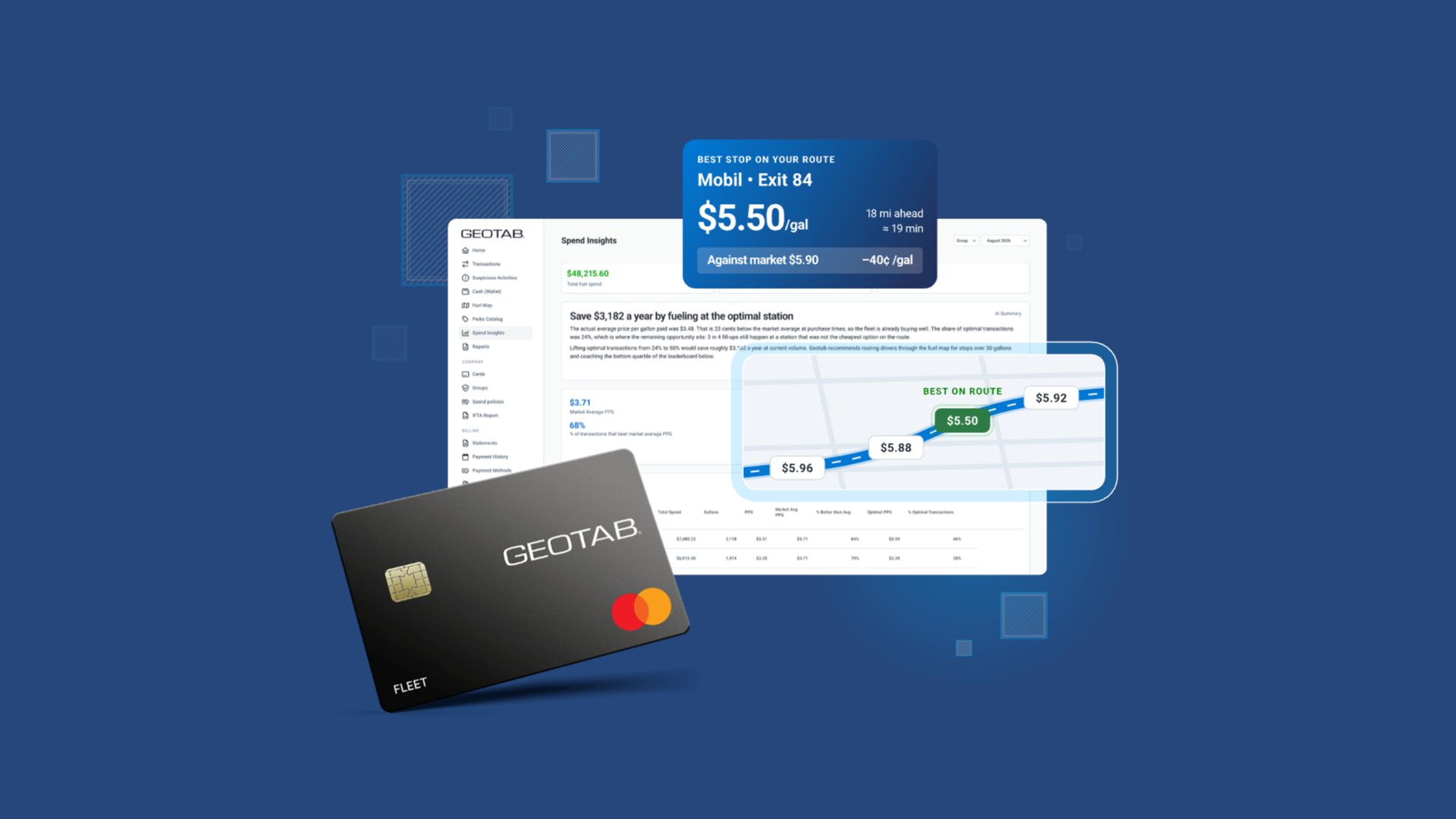
Geotab’s new Fuel Transactions solution centralizes purchase data for fleet and operations managers, providing greater visibility and control over fuel spend. By simplifying reconciliation and automatically flagging anomalies for investigation, it enables fleets to become more resilient to volatile fuel prices, directly contributing to your long-term fleet efficiency goals.
Fuel prices may be out of your control, but your fuel spend doesn't have to be. Learn how Geotab helps fleets build visibility and control into every fuel transaction.
Subscribe to get industry tips and insights
Frequently Asked Questions
Telematics lets you cross-reference fuel card transactions against actual vehicle diagnostics data, so you can catch mismatches automatically instead of hunting through spreadsheets at month-end. This removes the manual reconciliation burden and surfaces patterns, like unauthorized purchases or inefficient routes, that siloed systems would miss. Since fuel can account for more than 20% of total fleet operating costs, catching even small leaks adds up fast.
According to WEX, fuel fraud rates hit up to 12% in 2024 — that includes unauthorized fuel card use and skimming, where criminals install devices on pumps to steal cardholder PINs or data. Without oversight, these purchases are hard to spot because the data lives in disconnected systems. Automatic mismatch detection, where fuel card transactions are validated against vehicle data in real time, is one of the most effective ways to catch it early rather than weeks after the fact.
Ask how the system handles data from multiple sources — if you're still doing manual reconciliation at month-end, the program isn't saving you much time or money. Find out whether transactions are validated against vehicle diagnostics automatically, and how quickly anomalies are flagged. A good program should give you a single source of truth across fuel card data and vehicle data, not just another data silo.
Most overruns aren't caused by market prices at all — they come from multiple, compounding sources of leakage that go undetected when data is fragmented across systems. By the time issues surface through manual month-end reconciliation, the transactions can be weeks old and hard to investigate. Unifying fuel card and vehicle diagnostics data into one place makes it far easier to spot what's actually draining the budget.
Content Marketing Manager • Corporate Marketing
.
Table of Contents
Subscribe to get industry tips and insights
Related posts

Top seven best fleet fuel cards: How to choose the right one for your business?
October 1, 2026
7 minute read


Fleet maintenance software for small business: 8 top tools and guide
September 29, 2026
7 minute read

Field service GPS fleet tracking: what mid-market fleet managers need to know
September 15, 2026
4 minute read