10 fleet management tips to improve efficiency
Boost your operations with these fleet management tips. Learn how to reduce costs, improve driver safety and optimize vehicle maintenance for your business.

By Geotab Team
May 19, 2026

Key Insights
- Applying fleet management tips helps reduce operational costs, improve driver safety and keep your vehicles on the road longer.
- Real-time telematics data and AI-powered insights give fleet managers the visibility needed to make faster, and more informed decisions.
- Shifting from reactive to predictive maintenance cuts downtime and lowers repair costs.
- Automating compliance, digitizing workflows and right-sizing your vehicle count free up time and resources.
Fleet operators in 2026 are facing rising fuel costs, tightening insurance premiums and growing maintenance overheads. Add stricter regulatory requirements around electronic logging devices (ELDs) and Hours of Service (HOS) rules, and the demands can feel relentless. The best way to handle it is with the right fleet management tips.
Effective car fleet management centralizes all of your data into one system. It means your team spends less time chasing data and more time driving results. No matter if you manage five vehicles or five hundred, the ten actionable tips below will help reduce overhead, improve driver retention and build a safer, more productive operation.
| Action item | Frequency | Impact |
| Tire pressure checks | Weekly | High (reduces fuel waste and extends tire life) |
| Review driver scorecards | Weekly | High (identifies coaching needs before incidents occur) |
| Pull idle time and stop-and-go reports | Weekly | High (uncovers route and fuel inefficiencies) |
| Inspect engine fault codes via telematics | Bi-weekly | High (enables predictive maintenance and avoids breakdowns) |
| Reconcile fuel card data | Monthly | Medium (detects unauthorized purchases or fuel theft) |
| Review vehicle utilization reports | Monthly | Medium (supports right-sizing decisions) |
1. Use AI-powered telematics like Geotab
Telematics platforms give fleet managers a comprehensive view into their operation by collecting real-time data on:
- Vehicle location
- Engine health
- Driver behavior
Geotab builds on this by layering AI-powered fleet analysis on top of that data so managers can spot patterns regular human reviews might have missed. Combined with an open platform, Geotab enables you to integrate with third-party apps and custom data sources to centralize everything in one dashboard and create a scalable fleet management solution.
2. Move from reactive to predictive maintenance
Reactive maintenance means fixing a vehicle after something breaks, usually at the worst possible moment and the highest possible cost. Predictive maintenance transforms that model by using sensor data to monitor battery health, brake wear and engine temperature before a breakdown even occurs.
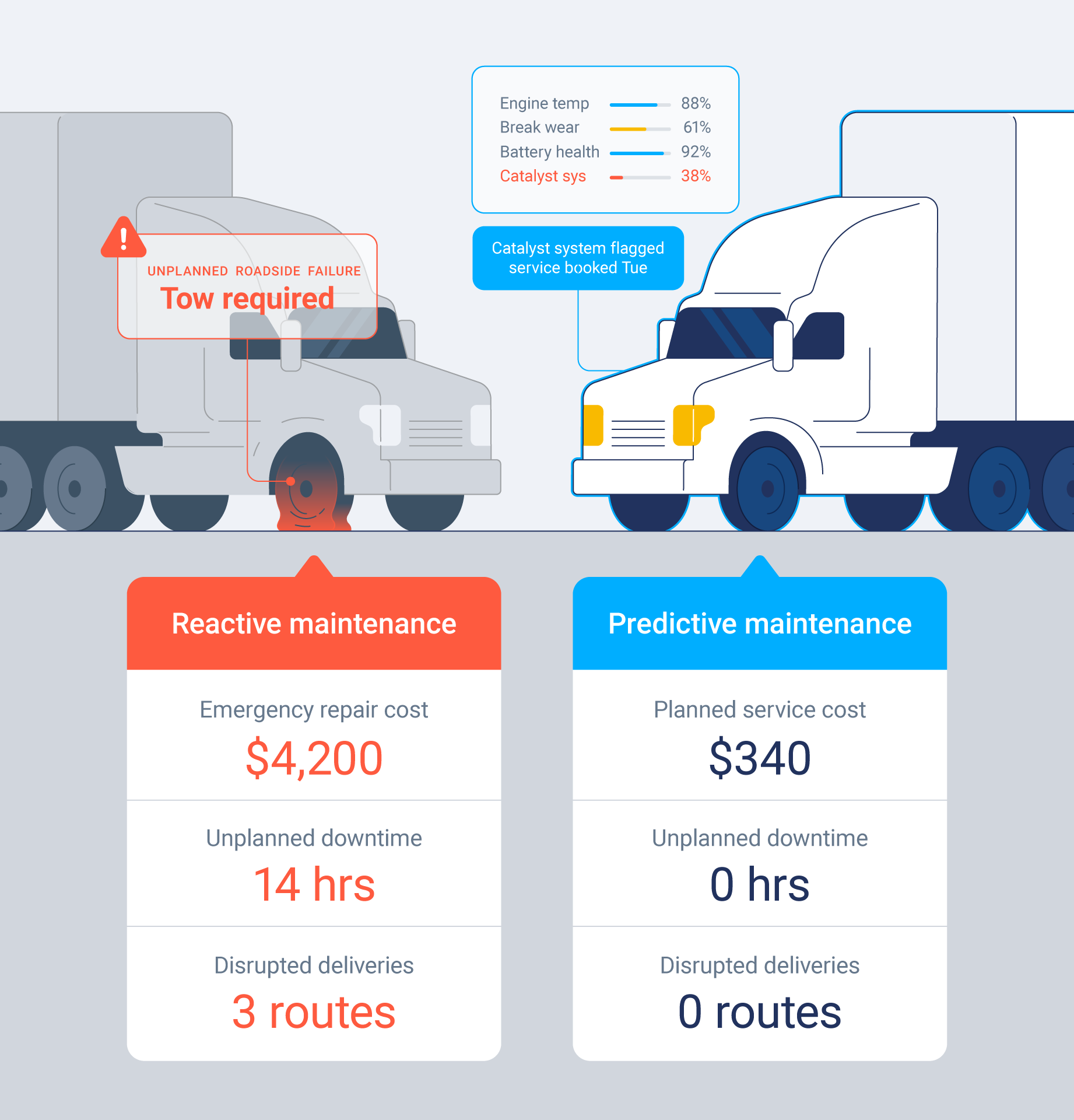
Research shows that predictive maintenance reduces costs by 15%. Geotab's platform surfaces fault code alerts and engine diagnostics automatically. That means your team can schedule service based on actual vehicle condition instead of arbitrary mileage intervals, one of the most powerful fleet vehicle maintenance best practices
3. Use route optimization to cut idle time
Modern routing software accounts for traffic, weather and delivery windows in real time, finding the most efficient path for every spot based on changing conditions. This results in meaningful savings over the course of a year by reducing:
- Fuel consumption
- Engine wear
- Idle time
Get started with route optimization by reviewing weekly stop-and-go reports from your telematics platform. Find the routes with the highest idle percentages and adjust accordingly. Even the smallest changes can have a significant impact on fuel spend and on-time delivery rates — two metrics that matter to your bottom line and your customers.
4. Prioritize driver safety and coaching
Driver behavior directly impacts insurance premiums. Fleets with documented safety programs and cleaner driving records typically pay for less coverage. In-cab feedback provides immediate help with speeding, harsh braking and seatbelt non-compliance, building a more effective coaching program for better driver performance.
Driver scorecard systems also help by rewarding safe drivers and creating an organization-wide culture of safety. Reducing collisions leads to less vehicle downtime, lower repair costs and reduced legal exposure, all of which benefit the organization as a whole.
5. Monitor fuel use and plan for electric vehicles
Fuel is usually the second-largest fleet expense after labor. Tracking fuel card data and reconciling it against telematics records helps identify:
- Unauthorized purchases
- Fuel theft
- Inefficient driving habits
It is also important to monitor trends over time. Every minute a vehicle idles wastes fuel and money. Start by identifying your top idling routes and set clear reduction targets for your drivers. Make sure to track everything.
Looking ahead, fleets continue to adopt electric vehicles (EVs). EV suitability assessments analyze route data to identify which vehicles and corridors are ready for electrification today.
6. Automate compliance and reporting
Manual compliance processes introduce human error and take hours of administration time every week. By automating ELD reporting and International Fuel Tax Agreement (IFTA) submissions, fleet managers remove risk and create a clear digital trail for audits and roadside inspections.
Setting up automated alerts also keeps your operation compliant. Stay on the good side of regulations by monitoring:
- Upcoming vehicle inspections
- Driver's license renewals
- Hours of Service thresholds
These automated alerts save hours of administrative work for office staff every month, while simultaneously reducing compliance risk.
7. Digitize administrative workflows
Paper logs and manual data entry slow down office staff and create room for costly errors. Mobile apps allow drivers to submit proof of delivery, fuel receipts and vehicle inspection reports instantly from the cab. For teams still managing data in spreadsheets, Excel tips for fleet managers can help bridge the gap as you transition to a fully digitized workflow.
Digitizing records also makes it easier to analyze long-term trends in fleet spending and performance. When your data lives in connected systems instead of filing cabinets, the numbers you need to make informed decisions are always within reach.
8. Track tire health and pressure
Under-inflated tires are an expensive mistake. They lead to increased:
- Rolling resistance
- Fuel consumption
- Tire wear
All of which only raises your fleet vehicle maintenance budget.
Tire Pressure Monitoring Systems (TPMS) send automated alerts when a tire drops below the recommended PSI. This means your team can act before a low tire turns into a roadside breakdown.
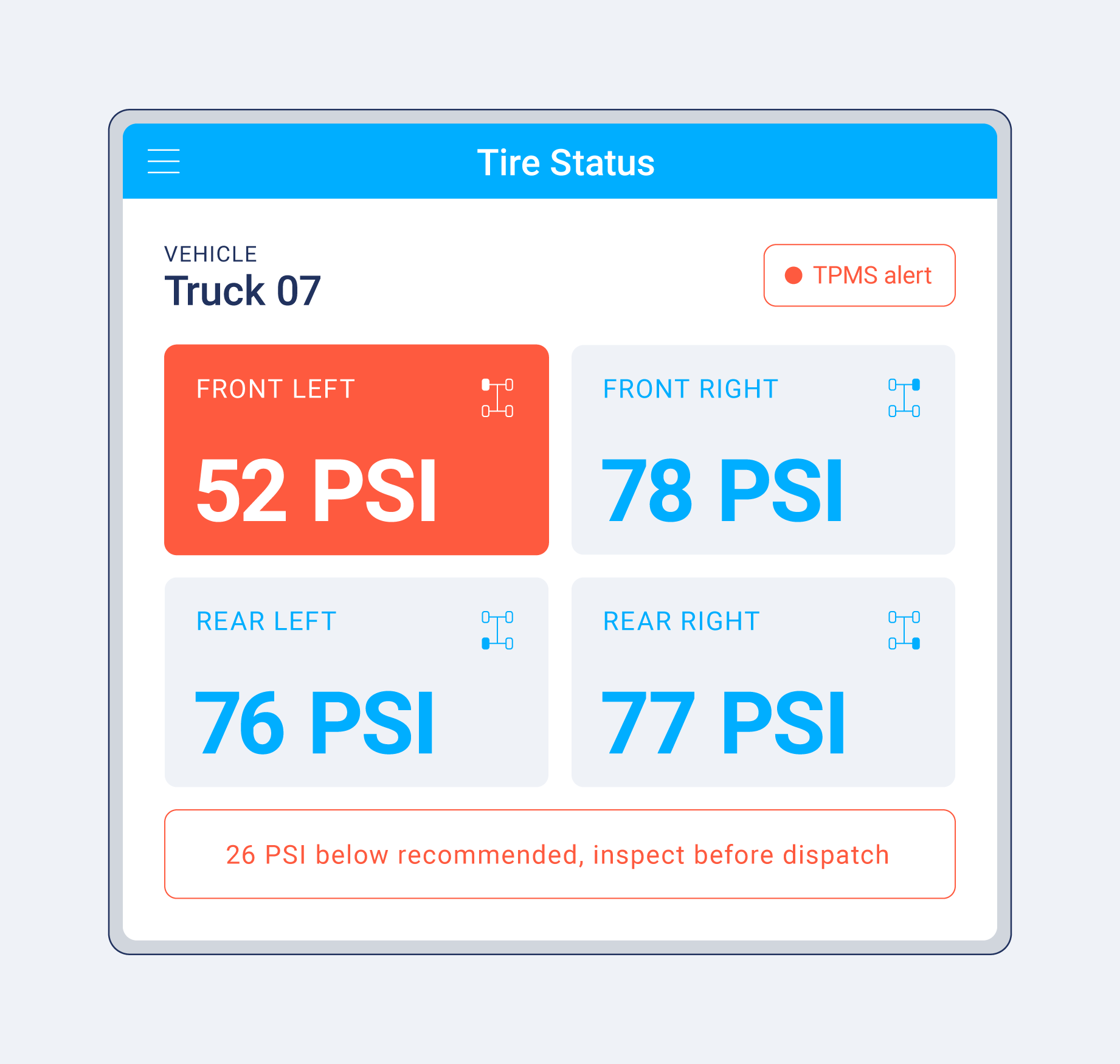
Regular tire rotations and alignments extend the lifespan of your fleet's tires and keep vehicles performing at peak fuel efficiency. Tracking tire health at the fleet level, rather than just vehicle by vehicle, also makes it easier to spot patterns, such as repeated issues on a specific route or with a specific vehicle type.
9. Right-size your fleet based on usage
Right-sizing means aligning your vehicle count to your actual operational needs. Utilization reports from your telematics platform tell you which assets are sitting idle and if those vehicles could be sold, reassigned or replaced.
Reducing the total number of vehicles in your fleet lowers insurance premiums, registration fees and maintenance costs. A seasonal review of your fleet's size ensures your vehicle count always matches current demand. This is especially helpful for operations that scale up during busy seasons.
10. Set clear performance benchmarks
Key performance indicators (KPIs) give your team a clear definition of success. The most impactful fleet management KPIs usually include:
- Fuel economy per vehicle
- Safety incident rates
- On-time delivery percentages
- Vehicle utilization
Share these benchmarks across your team so everyone understands what the operation is working toward. Review KPIs monthly to ensure they remain relevant, and keep track of everything with centralized dashboards. Regular reviews keep benchmarks visible and turn numbers on a spreadsheet into something that drives real behavioral changes.
H2: How to choose the right fleet management software
The right fleet management software platform is the foundation of every tip in this guide.
These are the main factors to evaluate when picking which platform will best fit your organization's needs:
- Ease of use: Look for a platform that offers an intuitive interface so drivers and office staff can get up to speed quickly, reducing training time and improving team-wide adoption rates.
- Hardware reliability: Select devices with simple installation and a strong record for uptime to get more accurate, consistent data and avoid disruptions.
- Customer support: Opt for a provider that offers responsive, knowledgeable support so you can quickly resolve issues and keep your fleet operating without delays.
- Scalability: Choose a solution that grows with your fleet so you can easily add or remove vehicles, users and features without ever needing to switch platforms.
Boost your fleet with smart management tips
The fleet management tips in this guide work best when they work together. Real-time telematics data informs your maintenance schedule, which supports vehicle uptime, which then supports your drivers and helps lower your insurance costs. Every part of the system should connect to perform at its best.
Put these fleet management resource guidelines into action. Geotab's platform gives you visibility, automation and reporting tools to run a more efficient, compliant and profitable fleet.
Subscribe to get industry tips and insights
Frequently Asked Questions
The most important fleet management KPI is vehicle utilization rate. It shows how efficiently each asset is being used relative to its cost. Fuel efficiency per vehicle and on-time delivery rate are also closely tracked because they directly affect both fleet costs and customer satisfaction.
Telematics data improves driver retention by giving managers an objective, data-backed view of driver performance, removing any subjectivity that can make feedback feel unfair. It helps drivers understand that coaching is based on real data and tied to clear goals. Recognizing top performers with driver scorecards also builds a positive culture.
Yes, fleet management software is worth it for most small fleets. The cost savings from reduced fuel waste, fewer collisions and lower maintenance overhead typically outweigh the subscription cost of a platform.
You can start transitioning your fleet to electric vehicles by first performing a vehicle suitability assessment. This uses your existing route and telematics data to identify which vehicles' travel distances and routes are compatible with EV range. From there, identify charging needs. A phased approach reduces risk and builds internal knowledge.
The five core pillars of fleet management are vehicle acquisition and disposal, fleet vehicle maintenance, driver management, fuel and cost control and compliance and risk management. Together they cover the full vehicle management lifecycle. Effective fleet management procedures address all five areas to ensure no part is left unmanaged.
The Geotab Team write about company news.
Table of Contents
- 1. Use AI-powered telematics like Geotab
- 2. Move from reactive to predictive maintenance
- 3. Use route optimization to cut idle time
- 4. Prioritize driver safety and coaching
- 5. Monitor fuel use and plan for electric vehicles
- 6. Automate compliance and reporting
- 7. Digitize administrative workflows
- 8. Track tire health and pressure
- 9. Right-size your fleet based on usage
- 10. Set clear performance benchmarks
- H2: How to choose the right fleet management software
- Boost your fleet with smart management tips
Subscribe to get industry tips and insights
Related posts
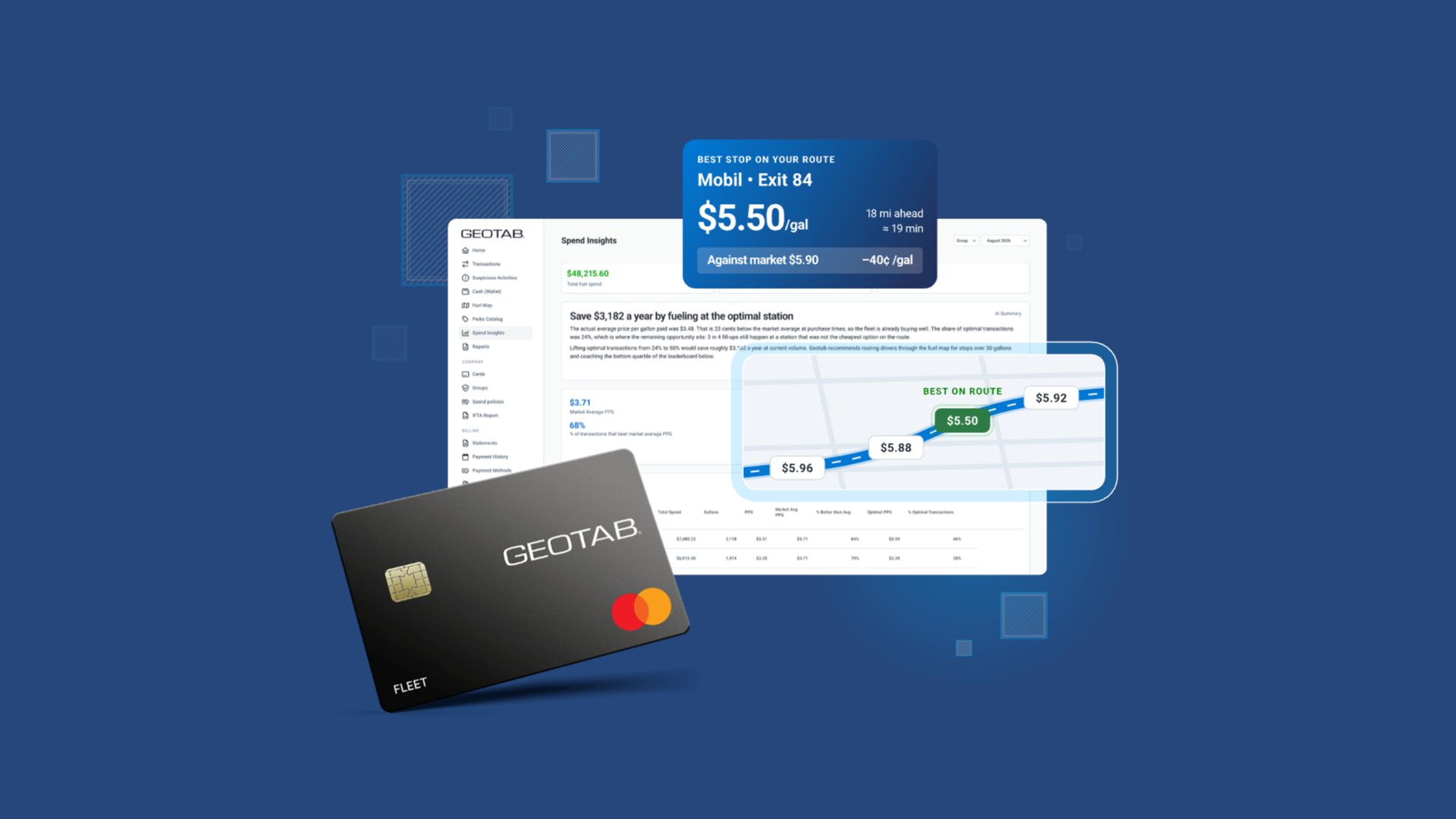

Top seven best fleet fuel cards: How to choose the right one for your business?
October 1, 2026
7 minute read

Fleet maintenance software for small business: 8 top tools and guide
September 29, 2026
7 minute read

The failure you didn't predict is more than just a repair bill
August 18, 2026
1 minute read

How dispatch management software contains the compounding costs of a sick call
August 10, 2026
3 minute read