Maintenance log template: How fleets track repairs, stay compliant and cut costs
Use a maintenance log template to track repairs, stay compliant and reduce downtime. Learn how fleets manage maintenance and scale with digital tools

By Geotab Team
Jun 3, 2026
Key Insights
- A maintenance log template gives fleets a simple, standardized way to track inspections, repairs and service intervals.
- Printable and spreadsheet-based templates work well for smaller fleets, but they become increasingly difficult to manage as vehicles, drivers and compliance requirements grow.
- When fleets outgrow manual tracking, maintenance logs evolve from static templates into connected, digital systems that reduce manual work, improve visibility and support proactive maintenance decisions.
What starts as simple management for a small fleet — perhaps just a few vehicles tracked in a shared spreadsheet — quickly becomes overwhelming as the fleet grows. Records end up scattered, services are missed and nobody has a clear view of vehicle health. That is often the moment fleets realize they need more than a basic maintenance log template to track inspections, repairs and service intervals consistently.
When maintenance data lives in paper logs and emails, small gaps create real risks. Preventative maintenance (PM) slips, compliance gets harder and downtime rises. A standardized maintenance log system creates a single source of truth, helping fleets regain control today and prepare for more automated, data-driven maintenance as they scale. This post breaks down what a strong maintenance log template should include and when fleets typically move to connected, digital maintenance systems.
What is a maintenance log template (and why do fleets still rely on it)?
A maintenance log template is a structured document that fleets use to record inspections, repairs and routine service over time. It standardizes what gets recorded, capturing details such as service dates, mileage or engine hours, parts replaced and driver sign-offs.
Fleets continue to rely on templates because they are simple to use and easy to put in place. However, templates are not systems. They do not automate reminders, pull mileage automatically or alert teams to upcoming service.
But a template does provide structure, which still matters for the Department of Transportation (DOT) and fleet compliance, where inspectors expect clear, organized maintenance records that show teams performed inspections and addressed issues. This makes the log a core component of any comprehensive fleet safety program.
What a good maintenance log template should include
A good maintenance log template captures the information fleets need to keep vehicles safe and compliant. It should track details like inspection details, mileage and clear sign-offs to show completed work. These core fields support better visibility into service needs, maintenance history and audits.
Vehicle and asset details
Vehicle and asset details form the foundation of an effective maintenance log. Recording identifiers such as the VIN and unit number ensures every inspection, repair and service entry ties back to the correct vehicle.
Tracking mileage and engine hours provides the benchmarks fleets use to schedule preventative maintenance and avoid under servicing or over servicing assets.
This information also supports compliance by proving maintenance occurred at the right intervals and helps protect resale value by creating a verifiable service history for each vehicle.
Service and inspection records
Service and inspection records document the work performed on each vehicle and create a clear maintenance history over time. Every entry should include enough detail to show the services performed, what was done and why.
Fleets should record:
- Parts replaced
- Work performed
- Service date and mileage
- Labor notes from the technician or service provider
- Service type, such as preventative, repair or inspection
These details make preventative maintenance easier to manage. Fleets can spot recurring issues, track part lifecycles and schedule service before breakdowns occur, including crucial seasonal prep like winter fleet preparation.
Driver and technician sign-offs
Driver and technician sign-offs add accountability to every maintenance record. Drivers complete pre- and post-trip inspections, while technicians document and complete repairs. By confirming who performed the work and when it was completed, sign-offs create a clear chain of responsibility.
This matters during audits and DOT inspections, where fleets must show that qualified personnel completed inspections and addressed defects. Clear signatures also protect fleets internally, showing proof of compliance and reducing disputes by documenting when maintenance actions took place and who approved them.
Cost and downtime tracking
Cost and downtime tracking help fleets understand the true impact of maintenance on operations. Recording this data allows fleets to compare vehicles and spot rising maintenance spend earlier.
When a vehicle consistently costs more to maintain or causes repeated downtime, those trends signal when to adjust service intervals, plan repairs or replace the asset altogether, a critical decision point in the vehicle lifecycle.

Maintenance log templates
Maintenance log templates generally fall into two formats: printable logs and spreadsheets. Both help fleets record inspections, repairs and service history. But neither is designed to manage maintenance as fleets grow.
Many fleets use a specialized truck maintenance log template or a commercial vehicle log to stay compliant. For fleets managing non-vehicle assets, a specialized equipment maintenance log template is often used to track maintenance history.
Printable maintenance log template
A printable maintenance log template gives fleets a straightforward way to record inspections, repairs and routine service by hand. Drivers and technicians can fill it out in the shop or cab, making it useful for fleets that prefer paper records or need a physical backup for audits or inspections.
However, as fleets scale, maintenance logs evolve. Digital systems powered by Electronic Logging Devices (ELDs) and telematics shift the focus from reactive to proactive maintenance.
Real-time vehicle data from these tools can replace the need for manual updates, ensuring consistency and accuracy. Over time, these digital logs outperform static templates because they offer automated insights, better visibility across the fleet, and a clear path to compliance, making manual, paper-based tracking a short-term solution for simple operations.
Pros of using a printable maintenance log template
Printable maintenance logs appeal to fleets because they’re simple, inexpensive and quick to implement. There is no software to configure or training required. Additionally, teams can start using them right away with minimal disruption.
Plus, these logs provide clear documentation of maintenance records, which is essential during DOT inspections, roadside audits and internal safety reviews.
Limitations that show up as fleets grow
The limitations of manual maintenance logs become harder to manage as fleets grow. Relying on handwritten entries increases the risk of errors, missed service and inconsistent records. It becomes difficult to track maintenance status across the entire fleet or quickly answer questions during a DOT audit when maintenance paperwork spreads across multiple locations.
As operations expand, these issues compound and expose fleets to compliance risk with:
- Missed PM schedules
- Limited visibility across vehicles
- Missing or incomplete maintenance records
- Inconsistent dates, mileage or signatures during audits
- Gaps between reported defects and recorded repairs
Spreadsheet maintenance log template
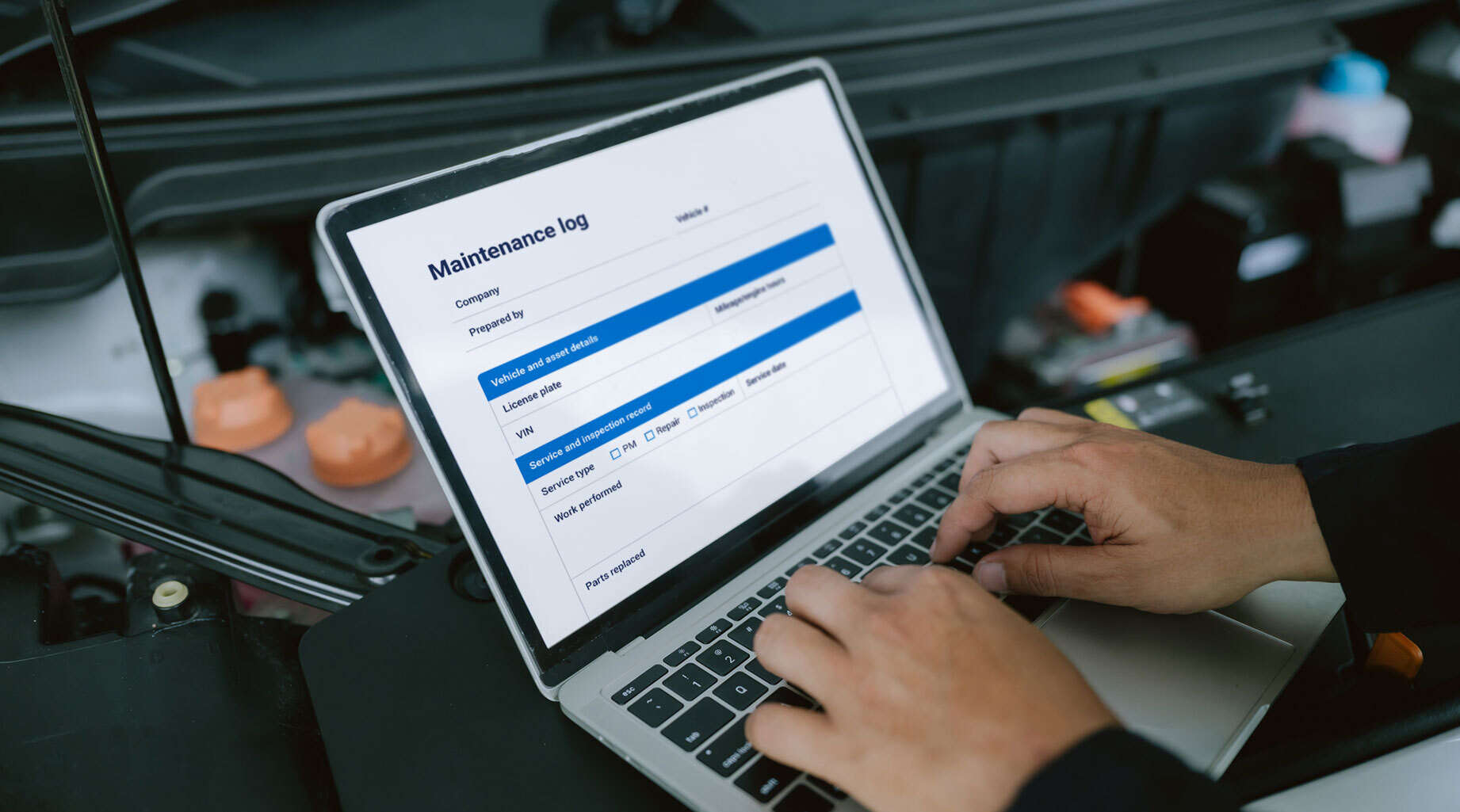
A spreadsheet maintenance log template offers more structure than paper logs through standardized fields, filters and basic formulas. Fleets can sort records by vehicle, date or service type and keep maintenance history in a single file instead of multiple binders.
Spreadsheets can reduce errors compared to printable logs, but they are still manual by nature and can be time-consuming.

Excel maintenance log template
Google Sheets maintenance log sheet
Free maintenance log templates vs. digital tracking tools
Free maintenance log templates work well for small fleets with simple maintenance needs. They’re easy to set up and have low cost. But, as fleets grow, manual tracking breaks down. Information lives in multiple locations and important follow-ups depend on memory instead of defined processes. Without built-in automations, teams struggle to stay ahead of renewals, inspections and regulatory requirements.
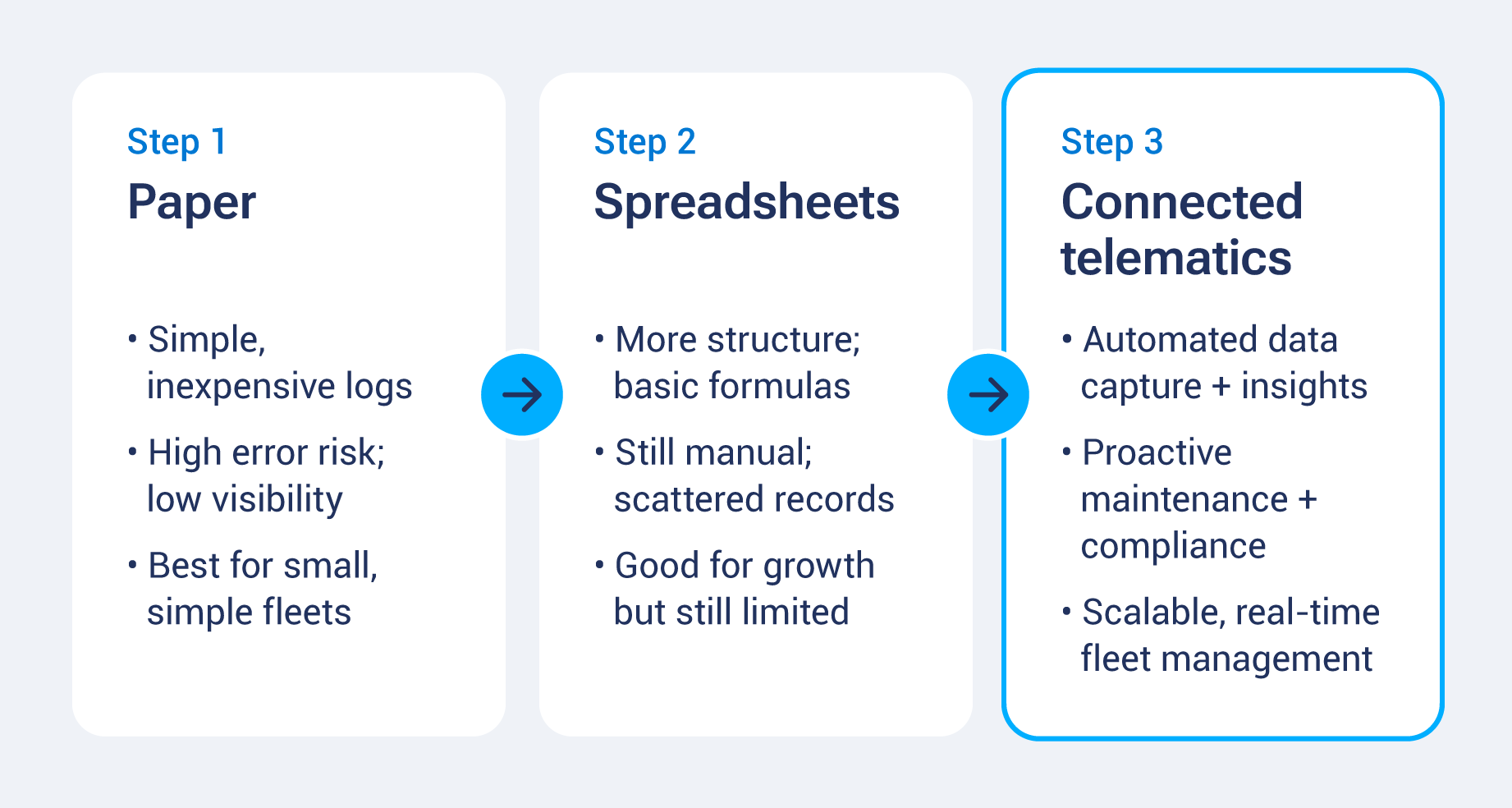
That is why many fleets follow a natural progression from paper to spreadsheets to solutions like Geotab’s centralized maintenance platform. Geotab brings maintenance records, vehicle data, and service activity into one place, making it easier to see which vehicles need attention and why.
Using real-time mileage, engine hours, fault codes, and diagnostic data, fleets can trigger maintenance at the right time instead of relying on manual updates or fixed schedules. This shift supports predictive maintenance and cost control.
Turn maintenance logs into operational insight
A maintenance log template creates structure and consistency, but its real value comes from how fleets use that information. When maintenance records stay current and easy to access, fleet managers gain clearer visibility into vehicle health. Over time, those insights support smarter fleet maintenance decisions and help reduce unplanned downtime.
As fleets grow, many move beyond static templates toward connected tools that automate data capture and surface issues sooner. If you’re ready to see how this works in practice, explore Geotab’s solutions to turn maintenance data into operational insight.

Subscribe to get industry tips and insights
Frequently Asked Questions
The best format for a maintenance log template depends on the size and complexity of the fleet. Small fleets often start with printable forms or spreadsheets, while growing fleets benefit from digital logs that automatically track mileage, schedule service and centralize records for compliance.
Fleets should keep maintenance records for at least one year while the vehicle is in service and six months after a vehicle leaves service under Federal Motor Carrier Safety Administration (FMCSA) regulations. However, many fleets retain records for up to seven years to support audits, resale value and long-term maintenance planning.
Yes, maintenance logs can be digital and meet DOT compliance requirements. In fact, digital logs often make compliance simpler by keeping maintenance history organized, centralized and available on demand.
The Geotab Team write about company news.
Table of Contents
Subscribe to get industry tips and insights
Related posts


Top seven best fleet fuel cards: How to choose the right one for your business?
October 1, 2026
7 minute read


Fleet maintenance software for small business: 8 top tools and guide
September 29, 2026
7 minute read