25 fleet management strategies to boost efficiency
Running a fleet means managing more moving parts than ever, literally. Here is how to build a smarter, more efficient operation with proven fleet management strategies.

By Geotab Team
Jul 24, 2026

Key Insights
- Effective fleet management strategies help fleets control costs, improve safety and stay compliant with evolving regulations.
- Telematics data is the foundation of modern fleet optimization, connecting vehicle health, driver behavior and operational performance in one place.
- From preventive maintenance to route optimization, the right combination of fleet management best practices can significantly reduce cost per mile.
- AI-powered tools and connected data platforms make it easier than ever to act on insights and continuously learn how to improve fleet management.
As fuel costs rise, maintenance expenses grow and labor shortages put pressure on operations, fleet managers face increasing challenges maintaining profitability and efficiency. Strong fleet management strategies help address these pressures by ensuring the systems and technologies fleets use improve safety, productivity, compliance and cost control.
Read on to learn 25 actionable strategies across maintenance, fuel, safety, routing, compliance and analytics. Knowing what fleet management is provides a foundation, but knowing what to do with it separates high-performing fleets from the read. Below are 25 proven strategies to help you learn how to manage a fleet more efficiently, safely and sustainably.
Fleet management strategies
1. Use telematics for real-time fleet visibility
GPS tracking and telematics give you a live view of where every vehicle is, how it is being driven and how it is performing. Real-time insights into location, speed, idle time and route activity help dispatchers make faster decisions and reduce operational blind spots. For fleets serious about improving fleet management, telematics is the logical starting point.
2. Implement preventive maintenance schedules
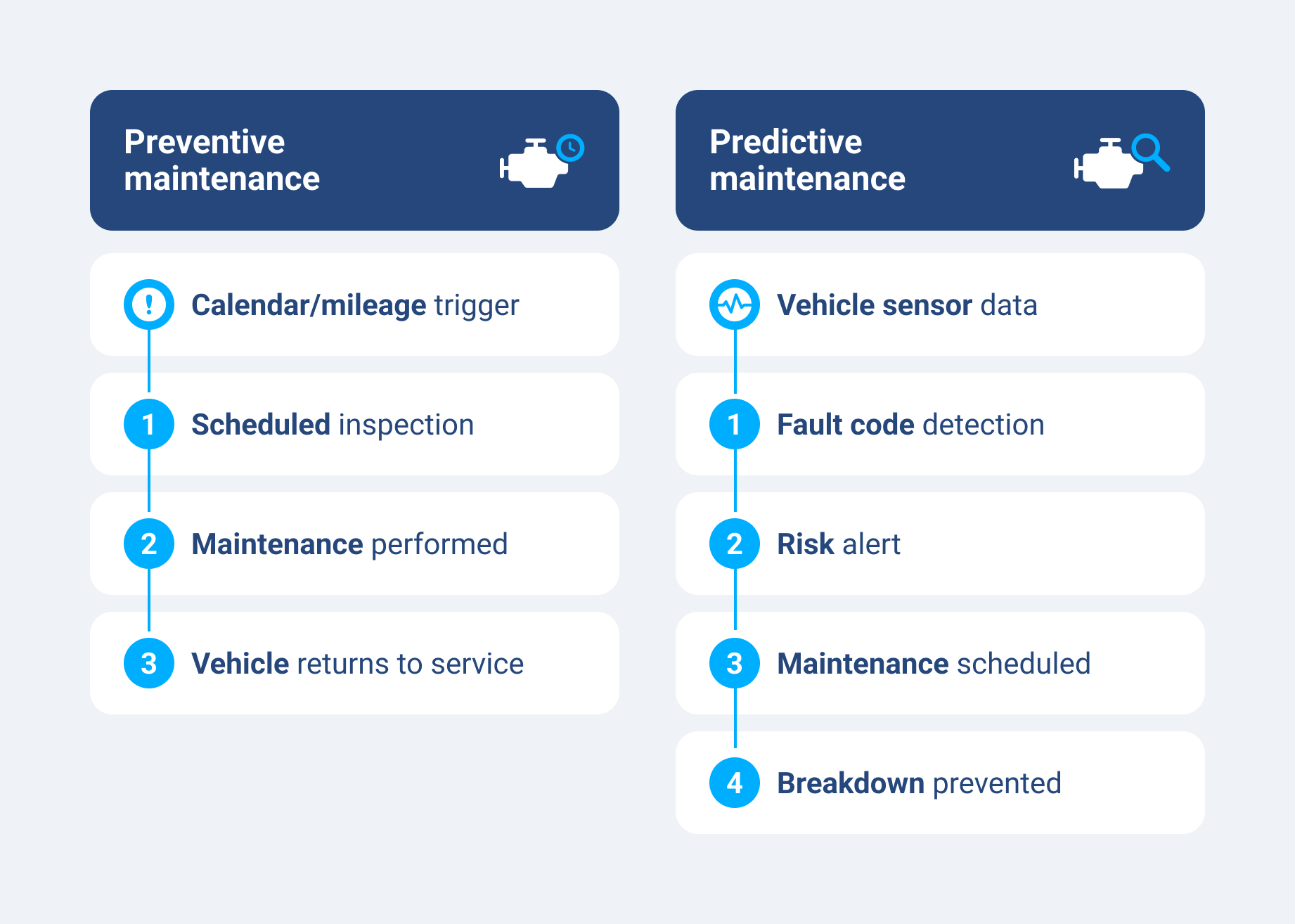
Scheduled oil changes, tire rotations and inspections keep vehicles on the road longer and reduce unexpected breakdowns. Preventive fleet maintenance is one of the most cost-effective fleet management tips available. It is key to catching small issues before they become expensive.
3. Adopt predictive maintenance using vehicle data
Predictive maintenance uses engine fault codes, diagnostics and telematics data to identify potential failures before they occur. Instead of following a fixed schedule, you can act on real vehicle health signals, reducing unnecessary service and catching issues early.
4. Reduce fuel waste through idle management
Excessive idling burns fuel without moving goods or people. Telematics alerts and driver coaching programs help reduce unnecessary idle time, cutting fuel spend and emissions across the fleet. For fleets with diesel vehicles, idle reduction is one of the fastest ways to see measurable cost savings.
5. Optimize routes with GPS and traffic data
Route optimization uses GPS and real-time traffic data to reduce mileage, avoid delays and lower fuel usage. Better routes also mean fewer late deliveries and stronger customer satisfaction. Smarter dispatching is vital to improving fleet operations and your bottom line because it helps maximize vehicle utilization and reduce idle times.
6. Monitor driver behavior and safety events
Speeding, harsh braking, aggressive acceleration and seat belt non-compliance all increase the risk of collision and liability costs. Safety monitoring gives fleet managers visibility into driver behavior across the entire fleet, enabling faster intervention and more consistent safety standard enforcement.
7. Build a driver coaching program
Scorecards, in-cab alerts and structured manager feedback help reinforce safer driving habits. A consistent coaching program builds accountability and gives drivers a clear path to improvement, both of which benefit safety and retention.
The most effective coaching programs also rely on objective driving data to identify risky behaviors and create targeted opportunities for improvement.
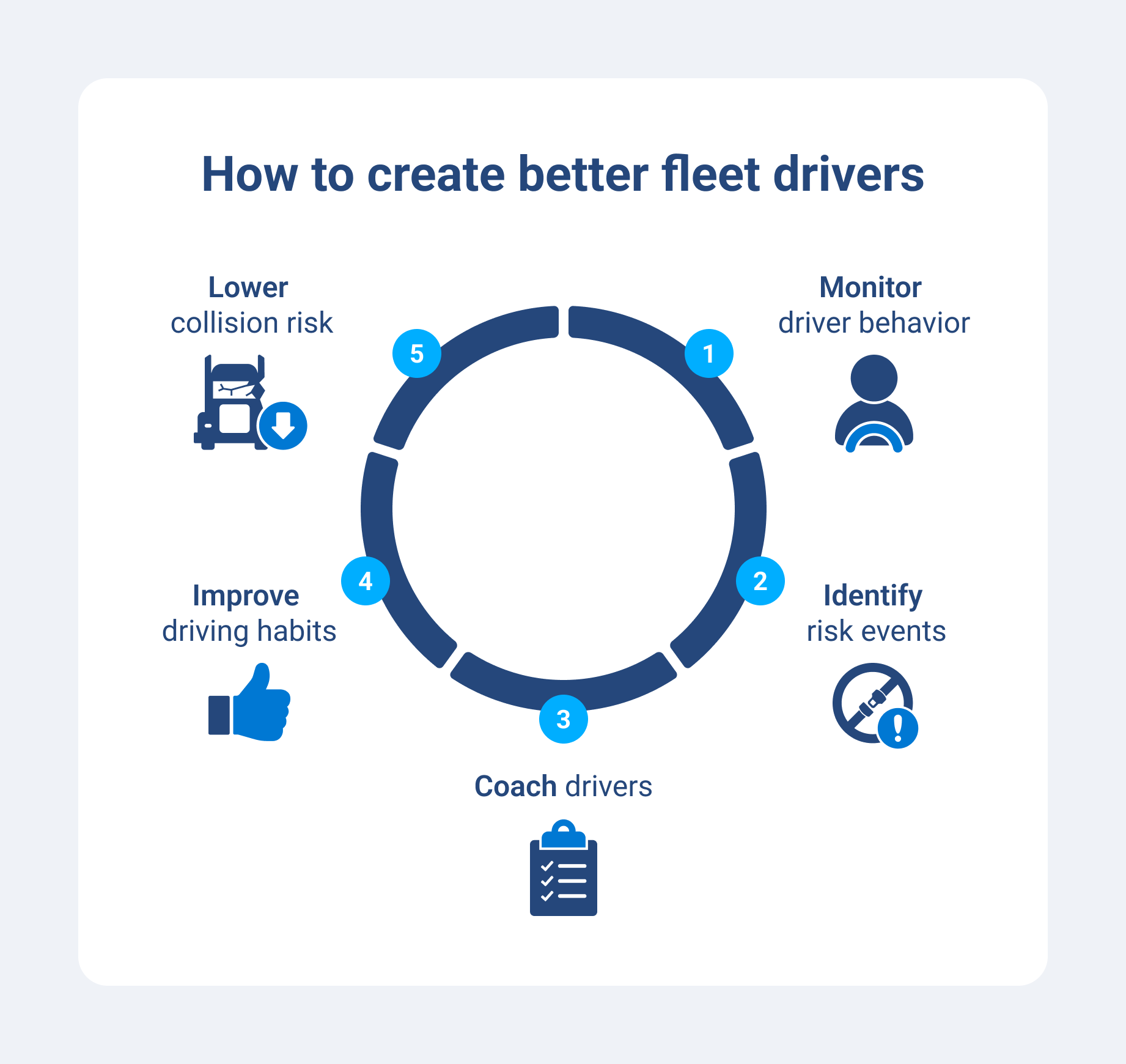
Geotab's driver coaching solution helps fleet managers deliver personalized feedback, monitor performance trends and encourage safer driving habits across their fleets.
8. Standardize vehicle inspections with DVIRs
Digital Driver Vehicle Inspection Reports (DVIRs) replace paper-based processes with consistent, trackable inspection records. Defect tracking and digital documentation make it easier to stay audit-ready and ensure vehicles are roadworthy before every trip.
9. Track fleet utilization rates
Monitoring how often and how heavily each vehicle is used helps fleets identify underused assets. This makes it easier to schedule trips and right-size your fleet.
10. Improve dispatching workflows
Centralized dispatching, automated job assignment and live vehicle tracking reduce delays and improve response times. When dispatchers have full visibility into fleet status, they can make smarter decisions faster, especially during peak demand.
11. Reduce unauthorized vehicle use
Geofencing and after-hours alerts help prevent unauthorized vehicle use, a common source of operational risk and added mileage. When drivers know the system monitors after-hours activity, compliance improves naturally.
12. Improve compliance with ELD and HOS automation
Electronic Logging Devices (ELDs) automate Hours of Service (HOS) tracking, reducing manual errors and simplifying audit preparation. Automated compliance reporting takes the administrative burden off drivers and back-office staff alike. For fleets navigating cross-border compliance, this automation is especially valuable.
13. Create fuel efficiency benchmarks
Comparing miles per gallon (MPG) trends across vehicles, routes and drivers reveals where drivers are wasting fuel. Benchmarking creates a baseline to measure fuel efficiency improvement and helps fleet managers direct coaching where it will have its biggest impact.
14. Use AI-powered video telematics
AI dash cams identify risky driving behaviors like distracted driving, tailgating and lane departure and provide contextual footage tied to specific incidents. This technology supports coaching programs by providing clearer evidence and helps fleets build a stronger fleet risk management framework.
15. Automate maintenance reminders and work orders
Automated service reminders and digital work order tracking ensure nothing slips through the cracks. When maintenance tasks are triggered by mileage, engine hours or calendar intervals and managed digitally, fleets spend less time chasing paperwork and more time getting vehicles road-ready.
16. Improve asset tracking across trailers and equipment
Telematics and asset tracking extend visibility beyond powered vehicles to trailers, heavy equipment and non-powered assets. Knowing where assets are and how they are being used reduces losses, improves planning and supports more accurate billing.
17. Benchmark fleet performance with KPIs
Tracking measurable performance indicators across safety, fuel, maintenance and utilization gives fleet managers the data they need to make confident decisions. Fleet management reporting tools make it easy to monitor trends and spot issues before they escalate.
Here are the common KPIs every fleet should monitor:
| KPI | Why it matters |
| Fuel efficiency | Fuel is often a fleet's largest operating expense |
| Vehicle downtime | Unplanned repairs disrupt schedules and increase costs |
| Safety scores | Driver behavior directly impacts collision risk and liability |
| Cost per mile | Reveals true operating costs across the fleet |
| Maintenance compliance rate | Tracks if scheduled service is completed on time |
| Driver Hours of Service (HOS) compliance | Ensures regulatory compliance and avoids DOT violations |
| Fleet utilization rate | Identifies underused assets that could be consolidated or redeployed |
18. Digitize fleet reporting and analytics
Automated reporting dashboards replace manual spreadsheets with real-time data and trend analysis. When data is centralized and easy to access, fleet managers can make faster, more informed decisions and share performance insights with stakeholders more easily.
19. Use geofencing for operational control
Geofences support arrival notifications, theft prevention and route compliance. Setting virtual boundaries around key locations like depots, customer sites or restricted zones gives managers an automatic alert system without constant manual monitoring.
20. Improve tire management practices
Tire pressure monitoring, tread inspections and alignment checks improve safety and fuel efficiency. Under-inflated tires increase fuel consumption and wear unevenly.
21. Develop a fleet replacement strategy
Life cycle planning helps fleets replace aging vehicles before repair costs outpace the vehicle's value. A structured fleet replacement strategy reduces downtime from chronic repairs and ensures the fleet stays productive and cost-efficient.
22. Centralize fleet data across systems
Integrating telematics with maintenance, fuel card, ERP and dispatch systems gives fleet managers one unified view of operations. When systems talk to each other, data gaps close and decisions improve, which is why this is the cornerstone of dedicated fleet management strategies for larger organizations.
23. Reduce emissions and support sustainability goals
Route optimization, idle reduction and electric vehicle (EV) adoption all contribute to lower emissions and stronger sustainable fleet management strategies. Fleets that track and report emissions data are also better positioned for regulatory compliance and customer requirements for sustainability.
24. Train drivers on fuel-efficient driving techniques
Smoother acceleration, reduced speeding and better route awareness all reduce fuel consumption. Fuel-efficient driving training is most effective when backed by data. That allows drivers to receive specific feedback tied to their own behavior instead of general guidance.
25. Continuously review and refine fleet operations
Fleet management best practices are not a one-time project. The most successful fleets treat operations as something to continuously improve, reviewing KPI trends, adjusting strategies as the business grows and staying current with new technologies. Oil and gas and other specialized fleets may apply industry-specific approaches to apply these principles.
Build a more efficient fleet with connected data
Strong fleet management strategies start with the right data. When vehicle health, driver behavior, fuel use and compliance information flow through a connected platform, fleet managers can act faster and plan smarter. Geotab brings these capabilities together in one open platform, giving fleets of any size the visibility they need to improve performance.
Explore Geotab's fleet maintenance solutions to put these strategies to use. See how you can connect data to help your team drive better outcomes every single day.
Subscribe to get industry tips and insights
Frequently Asked Questions
Fleet management is the process of overseeing a company's vehicles and drivers to maximize efficiency, control costs and meet safety and compliance requirements. It typically includes vehicle tracking, maintenance management, driver monitoring and regulatory reporting.
The most important fleet management strategies combine telematics-driven maintenance, driver safety programs, route optimization, fuel management and KPI tracking. Together, these approaches reduce cost per mile, lower collision risk and keep fleets compliant with regulations.
The five pillars of fleet management are:
- Vehicle maintenance: Keeping assets roadworthy
- Safety and compliance: Protecting drivers and meeting regulations
- Fuel management: Controlling the largest operating cost
- Asset utilization: Maximizing the value of each vehicle
- Data and reporting: Making informed decisions based on performance metrics
Telematics improve fleet management by providing real-time data on vehicle location, driver behavior, engine health and fuel consumption. Fleet managers use this data to catch maintenance issues early and optimize routes, reducing costs and improving overall performance.
Core KPIs include:
- Fuel efficiency (MPG and cost per mile)
- Vehicle downtime and breakdown frequency
- Driver safety scores
- Maintenance compliance rate
- Fleet utilization rate
- HOS compliance rate
Fleet managers can reduce fuel costs by reducing idle time, enforcing posted speed limits, optimizing routes to cut unnecessary mileage and coaching drivers on fuel-efficient techniques like smoother acceleration and anticipatory braking.
When looking for fleet management software, consider real-time GPS tracking, ELD compliance support, automated maintenance alerts, driver behavior monitoring and the ability to integrate with your existing systems. An open platform that connects with third-party tools gives you more flexibility as your organization scales.
Fleet management guidelines support regulatory compliance through automated ELD and HOS tracking, reducing manual logging errors and simplifying DOT audit preparation.
The difference between preventive and predictive maintenance in fleet management is that preventive maintenance follows a fixed schedule, while predictive maintenance uses real-time telematics data. Where preventive maintenance requires fixes regardless of condition, predictive maintenance follows diagnostics to identify issues before they cause failures.
The Geotab Team write about company news.
Subscribe to get industry tips and insights
Related posts
Four ways to transform garbage fleet efficiency with data and video tools
September 28, 2026
4 minute read

Why the OEM versus device-level telematics debate misses the point for mixed-fleet operators
September 25, 2026
2 minute read

6 benefits of an open, AI-powered fleet data platform
September 17, 2026
8 minute read

Field service GPS fleet tracking: what mid-market fleet managers need to know
September 15, 2026
4 minute read
Best construction fleet management software: Features, platforms and buying tips
September 9, 2026
7 minute read