Fleet replacement strategy: How to plan for lower costs and higher uptime
A smart fleet replacement strategy helps balance maintenance costs, uptime and capital investment while reducing total cost of ownership and keeping your fleet reliable.

By Geotab Team
Aug 20, 2026
Key Insights
- A fleet replacement strategy uses measurable criteria like age, mileage, maintenance costs and performance to determine the optimal time to replace a vehicle.
- Common replacement approaches include age-based, mileage-based, cost-based and lifecycle strategies.
- Key factors influencing replacement decisions extend beyond vehicle conditions to include business growth plans, sustainability goals, regulatory requirements and data quality.
- Building an effective fleet replacement strategy requires assessing current fleet health, defining clear replacement criteria, creating a phased replacement schedule and continuously monitoring performance to improve over time.
Rising maintenance costs, aging vehicles and pressure to meet emission targets are forcing fleet managers to rethink when and how to replace assets. Holding onto vehicles for too long increases repair bills and downtime risks, but replacing them too soon leaves residual value on the table. A strong fleet replacement strategy helps you get the timing right.
This guide covers the core components of an effective replacement strategy, common industry approaches and how you can build your own tactics. Whether you manage a small delivery fleet or a national trucking operation, understanding fleet maintenance cycles and replacement timing makes all the difference for your bottom line.
What is a fleet replacement strategy?
A fleet replacement strategy is a proactive plan fleet managers use to decide when to replace vehicles, relying on measurable criteria like mileage, maintenance costs and performance. Strong strategies improve fleet efficiency while controlling capital spend and maximizing every vehicle's lifecycle.
An effective fleet replacement strategy impacts several areas of performance:
- Total cost of ownership (TCO): Fleet replacement strategies help balance depreciation, maintenance, fuel and downtime to minimize lifetime costs.
- Vehicle uptime and reliability: A strong strategy reduces unplanned repairs and keeps assets in service when you need them.
- Safety and compliance: It also ensures vehicles meet safety standards and regulatory requirements.
- Sustainability and emissions goals: Smart strategies align replacement cycles with environmental targets, all while improving fuel efficiency.
Core components of an effective fleet replacement strategy
All fleet replacement strategies should include certain foundational elements that indicate when a vehicle becomes more expensive to fix than replace. These components provide the data you need to make informed decisions, so you can shift from reactive fleet maintenance towards planned, cost-efficient asset management.
Vehicle age, mileage and usage patterns
Age and mileage might be the most commonly used indicators for fleet replacement, but they should not be viewed in isolation. Two vehicles with the same odometer reading can have vastly different wear depending on how they are used.
In addition to calendar age and mileage, track these factors:
- Daily usage intensity and duty cycle
- Operating environment (urban vs. rural)
- Driver behavior and handling patterns
Maintenance and operating costs
Aging vehicles require more frequent and substantial repairs. Tracking maintenance costs over time helps fleet managers identify the point at which ongoing repairs exceed the asset's value. Key metrics to monitor include:
- Cost per mile for maintenance and repairs
- Frequency of unplanned repairs
- Part availability and lead times
- Fuel efficiency decline
- Sudden spikes or upward trends in maintenance costs
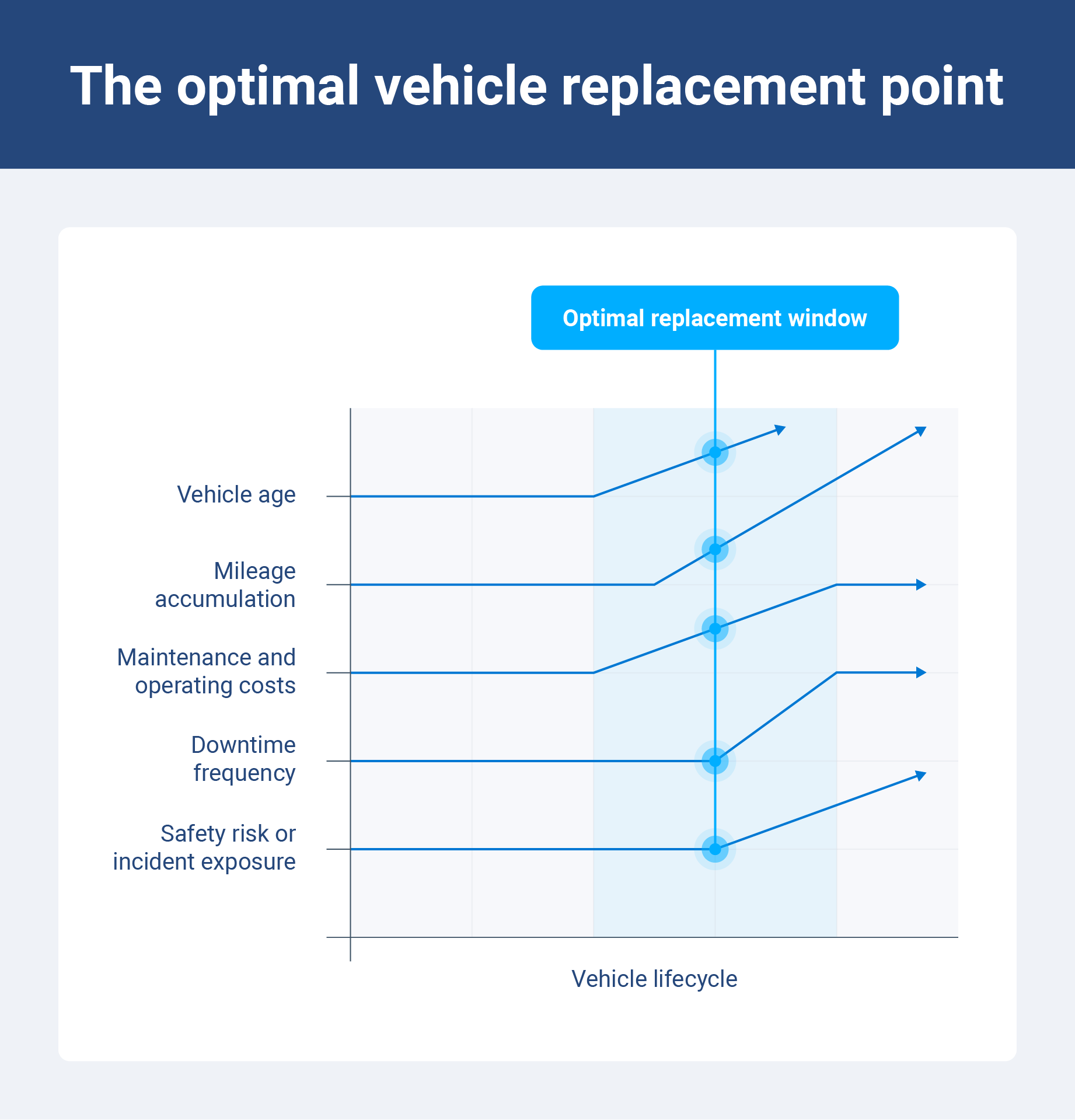
Reliability, downtime and safety risk
Unplanned downtime is not just expensive because of repairs — it also disrupts operations, delays deliveries and can damage customer trust. Keep track of these reliability indicators:
- Mean time between failures (MTBF)
- Frequency of roadside breakdowns
- Days out of service per quarter
- Collision history
- Safety system performance
Fleet managers should also consider the ROI from improved safety technology in newer vehicles. Modern vehicles often include driver monitoring tools that reduce incident rates, and pairing these technologies with a formal safety program and fleet safety certifications can further strengthen results.
Residual value and disposal timing
The value of a used vehicle declines over time, but the rate of depreciation is not usually linear. Vehicles tend to lose value more quickly in the first few years, then depreciation starts to slow. Timing disposal to capture the remaining residual value is another critical part of the replacement equation.
Other factors that influence resale value include:
- Vehicle condition and maintenance history
- Market demand for specific makes and models
- Mileage relative to expected lifespan
- Seasonal trends in used vehicle pricing
Selling or trading vehicles while they still have market appeal can help offset replacement costs and improve cash flow for new acquisitions.
Common fleet replacement approaches
There is no single best way to decide when to replace a vehicle. The right approach depends on your fleet, operating conditions and business needs. These are the most widely used methods, each with different trade-offs in complexity, cost control and adaptability.
Age-based replacement
Age-based replacement sets a fixed timeline for replacing vehicles, usually every seven years. This approach is best for fleets with consistent usage patterns and predictable depreciation schedules, such as corporate car programs or light-duty service vehicles.
Mileage- or usage-based replacement
Mileage-based strategies replace a vehicle when it reaches a specific odometer threshold, typically 100,000 or 250,000 miles, though this varies depending on vehicle type. This works well for fleets with high annual mileage and consistent road types, like long-haul trucking or delivery.
Cost-based replacement
Cost-based replacement considers maintenance and operating expenses. Replacement is triggered when depreciation savings outweigh maintenance and downtime expenses. Fleets that track detailed cost data and want to optimize TCO in real time benefit the most from this tactic.
Lifecycle and performance-based replacement
Lifecycle strategies compile age, mileage, maintenance costs, downtime and safety performance into a composite score. This approach offers the most nuanced view but also requires the most sophisticated data collection. For that reason, large and diverse fleets with access to telematics and fleet management software benefit from this strategy.
Key factors that influence fleet replacement decisions
Even with the most structured approach, replacement decisions are influenced by external factors that go beyond vehicle condition. Managers also need to consider broader business priorities like long-term fleet sustainability and regulatory requirements.
Fleet type and operating environment
A delivery van operating in a dense urban area with frequent stops will wear very differently than a highway truck running long routes. Replacement strategies need to account for these differences.
Factors to consider include:
- Vehicle class and duty type
- Terrain and climate conditions
- Load requirements and towing demands
Business growth and capital planning
Replacement decisions cannot be made in a vacuum. They must align with capital budgets, cash flow projections and business growth plans. A company expanding into new markets is probably going to prioritize growth over replacement, while an organization optimizing for efficiency might look to retire old vehicles sooner.
Sustainability and regulatory goals
Many fleets are transitioning to cleaner technologies like electric vehicles (EVs) while navigating new emissions requirements, customer expectations and corporate sustainability initiatives. These all influence the timing of replacements and the types of vehicles selected.
Data availability and technology maturity
The strength of your replacement strategy heavily relies on the reliability of your data. Fleets with telematics and maintenance management reports can make more informed decisions. If you are still stuck with manual tracking, investing in fleet management technology might be a prerequisite to developing a reliable replacement strategy.
How to build a fleet replacement strategy
Building a replacement strategy requires a structured approach that starts with understanding your fleet and ends with an adaptable process that grows alongside you.
1. Assess your current fleet and data quality
Start by auditing your fleet so you understand what you already have, how it is performing and what data you can access. Gather information on:
- Vehicle age, mileage and acquisition costs
- Maintenance history and total repair spend
- Downtime events and reliability trends
- Current market value and expected residual value
If you are missing data, prioritize improving your tracking system before making large-scale replacement decisions. Poor or incomplete data leads to an unreliable replacement strategy.
2. Define replacement criteria and KPIs
Establish clear, measurable criteria for when a vehicle should be considered for replacement. Common KPIs include:
- Maintenance cost per mile exceeding a set threshold
- Age or mileage reaching a predefined limit
- Downtime frequency or duration increasing beyond acceptable levels
- Safety incidents or compliance violations
3. Create a fleet replacement schedule
A fleet replacement schedule turns your new criteria into a multiyear plan that forecasts when specific vehicles will be retired. Make sure your schedule includes:
- Target replacement dates for each asset type
- Estimated replacement costs and funding sources
- Lead times for vehicle acquisition
- Contingency plans for unexpected failure
4. Monitor, adjust and refine over time
A replacement strategy is not a one-time project. It requires ongoing monitoring and adjustment based on your performance and needs. Use fleet management reporting tools to keep track of key metrics and compare your actual costs to projections so you can refine when necessary.
Turn fleet replacement into a long-term advantage
Fleets that replace vehicles at the right time benefit from increased reliability, lower fuel consumption, improved safety and higher driver satisfaction. That is why a well-executed fleet vehicle replacement strategy can turn your fleet into a competitive advantage — not an everyday headache.
By basing replacement decisions on evidence instead of intuition, fleet managers can keep fleets effective and competitive — but only if they have the right data and tools.
Ready to build a smarter approach to fleet replacement? Geotab's fleet management solutions provide the real-time insights and reporting you need to make confident, cost-effective replacement decisions. Learn how we can help fleets optimize vehicle lifecycles and improve total cost of ownership.
.jpg)
Subscribe to get industry tips and insights
Frequently Asked Questions
There is no universal timeline. The best replacement timing depends on vehicle type, usage patterns and operating thresholds. The key is to establish criteria based on your own data instead of relying on industry standards.
The most important KPIs depend on your priorities, but commonly tracked metrics include:
- Maintenance cost per mile
- Downtime frequency
- Total repair spend as a percentage of vehicle value
- Fuel efficiency trends
- Safety performance and collision rates
A phased plan spreads vehicle replacements over multiple years to avoid large capital expenses in a short period. Start by grouping vehicles by age, mileage or condition, and plan to replace the highest-priority assets first. Also consider budget constraints, expected maintenance costs and potential downtime when scheduling replacements.
Both timing and sales channel affect resale value. Selling vehicles before major repairs are needed and while they still have market value helps maximize return. Common disposal options include:
- Dealer trade-in
- Auction sales
- Direct sales to used vehicle buyers
- Certified resale programs
The Geotab Team write about company news.
Table of Contents
Subscribe to get industry tips and insights
Related posts

How private haulers can help prepare their fleets for new waste management contracts
October 23, 2026
4 minute read

Top seven best fleet fuel cards: How to choose the right one for your business?
October 1, 2026
7 minute read


Fleet maintenance software for small business: 8 top tools and guide
September 29, 2026
7 minute read