Fleet fuel management systems: Top tools for efficiency
Fuel management systems improve your fleet’s fuel efficiency and reduce fuel costs. The list below covers the pros, cons and features of the top 10 options.

By Geotab Team
May 13, 2026
Key Insights
- Fuel can account for up to 60% of total fleet operating costs, making fuel management systems essential for controlling costs and improving operational efficiency.
- The best fleet fuel management systems combine telematics, fuel card integration and software analytics to provide a comprehensive view of consumption and spend.
- Features like IFTA reporting, fraud alerts, driver behavior monitoring and EV tracking support help fleets reduce waste and stay in compliance.
- Choosing the right solution depends on fleet size, infrastructure and whether you need hardware-based fuel control, card management or full telematics integration.
Fleets using connected transportation and asset tracking can reduce idling as much as 30%. The key to cutting back on fuel waste and improving vehicle usage lies in the right fleet fuel management system. These platforms display fuel consumption data, costs and driver behavior so you can optimize your operation.
This guide discusses the top eight systems to consider in 2026, the features that matter most and how to evaluate options based on your fleet size and needs. We will cover diesel exhaust fluid (DEF) consumption and how you should factor your overall fleet management software cost into your long-term fleet fuel management strategy.
What is a fleet fuel management system?
Fuel management systems are tools used by fleets to track and optimize fuel consumption. These systems combine software with hardware installed in vehicles or fueling infrastructure.
Fleet fuel management solutions provide telemetric data to reduce fleet fuel costs, improve driver behavior and optimize route efficiency. They are crucial fuel management resources for most fleets.
A modern system combines three core components:
- Telematics devices: These devices connect to your vehicles and pull engine data like fuel level, odometer readings, idle time and speed to give you a real-time picture of how each vehicle is performing.
- Fuel cards: These fuel cards capture transaction data at the pump, like location, time and amount of purchase, creating auditable records that make it easy to spot discrepancies and manage driver spend.
- Software platforms: Software merges telematics and card data to show actual fuel economy versus purchased fuel, flagging gaps that could indicate unauthorized use, a maintenance issue or inefficiency.
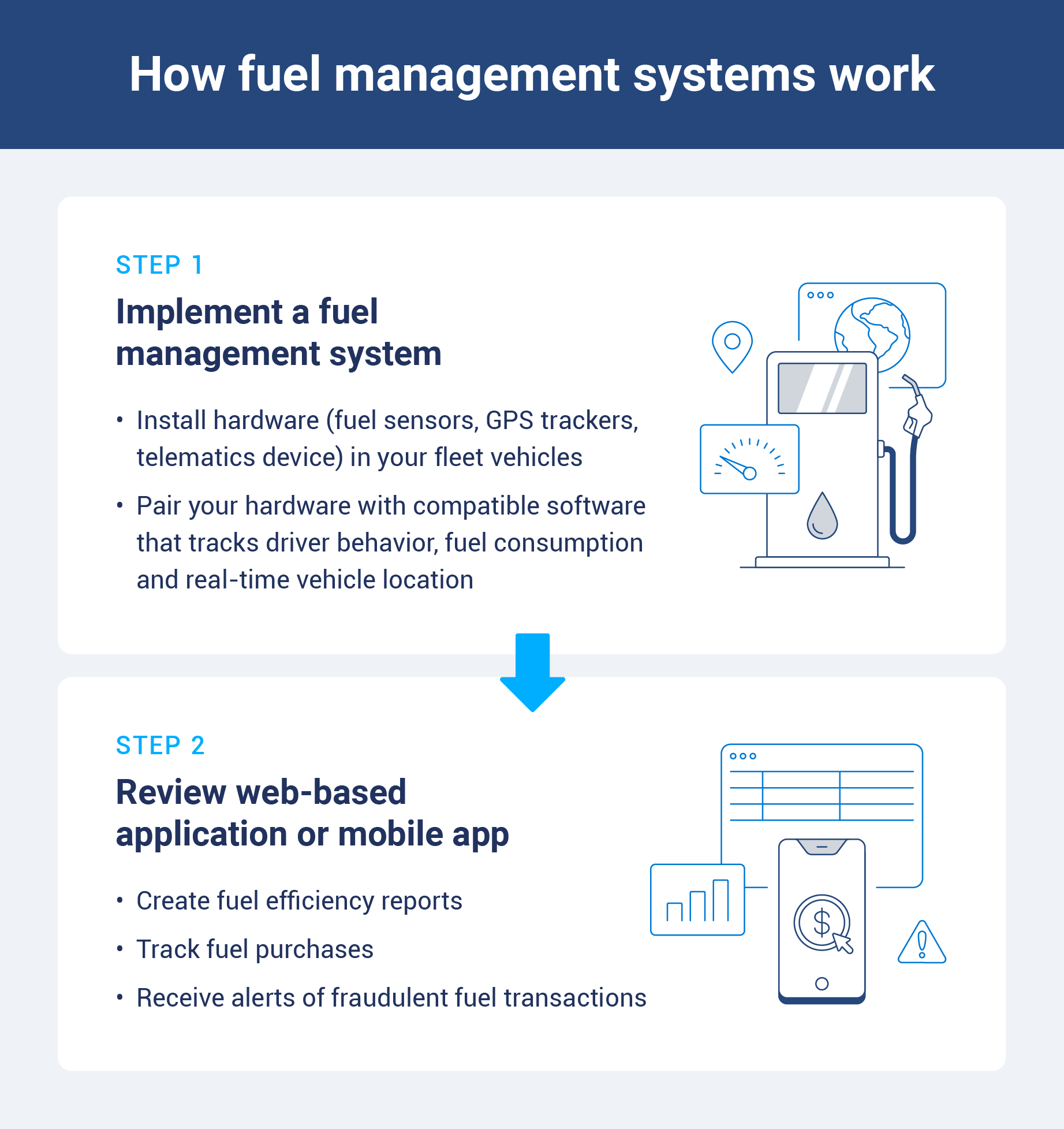
Choosing the right fuel management software is important for improving your fleet efficiency.
8 best fleet fuel management systems overview
The table below compares each fleet management system tool on the features that matter most to fleet managers. Use this to narrow your shortlist, then skip to our detailed breakdowns to make your final decision.
1. Geotab
Geotab's fleet fuel management platform surpasses simple fuel tracking. It combines real-time telematics, a broad open platform and deep diagnostic capabilities to help fleets understand what fuel dollars are actually doing. Most importantly, it shows them how to optimize that spend.
.jpg)
Geotab offers integrations across many fuel card providers globally and a Marketplace of specialized Add-Ins. It gives you the flexibility to build a fuel management solution that is a custom fit for your existing workflows.
Key features
- Fuel card integration: Geotab integrates with many fuel card providers globally, offering one of the broadest integration networks in the industry. Transaction data flows automatically into MyGeotab so you can reconcile purchases against telematics data without manual entry.
- Engine diagnostics: The platform surfaces root causes of fuel waste, not just problems. It tracks idling, speeds and aggressive acceleration at the vehicle level so managers can coach drivers and address issues before they compound.
- Geotab Marketplace: The open platform Marketplace hosts specialized Add-Ins for heavy-duty tracking, emissions reporting and more.
- Unified interface: Fuel data and maintenance alerts live in the same dashboard, so a drop in fuel economy can be connected to a specific vehicle health issue within the same platform.
Fuel Tracker
2. Fleetio
Fleetio is a mobile-first fleet management software built around maintenance, cost tracking and fuel spend visibility. Its focus on mobile usage makes it a strong fit for fleets where drivers log fuel and submit receipts from the field.
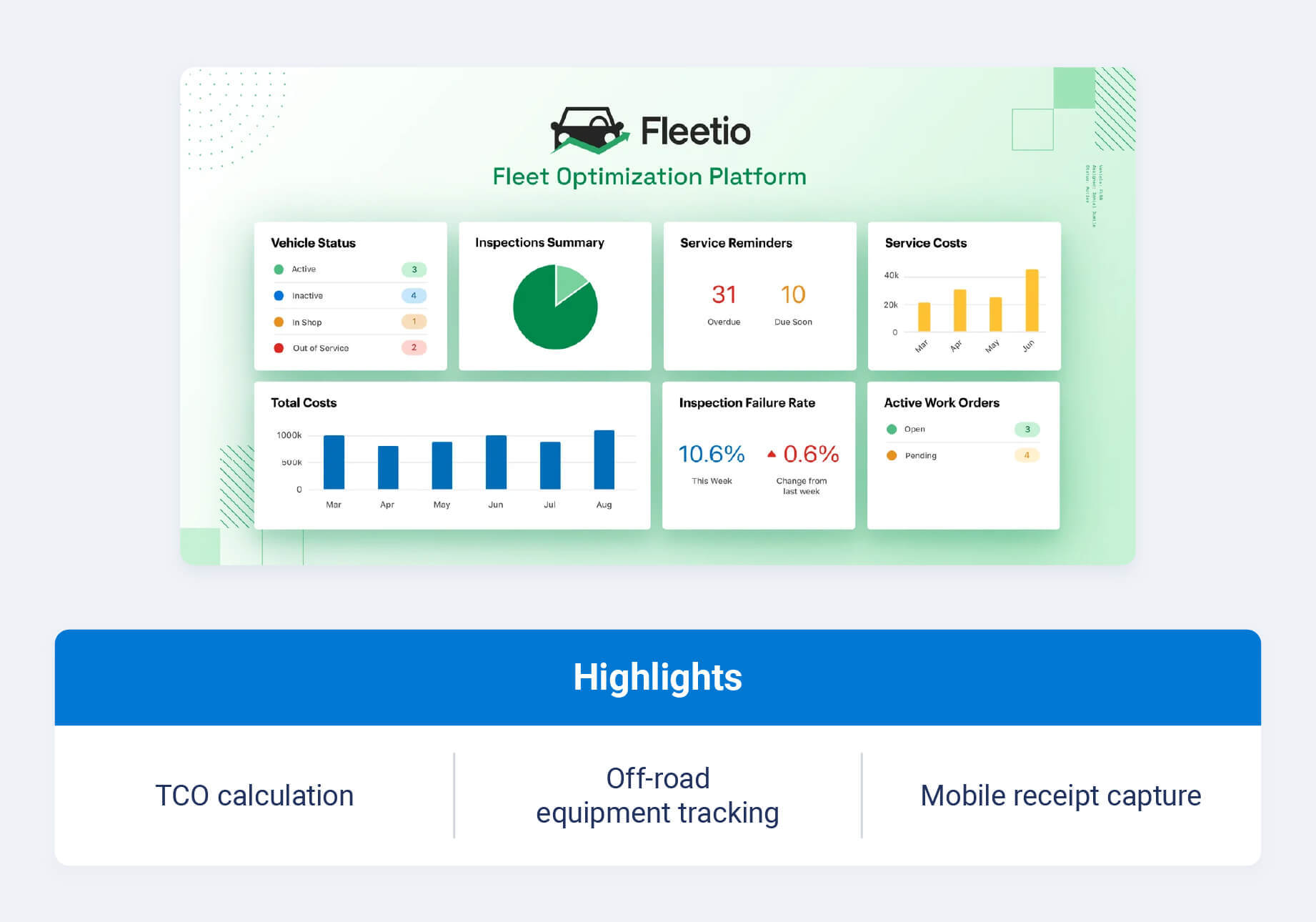
Fleetio calculates total cost of ownership (TCO) at the vehicle level, factoring in fuel, maintenance and repair costs so managers can make strategic vehicle replacement decisions. It also handles fuel tracking for off-road equipment, making it a strong choice for mixed fleets.
Key features
- TCO calculations: Fuel data feeds into total cost of ownership calculations, producing cost-per-mile figures for each asset, making it easier for managers to identify underperforming vehicles.
- Mobile receipt capture: The Fleetio Go app lets drivers photograph receipts at the pump and automatically matches transactions to the correct vehicle and driver, reducing manual entry.
- Off-road equipment tracking: Fleetio tracks fuel for on-road vehicles and off-road equipment like forklifts, generators and agriculture machinery, making it a strong choice for fleets with mixed assets.
- Fuel card integration: Fleetio integrates with major providers like WEX, FleetCor and Comdata. Transactions import automatically, and GPS location alerts flag purchases made far from the vehicle's recorded location.
3. Fill-Rite
Fill-Rite is made for organizations that manage their own on-site fuel storage. It has been a trusted name in fuel transfer equipment since 1961 and uses a hardware-first approach for fleet fuel management. Its Fuel Management System (FMS) combines physical pump access controls, cloud-based reporting and a mobile app for maximum visibility.
Private fueling stations that need hardware-level control in addition to card management often turn to this fleet fuel management solution.
Key features
- Hardware access control: The system controls pump access with PIN codes or key fob authentication so only authorized drivers can fuel vehicles, preventing unauthorized fuel usage.
- Real-time inventory: Cloud-based reporting tracks tank inventory in real-time and sends alerts when levels drop so you can avoid unexpected run-outs that could ground vehicles mid-shift.
- Automated tax refund reporting: Fill-Rite automatically generates off-road fuel tax refund reports to reduce the administrative burden of managing fuel tax claims for equipment that does not operate on public roads.
- Scalable modular design: The system supports unlimited drivers, vehicles and transactions per module. A modular, subscription-based model means no long-term contracts and easy scalability.
4. Coast
Coast acts as a Visa fuel card provider with sophisticated expense monitoring software that integrates with other fleet management software, including Geotab for deeper fuel insights. It works best for businesses that want to incorporate other fleet management software options with their fuel cards.
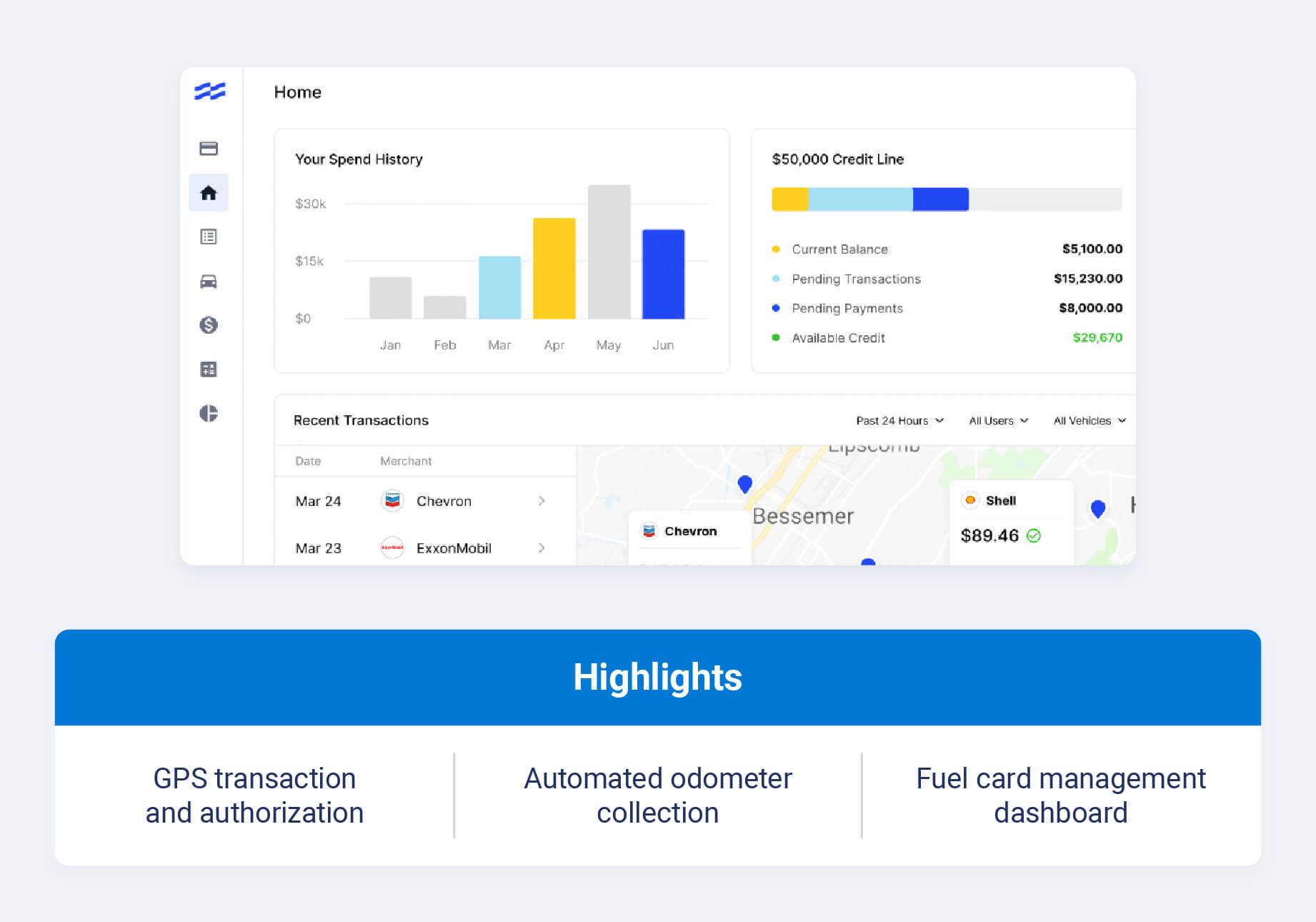
Coast integrates with existing fleet management software, like Geotab, enabling managers to layer GPS data onto transaction records for stronger fuel card management insights.
Key features
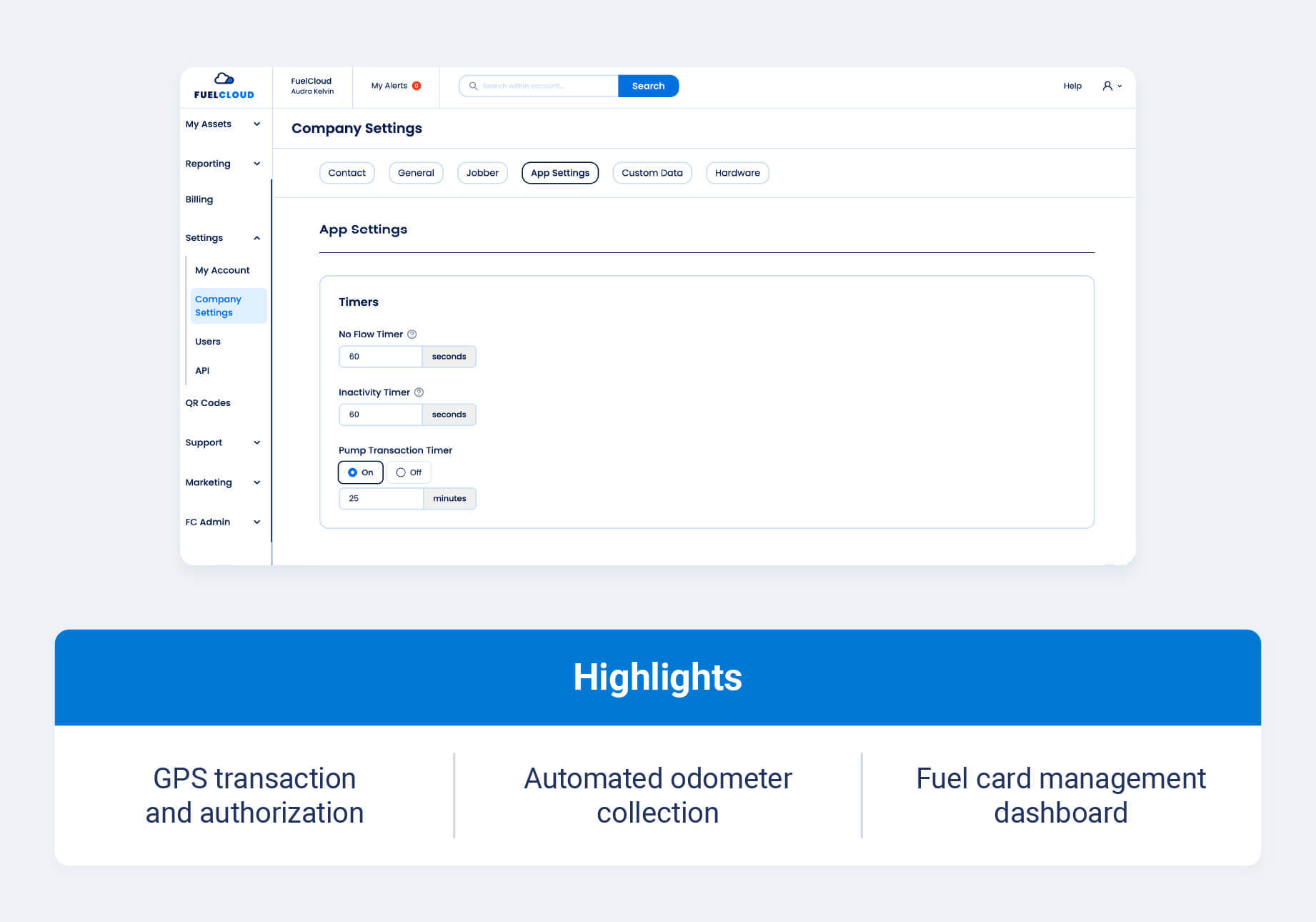
- GPS transaction authorization: Coast uses GPS data from integrated fleet platforms to authorize transactions only when the vehicle is physically present at the fueling location, reducing the risk of unauthorized purchases.
- Flexible expense controls: Managers can set granular rules for non-fuel purchases, blocking convenience store transactions and limited amounts by driver. This allows for precise control over how the card is used at each pump.
- Automated odometer collection: Coast captures odometer readings at each fuel-up, pulling the mileage data needed to calculate fuel-economy trends — no driver input required.
- Fuel card management dashboard: A centralized dashboard provides managers with a clear view of transactions, spending trends and real-time anomalies and allows them to adjust individual cards with a single click.
5. Samsara
Samsara connects vehicles, equipment, sites and drivers on a single interface, acting as a comprehensive fleet fuel management tool. Its fuel management abilities connect with its telematics offering, including GPS tracking, ELD compliance, driver safety and maintenance, which is why it is a strong choice for fleets that want an integrated solution.
.jpg)
Samsara's fuel tracking tools pull data from both GPS telematics and fuel card integrations. This gives managers visibility into consumption patterns, idle time and driver behavior on a single dashboard. AI-powered alerts notify managers in real time of risky driving behavior that could hurt fuel economy.
Key features
- Fuel usage reporting: Samsara logs fuel level, amount used, estimated cost, runtime and idle time for every vehicle. Reports can cover any custom time period, making it easy to identify patterns and create targeted coaching conversations.
- Fuel card integrations: Samsara integrates with major providers, including WEX, Fuelman, Comdata, EFS and Fleet One (US), with built-in detection tools to flag potential unauthorized use.
- Real-time speeding and idle alerts: Managers receive SMS and email alerts for speeding and idle events, enabling them to act on fuel waste before it accumulates.
- IFTA compliance: Samsara automates International Fuel Tax Agreement (IFTA) mileage and fuel import reporting, reducing administrative burden for quarterly reporting in multi-state operations.
6. Verizon Connect
Verizon Connect is a GPS fleet management platform backed by Verizon's network infrastructure. Its Reveal platform is well-suited to midsize fleets that want comprehensive reporting, compliance management and fuel visibility in a single solution.
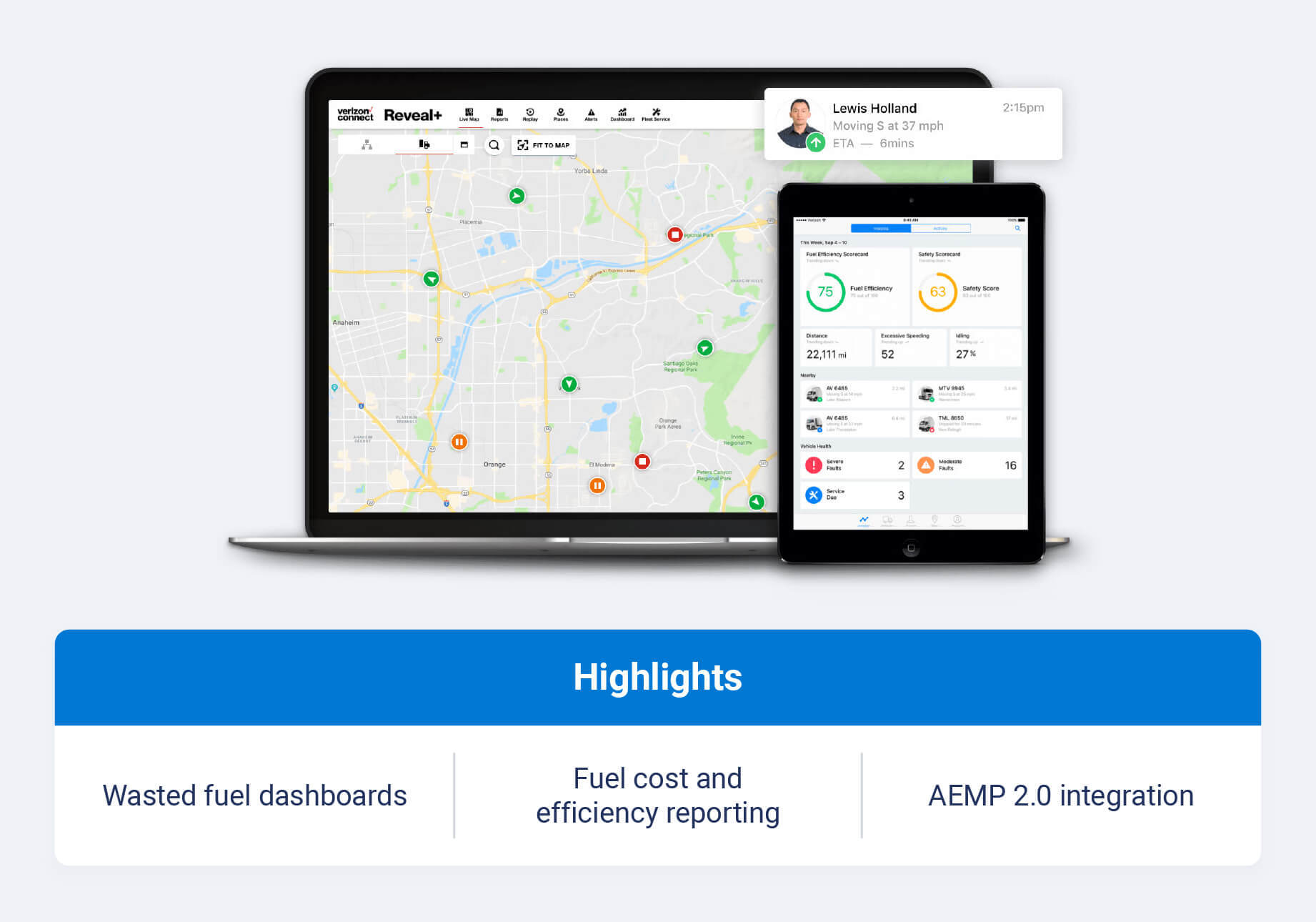
Useful features include Verizon Connect's ability to pull fuel consumption data from GPS telematics, giving managers visibility into idle time, wasted fuel costs and vehicle health. It also offers customizable dashboards that make it easy to track fuel performance across the entire fleet or drill down into individual vehicles.
Key features
- Wasted fuel dashboards: Dedicated dashboards display fuel wasted via idling above a set threshold, broken down by vehicle. This makes it easy to quantify the business case for driver coaching.
- Fuel cost and efficiency reporting: Managers can make custom reports on fuel consumption, cost per mile and vehicle diagnostics. Reports can be scheduled and sent automatically, reducing manual report time.
- AEMP 2.0 integration: Verizon Connect supports AEMP 2.0 telematics standards, allowing for richer data sharing across mixed fleets and more detailed fuel usage and machine health data for both vehicles and heavy equipment.
- Marketplace integrations: The Verizon Connect Marketplace includes 65+ apps across fuel management, compliance and EV tracking, so fleets can extend their platform as they grow.
7. Motive
Motive (formerly KeepTruckin) is made of the truck industry, with a strong focus on ELD compliance, driver safety and spend management. Its integrated fleet card, the Motive Card, automatically feeds fuel transaction data into the platform, eliminating manual reconciliation. Its approach to AI in fleet management is a strong draw for many organizations.
.jpg)
For long-haul carriers managing fuel spend across many drivers, Motive's combination of telematics, AI dashcams and an integrated fuel card creates a connected system. IFTA reporting becomes nearly automatic thanks to the ability to connect fuel transactions with driver, vehicle, location and time.
Key features
- Motive Card (integrated fuel card): A Mastercard-based fleet card that sends transaction data directly to the platform. Managers can monitor spend by cardholder, amount, date and vehicle type, and require driver authentication per transaction to reduce unauthorized use.
- AI-powered fuel efficiency coaching: Motive's AI driver platform analyzes idle time, over-RPM events and harsh braking to make fuel efficiency opportunities easy to identify.
- IFTA reporting automation: Fuel receipts added via the driver app feed directly into IFTA calculations, reducing the hours spent on quarterly compliance filing.
- Driver behavior monitoring: AI dashcams detect distracted driving, hard braking and speeding in real time, with in-cab alerts delivered to the driver in the moment, making for effective, behavior-changing coaching.
8. Quartix
Quartix is a straightforward GPS vehicle tracking platform. It focuses on live tracking, driver behavior and fuel reporting and is designed for small to midsize fleets of less than 50 vehicles.
.jpg)
It is the ideal solution for those who want a reliable fuel management software without enterprise-level complexity. Quartix does not offer its own fuel card or deep engine diagnostics, but it provides solid fuel consumption monitoring, IFTA tax reporting tools and driver behavior scoring.
Key features
- Fuel usage monitoring: Quartrix logs actual fuel consumption and calculates average fuel economy, with alerts for anomalies that could indicate inefficient driving or unauthorized usage.
- IFTA fuel tax reporting: The system calculates average fuel consumption, tracks miles driven within each IFTA jurisdiction, and generates the reports needed for quarterly fuel tax submissions.
- Driver behavior scoring: Quartrix scores drivers based on speed, acceleration, braking, cornering and idling, with daily briefing and league tables that make it easy to identify coaching opportunities.
- Custom reporting: Managers can build custom reports with 100 parameters, including mileage, driving hours, fuel usage and idling time.
Benefits of fleet fuel management systems
Deploying a truck fleet fuel management system delivers benefits that go well past basic cost tracking, including:
- Reduced fuel costs: Tracking consumption at the vehicle and driver levels reveals the specific behaviors and routes that drive inefficiency, enabling targeted coaching and route optimization.
- Unauthorized fuel use prevention: Systems that cross-reference GPS location with card transactions make it hard to hide unauthorized purchases.
- Improved driving behavior: Idling, speeding and aggressive acceleration are some of the biggest contributors to poor fuel usage. Improving visibility into these habits makes coaching targeted and trackable.
- Simplified IFTA compliance: For fleets operating across multiple states, the International Fuel Tax Agreement (IFTA) requires detailed records of fuel purchases and miles driven in each jurisdiction. Automated reporting eliminates hours of manual work and improves accuracy.
- Lower maintenance costs: A sudden drop in fuel economy can signal a need for maintenance, helping you act early on engine issues or lower tire pressure.
- Reduced emissions: Cutting idle time and optimizing routes directly lowers the fleet's carbon footprint.
- Clear picture of total operating costs: When fuel data is combined with maintenance and depreciation, fleet managers can create accurate cost-per-mile figures, enabling them to make smarter, more strategic budgeting and vehicle replacement decisions.
How to choose the right fuel management system for your fleet
When choosing a fuel management system for your fleet, the size and needs of your organization are important considerations. While no two fuel management systems are the same, they should all include some of these features:
- Automated IFTA reporting: If your fleet crosses state lines, look for a system that automatically calculates fuel taxes by jurisdiction with GPS mileage data. This massively reduces audit risk and time spent on manual calculations.
- Fuel theft and fraud alerts: Effective systems flag tank capacity mismatches, purchases that exceed a vehicle's capacity, and location discrepancies.
- Driver behavior monitoring: Idling, speeding, and harsh braking are the most common behaviors contributing to increased fuel consumption. A system that tracks these at the individual driver level makes coaching far more targeted and effective.
- Fleet size considerations: Small fleets of one to 20 vehicles often benefit from straightforward, affordable options like Quartrix or Fleetio that do not require expensive setup. Enterprise fleets with 100+ vehicles usually need deeper diagnostics, open platform integrations and the type of global support tools like Geotab provides.
- Support and hidden fees: Ask about implementation costs, hardware maintenance fees and what level of support is included in the base price. Some providers charge extra for 24/7 support or advanced reporting features, while others might include them by default.
Optimize your fleet’s fuel efficiency with the right system
Driver-related costs are a top concern for 85% of truck drivers, causing many fleets to look for efficiency solutions such as switching to hybrid vehicles. Fuel management systems are another useful solution for increasing fleet efficiency while reducing fuel costs. Use this guide to find the best fit for your fleet.
Ready to see what Geotab can do for your fuel costs? Explore fleet fuel management solutions or request a demo to get started.
Subscribe to get industry tips and insights
Frequently Asked Questions
A fuel card is a payment method. It captures transaction data at the pump, like location, time and amount. A fuel management system is the analytical layer that interprets that data alongside telematics to identify savings, flag unauthorized use and generate compliance reports. In other words, the card is the data source, while the system makes that data actionable.
Yes. Optimizing routes, reducing idle time and coaching drivers toward more fuel-effective habits directly lowers a fleet's carbon footprint. Many platforms now also include emissions-reporting features that help fleets track progress toward sustainability goals and meet corporate or regulatory reporting requirements.
It depends on the system. Telematics platforms like Geotab and Samsara use a small device that connects to the vehicle's OBD-II or diagnostic port, making installation simple for most commercial fleets. Fuel-card-only solutions like Coast require no installation at all. Hardwired solutions require a more permanent setup.
Fuel economy is one of the earliest indicators of a vehicle problem. A sudden drop in miles per gallon can indicate low tire pressure, a clogged fuel filter or an engine fault, all before a dashboard light appears. When fuel tracking is integrated with maintenance alerts, managers can catch these issues early and reduce costly breakdowns.
The Geotab Team write about company news.
Table of Contents
- What is a fleet fuel management system?
- 8 best fleet fuel management systems overview
- 1. Geotab
- 2. Fleetio
- 3. Fill-Rite
- 4. Coast
- 5. Samsara
- 6. Verizon Connect
- 7. Motive
- 8. Quartix
- Benefits of fleet fuel management systems
- How to choose the right fuel management system for your fleet
- Optimize your fleet’s fuel efficiency with the right system
Subscribe to get industry tips and insights
Related posts

Top seven best fleet fuel cards: How to choose the right one for your business?
October 1, 2026
7 minute read


Fleet maintenance software for small business: 8 top tools and guide
September 29, 2026
7 minute read

The failure you didn't predict is more than just a repair bill
August 18, 2026
1 minute read