What is remote fleet management? Benefits, features and top platforms
Remote fleet management gives you a clearer view of your vehicles, drivers and operations without being on-site. Learn how modern fleet tools improve efficiency and oversight across distributed fleets.

By Geotab Team
Aug 20, 2026

Key Insights
- Remote fleet management helps you monitor vehicles, drivers and assets from anywhere using telematics and real-time data.
- Fleet monitoring solutions improve visibility across distributed fleets and reduce inefficiencies caused by delayed information.
- Remote fleet management systems support proactive maintenance, safety oversight and more consistent compliance.
- Choosing the right platform depends on fleet size and how well it integrates with existing operations.
If you manage a fleet today, you know how challenging it has become to keep everything running smoothly. Vehicles are spread out across locations, drivers are constantly on the move and there is never enough time to catch every detail. Remote fleet management can make your life easier by giving you real-time visibility into your entire operation.
Leveraging features like remote diagnostics, you can spot issues early, save on fuel, prevent downtime and make smarter decisions from anywhere.
This guide explains what remote fleet management is, how it works and why many fleets rely on it today. We will also walk through the features that make this technology valuable and how leading operations use it to stay efficient and competitive, so you can evaluate whether it is the right fit for your fleet.
What is remote fleet management?
Remote fleet management is the practice of overseeing vehicles, drivers and assets from a central system without being physically on-site. It relies on connected vehicle technology to collect and share data in real time, allowing fleet managers to understand what is happening across their operation at any moment. As part of modern fleet monitoring solutions, it supports day-to-day decision-making by replacing manual check-ins with data-driven visibility.
Remote fleet management uses telematics devices, GPS tracking, sensors and vehicle health data to report on location, usage and performance. This approach is especially important for fleets with distributed teams operating across multiple locations, where in-person oversight is not practical. Industries such as transportation, construction and public sector fleets commonly use remote fleet management to maintain consistent oversight at scale.
How remote fleet management works
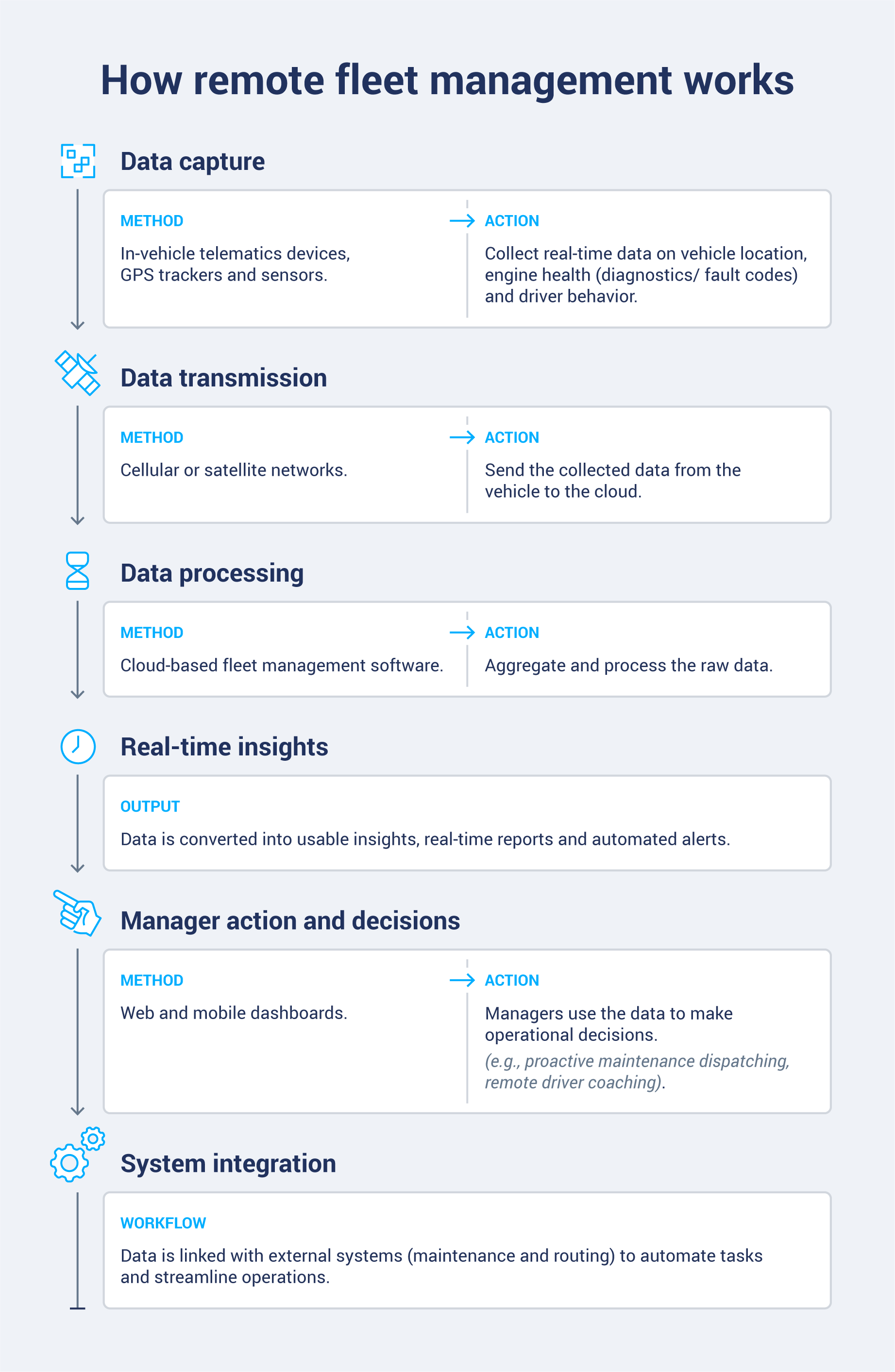
Remote fleet management connects vehicles and mobile assets to a centralized software platform that you can access from anywhere. In practice, fleet tracking systems rely on in-vehicle hardware to collect data, cloud infrastructure to process it and dashboards to turn it into actionable insights.
Here’s how the remote fleet management process works:
- Data collection begins with the vehicle, where telematics devices capture location and vehicle health information.
- The data moves through cellular networks to cloud-based fleet management software.
- From there, it appears in web and mobile dashboards as real-time reports.
- Managers can view the reports, receive alerts when issues occur and link fleet data with maintenance and routing systems to support day-to-day decisions.
Core technologies that enable remote fleet management
Remote fleet management relies on connected hardware and software working together:
- Telematics devices installed in vehicles collect data directly from the engine and other onboard systems.
- GPS tracking provides continuous location updates, which support routing and visibility across dispersed fleets.
- Onboard diagnostics, such as OBD-II data and engine fault codes, help fleet managers understand vehicle health and spot issues before they lead to downtime.
Additional sensors extend visibility beyond basic vehicle data:
- Fuel sensors monitor consumption.
- Temperature sensors support fleets that transport sensitive goods.
- Equipment sensors can track the status of powered assets.
Cellular connectivity transmits this information to cloud-based dashboards, where fleet managers can view the information and make data-driven decisions.
Example use cases
Remote fleet management supports a wide range of real-world use cases across industries. It helps fleet teams, particularly those involved in large operations like oil and gas fleet management, maintain visibility, address issues earlier and coordinate work without relying on in-person oversight. Below are common scenarios where remote fleet management can help.
- Monitoring dispersed fleets: A regional courier operates vehicles across three neighboring states and sees one city falling behind while another finishes early. The fleet manager uses live visibility to reassign nearby drivers and complete remaining stops.
- Improving uptime via remote diagnostics: A long-haul truck triggers an engine fault code midway through a cross-country run. The maintenance team reviews the diagnostics, directs the driver to a repair shop 50 miles ahead and preps the tech with the likely parts before the truck arrives.
- Coaching drivers remotely: An airport shuttle driver starts exhibiting frequent harsh braking and speeding events. The manager reviews trip data, holds a quick virtual coaching session the same day and sees the driver’s incident rate drop on the next shift.
- Managing mixed-use or seasonal fleets: A landscaping business runs a core fleet but adds rentals and trailers during the summer. With remote visibility, the owner tracks actual usage, reallocates underused units to busy crews and returns surplus vehicles early to cut costs.
- Supporting remote/field technicians: A utility company sends technicians to a wide rural area to address outages during a storm. Dispatch identifies the closest technician with the right equipment, reroutes the best technician to critical sites and pushes job details to their tablets to speed up restoration.
Key features of remote fleet management software
Remote fleet management software brings together connected vehicle data and cloud-based tools to provide a clear, centralized view of fleet activity without the need for constant in-person oversight.
Real-time GPS tracking and geofencing
Real-time GPS tracking shows where vehicles operate in real time. Geofencing adds context by creating virtual boundaries around facilities or service areas and triggers alerts when vehicles enter or leave those locations. Together, these tools help fleet managers improve dispatch accuracy, monitor route adherence and identify unauthorized vehicle use.
Remote diagnostics and vehicle health monitoring
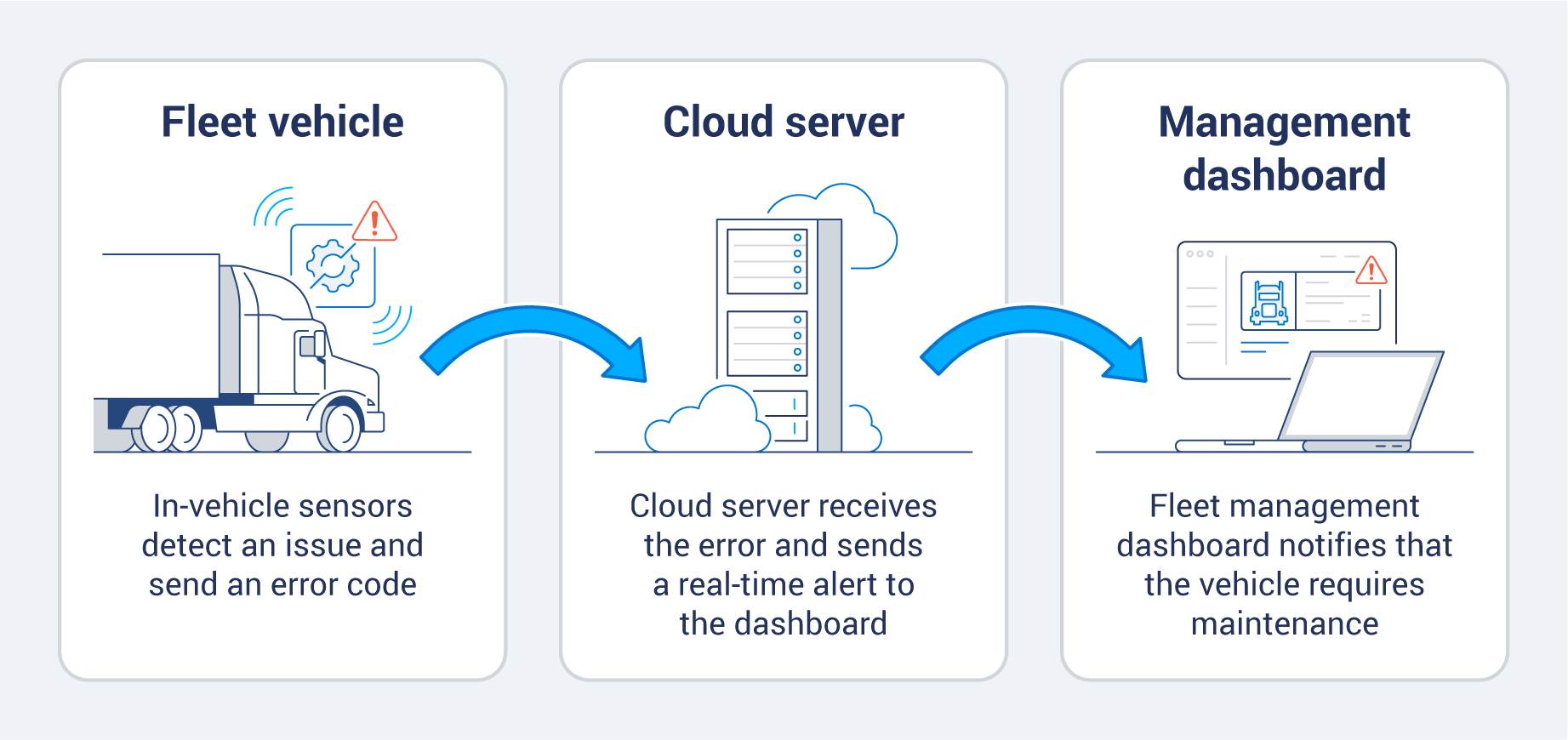
Remote diagnostics and vehicle health monitoring give fleet managers early insight into mechanical issues without inspecting vehicles in person. Telematics data surfaces fault codes, performance indicators and system alerts as they occur, allowing teams to prioritize maintenance and plan service more effectively.
Driver behavior and safety insights
Driver behavior and safety insights help fleet managers understand how vehicles are driven during daily operations. Telematics data highlights patterns such as speeding, harsh braking or extended idling, which can increase risk and operating costs. Managers can review this information remotely, provide targeted coaching and strengthen their fleet driver safety program.
Maintenance scheduling and automated alerts
Maintenance scheduling and automated alerts enable fleet teams to stay ahead of service needs without relying on manual tracking. The software uses mileage, engine hours and diagnostic data to trigger maintenance reminders at the right time. This approach supports more consistent servicing and helps extend vehicle life.
Asset and equipment tracking
Asset and equipment tracking extends beyond vehicles to include telematics for trailers, tools and powered equipment. GPS tracking and sensor data show fleet managers where assets are located and when they’re in use. This visibility helps teams reduce losses and plan work more efficiently across multiple sites.
Benefits of remote fleet management
The remote fleet management market continues to grow as organizations, particularly those focused on global fleet management, seek more efficient ways to manage distributed vehicles. The following benefits show how improved visibility and automation lead to measurable gains.
Reduced downtime and fewer unexpected breakdowns
Remote fleet management helps reduce downtime by giving fleet teams earlier visibility into vehicle issues. Diagnostic data and automated alerts highlight potential problems before they escalate, allowing maintenance teams to plan service proactively instead of reacting to roadside events. This lowers the likelihood of vehicles failing unexpectedly during routes or at job sites.
Lower operating costs and improved fuel efficiency
Remote fleet management reduces operating costs and boosts fuel efficiency by providing actionable insights into driver habits and vehicle performance. Telematics data flags wasteful idling, speeding and inefficient routing, while proactive maintenance helps prevent breakdowns and reduce engine wear.
Better visibility across distributed teams
Remote fleet management improves vehicle visibility across locations through a centralized dashboard. Real-time GPS data, geofencing alerts and automated status updates help teams see where vehicles operate, track active jobs and understand how resources are used throughout the day.
Access to real-time data can eliminate communication gaps between office staff and field teams, including drivers or technicians. With access to the same up-to-date information, teams can coordinate more effectively and respond to issues faster. Tools like driver scorecards and event reporting also create clearer accountability by highlighting performance issues and delays.
More consistent compliance and documentation
Remote fleet management standardizes compliance processes by capturing required regulatory data, such as electronic logging device (ELD) hours-of-service (HOS) logging, Driver Vehicle Inspection Report (DVIR) data and International Fuel Tax Agreement (IFTA) reporting.
This reduces reliance on manual paperwork and minimizes gaps due to missed entries or delayed reporting. Real-time, centralized records also help teams decrease violations, fines and disputes while making audits for the Department of Transportation (DOT) or Occupational Safety and Health Administration (OSHA) easier to manage.
Higher fleet productivity through automation
Remote fleet management improves fleet productivity through automation by replacing manual tasks with digital workflows. Automated data capture and alerts reduce the need for manual updates and follow-ups, allowing fleet teams to focus on planning and problem-solving instead of administrative work.
| Use case: A fleet manager who files quarterly fuel tax returns can use Geotab’s automated IFTA reporting instead of compiling mileage and fuel records manually. The telematics system automatically captures odometer values, jurisdictional miles and fuel card data, then generates the report in MyGeotab™ with just a few clicks. This reduces the time spent on paperwork and improves accuracy. |
Remote fleet management systems to consider
Choosing a remote fleet management system depends on fleet size and the level of insight you need. Some platforms focus on maintenance or compliance, while others provide broader visibility across drivers and vehicles and include top-rated asset trackers.
| Platform | Highlights |
| Geotab |
|
| Fleetio |
|
| Motive |
|
| Samsara |
|
Geotab
Geotab delivers telematics for fleets that need detailed vehicle data and flexibility at scale. The platform provides insights across GPS tracking, vehicle health and driver behavior, allowing you to make more informed operational decisions.
Its open platform ecosystem comes with an extensive marketplace of 500+ third-party add-ons, so you can fully customize the solution to your specific needs, whether you run a small or large fleet.
Fleetio
Fleetio focuses on maintenance management and lifecycle cost control. It centralizes inspections, work orders and service history while integrating with a wide range of GPS providers. This makes Fleetio an option for fleets looking to reduce breakdowns and better understand the total cost of ownership.
Motive
Motive offers 360° driver visibility, real-time risk alerts and tools spanning from fleet telematics to spend management. Motive can help simplify regulatory reporting and improve driver safety through automated monitoring and coaching.
Samsara
Samsara allows for real-time visibility and operational control through an integrated cloud platform that combines GPS tracking, vehicle diagnostics and compliance tools. Samsara can work well for mid- to large-sized fleets that require connected operations across assets.
Set your fleet up for smarter remote management with Geotab
Remote fleet management works best when you pair clear operational goals with the right technology. By choosing a platform that supports visibility, diagnostics and automation, you can reduce manual work and make more informed decisions across your fleet. Explore how Geotab’s vehicle telematics solutions support smarter fleet operations today.
.png)
Subscribe to get industry tips and insights
Frequently Asked Questions
Geotab is a strong option for small fleets because its open ecosystem allows teams to start with basic functionality and expand their system as the fleet grows through third-party apps and custom workflows.
Key telematics features to monitor remotely include vehicle location, engine health and driver behavior. Fleet managers also often track GPS position, diagnostic trouble codes (DTCs), mileage and fuel usage to support maintenance planning.
Fleets using GPS tracking and related fleet technology report fuel cost reductions of around 12% and maintenance cost reductions of about 15%, on average. Many also see accident-related costs drop by nearly 20%, driven by better visibility, proactive maintenance and safer driving behaviors.
The average fleet manager salary in the United States falls between $75,000 and $90,000. Higher-paying regions like California may see salaries exceed $100,000.
The four pillars of fleet success are stakeholder satisfaction, intentional culture, resource efficiency and risk management. These pillars are part of a specific framework popularized by RTA: The Fleet Success Company, its CEO, Josh Turley, and Steve Saltzgiver, the former VP of Fleet Operations at Coca-Cola.
The Geotab Team write about company news.
Table of Contents
Subscribe to get industry tips and insights
Related posts

How private haulers can help prepare their fleets for new waste management contracts
October 23, 2026
4 minute read

Top seven best fleet fuel cards: How to choose the right one for your business?
October 1, 2026
7 minute read
Four ways to transform garbage fleet efficiency with data and video tools
September 28, 2026
4 minute read
Why the OEM versus device-level telematics debate misses the point for mixed-fleet operators
September 25, 2026
2 minute read