Heavy equipment telematics to maximize fleet efficiency
Heavy equipment telematics turns disconnected machines into a single connected fleet, giving managers the visibility to cut fuel waste, prevent theft and catch maintenance issues before they become breakdowns.

By Geotab Team
Aug 24, 2026
Key Insights
- Heavy equipment telematics combines GPS tracking, engine diagnostics and wireless data transmission to give fleet managers real-time visibility into machine location, health and use.
- Engine hours, fault codes and idle time replace guesswork with data that managers can act on before a breakdown happens.
- Geofencing, remote immobilization and access control help fleets prevent theft and unauthorized use of high-value equipment.
- The right telematics system connects fleet data to the maintenance, payroll and project management software already in use across the business.
Idle heavy equipment can cost a construction fleet an estimated 25% of its annual operating budget, and that does not even include added wear and productivity. Heavy equipment telematics gives fleet managers the visibility to catch that waste before it adds up. Telematics uses GPS tracking to monitor machinery in real-time, showing where it is and how it is running.
This guide is written for fleet managers and construction business owners looking to cut costs, prevent theft and automate maintenance. It covers what heavy equipment telematics tracks, how it varies by machine type and what to look for in a provider.
What is heavy equipment telematics?
Heavy equipment telematics is the combination of location tracking, machine health monitoring and wireless data transfer used to monitor construction and industrial equipment. At a high level, a telematics system pairs three main components:
- GPS tracking: Shows where a machine is at any moment
- Onboard diagnostics: Reads engine hours and machine health directly from the equipment computer
- Wireless data transmission: Sends data over cellular or satellite networks to a fleet management platform
Basic GPS tracking only tells managers where the machine is. Full telematics goes deeper, reporting on machine behavior and health, including engine faults, fuel use and idle time.
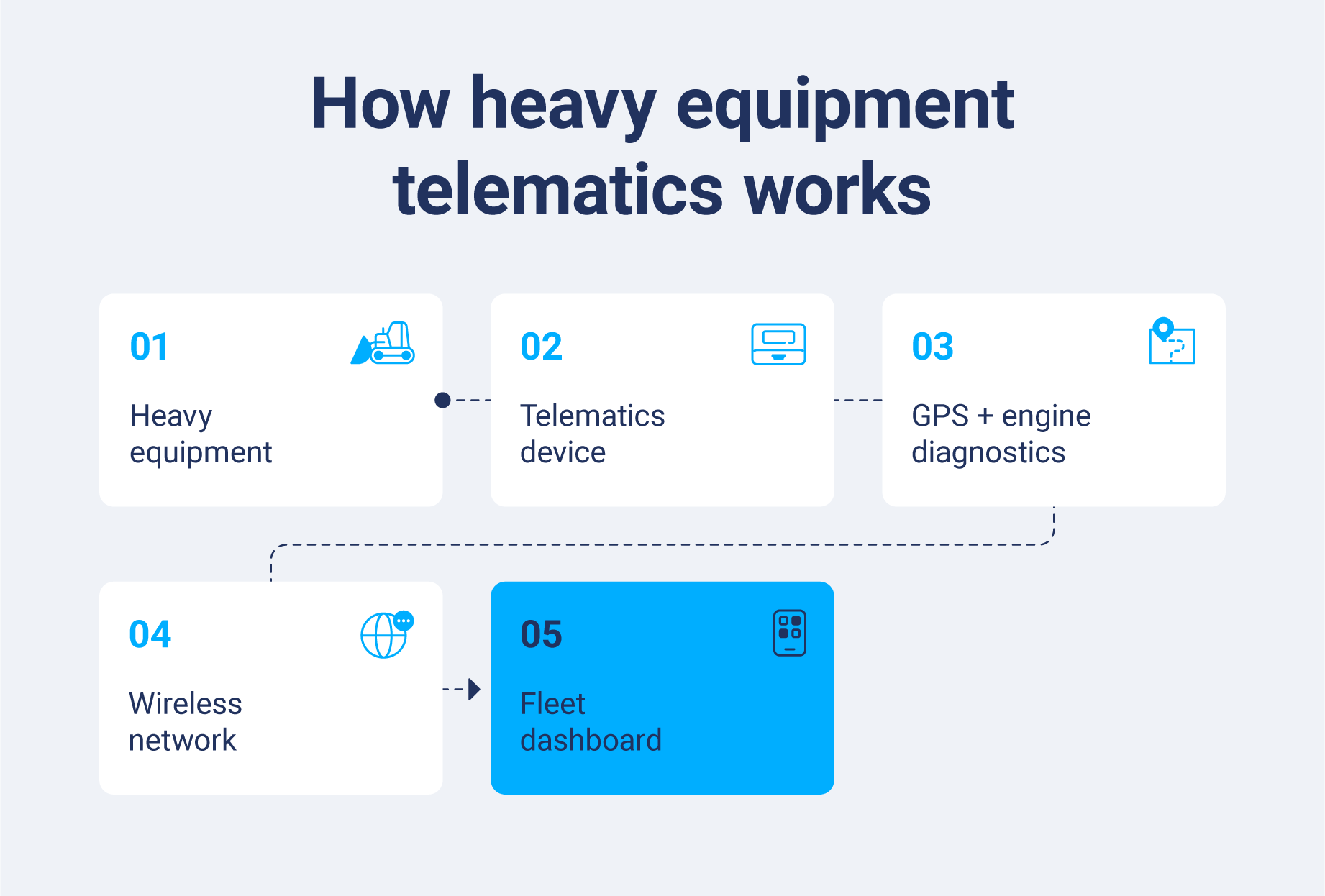
Telematics devices are typically hardwired into a machine's controller area network (CAN bus), the internal network that carries data between a machine's electronic control units or connected through an on-board diagnostics (OBD) port. Either connection lets the device read live engine data as it is generated.
Heavy equipment telematics by machine type
How construction equipment telematics works varies by machine. Below is a practical breakdown of what a system typically monitors for each category.
Excavators
For excavators, telematics tracks engine hours, hydraulic system health, bucket cycle counts and idle time. Utilization data shows if an excavator sits idle between tasks or if workers are using it. Fault code monitoring flags early warning signs of hydraulic pressure problems, helping managers avoid expensive repairs down the line.
Dump trucks
Dump trucks generate route, load cycle, fuel consumption and driver behavior data like speeding and harsh braking. Payload data paired with route data helps managers optimize hauling operations. Driver behavior monitoring is especially important here for safety and liability because dump trucks travel on public roads as part of heavy equipment transport.
Bulldozers and graders
Telematics on bulldozers and graders monitor engine load, blade hours and fuel burn. This data lets managers schedule maintenance around actual use instead of a fixed calendar. GPS tracking also confirms these machines stay within their designated site boundaries.
Cranes and lifting equipment
For cranes and other lifting equipment, telematics focuses on load monitoring, boom position and safety compliance. Real-time monitoring flags overload conditions or out-of-range operation as they happen, and telematics data can automate the compliance documentation that regulators require.
Mobile drilling rigs
Telematics on mobile drilling rigs tracks engine performance, drill cycle data and fuel consumption. Remote monitoring is especially valuable here, since rigs often work in locations where manual inspection is difficult or impractical.
Why heavy equipment fleets need telematics
The case for equipment telematics comes down to problems fleet managers face daily, not abstract benefits.
Equipment theft and unauthorized use
Telematics enables geofencing alerts, ignition monitoring and real-time location tracking that can flag unauthorized movement as it happens. Recovery rates for tracked equipment are meaningfully higher than for untracked machines, and since a single construction theft averages at $6,000, that is a lot of money saved.
Low visibility into equipment utilization
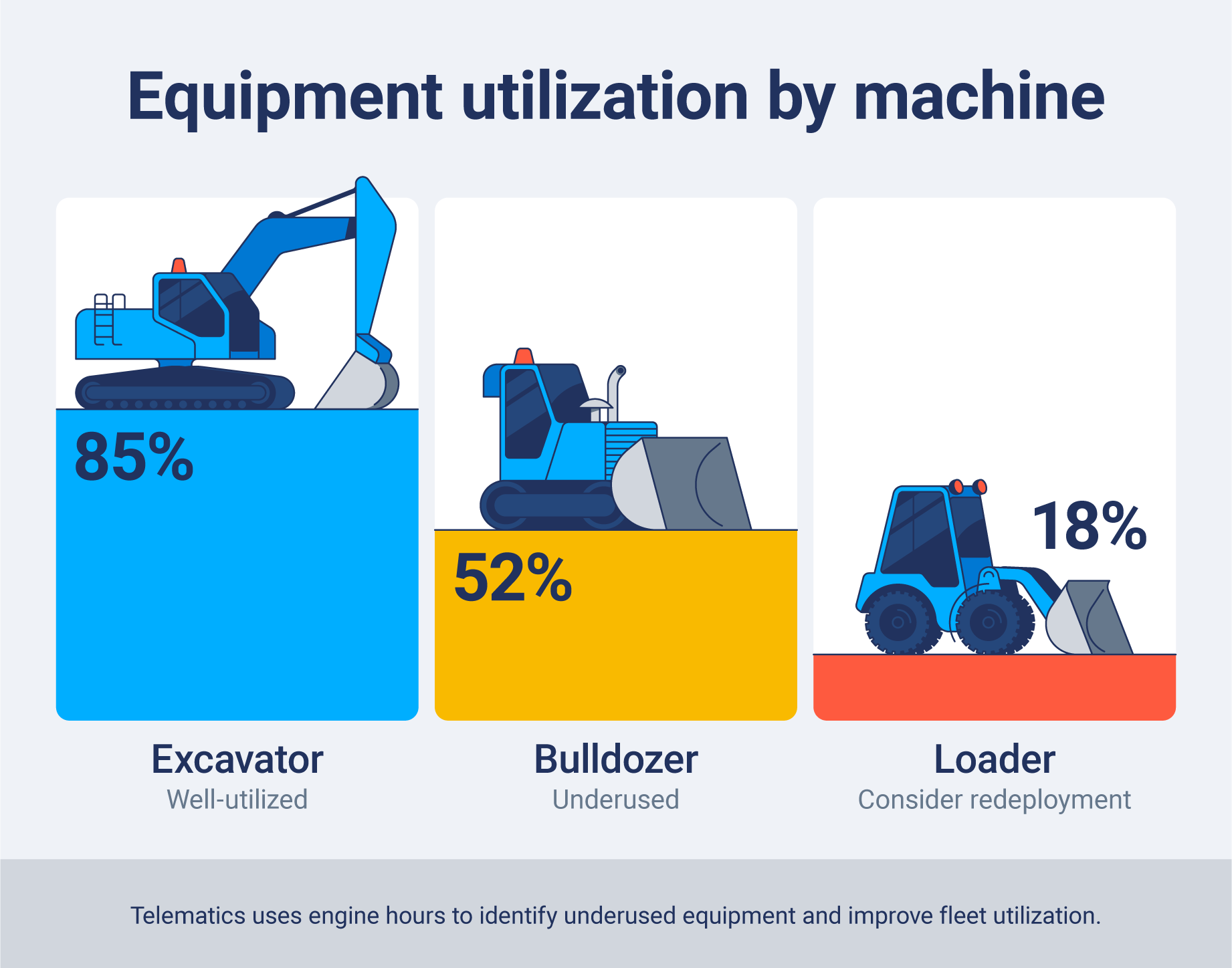
Many fleet managers cannot say with confidence which machines are working, idling or sitting unused across multiple sites. Utilization data, including engine hours, idle time and active work cycles, helps managers right-size fleets and avoid costly and unnecessary rentals.
A manager who discovers a machine has been sitting idle 40% of its operating hours can adjust scheduling and cut fuel costs immediately. Construction equipment monitoring closes this gap by making that utilization data easily accessible in one dashboard.
Unplanned maintenance and breakdowns
Reactive maintenance leads to costly downtime and missed project deadlines. Telematics monitors engine hours, fault codes and fluid levels to flag maintenance needs before a failure occurs.
Predictive maintenance based on actual engine hours is more accurate than a calendar-based schedule, since two machines with the same purchase date rarely see the same use.
Fuel theft and waste
Fuel is a top variable cost, and manual tracking makes theft or waste hard to detect. Telematics correlates fuel consumption with machine activity to flag spikes that do not match recorded work hours. Idle time reduction is a direct lever for fuel savings, and even a 10% reduction can produce measurable results across a fleet.
Managing equipment across multiple job sites
Tracking dozens of machines spread across several active sites without centralized visibility is an endless challenge. Telematics in construction gives dispatchers a single dashboard view of every asset and its current status, cutting down on the manual check-ins and phone calls to site supervisors that otherwise eat up a day.
Key capabilities of a heavy equipment telematics system
Construction equipment monitoring depends on a specific set of features working together. Here is what to look for in a system.
Real-time GPS tracking and geofencing
Real-time GPS tracking for construction equipment shows the exact location of every machine on a map, with update intervals a manager can configure. Geofencing adds virtual boundaries that trigger an alert when a machine enters or exits a job site without authorization and can confirm machines are used only in approved locations during set hours.
Engine hours and utilization monitoring
Engine hours, not odometer miles, are the standard measure of use for heavy equipment. Telematics logs hours automatically to calculate utilization rates per machine, giving managers the data to identify underused assets for redeployment or sale.
Fault code monitoring and maintenance alerts
Telematics reads diagnostic trouble codes directly from a machine's onboard computer, so managers can act on a warning, such as a hydraulic pressure issue, before it causes a mid-job failure. Maintenance reminders and maintenance reports for heavy equipment can be automated based on engine hours or specific fault thresholds.
Fuel monitoring and idle time tracking
Telematics tracks fuel consumption in real time and logs idle time separately from productive work. Idle time reports identify which operators or sites have excessive idling habits, and some systems can trigger in-cab alerts or automatic engine shutoffs after a set idle period.
Remote access control and immobilization
Some systems allow managers to remotely disable a machine's ignition for theft recovery or curfew enforcement. Access control features like PIN codes or key fobs log which operator used a machine and when, creating an audit trail for security and accountability.
Job site safety monitoring
Telematics supports safety by tracking machine speed, harsh operation events and proximity to restricted zones. Operator behavior data, including sudden acceleration and hard braking, identifies training needs before an incident occurs, and systems can alert supervisors if a machine enters a pedestrian-only zone.
How to choose a heavy equipment telematics provider
Choosing a provider comes down to matching telematics software to your fleet's problems. Read on to learn how to find the best equipment tracking software for your fleet.
Define what you need the system to do
Start by listing the top problems your fleet faces, such as theft or maintenance. Match those problems to system capabilities. Whether you manage 10 machines at one location or hundreds of assets across multiple job sites, the system should continue to perform as your fleet grows.
Hardware compatibility and installation
Hardware must be compatible with specific makes and models in the fleet. Hardwired CAN bus devices capture more data, while plug-in OBD devices generally offer a simpler installation. Ruggedized hardware rated for dust, vibration and temperature extremes is essential on a job site.
Data coverage and connectivity
Job sites often have poor cellular coverage, so ask if a system supports satellite connectivity or offline data buffering. Update frequency, real-time versus periodic, affects how useful an alert actually is.
Integration with existing software
Telematics software is most useful when it connects to the maintenance systems, payroll and project management tools already in use. Ask if a provider offers an application programming interface (API) or pre-built integration with common construction platforms.
Reporting and ease of use
A system is only as useful as its reports, so ask for a demo of the reporting interface. Good reporting means customizable dashboards, automated alerts and role-based access controls.
Support and implementation
Onboarding support matters. Ask if the provider handles installation directly or through third parties, since ongoing support quality is a key differentiator when issues affect active job sites.
Leading heavy equipment telematics providers
The right provider depends on fleet size and machine types. Below is an overview of established construction equipment telematics providers, listed without ranking.
Geotab
Geotab is an open platform provider with broad compatibility across on-road and off-road vehicle and equipment types. Its strength lies in data depth, custom reporting and integration through an open API, making it a scalable option for large, mixed fleets that combine construction fleet management with over-the-road trucking.
Teletrac Navman
Teletrac Navman focuses on construction and fleet management, offering equipment tracking and compliance tools alongside reporting and driver behavior monitoring features.
Navixy
Navixy is a platform focused on construction fleet management, with strong utilization monitoring and geofencing. It works well for fleets that include cranes, excavators and drilling rigs.
Telenor Connexion
Telenor Connexion takes an Internet of Things (IoT)-based approach to heavy equipment tracking, with an emphasis on connectivity infrastructure for remote assets.
How Geotab helps manage heavy equipment with telematics
Geotab brings heavy equipment telematics into the same platform used to manage on-road fleets, so managers get a clear view of every asset tracked instead of several disconnected systems. A single vehicle tracking device or ruggedized equipment tracker feeds engine hours, fault codes, location and fuel data into reports made for construction operations.
If reducing downtime and fuel waste is your goal, request a demo to see how Geotab's solution can help you save.
Subscribe to get industry tips and insights
Frequently Asked Questions
A heavy equipment construction telematics system tracks location, engine hours, idle time, fuel consumption, fault codes and operator activity.
Telematics differs from basic GPS tracking because GPS shows where a machine is, while equipment telematics shows what it is doing and how it is performing.
Yes, telematics can work on older equipment without modern onboard computers by using basic GPS and hour meter devices, though it will provide more limited diagnostic data.
The cost of heavy equipment telematics typically includes a one-time hardware fee of over $50 to $250 per vehicle plus a monthly subscription, with return on investment generally built on fuel and maintenance savings over time.
Telematics data is safeguarded when a provider uses encrypted data transmission and role-based access, so it is worth asking a potential provider about certifications.
Installing telematics on a heavy equipment fleet can take a couple of hours per machine for hardwired devices, though this varies depending on equipment type and hardware configuration. Plug-in devices take less time. Most providers offer installation support to help fleets get started.
The Geotab Team write about company news.
Table of Contents
- What is heavy equipment telematics?
- Heavy equipment telematics by machine type
- Why heavy equipment fleets need telematics
- Key capabilities of a heavy equipment telematics system
- How to choose a heavy equipment telematics provider
- Leading heavy equipment telematics providers
- How Geotab helps manage heavy equipment with telematics
Subscribe to get industry tips and insights
Related posts

Unlocking more jobs per day: How smart dispatch management improves tech performance
October 13, 2026
3 minute read
Best construction fleet management software: Features, platforms and buying tips
September 9, 2026
7 minute read
Beyond location: How asset trackers measure equipment utilization
August 4, 2026
3 minute read
Construction fleet management software: What mixed fleets should look for
July 29, 2026
5 minute read

Best small fleet management software providers and how to choose one for your business
July 16, 2026
8 minute read