Beyond location: How asset trackers measure equipment utilization
Asset trackers do more than show location — they capture runtime and engine hours that reveal whether equipment is actually being used, not just assigned.

By Geotab Team
Aug 4, 2026
Key Insights
- Commercial assets are active an average of just 186 days a year, meaning most fleets are sitting on more idle equipment than they realize.
- In addition to location, Asset trackers can capture runtime, engine hours and ignition activity giving fleet managers a clearer picture of which equipment is actually working versus just assigned.
- Using utilization data to schedule maintenance means servicing equipment based on actual use, not fixed calendar intervals — which matters when two assets in the same class can have very different workloads.
Asset trackers are often viewed as location tools, but that is only one part of what they can do. For powered equipment, the right asset tracker can also capture utilization data – giving fleet managers a more reliable way to measure equipment use than periodic checks, second-hand updates from the field, or consumer devices that were not designed for commercial use.
Reviewing utilization data is already a core part of fleet management. Engine hours and odometer readings help determine what gets serviced or what gets dispatched. The same thinking can apply to assets such as generators and excavators, which can produce some similar types of signals.
To get started, you need the right hardware to capture the data and fleet asset tracking software to review it.
Why should you be using your asset tracker for more than just location data?
Knowing where an asset is does not always tell a fleet manager whether it is still serving a purpose. A compressor can be sitting exactly where it was assigned, but if it has not run in days or weeks, it may be taking up capacity that could be used on another job. In fact, a report from Geotab found that commercial assets are active an average of just 186 days a year, meaning that there are yards full of equipment that are usually doing less than it looks.
The utilization data you can capture from an asset tracker helps fleet managers separate assigned equipment from active equipment. Runtime, engine hours or ignition activity can show when an asset is working, sitting idle or no longer needed on-site. With that visibility, managers can redeploy underused assets before approving another rental or purchase.
This is where the asset tracker becomes more than a location tool. It gives fleet managers a way to spot underused equipment before the same problem repeats across multiple sites. Instead of holding extra assets as a precaution, teams can make allocation decisions with a clearer record of what is actually being used.
How can asset trackers improve maintenance scheduling?
Fleet asset tracking software helps schedule maintenance by showing how much an asset has actually been used. Instead of servicing every piece of equipment at the same fixed interval, fleets can use utilization data captured by the asset tracker to plan maintenance based on real-world operation.
The Association of Equipment Manufacturers makes the same point: preventive maintenance has long been driven by engine hours, and reading those hours remotely is what lets a manager service a machine at the right time instead of on a fixed date.
This is important because maintenance requirements can look very different across the same asset class. A transport trailer running continuous shifts may be nearing its next service interval, while another one in the same fleet may have barely moved since its last inspection. Operating on a fixed 90-day schedule treats both assets the same, even though one carries far more wear than the other.
An asset tracker makes that difference visible. With a clearer record of equipment activity, fleets can build a more accurate maintenance schedule and avoid spending money on service before it is needed.
How does fleet asset tracking software support usage-based billing?
Usage-based billing depends on having a verified record of asset activity. Fleet asset tracking software helps create that record by capturing how a powered asset was actually used, so invoices do not have to rely on a manual reading, estimate or customer-reported number.
An asset tracker can support usage-based billing by capturing signals such as:
- Engine hours that show how long powered equipment ran
- Runtime that supports hourly billing for assets such as generators or compressors
- Ignition activity that helps confirm when equipment was operating
With those records in place, fleets have a clearer basis for invoicing. That can reduce billing disputes, limit under-billing and help customers understand how usage-based charges were calculated.
Can an asset tracker capture utilization data from every asset?
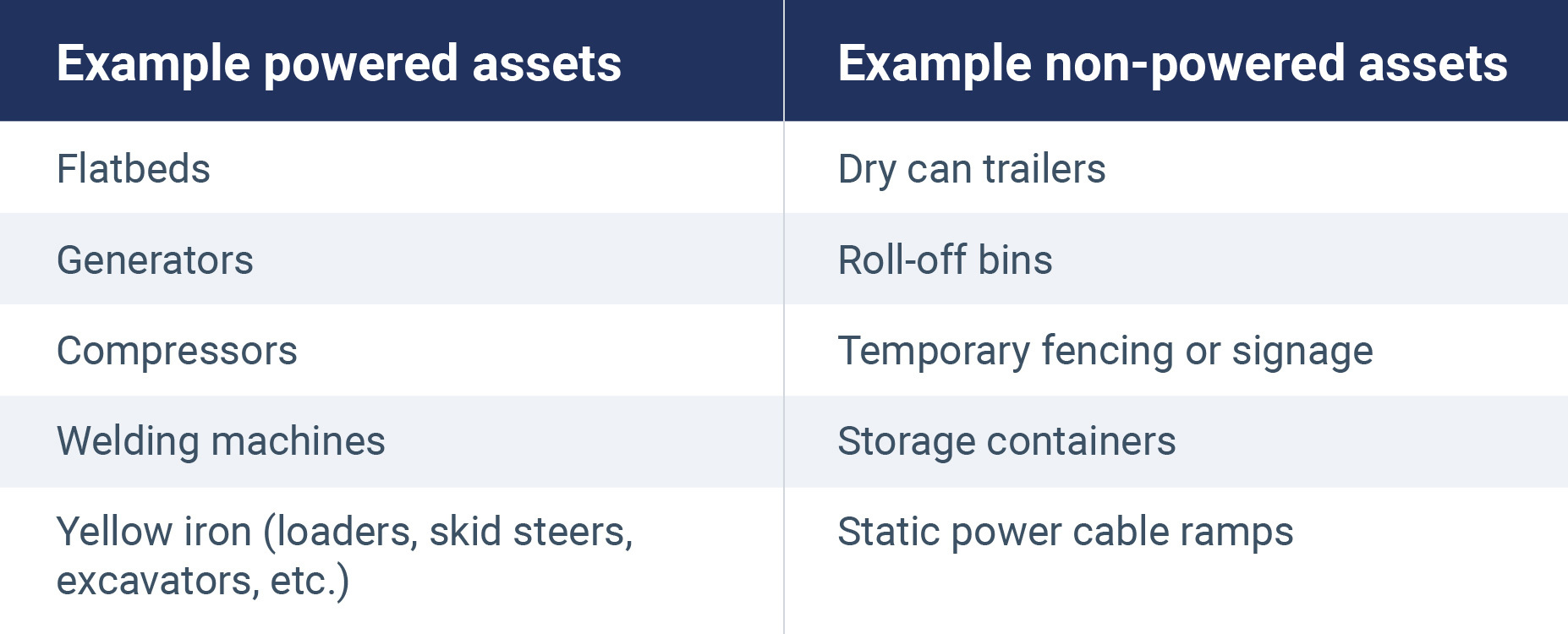
Not all asset types can produce the same data for an asset tracker to capture. Utilization data comes from powered equipment because the tracker reads the operating signals a machine generates while it runs. Depending on the asset, that data may include engine hours, idle time or trip history.
A tracker on a non-powered asset like a dry-van trailer or a roll-off bin will just report location and movement, since there is no engine to read.
How do you find the right asset tracker?
Finding the right tracker starts with understanding what each asset needs to report in your fleet asset tracking software. For assets where utilization matters, the tracker should capture activity signals that help fleet managers understand how the asset is being used in the field.
That is the difference between tracking an asset and managing it.
Geotab’s guide to choosing the right asset tracker walks through the questions fleet managers should ask before selecting a device. Download the guide to match the right tracker for each piece of equipment.
Subscribe to get industry tips and insights
Frequently Asked Questions
Fleet asset tracking software is a platform that collects location and operating data from trackers placed on your non-vehicle assets. It shows that data in one view, right alongside your trucks, turning scattered equipment into something a fleet manager can act on.
Yes, on powered assets. A tracker wired into a machine's power source can capture utilization data like engine hours, ignition state and run time. This makes usage-based maintenance and billing possible.
Location data tells you where an asset is and when it moved. Utilization data tells you how a powered asset has been used, things like engine hours, run time and whether it was working or idle. Location answers where the asset is, utilization answers what it did.
The Geotab Team write about company news.
Table of Contents
- Why should you be using your asset tracker for more than just location data?
- How can asset trackers improve maintenance scheduling?
- How does fleet asset tracking software support usage-based billing?
- Can an asset tracker capture utilization data from every asset?
- How do you find the right asset tracker?
Subscribe to get industry tips and insights
Related posts

How private haulers can help prepare their fleets for new waste management contracts
October 23, 2026
4 minute read

Unlocking more jobs per day: How smart dispatch management improves tech performance
October 13, 2026
3 minute read


Top seven best fleet fuel cards: How to choose the right one for your business?
October 1, 2026
7 minute read