How the latest field service scheduling tools help techs finish more jobs per day
Four-hour appointment windows aren’t inevitable. They happen when routing comes after booking.

By Devyn Keenan
Routing & Optimization Business Development Manager
Oct 8, 2026

Key Insights
- The typical four-hour appointment window in field service scheduling is necessary when route planning begins after bookings are locked.
- Technicians arriving late, or missing appointment windows altogether, lead to customer dissatisfaction, unnecessary rework and higher service delivery costs.
- Route-aware appointment scheduling brings booking directly into the routing workflow to continually optimize appointments based on live operational conditions.
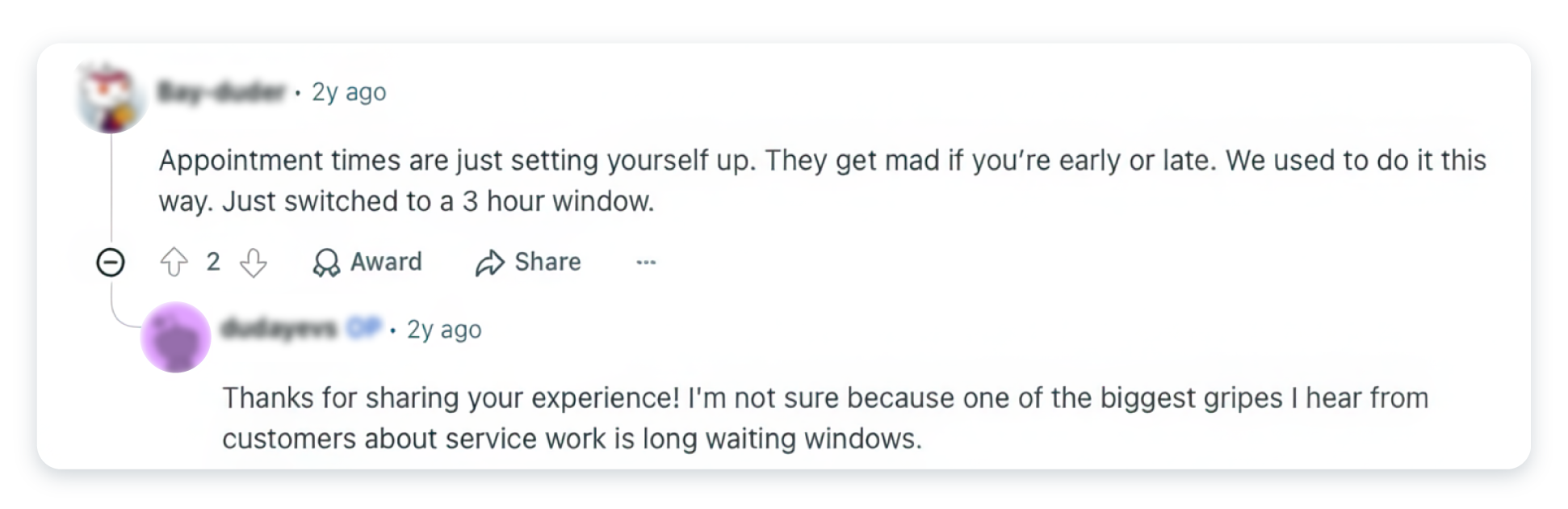
If you spend a few minutes browsing online consumer forums like Reddit, you’ll quickly find complaints about the multi-hour time windows that are so common in field service appointment scheduling. Customers have learned to expect them, but they will never like them.
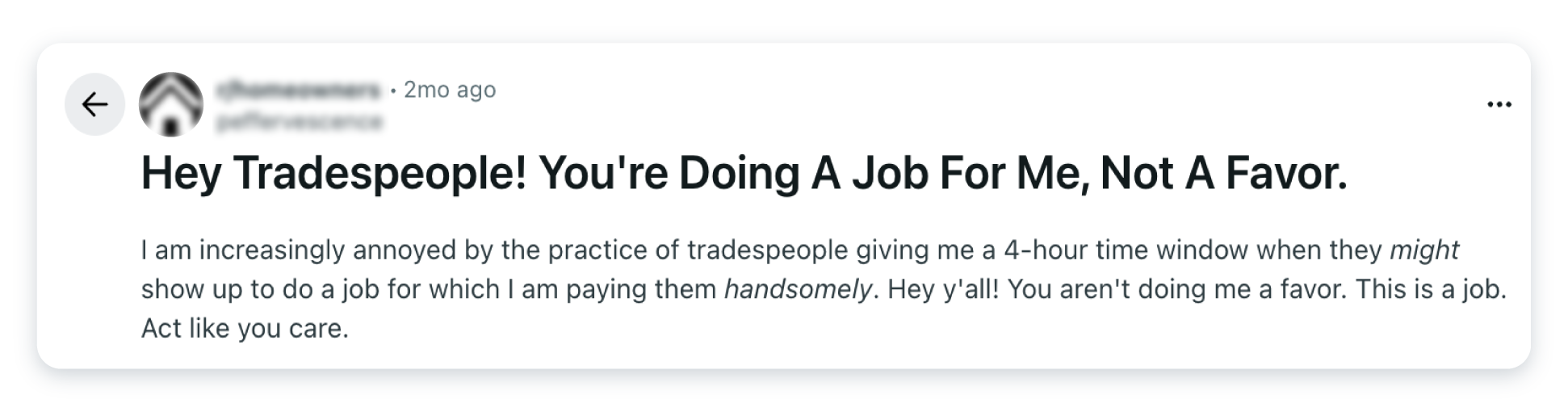
People have grown accustomed to tracking deliveries and rides in real time. As predictability becomes the norm across many service experiences, asking customers to accept hours-long technician arrival windows increasingly feels like an outdated way to deliver service. Yet many field service organizations say it’s unavoidable.
When a technician was supposed to arrive at a customer site between 8 AM and 12 PM, yet still hasn’t shown up at 11:45 AM, and there’s no updated ETA, the customer doesn’t care if the delay was caused by traffic, an earlier job running long or an emergency call. They simply feel the pain of spending all morning waiting.
Despite the negative hit to customer experience, three- to four-hour appointment windows are widely considered an operational necessity in field service. In reality, they are a result of inadequate sequencing.
Why do multi-hour appointment windows persist?
Appointment windows are a predictable outcome of confirming customer bookings before planning the day’s routes. Once those commitments are locked in, dispatch must work with them. They build routes around fixed constraints, so the wide appointment windows become necessary to absorb the uncertainties that crop up.
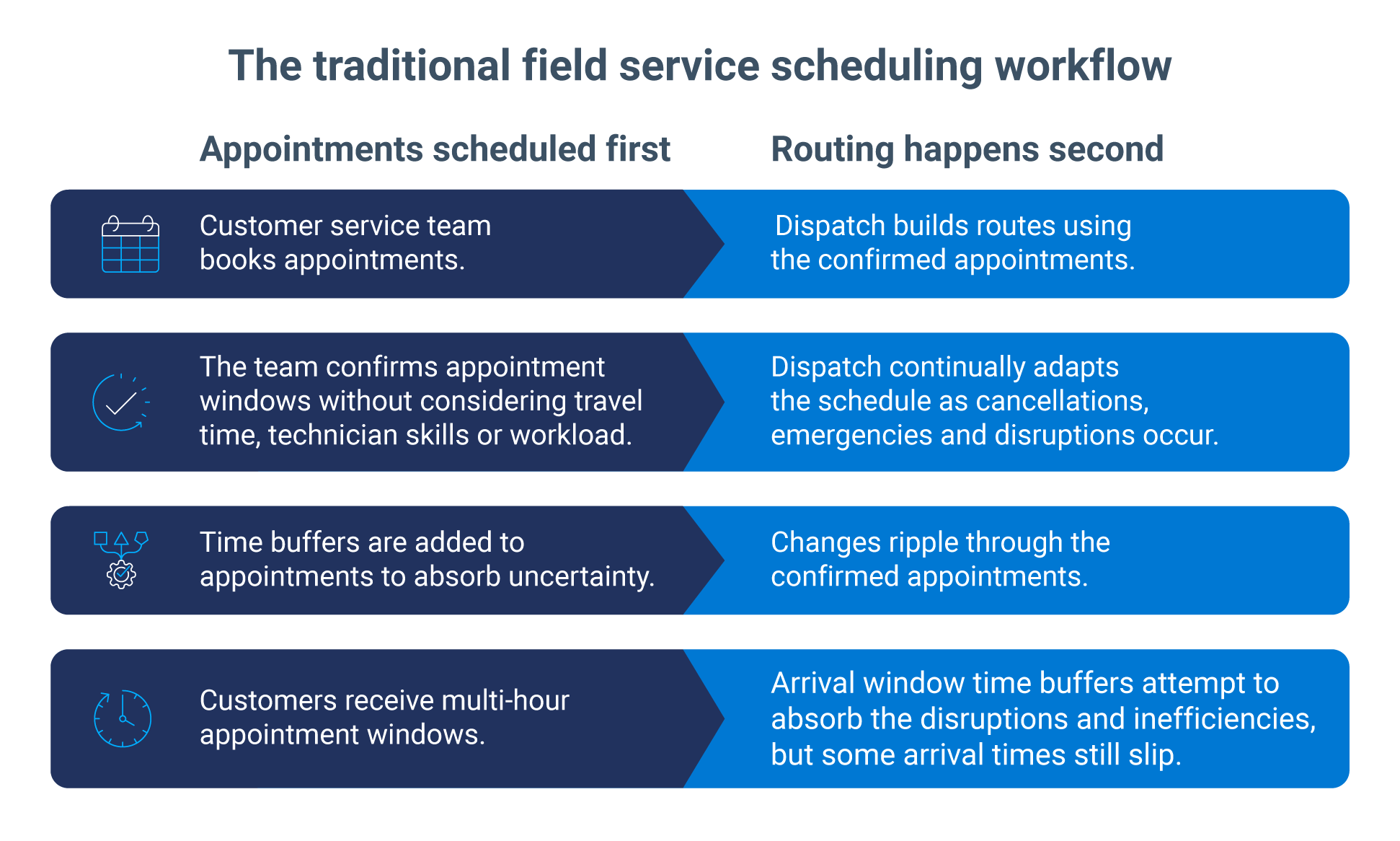
When teams lock in customer appointments without considering factors like technician capacity or travel time, inefficiencies are built into the schedule from the beginning. As disruptions occur throughout the day, those inefficiencies become more costly.
The cost of broad appointment windows
Multi-hour appointment windows create the perfect conditions for degrading customer experiences and operational efficiency. The ripple effect of a technician not arriving within the promised appointment window can be significant.
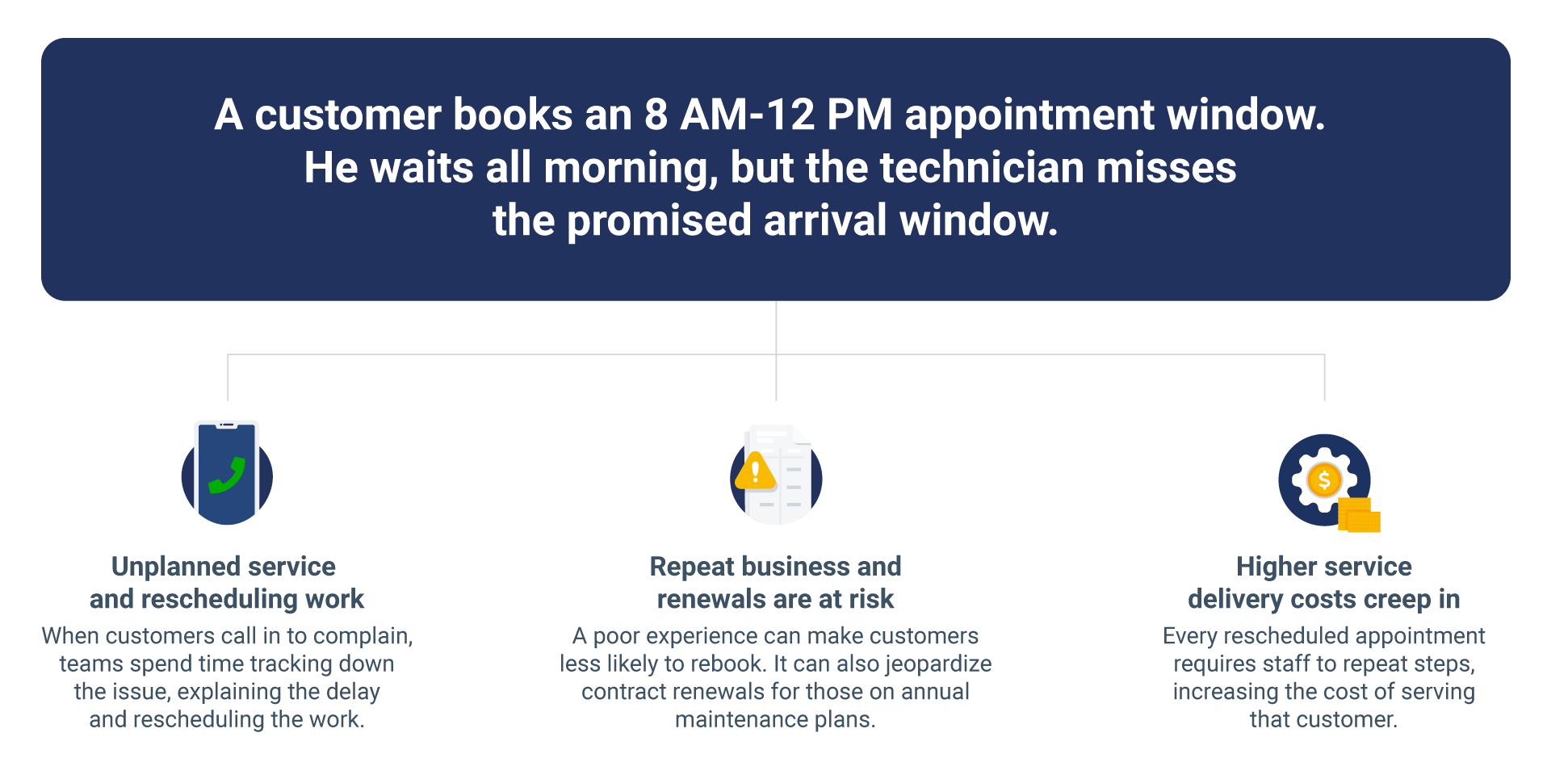
The connection between missed appointment windows and their downstream costs isn't always obvious to the organization. A customer who has been waiting all morning for an HVAC technician will call dispatch in the moment they’re frustrated. But their decision to find a new HVAC service company may not happen until months later. This makes it difficult to connect the business outcomes to the original scheduling decision.
A regional pattern of missed windows
At 500 or more vehicles, booking appointments before planning routes is more than an isolated branch problem. It creates inconsistency across regions. When each branch makes scheduling decisions using a different view of technician capacity, route conditions and demand, operations leaders can’t see how local booking decisions affect utilization, rescheduling costs and renewal risk across the network. A missed window at one branch can become a recurring service problem across regions.
Route-aware appointment scheduling is the answer
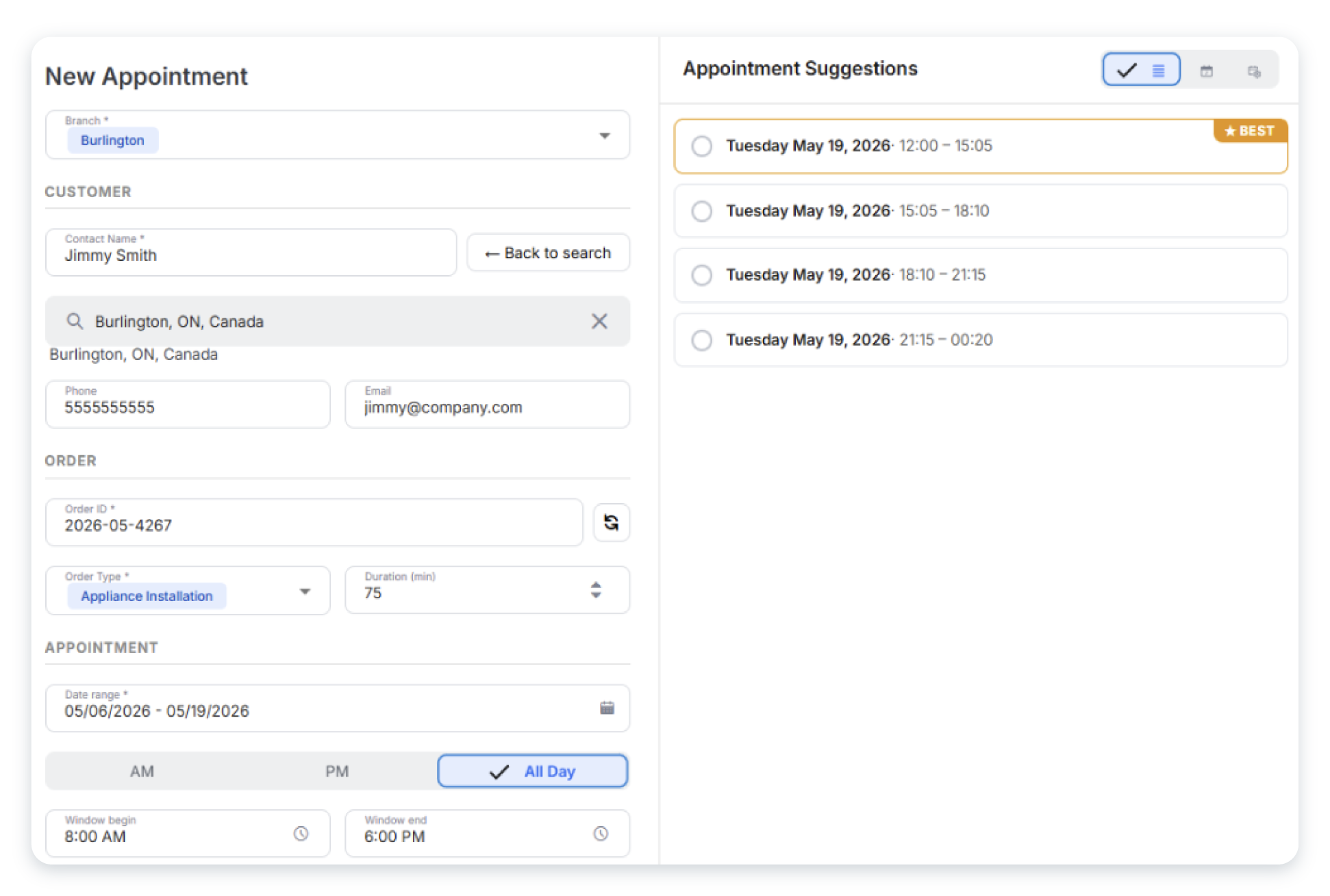
With Geotab Routing & Optimization, every appointment window gets evaluated against real operational conditions, like travel time, technician skills and existing workload, before it’s offered to a customer.
Customers get tighter service commitments that are based on what you can realistically deliver. Dispatchers begin the day with a schedule that’s built around their operational realities.
- Every incoming booking request generates ranked, optimized appointment options based on live operational conditions.
- The system continuously re-optimizes routes as appointments are added, changed or cancelled to help ensure the day’s schedule is aligned with live route conditions.
- A live operational dashboard shows at-risk appointments, delays and utilization in real time.
- It's designed to work alongside existing field service management software through available integrations and APIs.
After an appointment is booked, customers can choose to receive text or email notifications when the status changes, including the driver’s name and estimated arrival time, along with a link to view the driver’s location. Dispatchers field fewer routine “where is my technician?” calls and can spend more time focusing on their schedules and managing exceptions.
“We give everybody a 2-hour time window and we know that we can deliver on that 2-hour time window because Geotab is optimizing any changes that have happened.”
— Leslie Chadwick, SPS Pool Care
Customers using Geotab Routing & Optimization report completing two to three additional service calls per technician per day. The solution can also deliver a 15-30% reduction in mileage.
Bring scheduling and routing together
Broad customer appointment windows are a direct result of putting booking before routing. By bringing routing intelligence into field service appointment scheduling decisions, you can meet customers’ increasingly high expectations for service timing by providing accurate and achievable appointment windows.
When the right technicians show up as promised and complete the job within the expected timeframe, your customers enjoy a dependable experience that makes renewal or booking the follow-up a no-brainer.
Download The on-time advantage: How scheduling precision wins field service renewals to learn how route-first scheduling can help you streamline dispatch, complete more jobs on the first visit, strengthen customer retention and support business growth.
Subscribe to get industry tips and insights
Frequently Asked Questions
Field service scheduling is the process of assigning customer jobs to technicians based on their skills, availability, location, travel time, workload and other factors. It includes deciding when each job can realistically be completed, then adjusting the schedule as appointments change or disruptions occur. When appointment scheduling uses routing and operational data before suggesting an appointment time, dispatchers can offer narrower windows without overloading technicians or creating avoidable delays.
Traditionally, teams book appointments in a CRM or spreadsheet, then create routes after bookings are locked in. Advanced appointment scheduling connects those steps by using travel time, technician skills, existing workload and other operational constraints to generate ranked appointment windows. Once an option is selected, the booking becomes part of the route plan, which can be continuously updated as appointments are added, changed or cancelled.
Field service dispatch software with advanced appointment scheduling can reduce appointment windows by replacing broad time buffers with appointment options the operation can realistically deliver. Instead of offering a standard four-hour window and building routes around it, the system accounts for travel time, technician skills, workload and capacity when determining available times. This gives customers narrower, more achievable commitments and helps dispatchers identify risks early when conditions change.
Look for technician scheduling software that optimizes appointment options before booking, not just routes afterward. It should combine routing and dispatching, using travel time, technician skills, existing workload and capacity to rank feasible slots, continuously update routes as appointments change and provide live visibility into at-risk work. Together, these capabilities help teams reduce manual coordination and offer commitments they can realistically deliver.
Route-aware appointment scheduling improves technician capacity by turning time lost to unnecessary travel or poor sequencing into productive time for additional service calls. By using operational constraints when appointment options are created, the system helps fit more realistic work into existing technician hours while continuously adjusting routes to protect appointments as conditions change.
Devyn Keenan
Routing & Optimization Business Development Manager
Devyn Keenan is a Routing & Optimization Business Development Manager at Geotab.
Table of Contents
Subscribe to get industry tips and insights
Related posts

Unlocking more jobs per day: How smart dispatch management improves tech performance
October 13, 2026
3 minute read


Top seven best fleet fuel cards: How to choose the right one for your business?
October 1, 2026
7 minute read


Fleet maintenance software for small business: 8 top tools and guide
September 29, 2026
7 minute read