Fleet electrification ROI: How to calculate and maximize savings
Electrifying a fleet requires more than adding new vehicles to the yard. This guide breaks down how to calculate fleet electrification ROI, the variables that shape it and steps to build a business case finance teams will approve.

By Geotab Team
Sep 11, 2026

Key Insights
- Fleet electrification ROI measures the return generated as fuel, maintenance and other savings offset the initial vehicle and infrastructure investment.
- Payback periods vary by vehicle class, with lighter-duty vehicles typically recovering costs faster than heavy-duty trucks.
- Utilization, route predictability and charging strategy influence ROI more than sticker price alone.
- Telematics data helps fleet managers identify the best vehicles to electrify, optimizing charging costs and truck savings over time.
Electric vehicles cost more to purchase than their diesel or gasoline counterparts, yet many fleets recover the premium through lower fuel and maintenance spending over the life of the vehicle. Fleet electrification ROI helps fleets measure if those operating savings justify the additional investment.
This guide is written by fleet managers, finance directors and sustainability leaders who need to present a credible business case to stakeholders. It covers a practical ROI framework, the variables that shape total cost of ownership, charging infrastructure costs, incentives, battery health considerations and common modeling pitfalls to avoid.
How to calculate fleet electrification ROI
Calculating fleet electrification ROI starts with a simple formula that finance teams can build on as data matures. Fleet managers often ask what is the ROI on fleet electrification before committing capital, which is why a clear starting framework matters.
ROI = (Lifetime savings − Total investment costs) ÷ Total investment × 100
Many operators eventually build more detailed financial models that account for residual value, financing costs and multi-year sensitivity scenarios. This formula remains a useful starting point before scaling a broader fleet electrification program across the operation.
Understand your cost stack
Before calculating savings, fleet managers need to account for the full cost of switching a vehicle to electric. The vehicle itself may be the largest expense, but charging infrastructure, installation and other implementation costs also affect ROI.
Include the following costs in your model:
- EV purchase or lease costs
- Charging infrastructure
- Electrical upgrades
- Installation costs
- Fleet software
- Employee training
- Project implementation costs
- Explain that incentives reduce total investment costs.
Calculate your savings stack
Savings build over the vehicle's operating life. In addition to fuel costs, make sure to consider:
- Lower fuel costs
- Reduced maintenance
- Less brake wear through regenerative braking
- Reduced downtime
- Lower emissions-related compliance costs where applicable
- Potential insurance savings
- Residual vehicle value
- Tax credits and rebates
Fleet electrification ROI example
The following example illustrates how the formula works using representative figures for a mid-size delivery van. Actual costs and savings depend on vehicle class, location and utilization, so fleet managers should substitute their own data before presenting a business case.
| Category | Example |
| Additional vehicle investment | $15,000 |
| Charging infrastructure | $8,000 |
| Total investment | $23,000 |
| Fuel savings | $4,500 |
| Maintenance savings | $1,800 |
| Incentives | $5,000 |
| Total savings (5-year) | $36,500 |
| Estimated ROI | 59% |
Use your fleet's actual purchase, changing, fuel and maintenance costs to build a vehicle-specific model.
What factors affect fleet electrification ROI?
Vehicle price is only one variable in the ROI equation. Utilization, route patterns, charging costs and incentives can have just as much impact on the final calculation.

Vehicle utilization and annual mileage
High annual mileage generally improves ROI because more miles driven create greater fuel savings relative to the initial investment. Vehicles with lower annual mileage may take longer to recover the initial investment.
Fleet managers should carefully review supported EV makes and models to best match vehicle range to actual route demands before committing capital.
Duty cycles and route predictability
Predictable daily routes are often easier to electrify than variable long-haul treks. Return-to-depot fleets frequently achieve stronger ROI because overnight charging fits naturally into existing operations. Match battery range to actual route requirements instead of paying for more range than the operation needs. This helps control vehicle costs and charging needs.
Charging infrastructure and electricity costs
Depot charging generally costs less per mile than relying on public charging networks. Electricity rates, time-of-use pricing and demand charges all affect the total cost of powering a fleet.
Unmanaged charging, where every vehicle draws power at the same time, can significantly increase operating costs by triggering demand charges tied to peak electricity draw rather than total consumption. Managed charging schedules help avoid this outcome.
Incentives, rebates and tax credits
Federal, state and utility incentives can meaningfully reduce total investment costs, though eligibility and funding vary by location and program. Fleet managers evaluating federal fleet electrification programs should confirm current eligibility rather than relying on past program details, since incentive availability shifts as budgets and priorities evolve.
Maintenance, battery health and residual value
Electric vehicles generally require less routine maintenance because they have fewer moving parts and rely on regenerative braking to reduce brake wear. Battery degradation can affect long-term range, vehicle value and replacement costs, so include reasonable battery-life assumptions in long-term ROI models.
Resale value for electric commercial vehicles may also be less predictable than those for comparable diesel vehicles. Include an estimated residual value in longer-term projections and test how different resale assumptions affect ROI.
How long does fleet electrification take to pay off?
ROI and payback period answer related but different questions. ROI measures the overall return generated by an investment. Payback period looks at how long it takes to recover the initial investment through savings. Both figures matter when building a business case for stakeholders who want to know when returns begin.
The ROI on fleet electrification can vary significantly by vehicle class because mileage, charging requirements, electricity rates and incentives differ between applications.
| Vehicle class | Typical payback period |
| Class 1-3 | 2 to 4 years |
| Class 4-5 | 3 to 5 years |
| Class 6-7 | 4 to 6 years |
| Class 8 | 5 to 8 years |
These ranges reflect industry estimates, not actual guarantees. Actual payback depends on the specific duty cycle, electricity rates and incentive availability in each market, so fleet managers should treat published ranges as a starting reference, not a fixed outcome.
How telematics improves fleet electrification ROI
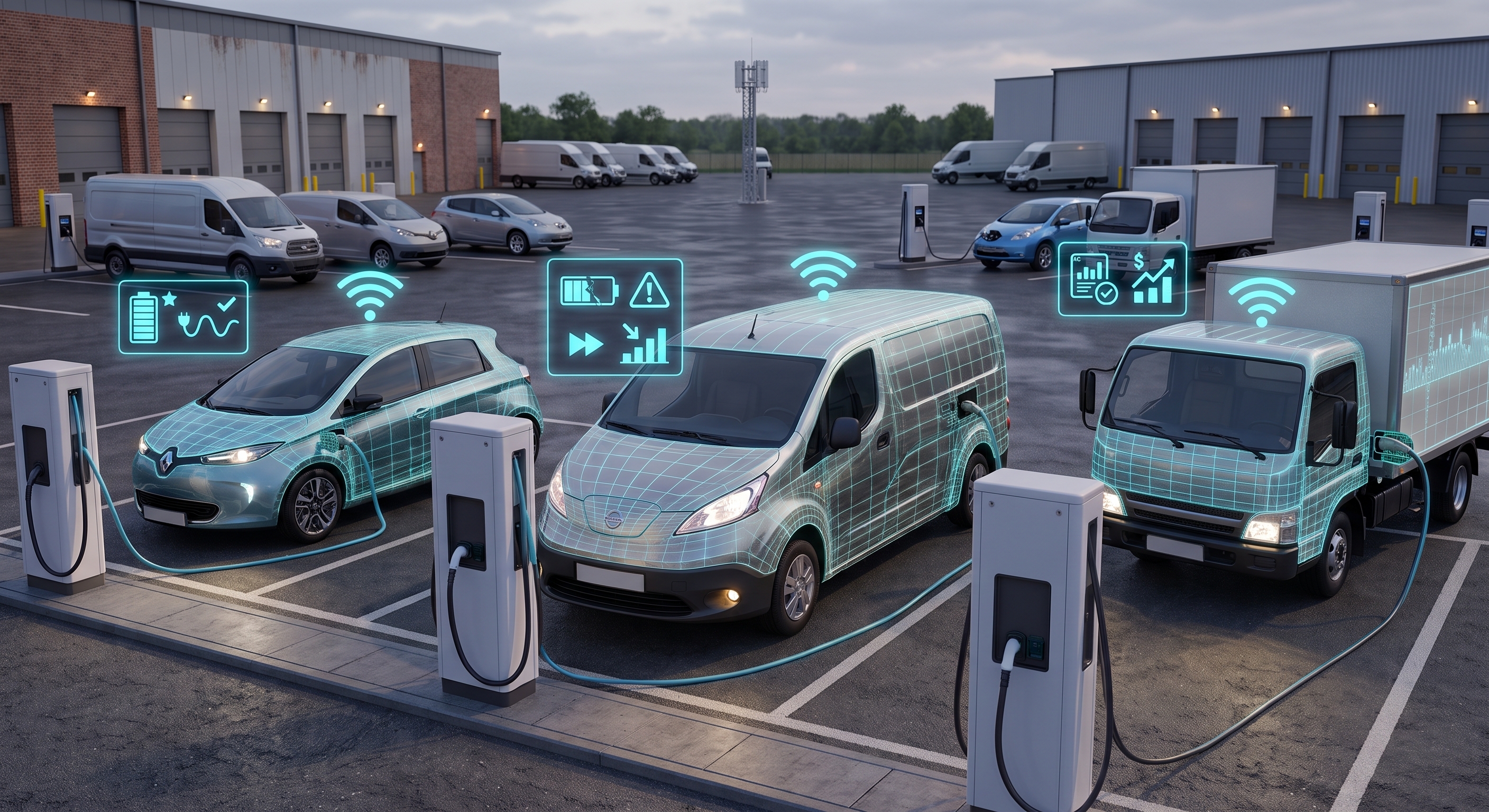
Telematics data can improve ROI calculation before and after vehicles are electrified. Before deployment, it helps identify suitable vehicles and routes. After deployment, it shows if actual energy use, mileage and maintenance costs match the model.

Identify the best vehicles to electrify
EV suitability assessment combines duty cycle analysis, vehicle utilization and daily mileage data to identify which vehicles in a fleet make the strongest electrification candidates.
Route analysis helps confirm that battery range matches real operating conditions, not just manufacturer estimates alone. This reduces the risk of selecting vehicles that underperform on actual routes.
Optimize charging and energy costs
Managed charging schedules help fleets avoid peak demand charges by spreading charging sessions across off-peak hours instead of allowing every vehicle to draw power at once. Depot charging optimization, paired with time-of-use electricity rates, gives fleet managers minute control over energy costs.
A cloud-powered transportation data platform can process this charging and route data at scale as fleets continue to grow.
Measure ROI over time
Ongoing monitoring lets fleet managers compare expected operating costs against actual results, track maintenance savings and report the total cost of ownership to stakeholders. This same discipline supports public sector fleet electrification planning, where agencies often need to demonstrate measurable outcomes to justify continued investment.
Continuous monitoring allows fleets to refine their electrification strategy as conditions evolve.
Best practices to maximize fleet electrification ROI
Maximizing fleet electrification ROI depends on treating electrification as an ongoing process, not just a simple purchase decision. The following practices help fleets get more value from each stage of the transition.
- Start with high-mileage vehicles, since more miles driven accelerate fuel and maintenance savings.
- Prioritize predictable return-to-depot routes where overnight charging fits naturally into daily operations.
- Conduct an EV suitability assessment before purchasing to confirm range and duty cycle fit.
- Build charging infrastructure around fleet operations rather than around vehicle count alone.
- Take advantage of incentives while confirming current eligibility requirements.
- Use managed charging to reduce electricity costs and avoid demand charges.
- Monitor fleet performance after deployment to compare actual results with your ROI assumptions.
- Recalculate ROI when mileage, energy prices, vehicle costs or incentives change to best understand how electrifying your fleet benefits your operations.
Electrification works best as an ongoing optimization process, with fleet managers adjusting vehicle selection, charging strategy and route assignments as data accumulates.
Improve fleet electrification ROI with Geotab
Geotab helps fleet managers build and maintain a strong fleet electrification ROI case by providing EV suitability assessments, charging analytics and ongoing performance tracking.
Fleet managers can use Geotab's electric vehicle solutions to identify suitable vehicles, plan charging and compare actual operating performance with their original assumptions. Fleet managers ready to build their own business case can request a demo to see how Geotab supports electrification planning from start to finish.
Subscribe to get industry tips and insights
Frequently Asked Questions
Most consider a fleet utilization rate of above 75% as strong, though acceptable ranges vary by industry and vehicle type. Higher utilization means vehicles spend more time actively working rather than sitting idle, which improves the overall return on fleet investments, including electrification.
The five pillars of fleet management typically include vehicle acquisition, maintenance, compliance, driver safety and cost control. For electrified fleets, energy and charging management becomes an additional consideration that affects each of these areas.
Federal tax credits can reduce the upfront cost of electric vehicles and charging infrastructure, though eligibility and credit amounts change over time. Fleet managers should confirm current program details before including specific credit amounts in a business case, since incentive programs are updated or replaced periodically.
A realistic payback period for commercial fleet electrification generally ranges from two to six years depending on vehicle class, utilization and charging strategy. Lighter-duty vehicles with high daily mileage tend to pay back faster than heavy-duty trucks used in lower-utilization applications.
High-mileage vehicles with predictable, return-to-depot routes are often strong candidates for early electrification. An EV suitability assessment can help confirm which vehicles in a fleet match available electric models and daily range requirements.
Demand charges can negatively impact your ROI calculations. Demand charges are based on peak electricity draw, not total energy consumed, so unmanaged charging across an entire fleet can significantly increase electricity costs. Managed charging schedules that spread charging sessions throughout the day can help control this expense.
Battery degradation can affect long-term ROI by gradually reducing usable range and capacity. Include expected battery performance and potential replacement or resale costs in longer-term projections.
The data you need to build a fleet electrification ROI model includes vehicle purchase and lease costs, charging infrastructure costs, electricity rates, expected mileage, maintenance cost estimates and availability incentives. Telematics data on current vehicle usage and duty cycles helps validate assumptions so you are not left operating on estimates alone.
The Geotab Team write about company news.
Table of Contents
Subscribe to get industry tips and insights
Related posts

EV fleet transition plan: Step-by-step guide for U.S. fleets 2026
September 17, 2026
6 minute read

EV fleet transition: How to plan a successful fleet electrification strategy
September 11, 2026
8 minute read

What an EV battery is actually worth at the end of a lease
August 20, 2026
2 minute read
Charged up: 6 data-driven strategies to maximize EV range in summer
June 19, 2026
2 minute read