On the ground in LA
What commercial trucks face during the World Cup

AVP Business Development, Altitude by Geotab
Jun 15, 2026
Key Insights
- SoFi Stadium ranks in the bottom 3 of all host city venues for freight readiness, with the worst post-event resilience score of any stadium in the ranking
- LA’s Inglewood corridor sees only 9 hours per day with traffic flowing at or above normal speeds, where the average stadium corridor during a special event sees mild to severe slowdowns within a 3 mile radius
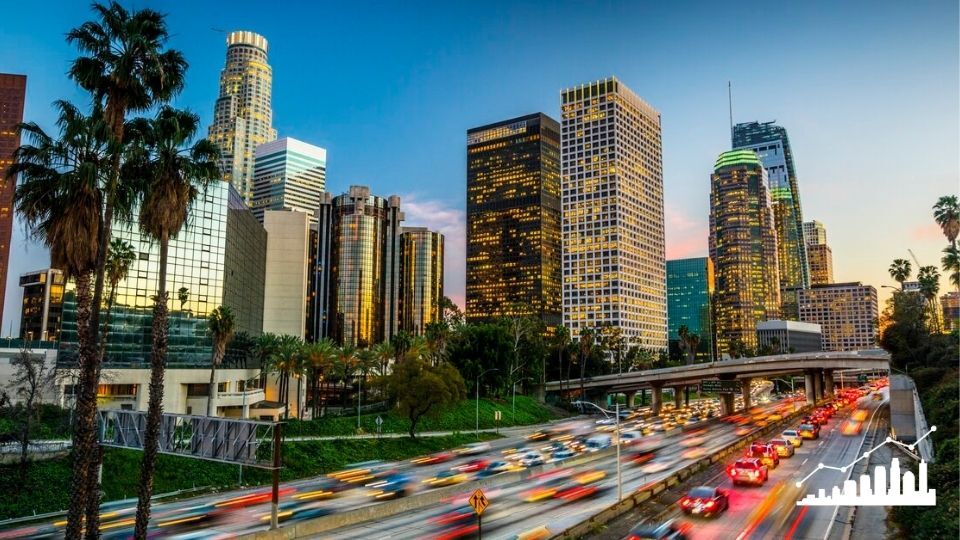
As someone who lives near LA, I find myself navigating traffic anytime I leave the house. Whether it's attending a concert at SoFi Stadium, or going from Westside to downtown, traffic here is always rush hour. It’s constant and unpredictable.
Imagine then what it feels like to move freight through this city on any given day. Already, the navigation apps are rerouting drivers off the freeways only to redirect them back on. This results in real delays and real costs for fleets. Then there is the unknown of road construction resulting in stopping and starting further compounding the problem.
Understanding The Road Network
One of the benefits I have is that I work with data scientists and engineering teams that spend time trying to understand and offer insights to governments, business leaders and transportation agencies, and help commercial fleets make smarter decisions with real-world data. Altitude by Geotab turns commercial vehicle data into intelligence for public agencies and fleets. We help decision-makers understand road network movements. With the world’s largest sporting event coming to North America for the first time, we wanted to know how fleets would do amid the flux of tourists, game-day watchers and other activities around the host city stadiums.
The Freight Gap No One is Talking About
It is not unusual for the host city logistics to be focused on how to welcome fans, athletes, and visitors. Unfortunately, city planning is typically passenger-first with freight as an afterthought. We used the World Cup tournament as an opportunity to see what the impact on the road network would be in and around stadiums. Altitude analyzed historical commercial vehicle data feeding into the SoFi stadium based on large sporting and entertainment events. We looked at fleet volumes, types and average travel times in and around the stadium site based on congestion, safety (incidents of harsh braking/cornering), idling and resilience (ability for the city road network to bounce back to normal).
.png)
SoFi Stadium - Road Segment Performance During Major Events
Inglewood, CA - Events May 21 (Kendrick Lamar & SZA) & June 14 (Concacaf Gold Cup). 2025 - All vehicles- 3 mile radius.
What the Data Actually Showed
We created a Host City ranking dashboard to gauge each host city’s freight network. SoFi Stadium received an overall score of 4.76 out of 10, placing it in the bottom three of all host cities.
The defining reason is resilience: SoFi’s ability to bounce back from large events is near zero, meaning the road network around Inglewood essentially can’t absorb a game-day crowd without significant disruption, and that disruption lingers. It doesn’t stay local, it spreads into the broader road network.
Congestion compounds the problem. The 3 miles around the stadium has only 9 hours per day when traffic flows at or above 70% of normal speed limits. In comparison, Gillette Stadium, outside of Boston, has 22 such hours. The LA stadium sits in one of the densest urban corridors in the country. Chronic congestion plus near-zero event resilience. Difficult to solve by better planning alone.
Conclusion
And of course we need to look ahead at the upcoming 2028 Olympic Games coming to LA. California is seriously funding its infrastructure. In fact, the California Transportation Commission announced this past March that it had allocated $848 million to “advance transit systems, expand pedestrian and bicycle options and improve freight movement.” More funding was also announced as part of the 2026 State Highway Operation and Protection Program which will see $17.9 billion invested over the next four years in the state highway system.
The 2028 Olympics are less than 3 years away. The infrastructure funding is already flowing. The next step is bringing mobility intelligence like Altitude’s to the city decision-makers who will decide how the money gets spent, before the congestion data writes the story for them.
Subscribe to get industry tips and insights
AVP Business Development, Altitude by Geotab
With over 8 years of experience in the transportation and logistics industry, Nate Veeh brings a wealth of transportation knowledge and insights to his vast network, allowing him to achieve organizational goals and impact customer initiatives.
Table of Contents
Subscribe to get industry tips and insights
Related posts

Why the OEM versus device-level telematics debate misses the point for mixed-fleet operators
September 25, 2026
2 minute read

European data sovereignty: the next step we've been building toward
September 9, 2026
2 minute read
The leasing industry helped build the autonomous future
August 25, 2026
1 minute read

What an EV battery is actually worth at the end of a lease
August 20, 2026
2 minute read