Unlocking Innovation Through University Partnerships

Vice President, Research & Innovation Partnerships
Aug 6, 2026

In his seminal work The Innovator’s Dilemma, Clayton Christensen observed that highly successful companies often stumble not because they ignore new technology, but because they are too laser-focused on optimizing their current offerings for existing customers. By taking this approach, they miss the disruptive forces shaping the horizon.
To avoid this trap, I have found that businesses must escape their own echo chambers, to avoid assuming that the problems within their own industry are entirely unique. While every sector has distinct characteristics, disruptive innovation rarely respects corporate boundaries. If you only look at your own circle of thought leaders, customers, and competitors, you are likely missing the signals of what’s coming next.
I have found that one of the most effective ways to break this cycle is through strategic university partnerships.
The Power of the “What If”
Academic researchers are often less constrained by the prevailing wisdom of a specific industry. While corporate teams are tasked with solving the problem of the quarter, researchers are wired to ask “what if.” Because many of these academics collaborate across multiple fields, from engineering and psychology to law and the arts, they bring a broader perspective that connects dots invisible to industry insiders.
At Geotab, we’ve found that the primary value of these partnerships goes well beyond accessing raw inventions. It is about catalytic space. University labs serve as hubs where different technical disciplines collide, inspiring cross-pollination. For instance, through our work with Ingenuity Labs at Queen’s University, we collaborated with researchers whose expertise spanned industrial robotics and medical diagnostics. By bringing that diverse lens to our telematics data, we were able to explore technology that gives dash cameras the ability to not only detect pedestrians and cyclists, but to predict their movement before a collision occurs. The solution benefited from the expertise of professionals accustomed to solving complex medical and robotics challenges.
Exploratory research beyond what is undertaken by product teams can highlight where technology may add value in the future, which is not necessarily tied to current product features. That said, some of the techniques it demonstrates (such as SHAP for explainable AI) are already valuable to our internal development teams, a good reason to pay attention to this research.
Collaboration as an Engine
University labs also provide a collaborative sandbox where disparate organizations can solve shared problems. The City Logistics for Urban Economy (CLUE) initiative, led by Dr. Matthew Roorda at the University of Toronto, is a perfect example. It brought together Geotab, Purolator, and the City of Toronto to test an e-trike-based urban delivery system. By pooling our resources, we demonstrated environmental and economic efficiencies that no single entity could have proven on its own.
Beyond logistics, there is the undeniable value of world-class domain expertise. When we needed to identify hazardous curves across the United States, we went beyond running internal analytics; we engaged with Dr. James Tsai at Georgia Tech. His deep research into highway safety design is helping us turn aggregated fleet data into a life-saving tool.
Rules for Fruitful Partnerships
If your organization is considering these partnerships, it is important to enter with the right mindset. Establishing a successful research relationship requires more than financial investment; it demands a commitment to mentorship and clear, deliberate intent.
Projects should not be viewed solely as R&D for the next product cycle. Sometimes, the most valuable outcome is ruling out an approach early, saving months of internal development time. You must build accountability into the process and ensure your staff is ready to mentor, monitor, and share the results.
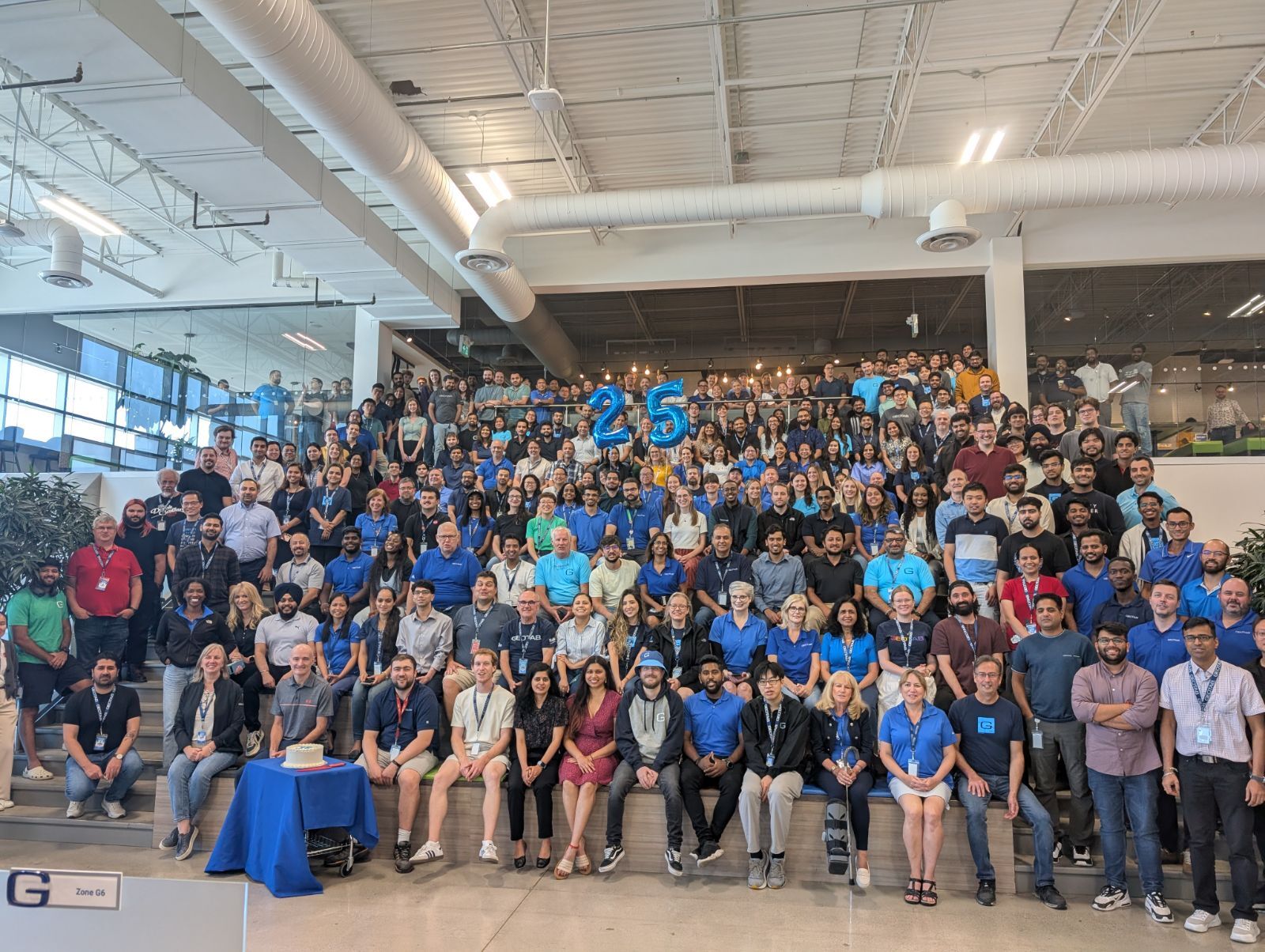
Innovation is a team sport that thrives when the worlds of academia and industry intersect. When we open data to the curious, ambitious minds in university halls, we are building the foundation for the next quarter-century of progress. To sustain an innovative edge, we have found that the best move is to invite the smartest minds to help you define what’s next.
Subscribe to get industry tips and insights
Vice President, Research & Innovation Partnerships
With decades in the transportation, aerospace, physical security and telematics industries, John has combined his technical/scientific curiosity with practical business experience gained in both large and small companies.
Table of Contents
Subscribe to get industry tips and insights
Related posts

A 95% location rate in 2026: what Geotab brings to rental, leasing and mobility fleets
October 22, 2026
2 minute read


Why the OEM versus device-level telematics debate misses the point for mixed-fleet operators
September 25, 2026
2 minute read
Minds Behind the Miles: The People Powering Geotab’s Innovation
September 23, 2026
1 minute read