Fleet vehicle maintenance: What it is, key benefits and checklist for managers
Fleet maintenance is key to keeping your vehicles on the road, your drivers safe and your customers happy, but without the right approach, maintaining multiple vehicles can become costly and overwhelming.

By Ben Schwartz
Jul 16, 2026

Key Insights
- Fleet vehicle maintenance uses systematic inspections, repairs and preventative care to keep commercial vehicles operating safely and efficiently.
- Proactive maintenance reduces operating costs and prevents costly emergency repairs.
- Modern telematics and fleet management software automate maintenance scheduling, providing real-time diagnostics and predictive insights.
- Tracking fleet maintenance KPIs and service history helps fleets make smarter replacement decisions and improve long-term operational efficiency.
Between juggling maintenance schedules, meeting compliance deadlines and keeping drivers on the road, fleet managers face constant pressure to do more with less. A single missed oil change could lead to a costly engine replacement, while a single failed inspection could keep a vehicle out of commission for days. This is why fleet vehicle maintenance is so essential.
Creating a maintenance program can help maximize uptime and ensure the safety and efficiency of your operations, especially when implemented alongside fleet maintenance software.
This guide will cover the elements of a good fleet maintenance process, including monthly, quarterly, biannual and annual mechanical checklists to keep on hand.
What is fleet maintenance?
Fleet vehicle maintenance is the practice of maintaining fleet vehicles through regular mechanical inspections and preventive care. A fleet maintenance manager schedules and oversees vehicle maintenance to help reduce downtime caused by surprise repairs.
A fleet maintenance program involves several key components:
- Scheduling recurring maintenance events: Maintenance events vary from a basic oil change to a full DOT safety inspection. The most common maintenance events are oil changes and air filter replacements.
- Overseeing routine inspections of fleet vehicles: This includes regular check-ups, tire rotations, brake inspections and fluid level checks.
- Deploying driver training: Drivers must understand vehicle maintenance needs, so offering training and resources is key to a successful program.
- Utilizing fleet maintenance tools and reminders: Receiving early maintenance reminders can help you efficiently schedule necessary vehicle downtime for maintenance events and vehicle repairs.
Importance of fleet maintenance
The importance of fleet maintenance should not be underestimated. Neglecting upkeep often creates a domino effect of problems that can hurt your operations and drain your budget.
The math for fleet vehicle maintenance is simple. A $50 oil change can save you from a $40,000 engine replacement. In other words, the cost of ignoring maintenance is often far greater than the cost of paying a mechanic, an important factor to consider when prioritizing ROI vs. COI.
Beyond cost savings, proper maintenance protects your drivers—and your customers. Well-maintained vehicles are safer. They don’t leave your drivers stranded on dangerous roadways. And they don’t leave disgruntled customers with late orders.
The best way to stay on top of maintenance schedules is with fleet maintenance software.
These platforms automate vehicle upkeep by tracking maintenance history and vehicle usage data, often through telematics. They help fleet managers automate preventive maintenance scheduling, manage work orders and inventory, reduce operating costs, ensure regulatory compliance and maximize vehicle uptime, so you can meet customer commitments.

Types of fleet vehicle maintenance
Fleet vehicle maintenance can take several forms depending on how your organization approaches inspections, repairs and long-term vehicle health. Most fleets use a combination of maintenance strategies to reduce downtime, improve safety and control operating costs.
Understanding the different types of fleet maintenance can help you build a more proactive and efficient maintenance program.
Preventive maintenance
Preventive maintenance involves scheduled service performed at regular mileage or time intervals to help prevent breakdowns and costly repairs. Common examples include oil changes, tire rotations, brake inspections and fluid checks.
This proactive approach helps improve vehicle reliability, reduce downtime and extend vehicle lifespan.
Predictive maintenance
Predictive maintenance uses telematics and vehicle diagnostics to identify potential issues before failures occur. Fleet managers can monitor fault codes, engine performance and other vehicle data in real time to schedule maintenance more efficiently.
This approach helps reduce unexpected repairs and maximize vehicle uptime.
Corrective maintenance
Corrective maintenance refers to repairs completed after a problem has been identified. This may include fixing engine issues, replacing worn parts or repairing damaged components.
While sometimes unavoidable, relying heavily on corrective maintenance can increase costs and operational disruptions.
Condition-based maintenance
Condition-based maintenance uses real-time vehicle condition data to determine when service is needed, rather than relying solely on fixed schedules. Fleets may monitor brake wear, tire condition or fluid health to guide maintenance decisions.
This approach helps reduce unnecessary service while still minimizing breakdown risks.
Benefits of fleet vehicle maintenance
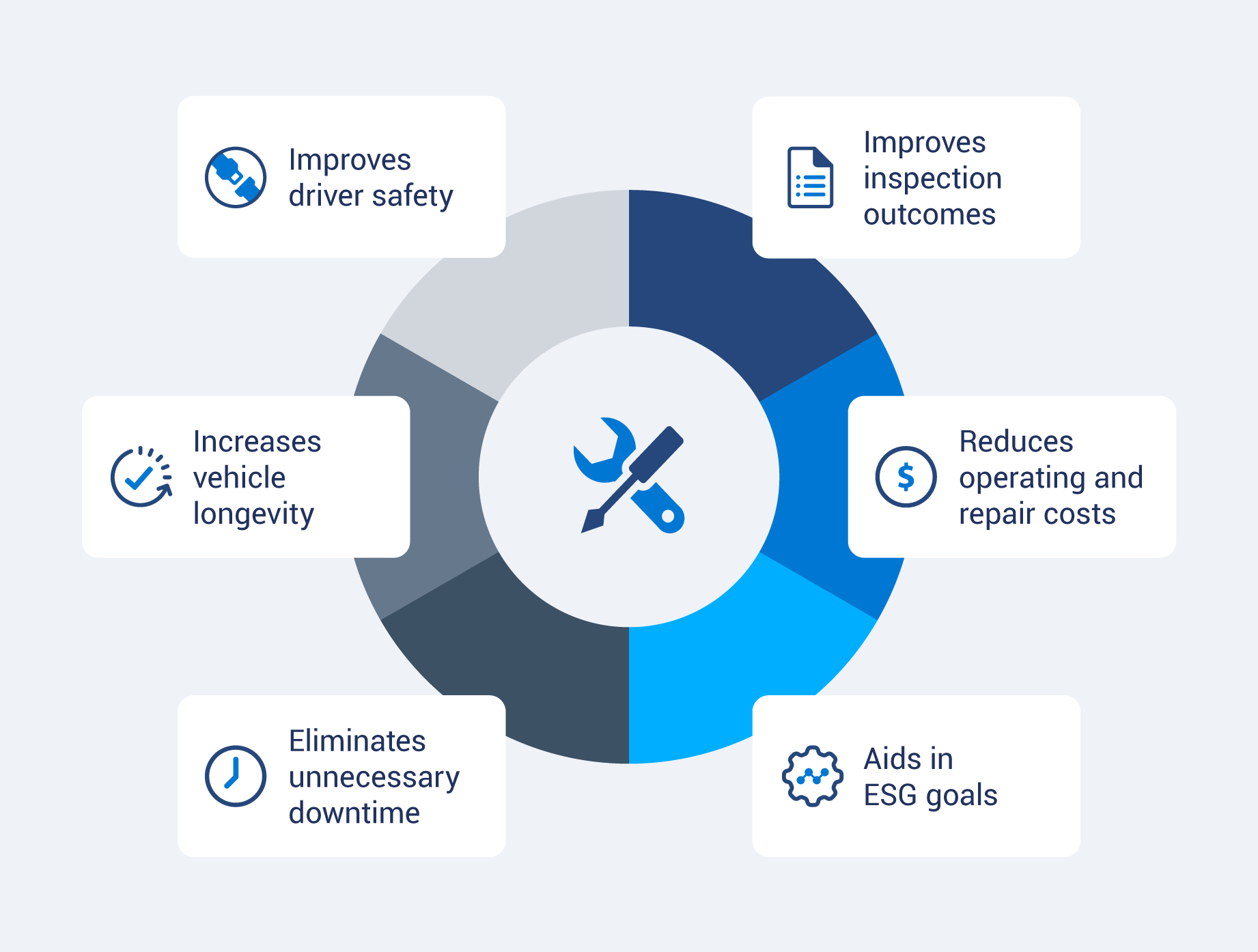
Using a structured fleet vehicle maintenance and repair approach will invariably pay off for your fleet in uptime and dollars saved. Take a look at how a proactive maintenance strategy can turn your fleet from costly to competitive.
Improves inspection outcomes
Regular inspections are the foundation of a well-maintained fleet. By catching problems early through preventive maintenance inspections, you can address minor issues before they escalate into major safety hazards and delays. A well-managed program also ensures you meet Driver Vehicle Inspection Report (DVIR) compliance requirements.
Reduces operating and repair costs
Proactive maintenance is significantly cheaper than reactive repairs. Regularly checking oil levels can be a hassle, but it can prevent the need for a full engine replacement down the road. Plus, well maintained vehicles operate more efficiently, which helps lower fuel costs.
Aids in environmental, social and governance (ESG) goals
As we mentioned above, well maintained vehicles operate more efficiently, burning less fuel and producing fewer emissions. Reducing emissions benefits everyone. Whether you manage an EV fleet or not, switching to cleaner energy sources contributes to cost savings and a healthier planet.
Increases vehicle longevity
The better maintained your vehicles are, the less wear and tear they’ll experience and the longer they’ll run. When oil, filter and inspection changes are performed regularly, vehicles are less likely to run into serious issues down the road—aiding a longer vehicle lifecycle.
Eliminates unnecessary downtime
Healthier vehicles lead to greater productivity. Vehicle downtime directly affects a vehicle’s ability to generate revenue. Eliminating unnecessary downtime will help your company maximize the revenue stemming from your fleet.
Improves driver safety
Staying on top of repairs doesn’t just save you money — it also keeps drivers and others safer on the road. Even something as simple as faulty wiper blades can lead to a collision. A robust fleet safety program is essential for protecting drivers, vehicles and your company’s reputation.
Supports regulatory compliance
The trucking industry has strict regulations for semi-truck maintenance and vehicle safety. Federal and state agencies require specific inspection schedules, maintenance standards and record-keeping requirements. Regular upkeep can help you avoid violations that result in fines, out-of-service orders and increased regulatory scrutiny.
Boosts fuel efficiency
Fuel represents 60% of the total fleet budget. That means even small increases in fuel efficiency can get you massive savings — and to get those small increases, you just have to stay up-to-date on your maintenance. That means regular tune-ups, clean air filters, properly inflated tires and quality oil.
Key challenges of fleet vehicle maintenance
It’s clear that a fleet maintenance program offers a range of benefits, but there are a few considerations to weigh. Namely, that initial implementation can be challenging without the right tools.
- Scheduling and planning: It is difficult to keep track of multiple company vehicle maintenance schedules. Balancing routine inspections with unexpected repairs and aligning maintenance with driver availability can lead to scheduling conflicts and operational disruptions.
- Managing costs: Striking a balance between maintenance and operational expenses is a constant challenge. While investing in regular inspections can reduce costly breakdowns, justifying these upfront fleet costs can be difficult.
- Tracking maintenance history: A comprehensive maintenance history is essential for identifying trends, predicting future needs and ensuring compliance. And while maintaining accurate and accessible records for each vehicle is crucial for informed decision-making, it can be time-consuming and error-prone when done manually.
- Maintaining compliance: Staying up to date with ever-changing regulations and industry standards while ensuring fleet-wide compliance is a complex and ongoing challenge. Balancing the need for vehicle uptime with regulatory requirements often necessitates careful planning and resource allocation.
- Managing parts inventory: Finding the right balance between having necessary parts on hand and avoiding excessive inventory costs can be difficult. Insufficient stock can lead to costly downtime, while excessive inventory ties up capital.
- Unplanned downtime and breakdowns: Even with regular upkeep, unexpected failures will happen. These emergency situations disrupt schedules and test your crisis management abilities.
- Driver communication and accountability: Your maintenance program only works if drivers report issues promptly and accurately, and getting busy drivers to complete thorough pre-tip inspections and communicate with vehicles takes consistent training.
- Data overload: Modern telematics systems generate a lot of data. Sorting through those numbers to identify actionable business insights takes skill and time.
- Adapting to new technologies: The fleet industry is ever-evolving. Electric vehicles, advanced driver assistance systems and connected vehicle technologies all come with new maintenance requirements and keeping your team trained to stay ahead is time-consuming.
How to implement a fleet vehicle maintenance program
The more vehicles you have to manage, the harder it is to track when each one is due for maintenance. These fleet maintenance best practices help you build an efficient and effective fleet maintenance policy so you can stay on top of things.
Create a vehicle maintenance policy
A written fleet maintenance policy establishes clear rules and expectations for your entire organization. The document should outline maintenance schedules, inspection procedures and accountability measures.
You can create this policy manually, or you can invest in fleet maintenance software like Geotab, which will manage everything from inspections to mileage tracking automatically.
Customize driving rules
Driving rules (such as idle time, harsh braking restrictions and route optimization) can be tailored to your fleet's specific needs. Implementing these rules helps reduce unnecessary wear and tear, saving both time and money on repairs.
Track total cost of ownership and replacement cycles
Tracking the total cost of ownership (TCO) helps fleets understand the true cost of operating each vehicle over time. Beyond the initial purchase price, TCO includes fuel, maintenance, repairs, insurance, downtime and depreciation.
Monitoring these costs can help fleet managers identify vehicles that are becoming too expensive to maintain and determine the right time for replacement. Holding onto aging vehicles for too long may lead to higher repair costs, increased downtime and lower fuel efficiency.
Using fleet maintenance software and telematics data can help organizations track operating trends, compare vehicle performance and make more informed replacement cycle decisions.
Set diagnostic reminders
Regular diagnostic checks are crucial to catching potential issues before they become serious problems. Automated reminders for these checks ensure that no vehicle in your fleet is overlooked, helping to keep consistent maintenance schedules.
Maintain compliance
Complying with regulatory requirements is essential to avoiding fines and ensuring the health and safety of your vehicles. Regularly reviewing and updating your fleet’s compliance status helps prevent legal issues and maintain operational efficiency.
Leverage predictive analytics
Predictive analytics using powerful telematics tools moves you from reactive to proactive maintenance.
Telematics systems monitor engine diagnostics, fuel consumption and real-time fleet performance maintenance KPIs so you know exactly when a vehicle is due for maintenance. You can use historical data to analyze patterns and anticipate failures before they come.
Run reports regularly and audit
Generating and analyzing reports on your fleet’s performance can provide valuable insights into areas needing improvement. Regular reports help you track maintenance trends, fuel usage and overall vehicle health, enabling data-driven decisions.
Fleet maintenance KPIs to track
Tracking fleet maintenance KPIs can help organizations measure vehicle performance, identify maintenance trends and reduce unnecessary operating costs.
Monitoring the right metrics gives fleet managers better visibility into vehicle health, downtime and maintenance efficiency so they can make more informed decisions.
The following fleet maintenance KPIs can help you evaluate the effectiveness of your maintenance program and identify areas for improvement.
| KPI | Why it matters |
| Vehicle downtime | Measures operational disruption |
| Cost per mile | Tracks maintenance efficiency |
| Cost per mile | Identifies vehicle reliability |
| Preventive maintenance compliance | Ensures schedules are followed |
| Fuel efficiency | Detects performance issues |
| Maintenance cost per vehicle | Tracks fleet health trends |
| Maintenance cost per vehicle | Reveals maintenance gaps |
Example fleet maintenance schedule
A consistent maintenance schedule helps fleets stay ahead of breakdowns, improve vehicle reliability and reduce costly downtime. While service intervals vary depending on vehicle type, mileage and operating conditions, most fleets follow a combination of daily, monthly and annual maintenance checks.
The following example fleet maintenance schedule outlines common service intervals and routine maintenance tasks fleets should monitor regularly.
| Interval | Common tasks |
| Daily | DVIR checks, tire pressure |
| Monthly | Fluids, filters, battery checks |
| Quarterly | Brake inspections, alignment |
| Biannual | Transmission service |
| Annual | DOT inspections, major diagnostics |
Fleet vehicle maintenance checklist
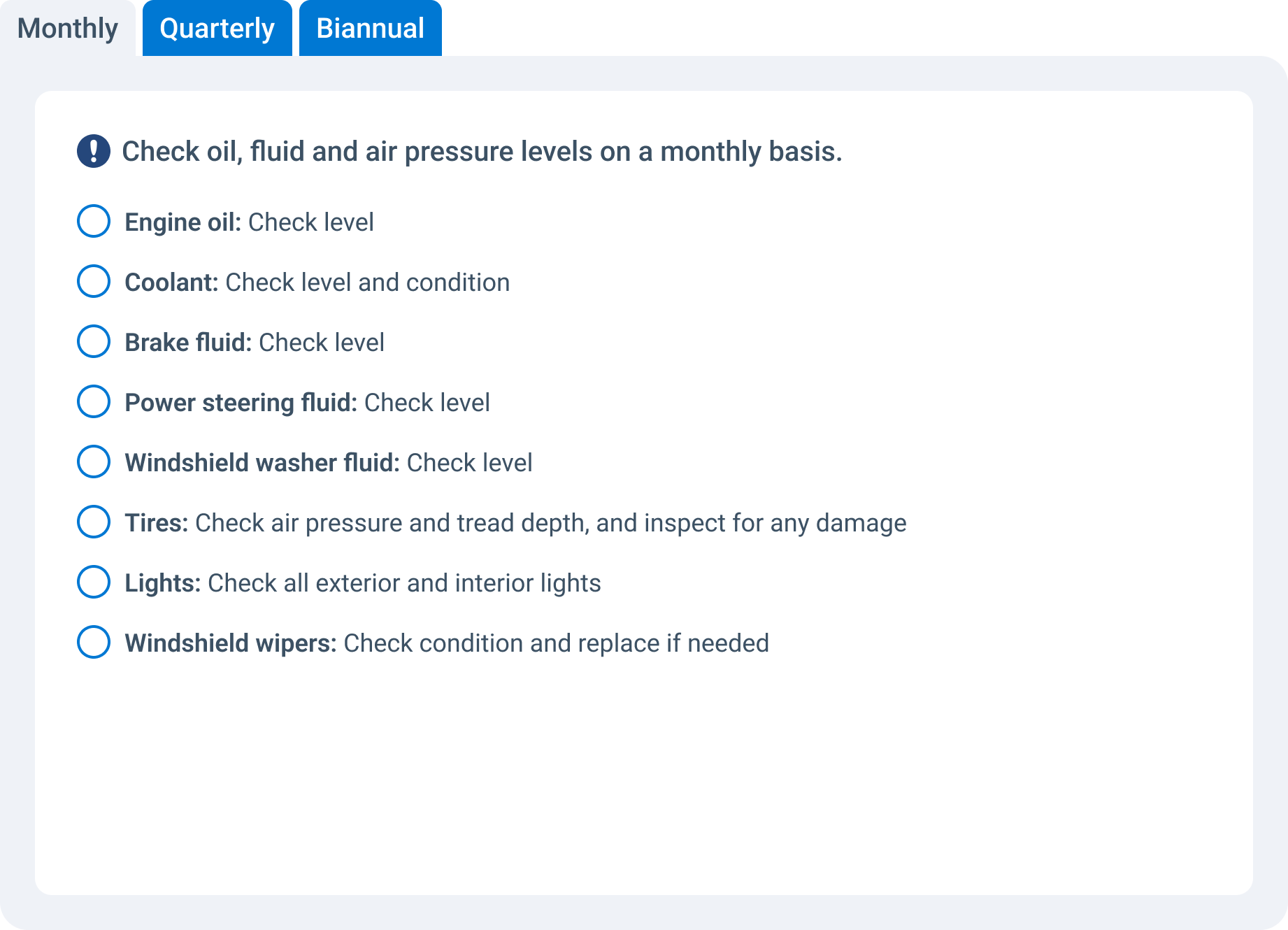
With the right fleet vehicle maintenance checklist template, you can mitigate many maintenance challenges. A well structured program should include a combination of routine inspections, fluid checks and component replacements.
Follow this checklist to avoid costly fixes and ensure you don’t miss any important routine inspections.

Automate maintenance with fleet management software
Fleet maintenance is crucial to keeping a fleet efficient and safe, but balancing scheduling, data, and tracking can be difficult. Adding a telematics solution to your fleet, such as Geotab, can help you stay on top of reminders and predictive maintenance to increase vehicle uptime and reduce costs.
Fleet maintenance isn’t just about fixing vehicles — it’s about building a foundation for operational success. Are you ready to transform your vehicle maintenance tracking? Explore Geotab’s fleet maintenance solutions to learn how predictive analysis and automated scheduling can keep you ahead of the game at all times.

Subscribe to get industry tips and insights
Frequently Asked Questions
Fleet management is the process of managing fleet operations as a whole, while fleet maintenance focuses specifically on managing maintenance needs. For instance, common fleet management policies and procedures include route planning, driver management and vehicle tracking, while fleet maintenance covers vehicle inspections, repairs and parts management.
Fleet vehicles should be serviced based on manufacturer recommendations, mileage, operating conditions and vehicle usage. Many fleets follow daily inspections alongside monthly, quarterly, biannual and annual maintenance schedules to help prevent breakdowns and maintain compliance.
Preventive maintenance is a scheduled vehicle service designed to reduce the risk of unexpected breakdowns and costly repairs. Common preventive maintenance tasks include oil changes, tire rotations, brake inspections and fluid checks performed at regular time or mileage intervals.
A fleet maintenance manager is responsible for the maintenance and upkeep of fleet vehicles. This includes creating a fleet maintenance schedule, managing inspection requirements, tracking vehicle data and training drivers.
Fleet services involve a wide range of duties for the management of fleet vehicles. Maintenance, vehicle selection and operations are core components of fleet services.
Drivers play an important role in pre- and post-trip inspections. While fleet maintenance managers implement processes, it’s the driver’s job to identify potential issues and report them before they become major problems.
Fleet maintenance reduces costs by catching minor issues before they become expensive repairs. Well-maintained vehicles operate more efficiently, consuming less fuel and reducing per-mile costs. Regular maintenance also maintains vehicle life, maximizing your ROI.
Ben Schwartz is a Partner Account Manager for Geotab and author of the white paper Driver Safety Scorecards.
Table of Contents
- What is fleet maintenance?
- Importance of fleet maintenance
- Types of fleet vehicle maintenance
- Benefits of fleet vehicle maintenance
- Key challenges of fleet vehicle maintenance
- How to implement a fleet vehicle maintenance program
- Fleet maintenance KPIs to track
- Example fleet maintenance schedule
- Fleet vehicle maintenance checklist
- Automate maintenance with fleet management software
Subscribe to get industry tips and insights
Related posts
The failure you didn't predict is more than just a repair bill
August 18, 2026
1 minute read

How dispatch management software contains the compounding costs of a sick call
August 10, 2026
3 minute read

Before the storm call: Five ways to know your utility fleet is ready
August 6, 2026
3 minute read
Beyond location: How asset trackers measure equipment utilization
August 4, 2026
3 minute read

Construction fleet management software: What mixed fleets should look for
July 29, 2026
5 minute read
Beyond consumer apps: 5 ways integrated navigation protects your fleet
July 23, 2026
6 minute read